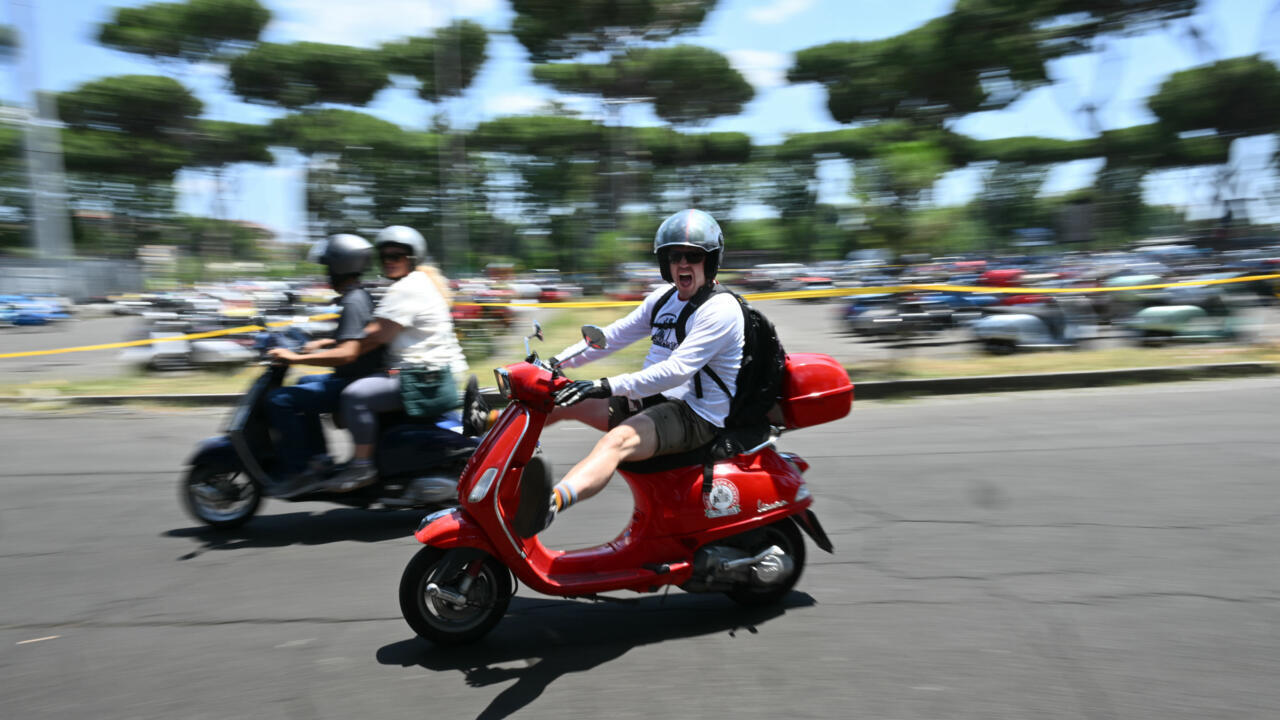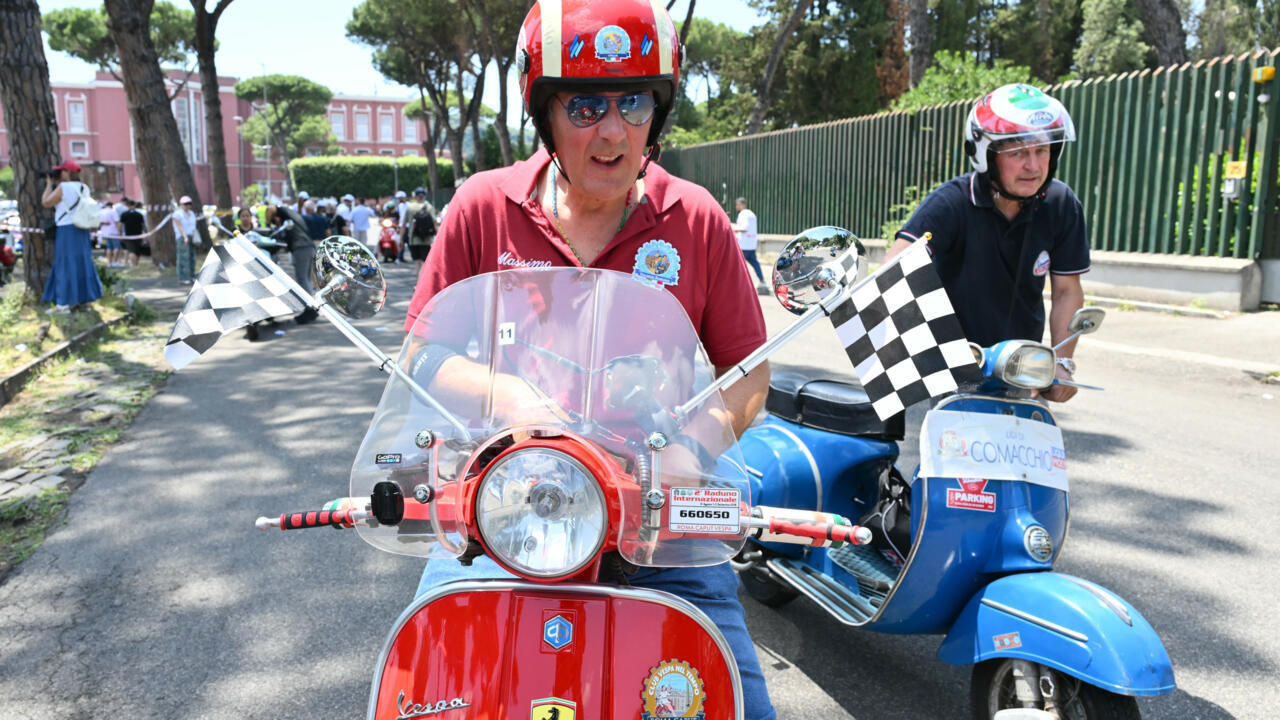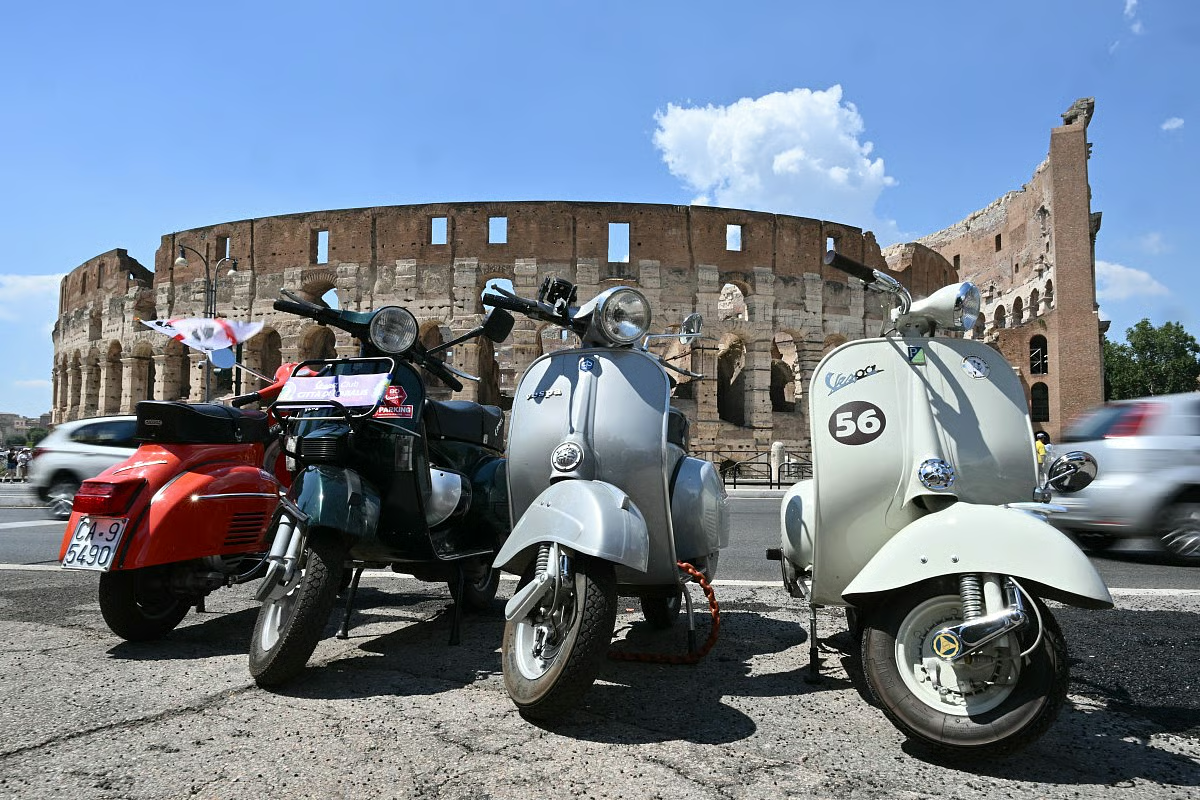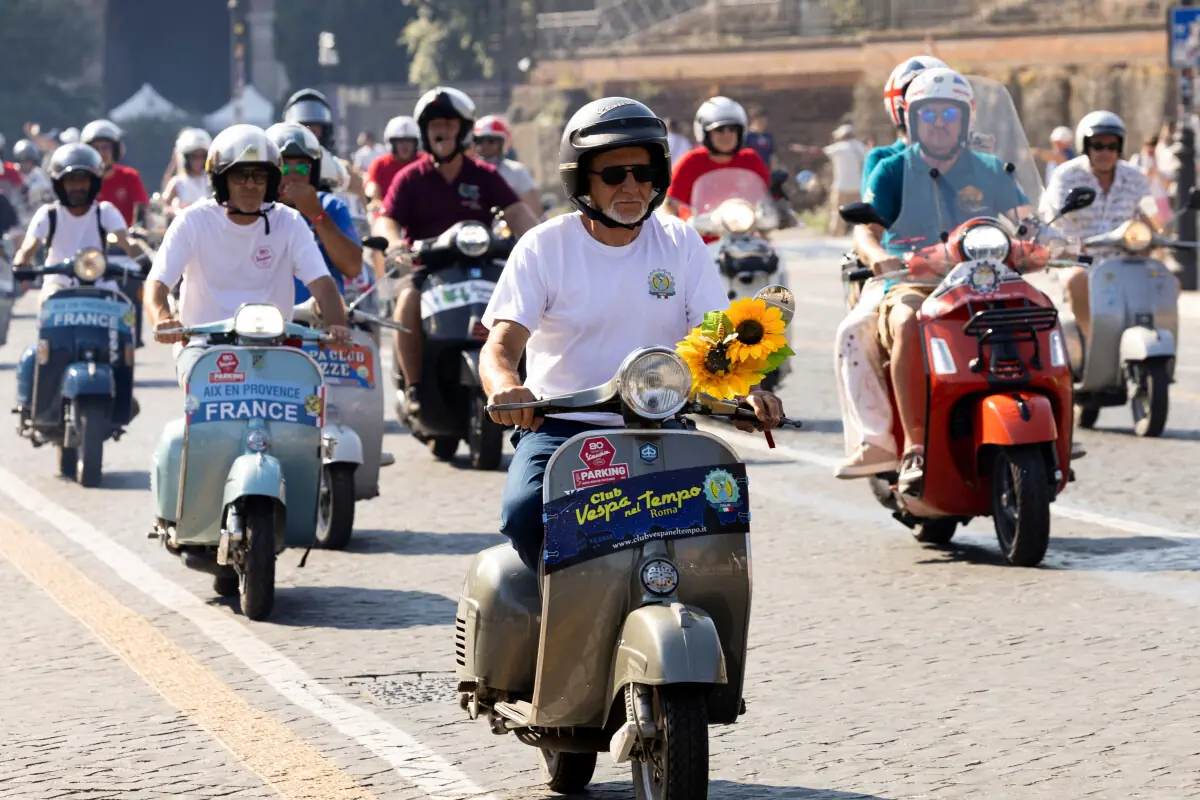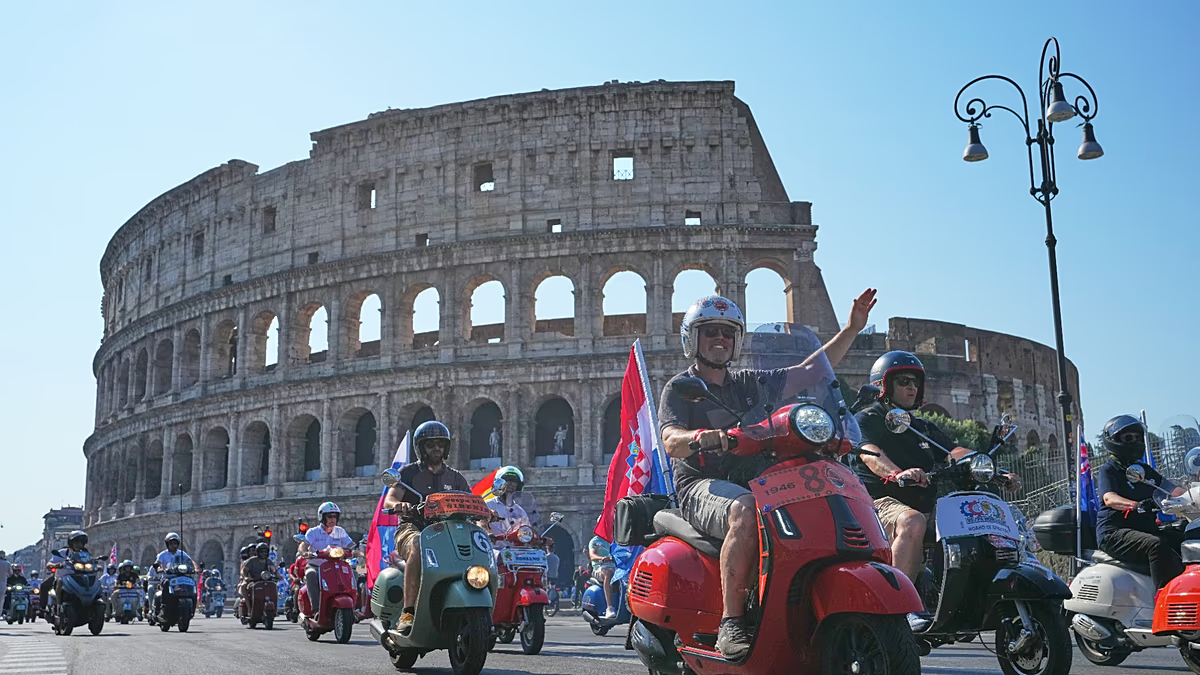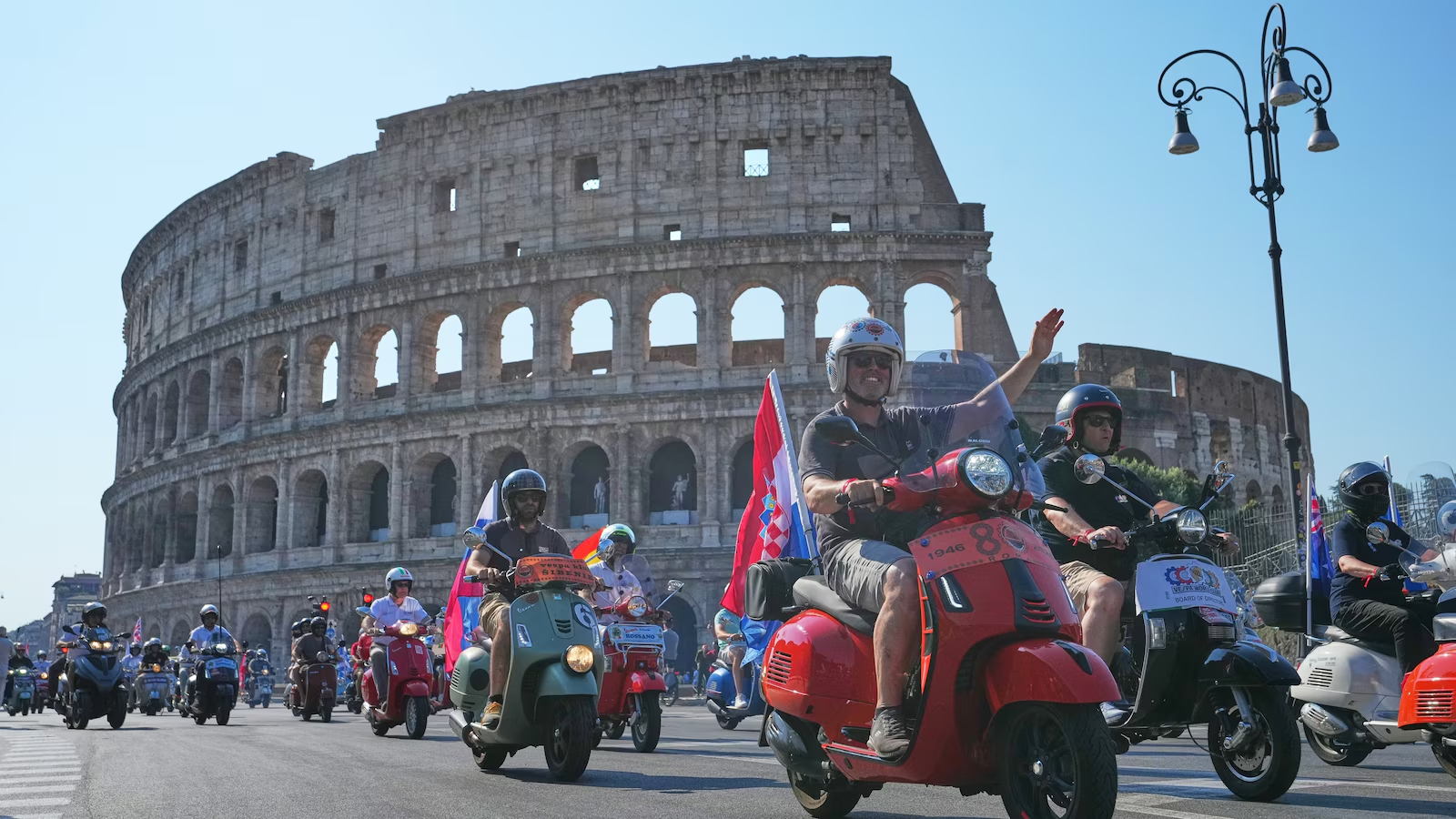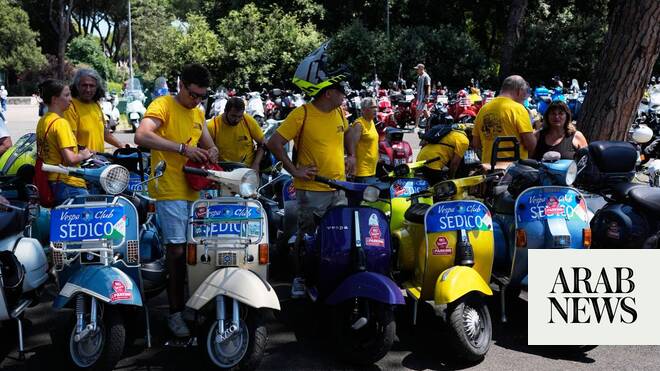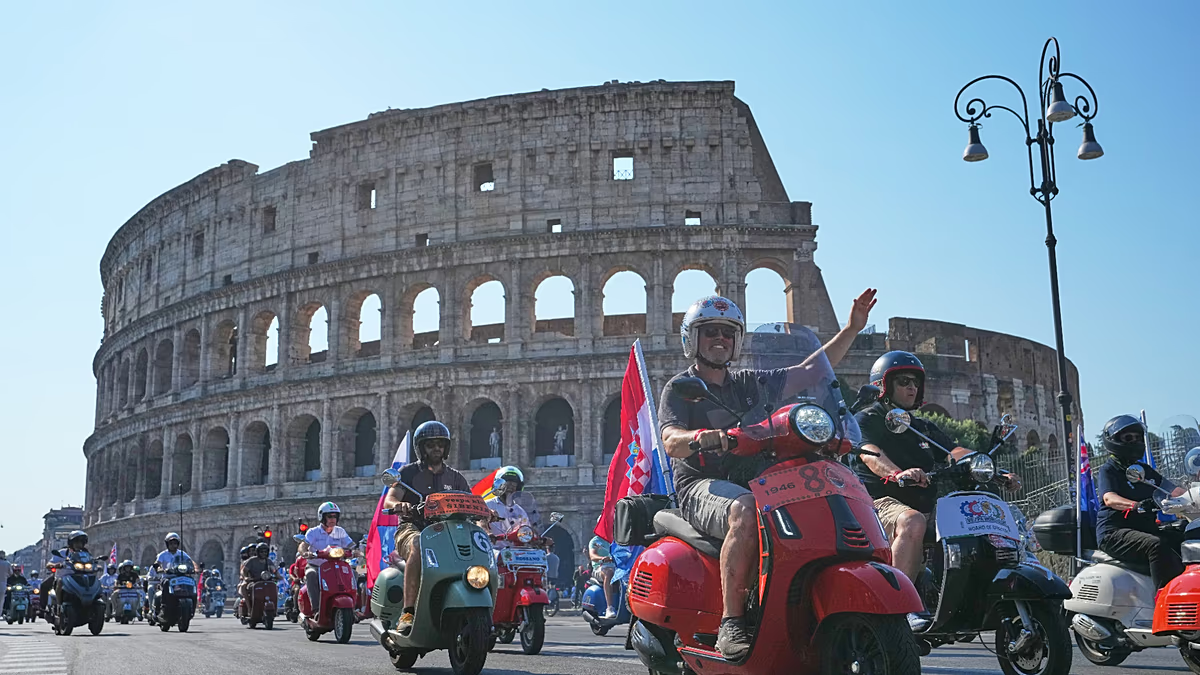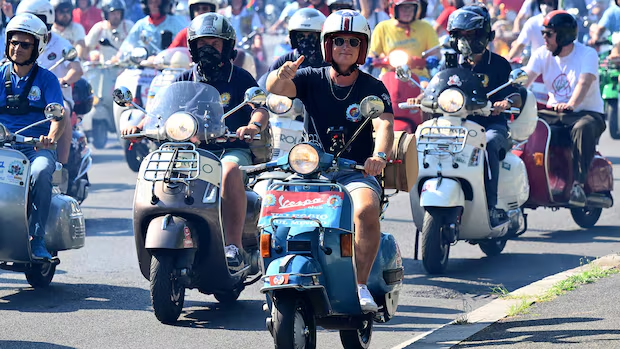
WorldThousands of Vespa riders have been moving in swarms through Rome to celebrate the 80th anniversary of the iconic Italian scooter, which became famous in the 1953 film Roman Holiday.Produced in the postwar years, the scooter came to signify freedom and modernityMegan Williams · CBC News · Posted: Jul 01, 2026 4:00 AM EDT | Last Updated: 33 minutes agoListen to this articleEstimated 4 minutesThe audio version of this article is generated by AI-based technology. Mispronunciations can occur. We are working with our partners to continually review and improve the results.Vespa enthusiasts from around the world ride during the parade in Rome marking the 80th anniversary of the iconic Italian brand of scooters on June 27, 2026. (Alberto Pizzoli/Getty Images)Down a flight of stairs beneath a scooter rental shop near the Colosseum, Rome’s heat and honking traffic give way to a calm, cool reverence in the form of a basement shrine to Italy’s most iconic two-wheeler.Parked in chronological order are machines that look more like sculptures in steel and chrome: Vespas from 1946 onward, their narrow waists and curved bodies instantly recognizable.In the last week in Rome, their buzz has been even more pronounced than usual, with thousands of Vespa riders moving in swarms throughout the city for the vehicle’s 80th anniversary. They streamed through the intense summer heat past the Colosseum, the Circus Maximus and the ruins of the Baths of Caracalla — some wearing vintage leather helmets, others with flags fluttering. The Vespa was all about freedom. It was about being modern.- Claudio SarraBut the celebration was also a reminder of how unlikely Vespa’s story is: a scooter born from the ruins of war that within just a few years, became one of Italy’s most enduring symbols of freedom, romance and style.The museum walls are covered with old advertising posters, vintage riding gear and photographs of Audrey Hepburn and Gregory Peck gliding through Rome in the 1953 film Roman Holiday."The Vespa was all about freedom," said Claudio Sarra, who has run the Vespa rental business with the small museum for three decades. "It was about being modern."Claudio Sarra is seen inside his small Vespa museum near the Colosseum in Rome. Sarra, who has run a Vespa rental business for three decades, says the scooter symbolized freedom and modernity in postwar Italy. (Megan Williams/CBC)Sarra grew up sneaking rides on his aunt’s Vespa in small-town Italy in the 1970s. He says it was never just a way to get from one place to another, but a way of entering the wider world.Postwar designBefore making Vespas, the manufacturer Piaggio built warplanes. Its plant in Pontedera, Tuscany, had been one of Italy’s important aerospace manufacturers.After the Second World War, founder Enrico Piaggio looked at a country of bombed-out roads, broken railway lines, damaged factories and millions of people who needed a cheap way to get around. He commissioned aircraft engineer Corradino D’Ascanio to design a solution."Italian industrial production sites had been blown to smithereens during the war," he said, "Manufacturing this new scooter was an essential part of Italy’s postwar economic launch."D’Ascanio, who reportedly hated motorcycles, designed something entirely new: a lightweight, aerodynamic scooter with an enclosed engine and step-through frame that women in skirts could ride with ease. At a time when Italian women had only just won the right to vote, the Vespa offered mobility, independence and a machine that did not ask them to throw a leg over a heavy frame."The first ads for the Vespa featured a woman," said Sarra. "You could call it a kind of feminist design."Vespa museum owner Claudio Sarra's mother, Annamaria, right, sits on a Vespa with a friend in the 1950s. The scooter was designed so that women in skirts could ride it. (Megan Williams/CBC)The production model was launched at the Turin Motor Show in April 1946. According to company lore, when Piaggio first laid eyes on the prototype, with its hourglass waist and buzzy engine, he exclaimed, "Sembra una vespa!" — it looks like a wasp! The name stuck.Within a year, Piaggio was selling tens of thousands. By the 1950s, the scooter had become synonymous with glamour, turning even a humdrum commute into an act of style. Roman Holiday expanded that romance to global audiences.'The Vespa encapsulates Italy'Piaggio says more than 19 million Vespas have been produced since 1946, in more than 100 countries.Among the riders during the recent celebrations were David Mumunadai and Dawn Brooks Mumundai from Texas, riding double on a postwar Vespa painted in the original mimetico green — the military shade born from leftover airplane paint.The couple own 13 vintage Vespas."We love Vespas — we met riding Vespas in New Orleans 16 years ago," he said.David Baamonde and Dawn Brooks Baamonde from Texas met 16 years ago riding Vespas and joined the thousands of other Vespa riders in Rome to celebrate the scooter's 80th anniversary. (Megan Williams/CBC)"It’s about representation … not just men riding," said Shirley Russell, who travelled from Brisbane, Australia, with three fellow Vespa lovers. "It’s inclusive."The anniversary comes at a complicated moment for Vespa’s parent company. Piaggio reported lower sales and profits in 2025 as demand softened in Europe, North America and Asia.Still, in Rome this weekend, you would never know it."The Vespa encapsulates Italy," said Cuban burlesque performer Doris Gomez Rodriguez, who dressed up as a 1950s pin-up girl for the celebration in Rome.Eighty years after it was born from the ruins of war, the wasps are still buzzing.ABOUT THE AUTHORMegan Williams has been covering all things Italian, from politics and the Vatican, to food and culture, to the plight of migrants in the Mediterranean, for more than two decades. Based in Rome, Megan has also told stories from other parts of Europe and the world and won many international prizes for her reporting, including a James Beard Award. Her radio documentaries can be heard on Ideas and The Current. Megan is also a regular guest host on CBC national radio shows.
The Vespa at 80: Why the Italian scooter remains the coolest thing on 2 wheels | CBC News
Thousands of Vespa riders have been moving in swarms through Rome to celebrate the 80th anniversary of the iconic Italian scooter, which became famous in the 1953 film Roman Holiday.
988 words~4 min read