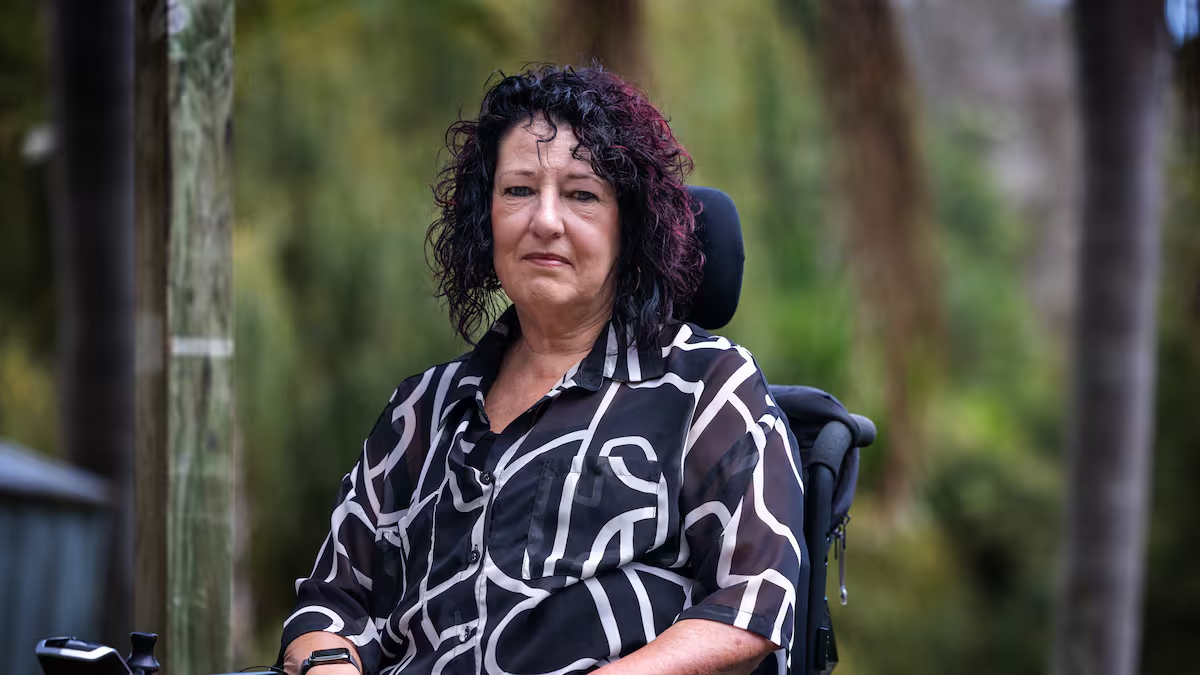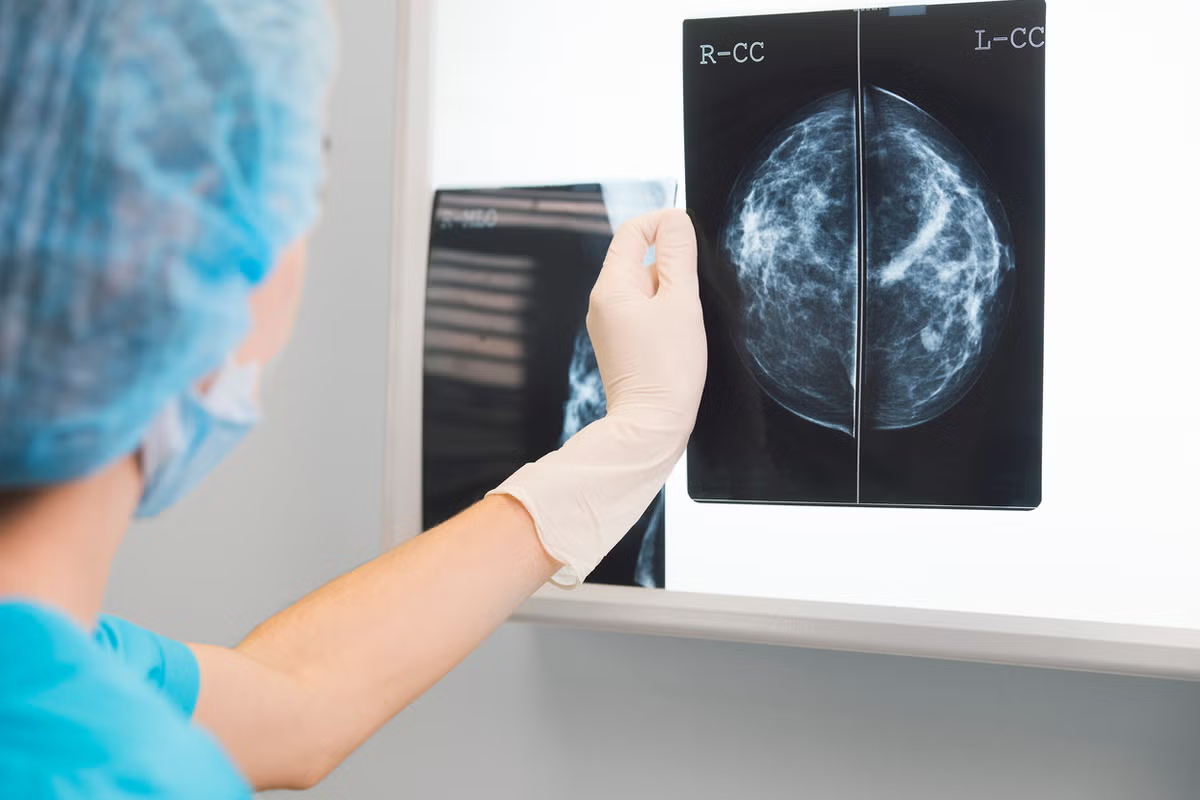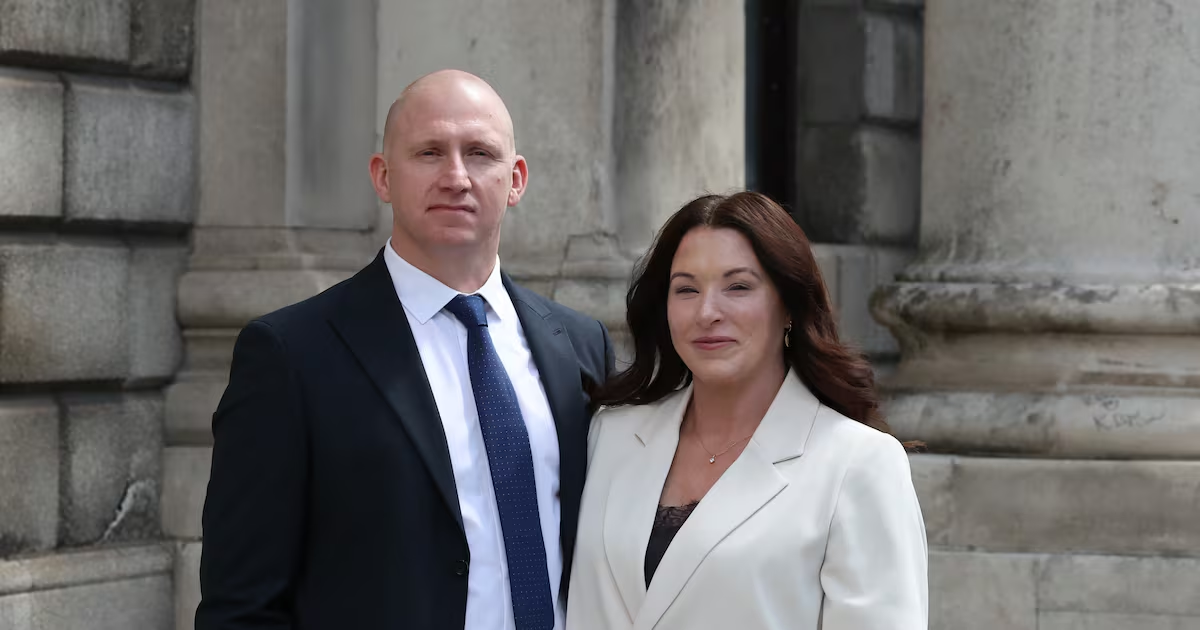
A Co Tipperary nurse who sued the Health Service Executive claiming an alleged delay in diagnosing her breast cancer has won a significant part of her action at the High Court.Áine McSweeney, a mother of three, from Clonmel, claimed she had two mammograms in 2020 and 2022 that were allegedly incorrectly interpreted as benign.McSweeney (52) was diagnosed with breast cancer in 2023 and had to have a mastectomy, chemotherapy and radiotherapy.After hearing extensive expert evidence on both sides, Judge Paul Coffey ruled that by January 2022 the classification of McSweeney’s mammogram as benign “fell outside the range of acceptable professional judgment”. The failure to recall McSweeney for further assessment at that time constituted a breach of duty by the HSE, the judge said.The January 2022 mammogram findings should at a minimum have been regarded as indeterminate, thereby requiring recall for further assessment, the judge said.However, he ruled the McSweeney side had not discharged the burden of establishing breach of duty in respect of the October 2020 mammogram.Legal sources said the judgment in McSweeney’s case is important in relation to breast cancer and breast radiology services.At the opening of the case last March, McSweeney’s counsel, Dr John O’Mahony, appearing with Cian O’Mahony and instructed by solicitor Brigid O’Donnell, told the court the nurse had a family history of breast cancer.It was claimed McSweeney had two mammograms at the breast clinic in University Hospital Waterford in 2020 and 2022, which were reported back as benign. It was claimed these should have been reported as being indeterminate. It was contended the two mammograms allegedly showed clustered microcalcifications. If the two mammograms had been followed through, there would have been an investigation and treatment, the McSweeney side contended.All of the claims were denied and the High Court heard evidence from radiological experts on both sides as Coffey decided on whether there had been a breach of duty.Outlining the issues in the case, the judge said McSweeney alleged negligence by the HSE in the interpretation of mammograms performed in October 2020 and January 2022, resulting in what she contended was a failure to recall her for further assessment, delayed biopsy and delayed diagnosis of breast cancer which was confirmed in 2023.The judge said the McSweeney side contended that each of the 2020 and 2022 mammograms demonstrated a new cluster of microcalcifications in the left breast and that their indeterminacy mandated recall and that the failure to recall her for magnification views and biopsy amounted to a breach of duty.The core dispute between the expert witnesses in the case did not concern the existence of breast cancer by 2023, nor the biological fact that the disease developed over time, the judge said, but rather the interpretation of subtle mammographic appearances in 2020 and 2022 and whether those appearances crossed the threshold for recall under accepted professional standards.The judge said the court was satisfied that in 2020 the appearance of a small number of amorphous microcalcifications against that background did not mandate recall as a matter of professional obligation.The court accepted that with the benefit of hindsight the microcalcifications identified in 2020 and 2022 were likely manifestations of the cancer diagnosed in 2023.However, Coffey said retrospective fact does not determine breach. The issue is whether those findings as they appeared at the time, and without knowledge of outcome, required recall under accepted professional standards. He said the evidence established that what were early malignant microcalcifications in 2020 were indistinguishable from benign findings and did not reach the threshold for intervention.
Nurse who sued HSE over alleged delay in breast cancer diagnosis wins part of action
Classification of mammogram as benign ‘fell outside the range of acceptable professional judgment’, judge rules
583 words~3 min read