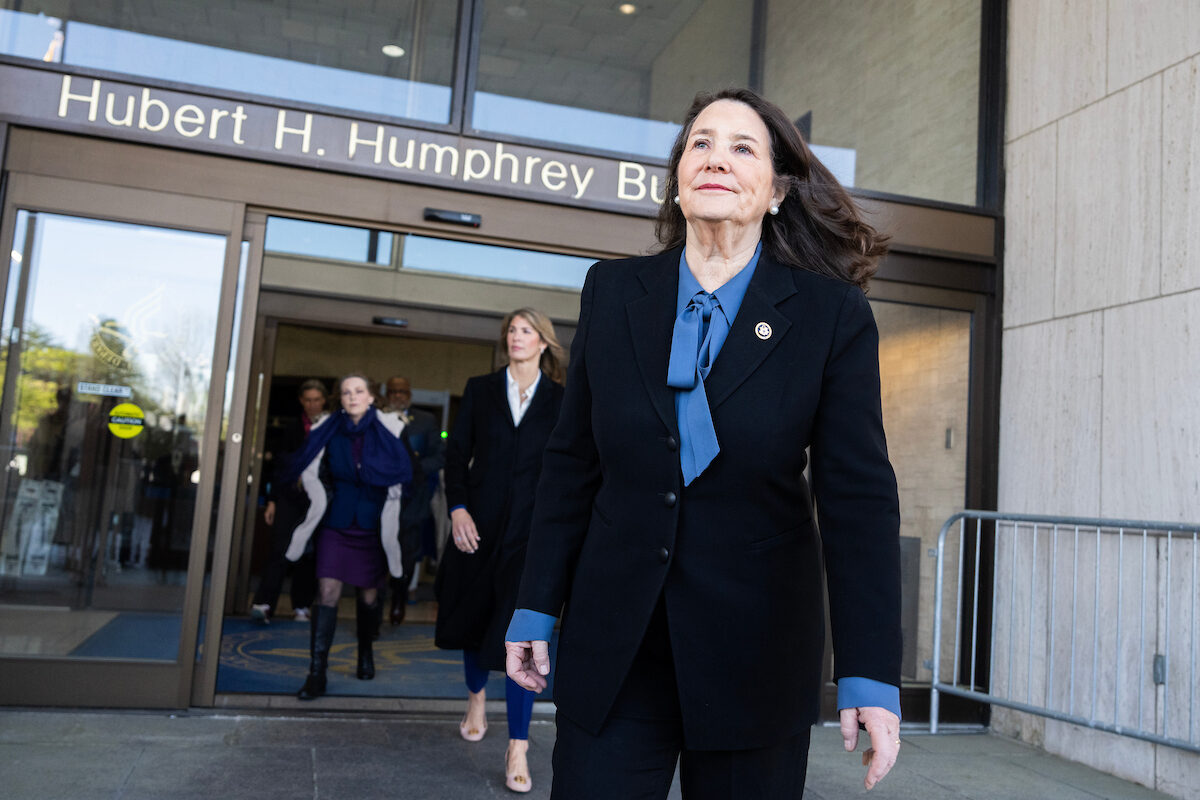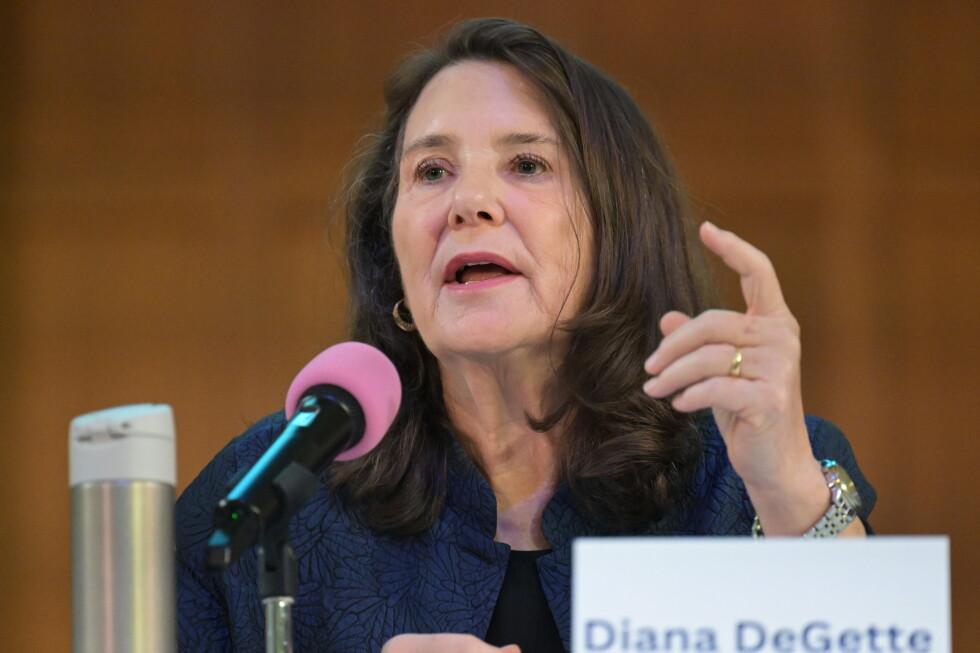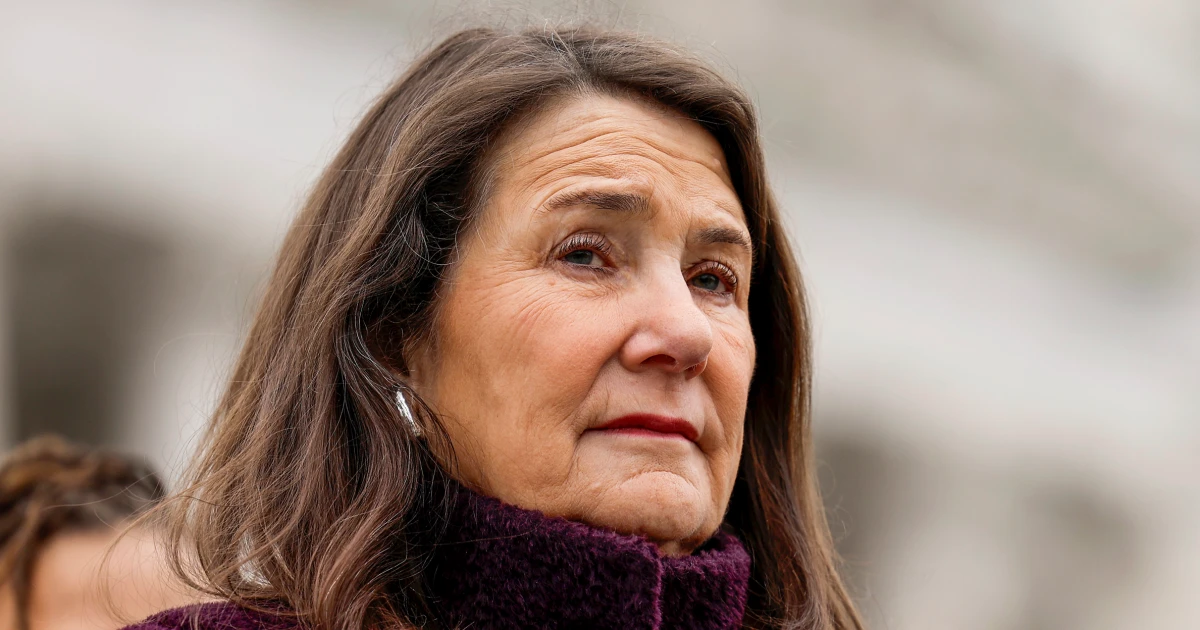
Democrats' generational war continued, as Sen. John Hickenlooper won, Sen. Michael Bennet lost, and socialist Melat Kiros leads Rep. Diana DeGette.Show Caption
Democrats' generational and ideological tug-of-war continued to unfold in the June 30 Colorado primary, amid a national anti-establishment surge that has emboldened younger, more progressive contenders.In a congressional race for the district covering Denver, longtime Rep. Diana DeGette, 68, was upset by political newcomer Melat Kiros, 29, who identifies as a democratic socialist. And in a key swing congressional district, state Rep. Manny Rutinel, a progressive, beat a more moderate opponent to win the Democratic nomination.But statewide, U.S. Sen. John Hickenlooper, 74, held off a challenge from state Sen. Julie Gonzales, 43, who ran to the incumbent's left and argued that it was time for a new voice in Washington.Polls show Democrats are the favorites to retake Congress heading into November, but the party is engulfed at the moment by a fierce debate about its ideologicl direction.Some veteran party figures are rejecting the socialist insurgency, as New York City Mayor Zohran Mamdani's preferred candidates swept Democratic congressional primaries in several very liberal districts on June 23, while centrist candidates have recently won statewide contests such as 2025's New Jersey and Virginia governor's races.In Colorado, Sen. Michael Bennet also suffered an upset at the hands of state Attorney General Phil Weiser in the gubernatorial primary. Like many Democratic primaries in 2026, that campaign was less defined by sharp policy disagreements than a contest over who would more effectively oppose the Trump administration's staunchly conservative policy agenda and its aggressive actions.Here are the key takeaways from the Colorado primary:Kiros upsets longtime Democratic congresswoman in deep blue districtProgressives aligned with the Democratic Socialists of America continued their national winning streak in the midterms by plucking out another veteran lawmaker in a deep blue area.DeGette was first elected in 1996 — a year before Kiros was even born — in a district that former Vice President Kamala Harris won by 56 percentage points in 2024.The congresswoman stressed her relationships on Capitol Hill and her opposition to Trump. She was among the group of House Democrats who skipped Trump's 2026 State of the Union address in protest.But that wasn’t enough to stave off Kiros, who campaigned on concerns often cited by younger and more progressive Democrats, including the rise of artificial intelligence and Israel's alleged war crimes in Gaza. Kiros first gained online notoriety for being fired by her law firm in New York after writing a letter sharply critical of Israel in November 2023.The outcome is bound to escalate an internal Democratic debate that has been growing since Mamdani's win in New York City. Democratic socialists have pulled off upsets in major cities, such as Washington, D.C. and Seattle, and liberal-leaning congressional districts, but they have attracted criticism from some in the party's centrist wing, who say farther left candidates and their policies are anathema in swing states and districts.A Pew Research Center survey released in January, for example, found 32% of Democratic voters likeleaders who describe themselves as democratic socialists versus 11% who dislike the term.Weiser prevails over Bennet in governor's race by going anti-TrumpFor much of 2025 the gripe among rank-and-file Democrats was that their leaders in Washington weren't doing enough to resist the returning Trump administration's bulldozing agenda.That appears to be what gave Weiser the edge to defeat Bennet in what started as an uphill battle due largely to name recognition.In 2025, polls showed Bennet, a three-term senator, leading the primary by as much has 31 percentage points. But Weiser closed the fundraising gap, raising a record more than $6.5 million versus the $4.8 million Bennet raised.Weiser made much of the campaign about fighting back against Trump, who is deeply unpopular in the state. The anti-Trump sentiment was inflamed further when Gov. Jared Polis, the Democratic incumbent, commuted a nine-year prison sentence for Tina Peters, a former county clerk convicted for letting someone access data from a secure voting system. Trump had demanded Peters' release and threatened to withhold federal funds from Colorado if his demand was not met.Peters, a Republican, attempting to prove Trump's baseless claims about fraud in the 2020 presidential election.Polis was censured by the Colorado Democratic Party in May as a result of his decision letting Peters out of prison.Both Weiser and Bennet criticized Polis' decision and Bennet promised that if he won the election he would hold his Senate seat until taking office, rather than allowing Polis to fill the vacancy.But Weiser distinguished himself with primary voters by noting he has sued the president 66 times. He also called out Bennet, a moderate known for bipartisanship, for supporting parts of the president's agenda such as voting to confirm at least eight of Trump's cabinet nominees.Hickenlooper survives progressive challenge over aging DemsIf centrists are looking for a sign that their breed of Democrat can withstand the blue wave, it was in Colorado’s Senate race, which turned into a generational referendum.Incumbent Sen. John Hickenlooper, 74, a former Colorado governor and Denver mayor, fended off state Sen. Julie Gonzales, 43, with a decisive win.Gonzales ran with a platform decisively to the left, supporting Medicare-for-all, raising the minimum wage and cracking down on junk fees. She said younger voices are needed on Capitol Hill, a theme in many 2026 Democratic primaries.Hickenlooper will face Republican Mark Baisley, who ran unopposed in the GOP primary but experts give Republicans very little chance in flipping the Senate seat this fall, noting that the state has been trending heavily Democratic over the past decade.Contributing: Terry Collins