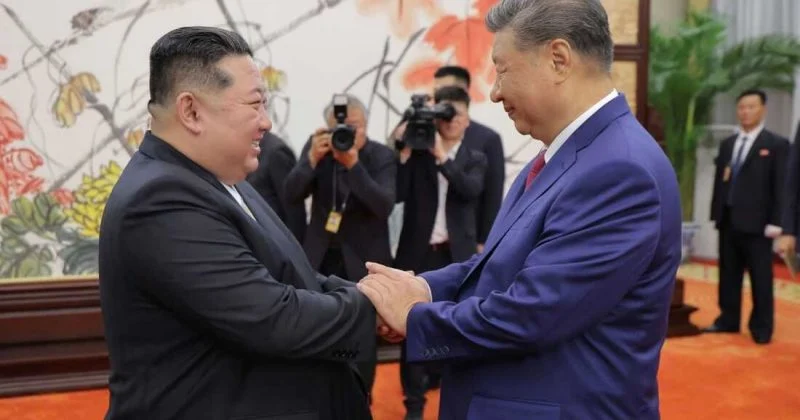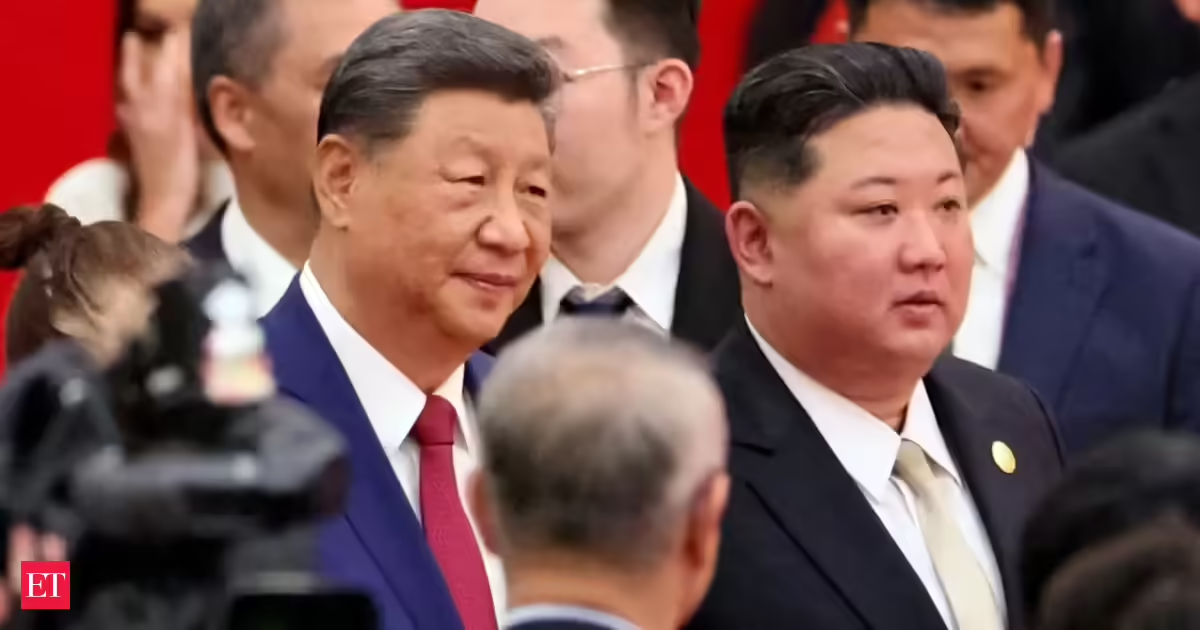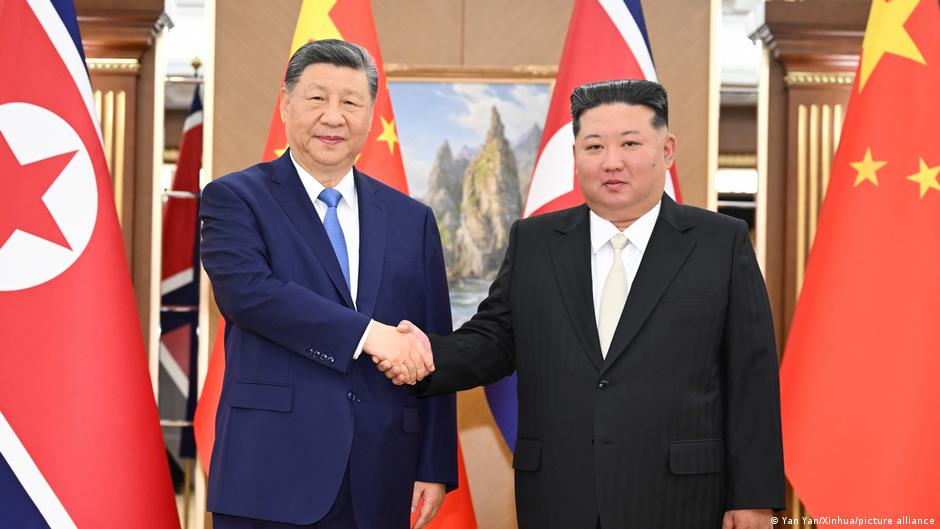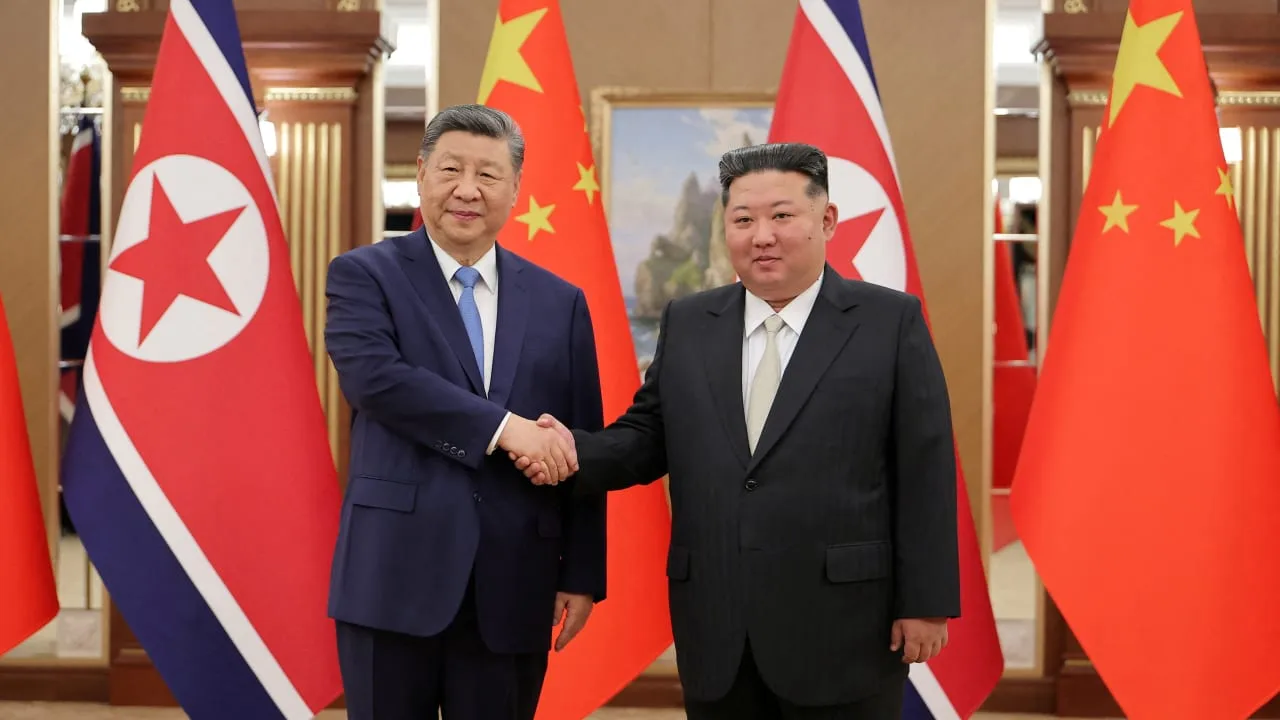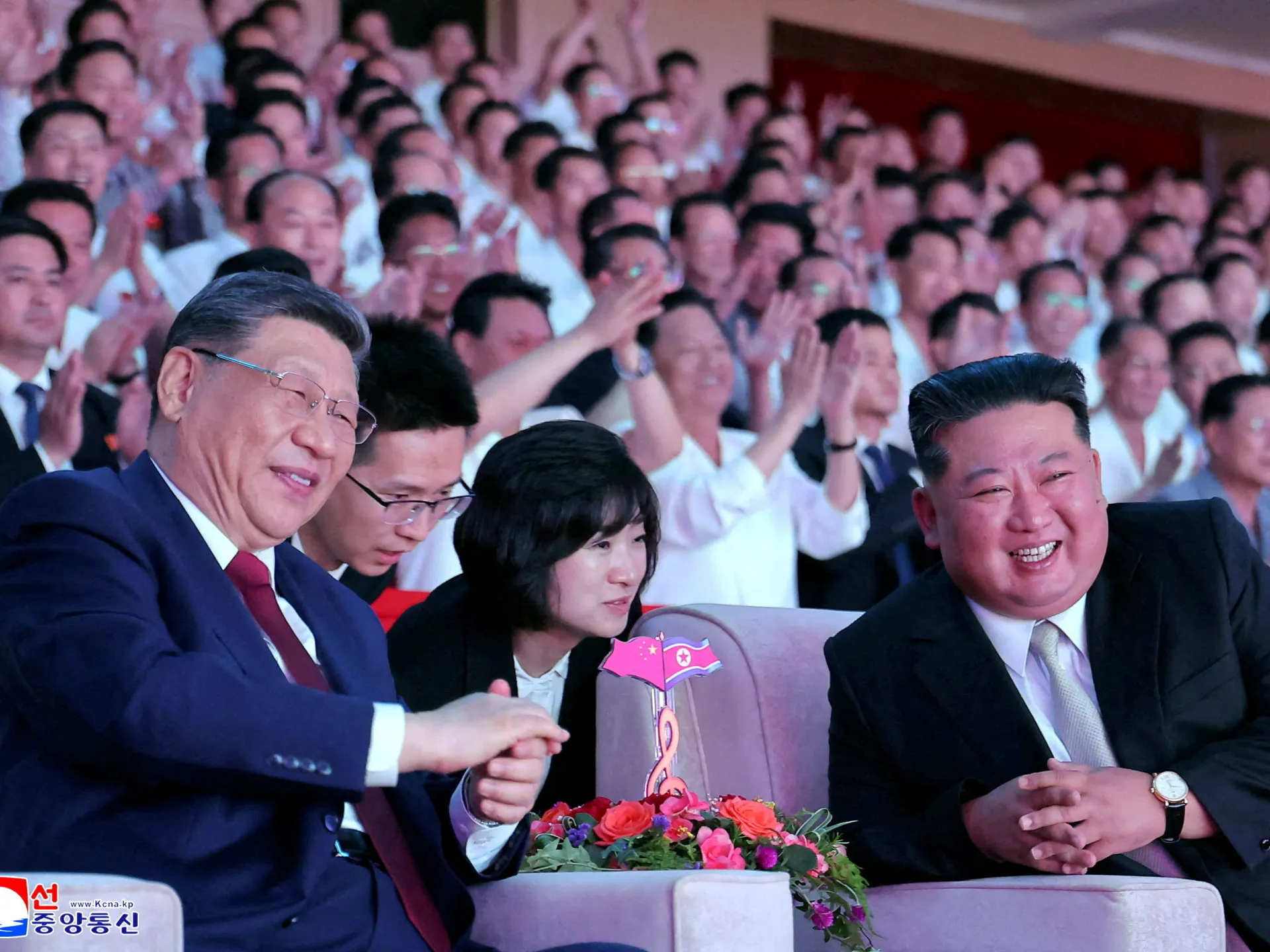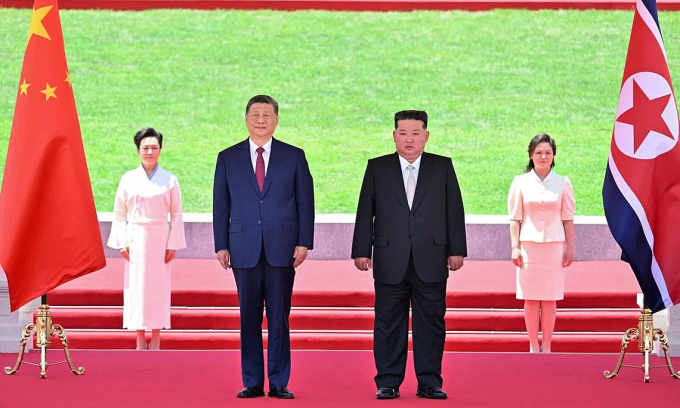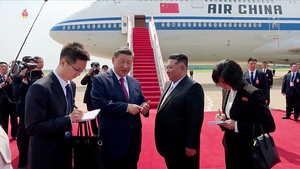
North Korean leader Kim Jong-un (center right) and Chinese President Xi Jinping talk at Pyongyang International Airport on June 9 before Xi boarded his plane after wrapping up a two-day state visit to North Korea. (Korean Central Television via Yonhap) Recent remarks by Kim Jong-un reflect Pyongyang's efforts to institutionalize closer ties with Beijing amid a shifting geopolitical landscape, experts say.The North Korean leader shared a message marking the 105th anniversary of the Chinese Communist Party, in which he reaffirmed his support for Chinese President Xi Jinping and portray last month's Pyongyang summit as a turning point in bilateral relations.In a congratulatory message to Xi released by the Korean Central News Agency on Wednesday, Kim praised the CCP's leadership and pledged to further strengthen the traditional relationship between the two socialist neighbors."There is no new China without the Communist Party. This is the truth the Chinese people have realized while advancing under its guidance for many years," KCNA quoted Kim as saying.Kim also looked back on Xi's June 8-9 state visit to Pyongyang, describing the summit as a "historic occasion" that deepened mutual trust and reaffirmed the two countries' "unshakable will" to more vigorously advance socialist construction and their longstanding friendship.Xi's visit — his first to North Korea in nearly seven years — resulted in agreements to expand cooperation in politics, the economy and culture while strengthening high-level exchanges.In his latest message, Kim said "the absolute superiority of the relations between the two countries is firmly guaranteed by the leadership of the parties" and pledged to work with Xi to "add shine to socialism, the common cause of the two parties," while continuing to develop what he called a "friendly and cooperative" relationship shared by both peoples.Yang Moo-jin, a distinguished professor at the University of North Korean Studies, said Kim's emphasis on the Pyongyang summit suggests the North Korean leader seeks to present the meeting as a new milestone in bilateral relations to audiences both at home and abroad."When ties between North Korea and China were strained in the past, Pyongyang largely relied on formulaic rhetoric such as 'traditional friendship' or the 'socialist cause,'" Yang said. "This time, however, Kim framed the summit itself as a landmark event."Yang also noted that Kim largely avoided invoking the traditional notion of the two countries as a "blood alliance," instead emphasizing themes such as the "common cause" and the leadership of the two ruling parties.According to Yang, the shift reflects Pyongyang's intention to place bilateral ties on a more institutional footing while further consolidating its partnership with Beijing amid an increasingly complex international environment.The latest message by Kim also signaled Pyongyang's support for Xi's centralized leadership, Yang added."By explicitly backing Xi's leadership, North Korea is reinforcing socialist solidarity with China," Yang said. "It could also represent a strategic move aimed at encouraging Beijing to further accept North Korea's four-generation hereditary leadership system."Separately, KCNA reported that the Chinese Embassy in Pyongyang hosted a banquet Tuesday to commemorate the CCP anniversary, attended by senior North Korean officials including Jo Yong-won and Kim Song-nam, secretaries of the Central Committee of the ruling Workers' Party of Korea.Chinese Ambassador Wang Yajun said Beijing hopes to deepen "strategic communication" and exchanges with North Korea, describing the two countries as bound by a shared destiny forged through generations of mutual support. A session on party-building experience preceded the dinner, according to the report.The latest exchange reflects Pyongyang's broader diplomatic push to strengthen ties with both Beijing and Moscow. North Korea has elevated its strategic partnership with Russia through expanded military cooperation and a mutual defense treaty, while also working to stabilize and deepen relations with China after years of relatively limited high-level engagement.
North Korea's Kim reaffirms support for Xi, hails Pyongyang summit as milestone in China ties
Recent remarks by Kim Jong-un reflect Pyongyang's efforts to institutionalize closer ties with Beijing amid a shifting geopolitical landscape, experts say. The
614 words~3 min read