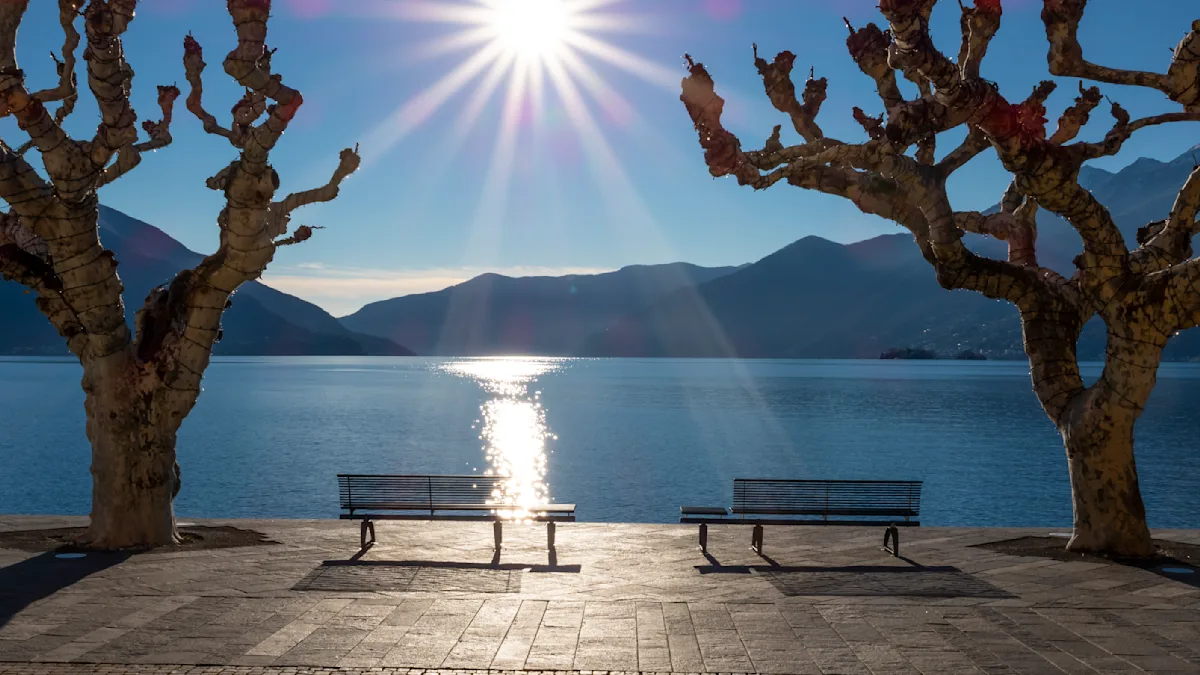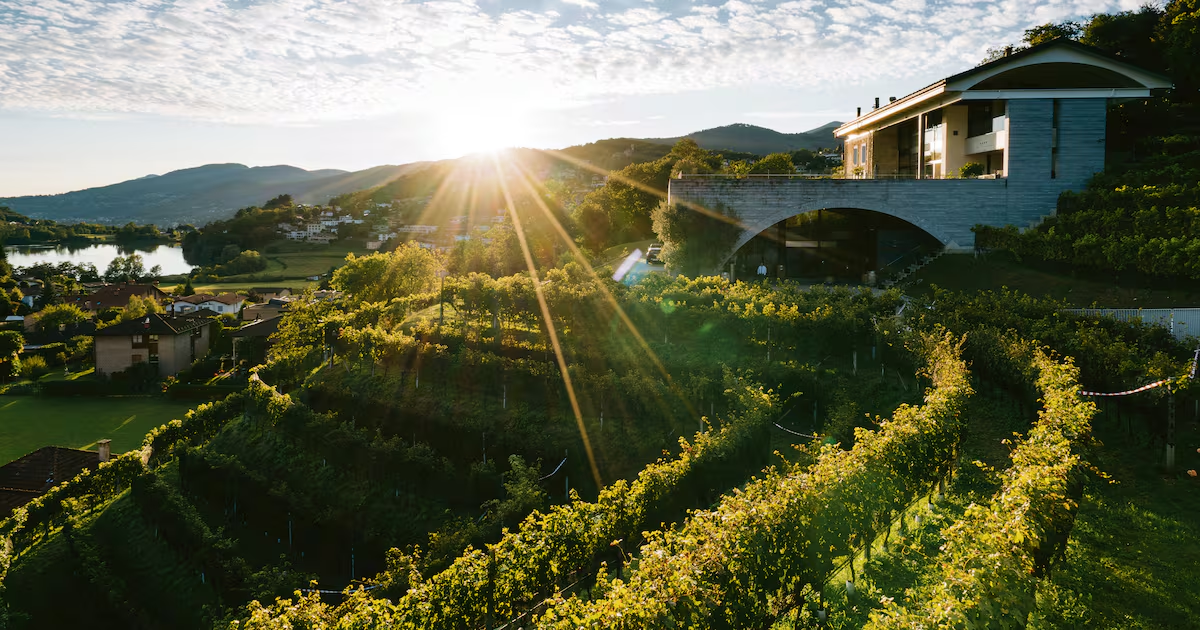
Between Alpine peaks and peaceful lakes that mirror the breathtaking mountains, a two-hour train journey south of Zurich takes you to a compact region of Switzerland and the Italian-speaking canton of Ticino. Lakeside promenades, modern art institutions, exceptional cuisine and historic villages are within a short distance from each other, either on foot or by boat, in the city of Lugano. If business is on the cards in either Zurich or Milan, this is a journey worth taking if time permits, bringing together culture, food, wine and outstanding scenery. The journey south through Switzerland on the famously efficient transport network is part of the experience: lush green mountainous scenery gradually gives way to Mediterranean influences as the route descends toward Ticino. On arrival in Lugano, a panoramic view awaits as we ascend the train station by escalator, and this gives a little taster of what’s about to come and anticipation builds. We stayed in the lakeside Grand Hotel Villa Castagnola, a historic property set slightly apart from the city centre, offering views over the water and surrounding hills. If the weather permits, there is outdoor dining, sun loungers on the lawn and an indoor pool area with large windows that open to bring the glorious outside in. Even better is the lido area that belongs to the hotel, a two-minute walk away which will allow you dip in glacial Lake Lugano. And in early spring, it was an icy but invigorating experience. We started day one with a cultural focus and strolled for about 20 minutes into the city centre through the beautiful Parco Ciani to the cultural district. Museo d’arte della Svizzera Italiana (MASI) is located within a broader cultural complex and is a contemporary museum with works by many Italian Swiss artists. From historical masterpieces to contemporary exhibitions that include video and photography, there is something for all tastes. And the floor-to-ceiling window wall overlooking the lake allows for some quiet contemplation as you sit and take in nature’s masterpiece. Castagnola, Lugano Close by, visit Palazzo Reali, which is a part of MASI, but a few minutes’ walk away with the standout show – a self-portraits collection containing work by Marina Abramovis, Florence Henri and Ilse Bing. That evening, we dined close by at Osteria Trani. Tucked into stone-lined streets near the cathedral, the restaurant will have you believing you’re in Italy with the general ambience and cuisine saying as much. Languages, borders, and cultures overlap here, and it can be seen on the plate. On day two, we returned to Parco Ciani, shaded by mature trees and lined with sculptures and flower beds packed with every colour and species of plant. From here, we sailed across Lake Lugano, where many boats make a daily crossing towards the village of Gandria. Step back in time in this pretty car-free village built into the steep hillside with narrow stairways and tightly packed houses overlooking the lake. Lunch at Locanda Gandriese was a highlight of this trip, sampling perfectly cooked pastas and risottos with simple but delicious sauces. Local wine, served by the glass, is minerally and refreshing. As we looked down on multicoloured boats bobbing along the lake as well as fishermen out for some quiet meditation, we congratulated ourselves on such a find. The village of Gandria on the northern shore of Lake Lugano Monte Brè Funicular The return journey to Lugano follows the Olive Grove Trail, a scenic walk that takes about 45 minutes from Gandria to upmarket residential Castagnola. This route shows off the region’s Mediterranean vegetation, a contrast to the alpine landscape usually associated with Switzerland. As evening approached, we took a taxi to the surrounding hills for a visit to Moncucchetto, a winery and restaurant. We chatted to the owners about wine production, had a tour of the cellar and enjoyed a wine tasting from their own bottles. Lugano isn’t short of spectacular viewing spots, but this is one place to get the camera phone out. The setting, overlooking the city and lake below, reinforces how much urban and rural intertwine in this region. The next day, we rose high above the city via funicular to Monte Brè. From this natural terrace, views stretch across Lake Lugano and the surrounding Alps, offering a last look at the region’s gorgeous scenery. The contrast between lake and mountain, urban centre and rural landscape, becomes especially clear from this vantage point. Before leaving, try lunch at Ristorante Bottegone del Vino, a favourite spot with locals and a great place to people-watch. Great local produce and regional wines take centre stage here, as is the case right across Lugano. Alternatively, the train to Zurich offers great food options and snacks. Flights to Zurich with Swiss Air, Ryanair and Aer Lingus are daily.
Destination Lugano: A delightful detour between Milan and Zurich
Mimi Murray finds a captivating mix of urban and rural charms in this picture postcard destination
794 words~4 min read