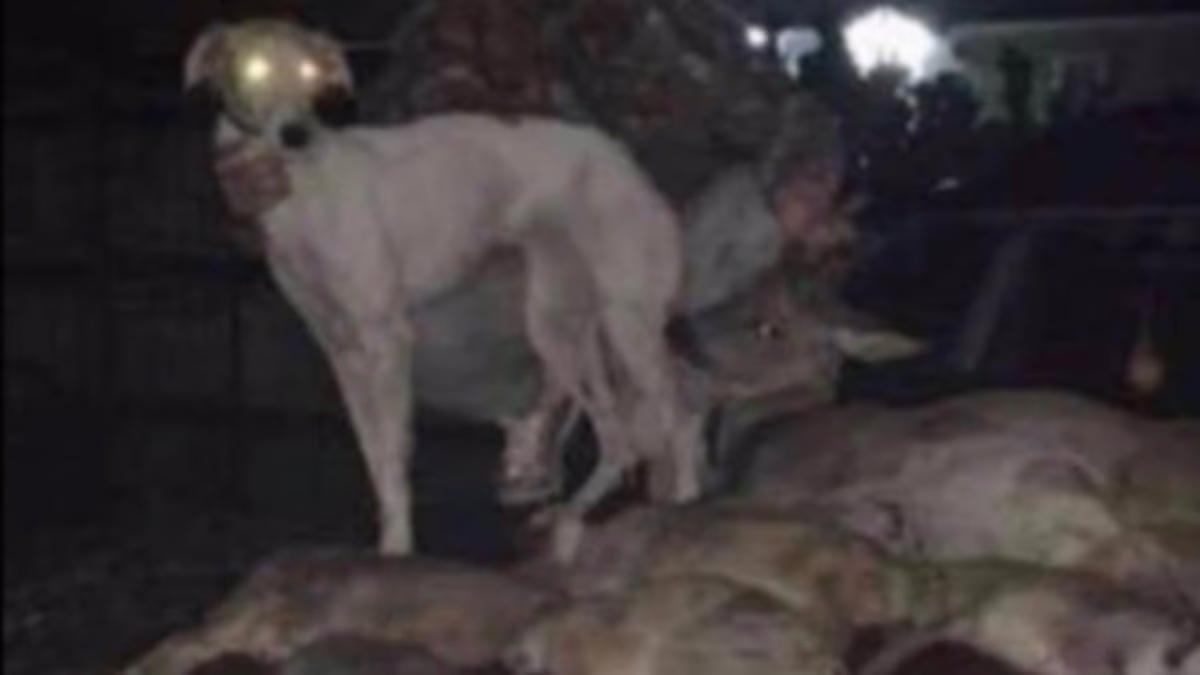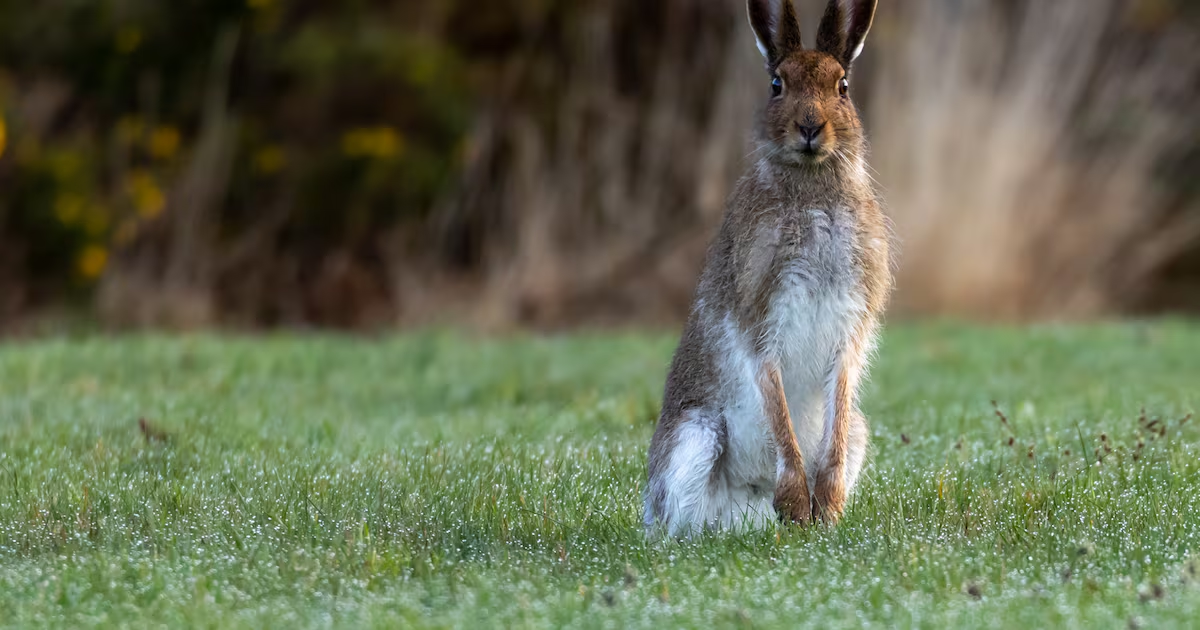
Here is the problem for hare coursing enthusiasts. Small human fans of the Nutbrown Hares (see Guess How Much I Love You by Sam McBratney, illustrated by Anita Jeram) will ascribe human attributes to the adorable hares, and the book’s tens of millions of grown-up buyers will stand accused of endorsing such anthropomorphic notions. Then again, a bedtime story about a shy little Irish hare that is netted in the wild, transported and held captive for weeks before being dropped into an enclosure as live bait for a pair of muscular, muzzled 35kg coursing greyhounds is unlikely to be toddler catnip. Coursing fans might ask themselves why, as a third effort to ban the pursuit comes before the Dáil. TD Paul Murphy’s Animal Health and Welfare (Ban on Hare Coursing) Bill will be debated tomorrow and voted on next Wednesday. The ethical case against using wild or domestic animals for entertainment seemed unanswerable as far back as 1835, when Britain and Ireland outlawed cockfighting along with bear- and bull-baiting. In modern Ireland, section 15 of the Animal Health and Welfare Act 2013 prohibits the use of animals for fighting, training or baiting purposes. It also makes it illegal to publicise or promote such events, provide information about them or receive money for admission to them. To many people those descriptions may sound uncannily like hare coursing events. The Irish hare – a subspecies of the mountain hare unique to Ireland, eats only herbs and grasses and can reach speeds of 70km an hour – is protected under the Irish Wildlife Acts and can only be captured, tagged or killed under licence. To bolster their case, coursing supporters heavily emphasise the fact that coursing is regulated by law. The Irish Coursing Club (ICC) has about 89 affiliated clubs which are licensed by the National Parks and Wildlife Service (NPWS) to capture live hares for the winter season. Clubs must tag each hare and report the numbers captured and where to the NPWS four days before an event. They must supply details of the number of courses and trials run, the number of hares plunged into battle each day, the number that were “pinned” (where the muzzled dog pins the hare to the ground or otherwise immobilises it) or “hit” (where a dog hits, strikes or tosses the hare); they must state how many such incidents were investigated by the mandatory veterinarian and how many hares were euthanised or died of natural causes. The club must also report how many hares were returned to the wild and at which locations.[ Hare coursing should not need to be debated, just endedOpens in new window ]The conditions around hare captivity were highlighted during Covid restrictions when then Minister for Heritage Darragh O’Brien requested the release of captured hares given the unpredictability of the lockdown. His letter to the ICC virtually stated the case against any length of captivity: “Clearly wild hares, which are a protected species, are better off in the wild rather than being held in captivity in groups in confined enclosures,” he wrote. That the release was framed as a request tells its own story. No maximum captivity time is mentioned in the law. A random check of 2024-2025 coursing returns on the NPWS site suggests that the east Donegal coursing club began to net hares from October 1st for an event scheduled for the end of December. That meant three months of captivity for some of the 47 hares. Over the three-day event, five were pinned and examined by the vet and three required treatment for injuries; antibiotics and anti-inflammatories were administered. On day three, two other hares died of “natural causes”. For its two-day meeting on January 16thth and 17th, Gorey Coursing club had already started netting hares on November 17th – a two-month period of captivity for some of the hares. Of the 30 netted, three escaped and three were pinned and examined. Two of them had to be euthanised. At the Rathkeale/Limerick City club meeting on November 24th, one hare was pinned and examined and two escaped. Another died of “natural causes” and was removed by NWPS rangers for a postmortem. More than 3,000 hares were captured from the wild during the 2023/2024 coursing season, according to the ISPCA. Of those, more than 100 were hit or tossed by dogs, more than 130 were pinned and more than 120 needed veterinary attention, with some dying or being euthanised. The question every TD of any stripe must answer tomorrow is why this is tolerated in a modern country. Is this a “sport” they want to see featured in their children’s bedtime stories or analysed in classroom discussions? If not, why not? They might also remember that more than three-quarters of respondents to a 2019 Red C survey agreed it should be banned. And that we are one of only three European countries that continues to support it. They could also have another (or first) look at the Government’s own 2021 Animal Welfare Strategy – remember “One Health, One Welfare approach, acknowledging and valuing the interconnections and interdependencies between human, animal and environmental health”? Arguments – such as Sinn Féin’s – that “outright bans would drive these practices underground” could be applied to any social ill. The problem with live hare coursing is not insufficient regulation but that it exists at all. A free vote next week would be a big step for transparency. Tomorrow’s debate will reveal which evidence-based values our TDs represent.
Kathy Sheridan: The shy hare used as bait for muscular 35kg dogs is a depressingly Irish bedtime story
More than 3,000 hares were captured from the wild during the 2023-2024 coursing season
914 words~4 min read