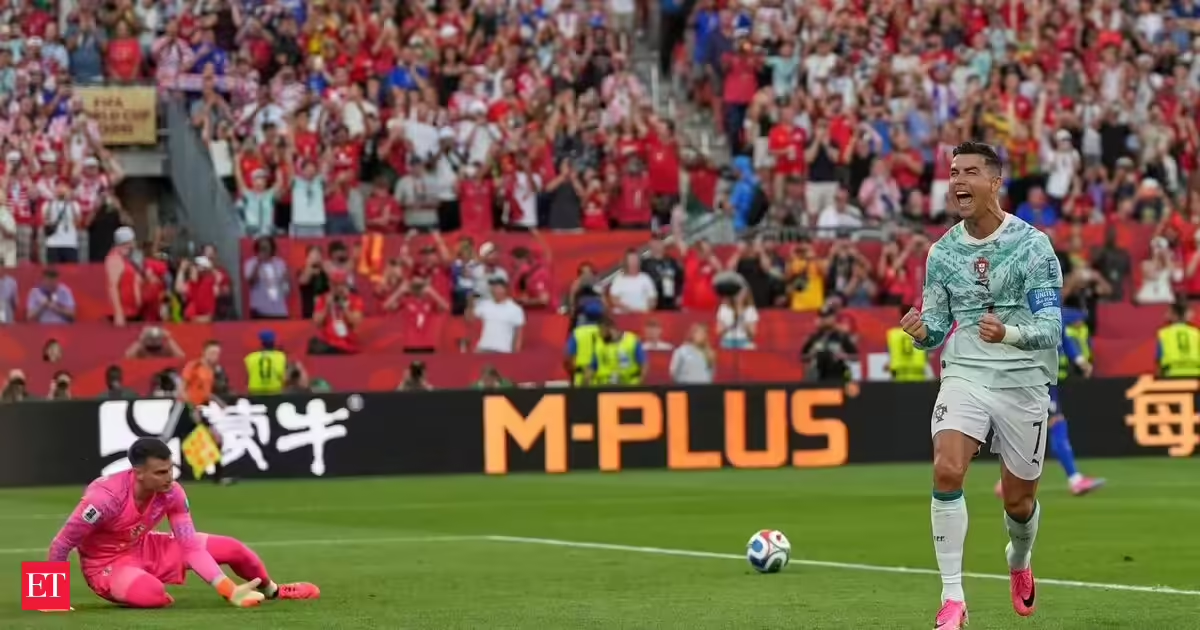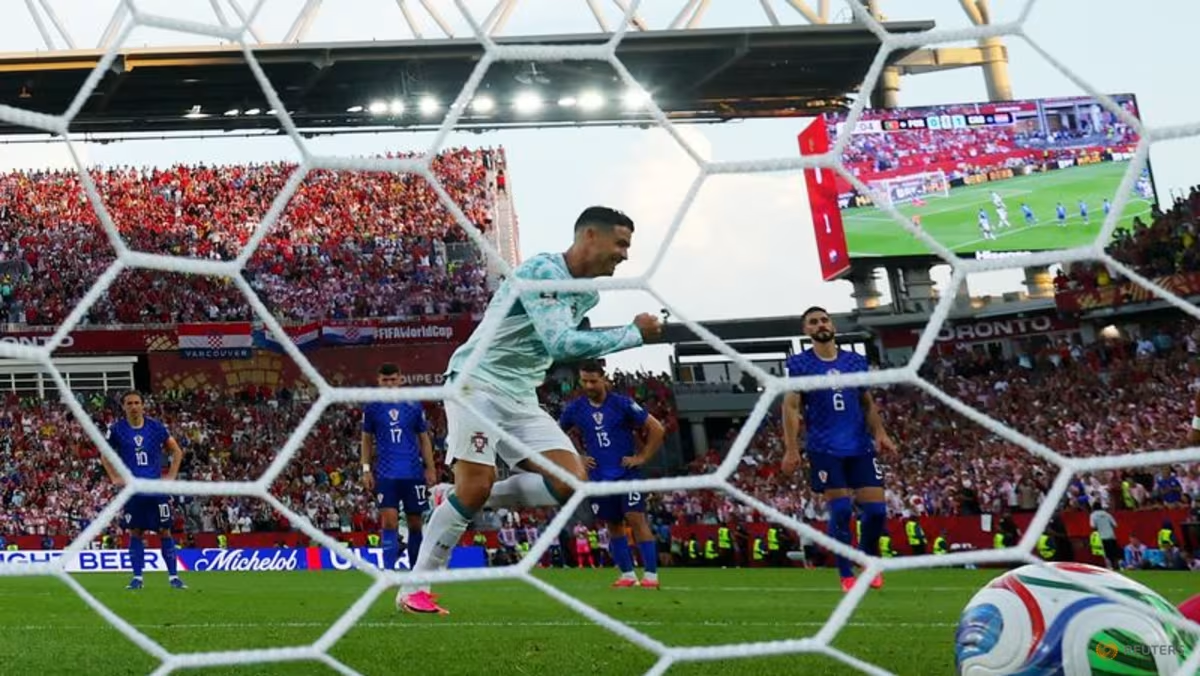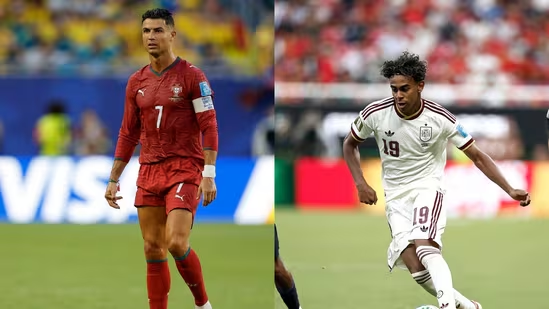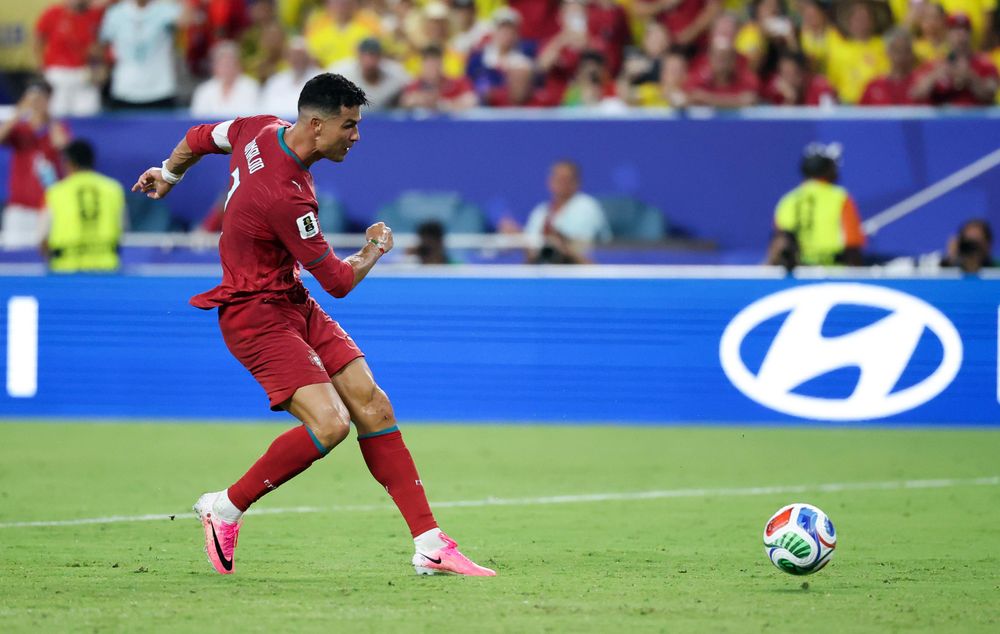
Every statistical forecast model worth its salt had Portugal among the favourites to win the 2026 World Cup ahead of the tournament.A simple glance at Roberto Martinez’s squad would have been enough to convince you the individual talent at his disposal was among the best of any nation, arguably only bettered by Didier Deschamps’ France.Despite such quality and depth, Portugal stuttered to the knockout stage with two draws and a single victory to finish second in Group K and set up a round-of-32 clash with Croatia. They still have a strong opportunity to go far in the tournament, but there is still a lingering question to answer: are Portugal actually… any good?Stylistically, Martinez wants his side to be protagonists on the ball, dominating possession and quickly regaining control when they lose it. With the technical quality they have in midfield, the profiles of Vitinha, Joao Neves and Bruno Fernandes can dominate any game by themselves with the ball. How well they can match that as the tournament’s best out-of-possession team remains a point of contention.Portugal swept Uzbekistan aside with a 5-0 victory on matchday two, but a single shot on target against DR Congo and a blank against Colombia does point to an underperformance in their chance creation.It can be hard to break down low blocks. Portugal joined Spain, England, the Netherlands and Belgium in dropping points during group games when playing against stubborn defences that look to condense space.With Vitinha at the base of midfield, Portugal’s centre-backs will often split wide during build-up – or a full-back will tuck in to help form a back three — which allows Martinez’s side to push five players on to the opposition back line and create maximum width to stretch the play.As shown above, this was a clear method of attack against DR Congo, but became an infrequent sight as the game wore on. With the match largely in front of the opposition block, Portugal’s attacking threat grew increasingly static.The Cristiano Ronaldo-shaped elephant in the room is impossible to avoid here.There were two well-taken goals against Uzbekistan, but the 41-year-old was otherwise kept largely quiet in the remaining group games — despite his, and his team-mates’, best intentions to bottleneck the attack towards him.Ronaldo’s reduced mobility has been used as a stick to beat him with, but that argument lacks perspective. According to FIFA’s data, 50 per cent of his total distance covered has been walking during this tournament — but Lionel Messi’s share has been 62 per cent.Two per cent of Ronaldo’s runs have been sprints. Messi? Just 0.9 per cent.Some of the star players of the tournament need their weaknesses to be mitigated by their team-mates, allowing them to maximise their strengths. You only need to look at the last World Cup to see how Messi’s team-mates facilitated their star man physically, to help him work his magic on the way to Argentina’s third World Cup victory.Much was spoken about the positions Ronaldo was taking up in their opening game, often keeping himself offside when DR Congo pushed up the pitch. This was viewed as a negative by some, but it was intelligent centre-forward play to occupy centre-backs outside their field of view and act as a decoy to make space for his team-mates elsewhere.
Are Portugal any good at this World Cup?
Despite a wealth of talent, Portugal drew two of their group games. Mark Carey takes a look at how they are playing
1,564 words~7 min read