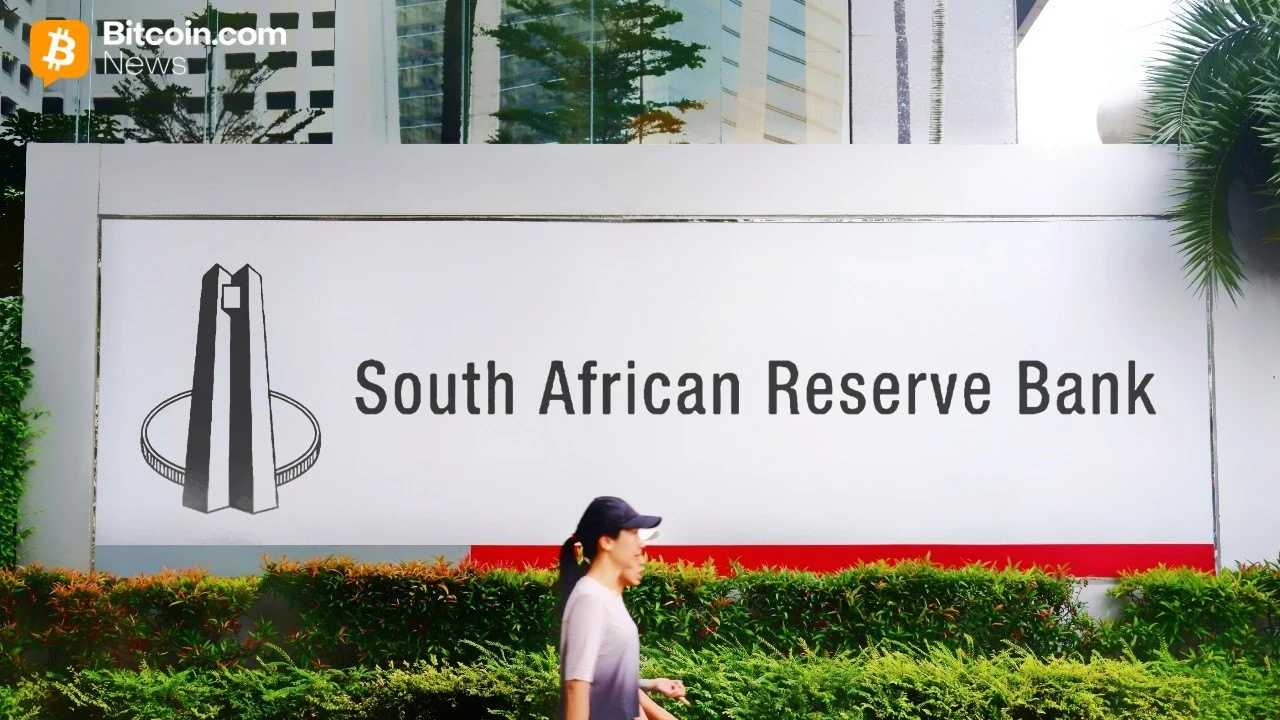
Instead of laying the groundwork for the final elimination of exchange controls ― promised by then president Nelson Mandela at the opening of parliament in 1996 ― and for our rejoining the rest of the real financial world, the specious position of South African Reserve Bank and Financial Services Conduct Authority (FSCA) bureaucrats is that cryptocurrencies and stablecoins are not really money.A recent joint communication by these two sets of regulators on the use of crypto assets in payments is presented as a measured step in consumer protection and financial stability. In substance, however, it reflects a regulatory posture out of step with market reality and our country’s own recent judicial developments. (Karen Moolman) This exclusion from money sits uncomfortably alongside the way these same assets are already treated elsewhere in law and regulation. By decreeing via regulation that has not been through parliament that digital tokens and stablecoins are not real money and are barred from legal tender status, the Bank and FSCA employees have isolated the National Payment System Act from future innovation. In so doing, they have curtailed the operation of fundamental market principles and left themselves open to constitutional challenges, simultaneously exposing once again the many masters to whom South African financial services must answer.The tension has now been sharpened by the high court in Johannesburg.In Mangundhla v South African Reserve Bank on June 1 and in direct contradiction of the recent Bank-FSCA communication, judge Stuart Wilson held that bitcoin constitutes both “money” in functional terms and “capital” for the purposes of South Africa’s exchange control framework. The court further found that offshore transfers of bitcoin may indeed constitute capital export, falling within the scope of existing regulatory controls.The significance of that finding is that crypto assets are not external to the payments system. They are part of it legally, economically and judicially.Yet our bureaucrats apply three conceptual frameworks to the same asset class: the Bank taxes crypto as property. The courts recognise it as money and capital. Payment regulators, however, purportedly wish to exclude it from functioning as money in the local payments system. This despite that it functions as such elsewhere in the international settlements arena.So, crypto is apparently real enough to tax and real enough to regulate as capital, but not real enough to use to settle a payment, at least not in our country.The same inconsistency appears in the treatment of stablecoins. Rand-pegged stablecoins are permitted within regulatory sandbox environments, while, for fear of “dollarisation”, foreign currency-pegged stablecoins are not.However, users do not adopt foreign stablecoins as a political preference. They do so as a rational response to currency volatility and long-term depreciation risk.Restricting these instruments certainly does not eliminate them. It simply narrows the channels through which their demand can be expressed, pushing activity into less transparent pathways.For fintech firms operating in this environment, the regulatory compliance burden is significant. Crypto asset service providers must obtain financial services licensing under the Financial Advisory and Intermediary Services Act and comply with extensive obligations under anti-money-laundering, tax, consumer protection and corporate reporting regimes.Yet, they remain excluded from the core clearing and settlement infrastructure governed under the National Payment System framework.This creates a structural imbalance: full compliance responsibilities on one side, largely excluded from market access on the other.More broadly, financial services firms find themselves accountable to multiple, overlapping regulatory authorities and regimes. These include the Bank, FSCA, Financial Intelligence Centre, South African Revenue Service (Sars), the National Credit Regulator and innumerable statutory reporting frameworks covering tax, labour, corporate governance and information protection and various ombudsmen.The cumulative effect is a system in which financial intermediaries must answer to multiple masters, frequently with overlapping mandates yet divergent expectations. The result is escalating compliance costs, regulatory uncertainty and growing barriers to entry.Section 22 of the constitution protects the right to choose a trade, occupation or profession. Such regulation must be rational and justifiable in an open and democratic society.If an entire category of economic activity is excluded from core financial infrastructure, despite being recognised by the courts as money and capital, the rational basis for that exclusion becomes all but impossible to sustain.Section 25 of the constitution protects property, including intangible financial interests. Crypto assets are already treated as property for tax purposes and as capital for exchange control purposes. Those same assets are now proposed to be excluded from ordinary economic functionality without a cogent legal rationale.Section 33 and the Promotion of Administrative Justice Act require administrative action to be lawful, reasonable and proportionate. Blanket exclusions of entire asset classes are clearly difficult to justify if more targeted regulatory tools exist, such as risk-based licensing, exposure limits or tiered participation in payment systems.The high court’s finding that bitcoin is money and capital removes the key conceptual foundations relied upon to justify exclusion from the payment infrastructure. It is no longer plausible to argue that crypto falls outside the financial system while regulating it as inside that system for most other legal purposes.South Africa now operates with an incoherent, fragmented regulatory architecture for digital assets:Sars treats crypto as taxable property. Courts recognise it as money and capital. Payment regulators exclude it as money from monetary functionality. Taken together, these create a system that is difficult to reconcile with legal coherence or policy certainty.This fragmentation is reinforced by institutional complexity. Financial market participants must navigate a dense network of regulatory authorities often exercising overlapping mandates. The result is a system that is now difficult to describe as unified financial regulation and more accurately characterised as layered supervision without policy alignment.South Africa’s policy drift is particularly relevant as Brics economies race ahead, exploring alternative settlement systems based on blockchain infrastructure and multicurrency digital mechanisms.The high court judgment underscores this divergence. By locating crypto assets in the legal categories of money and capital, South African jurisprudence is moving closer to global reality, even as the Bank–FSCA framework attempts to resist it.The central issue is no longer whether crypto assets exist in the South African financial system; the courts have resolved that question.The issue now is policy coherence.The joint communication shows a clear desire by regulators to maintain total control over an antiquated monetary system in the established “we-know-best” tradition. However, attempting to halt decentralised financial innovation by crudely excluding it from legacy legal definitions is an entirely unsustainable strategy.By building a rigid legal wall between traditional payment networks and digital assets, the Bank and FSCA have merely driven it into unmonitored territory, stifled local fintech development, and left the state’s financial policies exposed to constitutional challenges in a digital backwater.Rather than protecting the economy, this outdated approach ensures that South Africa remains a passive backwater observer in the global evolution of business and the digital exchange of value.• Benfield, a retired professor in the department of economics at the University of the Witwatersrand, is a senior associate and board member of the Free Market Foundation.
BRIAN BENFIELD | Taxed by one, banned by the other: a fragmented crypto regime
Bank and FSCA exclude cryptocurrencies and stablecoins from legal tender status despite them being taxed as property and recognised by courts as money and capital
1,146 words~5 min read