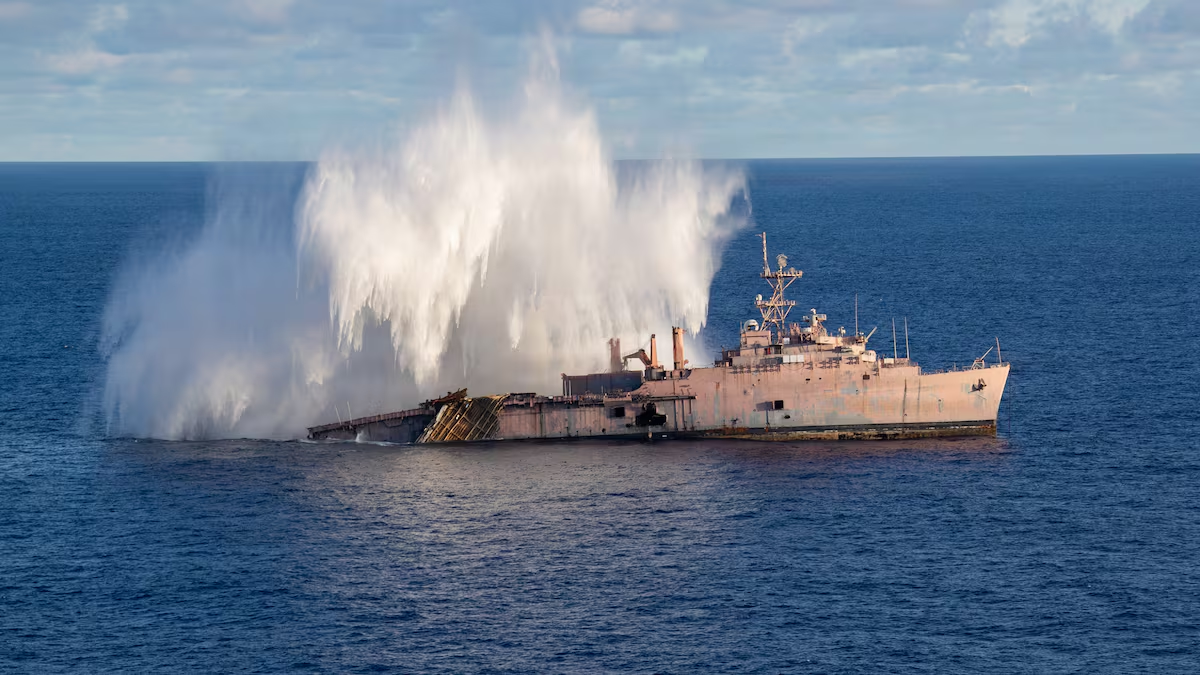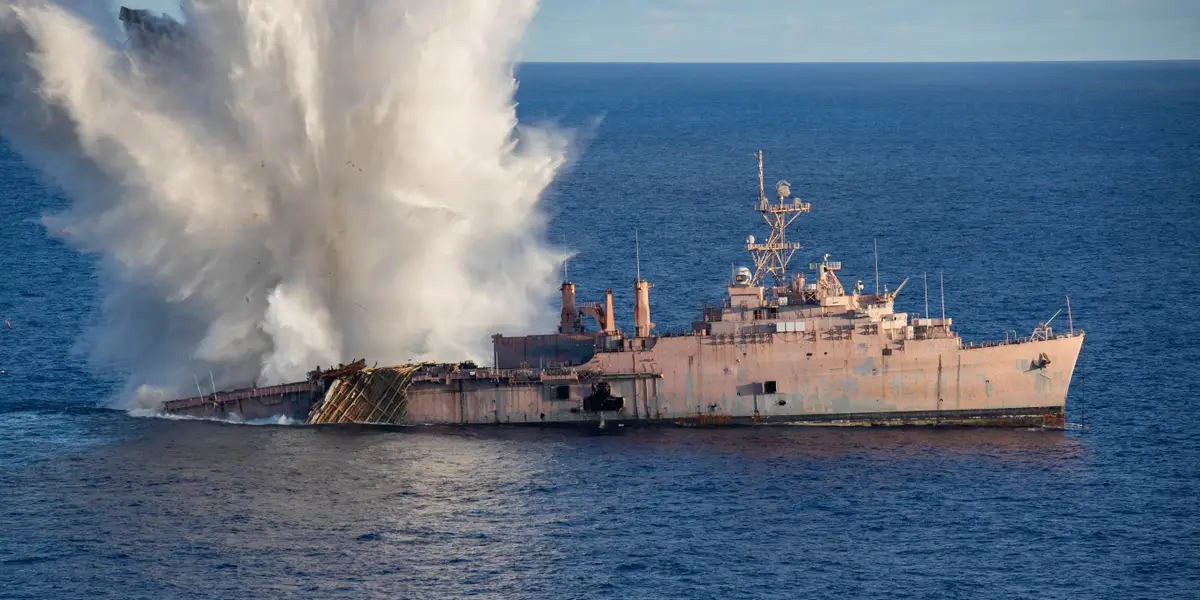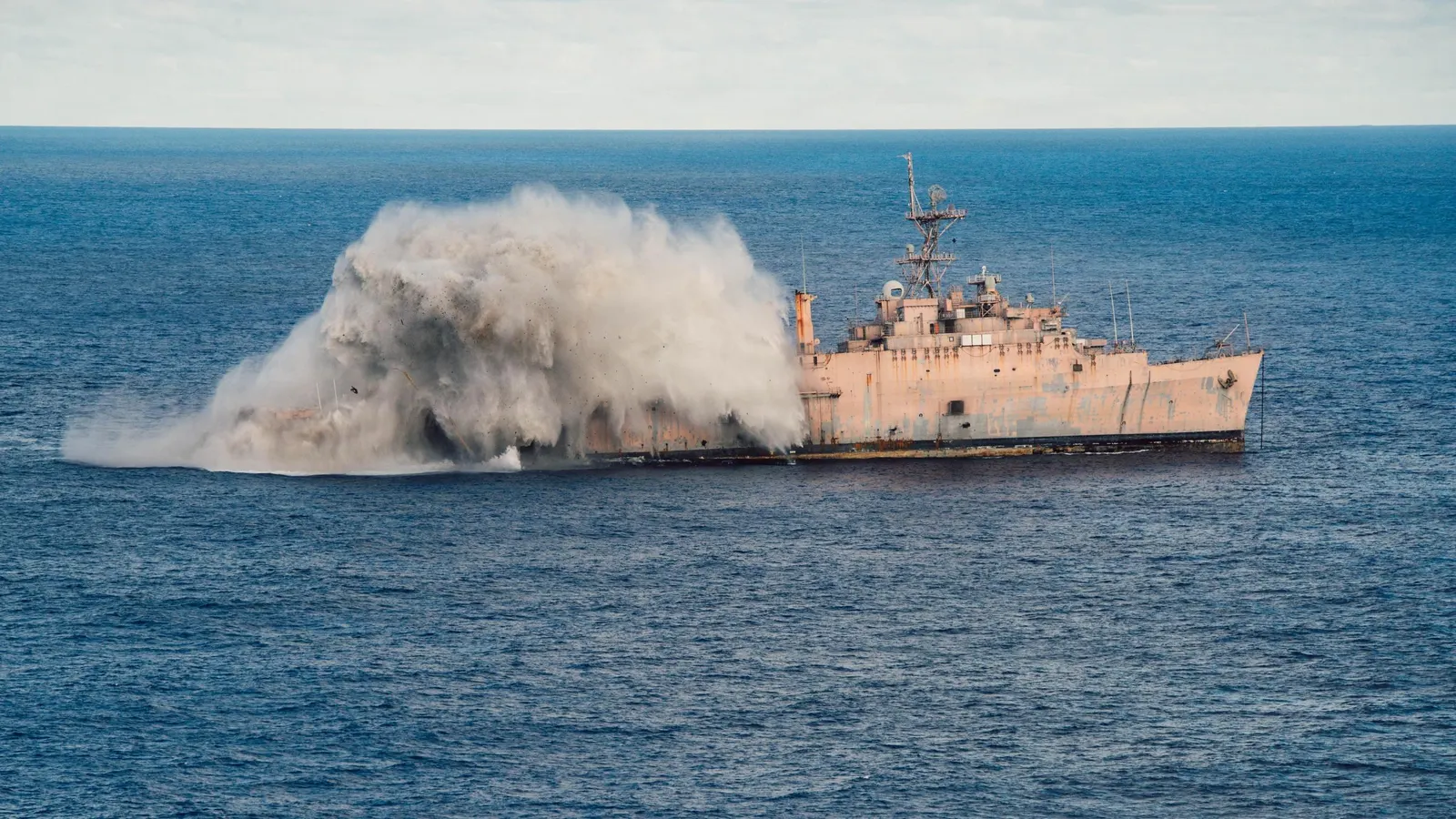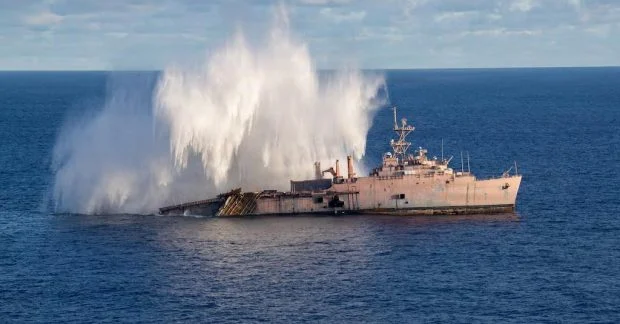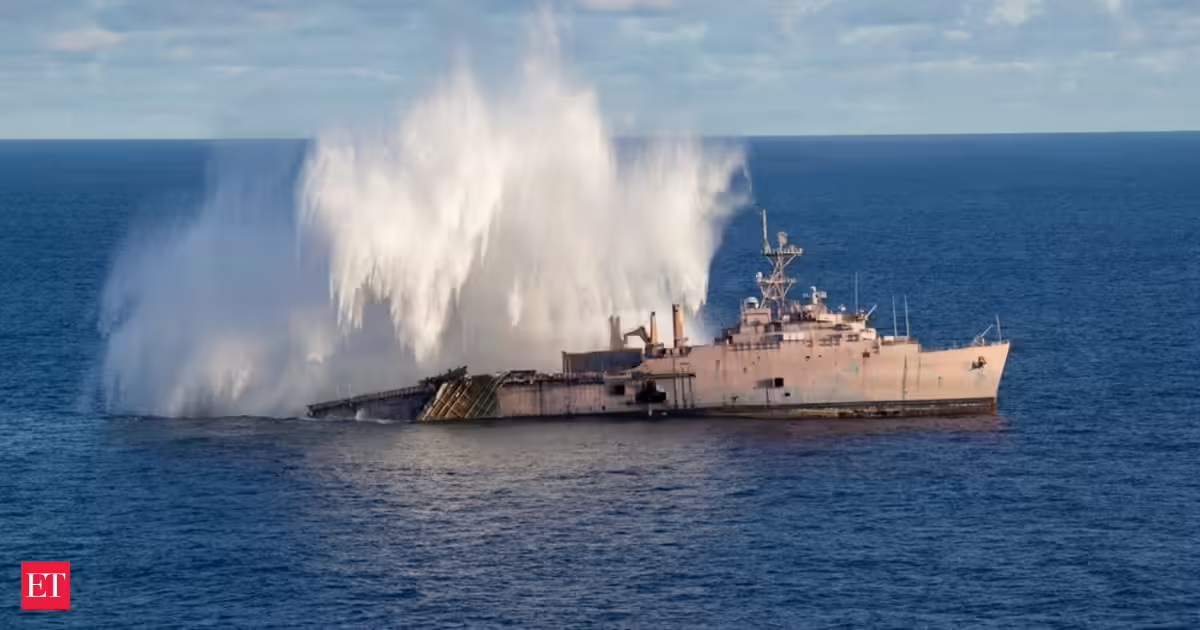
For nearly 40 years, USS Juneau carried Marines into war zones, delivered aid after some of the world's deadliest disasters, and served as a symbol of America's amphibious military power. Now, the Austin-class amphibious transport dock has reached its final resting place, on the floor of the Pacific Ocean.The decommissioned USS Juneau (LPD-10) was deliberately sunk during the ongoing Valiant Shield military exercise on June 27, after a torpedo fired by a Japan Maritime Self-Defense Force submarine sent the retired warship beneath the waves more than 200 nautical miles off the Mariana Islands Range Complex, according to USNI News.A final mission decades after retirementThe sinking formed part of a SINKEX (sinking exercise), a military drill designed to provide realistic training that cannot be replicated through simulations.“This SINKEX provided an outstanding opportunity for our joint team to integrate capabilities across domains, honing the lethal precision and coordination essential for high-end maritime operations in the Pacific theater,” said Rear Adm. Eric Anduze, commander of Carrier Strike Group 5 and Task Force 70, in a press release.The exercise took place during Valiant Shield 2026, a biennial multinational training event involving the United States, Japan, Australia, Canada and New Zealand. The drills focus on detecting, tracking and engaging threats across sea, air, land, space and cyberspace. Before the exercise, the Navy subjected Juneau to an extensive environmental remediation process.According to the Navy, every vessel designated for SINKEX undergoes rigorous cleaning, including the removal of liquid polychlorinated biphenyls (PCBs), petroleum products, mercury-containing materials, floatable debris and other hazardous substances. Environmental and quality assurance officials inspect the ship before approval is granted for sinking.A ship built for amphibious warfareUSS Juneau was the third U.S. Navy vessel to bear the name of Alaska's capital city. Constructed by Lockheed Shipbuilding & Construction Co. in Seattle, the ship was laid down on January 23, 1965, launched on February 12, 1966, and officially commissioned on July 12, 1969.As an Austin-class amphibious transport dock, Juneau was designed to transport Marines, landing craft, helicopters, vehicles, and heavy equipment directly into amphibious assaults. Stretching 570 feet in length, the behemoth could carry approximately 860 troops while operating multiple helicopters and amphibious landing craft.Its crest reflected its namesake city, featuring Alaska's Sitka spruce and mountain landscape, while alligators on the insignia symbolized the Navy's amphibious forces and their ability to bridge land and sea.From Vietnam to the Persian GulfJuneau entered operational service during the Vietnam War era. On its maiden deployment in 1970, the ship participated in Operation Keystone Robin Alpha, helping transport US Marines and equipment home from South Vietnam as American involvement in the conflict gradually wound down.In the years that followed, the vessel supported several notable military operations. It participated in the Amchitka Nuclear Test Operation in 1971, supporting activities surrounding the Cannikin underground nuclear test in Alaska.During the 1976 Bicentennial celebrations, Juneau visited its namesake city of Juneau, Alaska, where residents welcomed the crew in what the ship's historian described as "a real frontier welcome."The ship later deployed during Operation Desert Shield and Operation Desert Storm after Iraq invaded Kuwait in 1990. Operating with a large amphibious task group, Juneau transported Marines, helicopters and military equipment throughout the Persian Gulf as coalition forces prepared for and executed operations to liberate Kuwait.When the warship became a humanitarian lifelineWhile built for combat, some of Juneau's most significant contributions came during humanitarian crises. Following the catastrophic Exxon Valdez oil spill in Alaska in 1989, the ship became the command-and-control center for military support operations, the US Navy website notes. It housed hundreds of civilian workers, coordinated cleanup efforts, and provided medical care, communications, and transportation for response teams.In 1991, shortly after the Gulf War, Juneau was redirected to the Bay of Bengal for Operation Sea Angel, the multinational relief effort launched after a devastating cyclone struck Bangladesh, killing more than 138,000 people and leaving millions homeless. The ship served as the primary control vessel for landing craft delivering humanitarian assistance along the Bangladeshi coast.Years later, while forward-deployed in Japan, Juneau again shifted from military missions to disaster response.After landslides devastated parts of the Philippines in 2006, the ship supported medical outreach missions in remote communities. Navy and Army medical teams treated more than 11,000 people and hundreds of animals, while Marine engineers built schools in affected areas.In 2008, the vessel also joined international relief efforts following Cyclone Nargis off Myanmar, although restrictions imposed by the country's military government limited direct aid delivery.From Pearl Harbor to the Pacific floorUSS Juneau was decommissioned on October 31, 2008, ending nearly four decades of active naval service. Following retirement, the ship remained berthed at the Naval Sea Systems Command Inactive Ships On-Site Maintenance Office at Pearl Harbor, awaiting disposal.Seventeen years later, that wait ended. Rather than being dismantled for scrap, the veteran warship undertook one final assignment, helping American and allied forces sharpen combat readiness during one of the Indo-Pacific's largest military exercises.
USS Juneau's final mission: After serving in Vietnam, the Gulf War and disaster relief, a Japanese torpedo sends this piece of history to the Pacific seabed
The USS Juneau, a veteran amphibious transport dock with a distinguished 40-year career, has been deliberately sunk in the Pacific Ocean during a military exercise. After serving in conflicts like Vietnam and the Persian Gulf and providing crucial humanitarian aid after major disasters, the decommissioned ship was used for a SINKEX to enhance joint military readiness.
816 words~4 min read