The Department of Veterans Affairs began enrolling veterans in its first-ever clinical trial of therapy assisted by MDMA, or Ecstasy, in May 2026. The program targets treatment-resistant PTSD and alcohol use disorder. The announcement did not come with a major press rollout. But for veterans who have cycled through medication management, group therapy, prolonged exposure, cognitive processing therapy and residential programs — and are still struggling — it landed anyway. The trial is real, and it is a meaningful step. It is also, by design, small, tightly controlled, and years away from producing results. Veterans reading about it should understand both of those things at once.
What the VA’s MDMA Trial Is
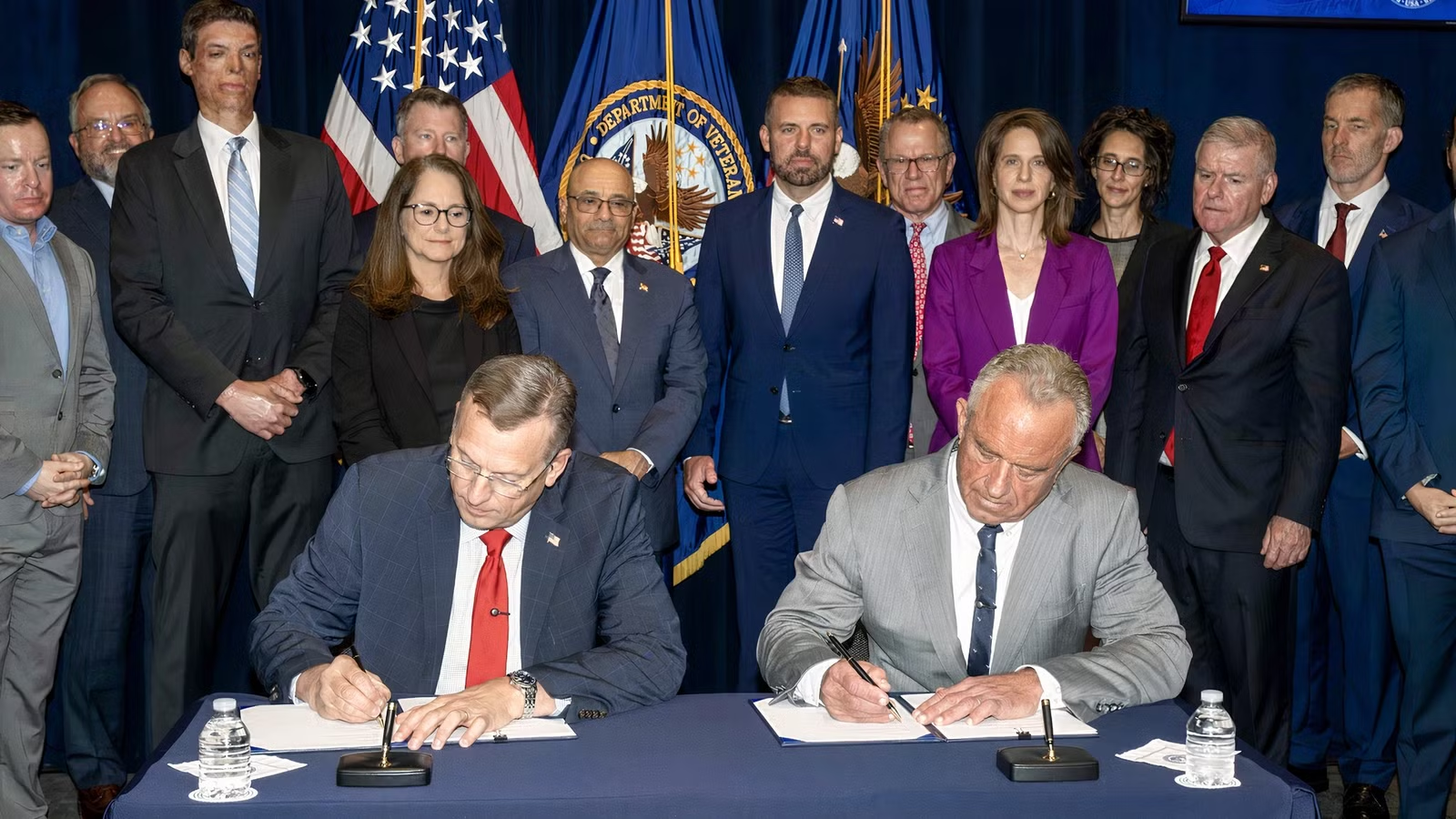
The VA trial, registered at ClinicalTrials.gov as NCT0711883, is formally titled “A Randomized Controlled Trial of MDMA-Assisted Therapy for PTSD and Alcohol Use Disorder in U.S. Veterans.” Enrollment began May 18, 2026. The study is led by Dr. Erica M. Eaton at the Providence VA Medical Center in Rhode Island, with a second site at the VA Connecticut Healthcare System in West Haven. Approximately 80 veterans will be enrolled. The design is randomized and placebo-controlled, meaning participants are randomly assigned to receive either MDMA-assisted therapy or an identical structured therapy session with an active placebo. The double-blind structure is specifically what the FDA said it needed before it would reconsider MDMA therapy for PTSD after declining to approve it in August 2024. The trial targets a population the VA's existing treatment menu has not served well: veterans with severe PTSD and a co-occurring alcohol use disorder. Both conditions must be present. Both must be treatment-resistant. Results are expected in May 2030. The trial is part of a broader VA psychedelic research initiative supported by more than $23 million in external grants across 19 active studies, further accelerated by President Trump's April 2026 executive order directing federal agencies to fast-track psychedelic therapy research and allocating $50 million through ARPA-H for state programs. Read More: Ibogaine, LSD and Psilocybin: Trump’s New Order a Medical ‘Turning Point’