Dear reader, I’ve had enough. In my decades as Money Mail’s savings expert, I’ve seen my share of banking scandals and let-downs.The financial crisis, when we taxpayers were left on the hook for bank bailouts. Online banking systems going down, leaving our payments in limbo. Mass branch closures, with banks abandoning high streets in their droves.Time and again, we give our bank the benefit of the doubt, believing it to be on our side as a trusted custodian of our savings. After all, most of us stick loyally with the same current account provider from young adulthood to old age.But this month marks three years since rules to enforce better treatment of savers came in – and the banks have paid no more than lip service to them. As I reveal today, very little has improved.Their cavalier attitude – bordering on contempt – for the responsibilities imposed by the Financial Conduct Authority (FCA) makes it hard to believe they have our best interests at heart. It’s starting to look like the final proof that they are exploiting our loyalty, making millions from our nest eggs while handing just a fraction back to us. Regular saver accounts offer decent rates, but huge restrictions. Some are also only available if you run a certain type of current accountHigh street banks are offering pitiful rates of 1 per cent on popular easy-access accounts – little better than when they were rebuked for low rates three years ago.If you have ever opened a main savings account from your current-account provider, this is where your money will be festering. If you once opened a top-paying account and didn’t move your money when the deal expired, you are likely to be in one of these miserly accounts, too.Banks are very secretive about how much of our money they hold in easy-access accounts. But industry insiders tell me it’s likely to be about £800 billion.Think of the billions of pounds of lost interest savers could be earning. It breaks my heart to think of the difference that could make to millions struggling to balance their budgets.I feel compelled to speak out now because it wasn’t supposed to be like this. Cast your mind back three years, when inflation was soaring and the Bank of England was raising interest rates to curb it – reaching 5.25 per cent for a year from August 2023.As the base rate soared, high street banks obstinately refused to put up their easy-access rates. Savers lost billions of pounds in real terms as inflation eroded the value of their nest eggs. The UK’s four largest banks – Barclays, HSBC, Lloyds and NatWest – all offered less than 1 per cent on some easy-access savings accounts.The outcry was deafening. Money Mail relaunched its Give Savers A Rate Rise campaign. The Treasury Committee read the riot act to big banks over the dreadful rates that they paid savers, accusing them of ‘blatant profiteering’ and telling them to get their act together. The Government chimed in with the same message.The FCA then introduced Consumer Duty rules to much fanfare, which promised to solve the problem. These state financial firms must offer ‘good outcomes’ to their customers.Surely, I thought, a bank couldn’t argue that a sub-1 per cent savings rate is a ‘good outcome’ when their competitors offer three or four times that amount?Surely bank bosses couldn’t say with a straight face that a savings rate more than three percentage points lower than the base rate offered the ‘fair value’ that the rules state banks must provide?Well, it turns out they are more brazen than I thought. Big banks are still running their duff easy-access accounts with awful rates.In fact, they made record profits last year by raising their net interest margin – the difference between what they pay savers on deposits and charge borrowers.High street banks pocketed more than £44 billion last year from the gap – a 10 pc rise on the £39.7 billion in the previous year.When I asked the FCA last week how banks get away with paying 1 per cent or less on some accounts, I was told: ‘Savers deserve to get the most from their money. With plenty of accounts offering over 4 per cent, it’s worth shopping around.’There you have it. Despite the promises, it’s all down to us. I’ve concluded that these accounts aren’t going to go away.How do they get away with it?The regulator is not a price monitor – it shied away from coming out with a minimum standard interest rate that providers should pay.All the big banks tell me they comply with the rules – not to do so could lead to a fine from the FCA. But, instead of bumping up rates on ordinary easy-access accounts, they offer a raft of niche accounts with better rates targeted at a particular type of saver.Then if anyone asks why their easy-access rates are so low, they can point to these accounts and say other options are available.Among them are regular saver accounts for those building a rainy day fund. If that is you, make the most of them (see my picks on the next page).There are also higher rates for those willing to limit how often they withdraw money. Banks are also better at telling us what rate we are getting, what we could earn by switching to another of their accounts – and how to do it.Are you being stung?Don’t think you’re safe because you had a good rate in the past. Most high street banks offer a top rate for a fixed period – then dump your cash in a low-paying easy-access account when it’s over. If you open one of these, make a note of when the rate changes in your diary. Your provider will tell you – but it’s easy to overlook the letter or email.I’ve scrutinised the 25 lowest-paying accounts and the main banks – the big four along with Santander and TSB (now part of Santander) – take up 15 places.Add in Bank of Ireland, where money in a Post Office account ends up, and it rises to 17, along with a smattering of small banks and building societies.The worst is Ikano Bank at 0.16 per cent, but this account was closed to new savers years ago. Old Cynergy Bank Online Saver accounts also pay a pittance at 0.5 per cent.But next come accounts from the huge Lloyds Banking Group – Halifax, Lloyds and Bank of Scotland – paying just 0.75 per cent.You can end up in their dreadful closed accounts – Halifax Instant Saver, Lloyds Bank Standard Saver and Bank of Scotland Instant Access Saver – once you have been in their higher-paying easy-access accounts with bonuses or withdrawal restrictions for a year.The awful Santander Everyday Saver at 0.9 per cent is also a closed account in which you can end up after a year.TSB pays as little as 0.9 per cent too, while at Barclays it’s 1 per cent.Although HSBC just missed the table with its Flexible Saver, the rate is as low as 1.05 per cent. This is less than half the average 2.53 per cent paid on easy-access accounts on sale now, according to data scrutineer MoneyfactsCompare. Even this average rate is not enough to guard your nest egg from the ravages of inflation. This stands at 2.8 per cent – but could go higher.It’s the minimum rate you need to ensure your money retains its purchasing power as prices rise. The UK’s four largest banks – Barclays, HSBC, Lloyds Banking Group and NatWest Group - all offered less than 1% on some easy access savings accountsBest of the bunch Regular saver accounts offer decent rates, but severe restrictions. Some are also only available if you hold a certain type of current account.For example, Barclays Rainy Day Saver pays an above average 3.96 per cent. It’s designed for you to build up your first £5,000 and you can put money in and take it out at any time. But go over the limit and you’ll only get 0.7 per cent on anything above £5,000.Santander pays 6 per cent on its Santander Edge Saver, but only on up to £4,000 and the rate falls to 3.5 per cent after a year.Its online offshoot Cahoot pays 5 per cent on the first £3,000 in the Sunny Day Saver account – and you don’t need a current account to open one. But the account only lasts for a year before you are moved to one paying 1 per cent. With these three accounts you can put money in as and when you want.Santander has just launched a regular saver for its current account holders at a top 8 per cent, including a 5 percentage-point bonus for 12 months on savings of up to £200 a month.If you save this maximum for a year you end up with £2,504 including £104 interest.NatWest Digital Regular Saver is also a no-brainer for its current-account holders looking to start saving. You can put in £1 to £150 a month and it pays 5.25 per cent. The most you can save in the account at this rate is £5,000. If you save £100 a month, you would have £1,234 after 12 months including £34 interest.Lloyds has a regular saver paying up to 6.25 per cent if you put away £25 to £400 monthly. But after a year your money is dumped into its Standard Saver paying a dreadful 0.75 per cent.Even if you saved the maximum in these accounts, it would not be sufficient to build a large enough emergency fund – advisers recommend saving up to six months’ salary.These are not the very top rates – smaller banks and building societies pay more.And if you have a lump sum, a regular savings account won’t be a good deal as you can only drip feed it rather than earn the good rate from the start.Do the big 4 have other accounts?Yes, but they’re not really worth it – you would do much better going elsewhere.Some do pay better rates, but you need to jump through hoops to get them. For example, the top easy-access rate is still only 3.35 per cent. It’s from HSBC’s Online Bonus Saver. But if you make a withdrawal, you only earn its standard rate of 1.05 per cent.The Halifax Reward Bonus Saver pays 3 per cent and limits you to two withdrawals a year. Go over that and your rate drops to 0.65 per cent for the rest of the year.Then after 12 months you get shifted into its Instant Saver which pays 0.75 per cent on up to £25,000, 0.9 per cent if you have up to £100,000 in your account and only 1 per cent on more.Lloyds and Bank of Scotland have similar accounts. Why put up with these when Secure Trust Bank pays 4.21 per cent with no withdrawal restrictions?There are also better rates on the high street – such as Coventry 3 Access Saver at 4.3 per cent, allowing up to three withdrawals a year. If you are tempted by the Coventry account make a note in the diary. It runs for just a year. You can find the top accounts in my best buy tables.So, reader, I give up hope that the big banks will change their ways – or that the regulator will use its might to force them.It is up to us to move our money around to get the best deals. The one thing you can rely on is that I’ll print the top accounts in these pages every week to help you find the best home for your money.
How your bank is ripping you off, and how to fight back: SYLVIA MORRIS
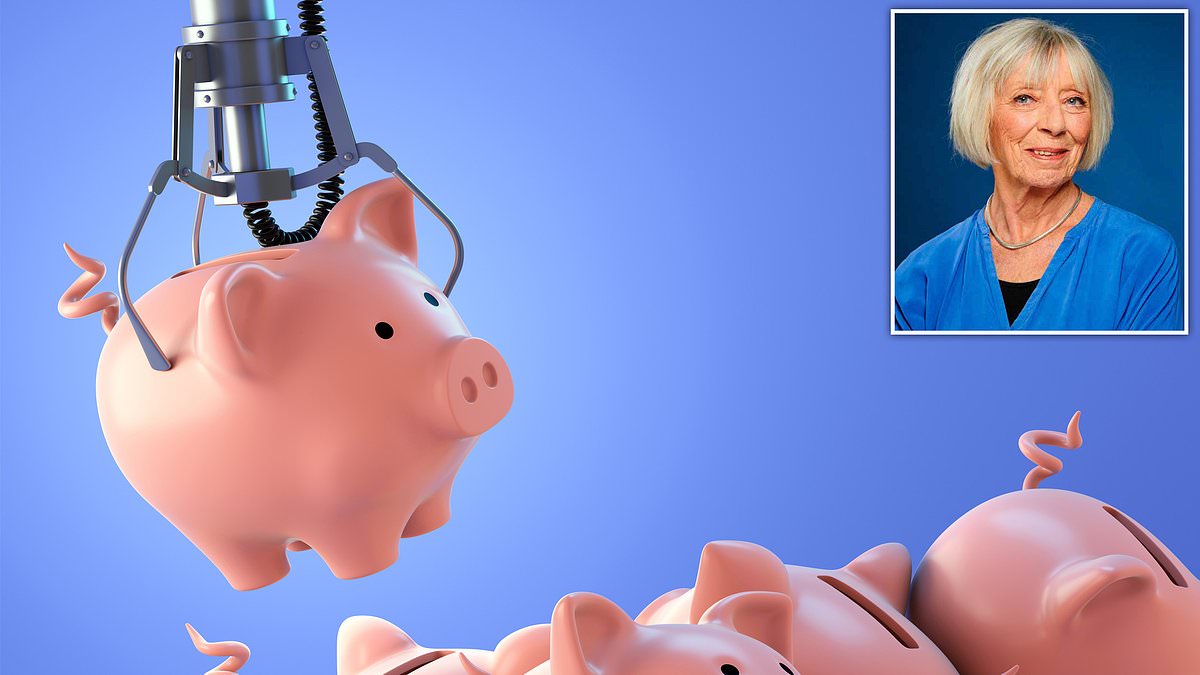
High street banks are still offering pitiful rates of 1% on their popular easy-access accounts - little better than when they were rebuked for low rates three years ago.
1,938 words~9 min read