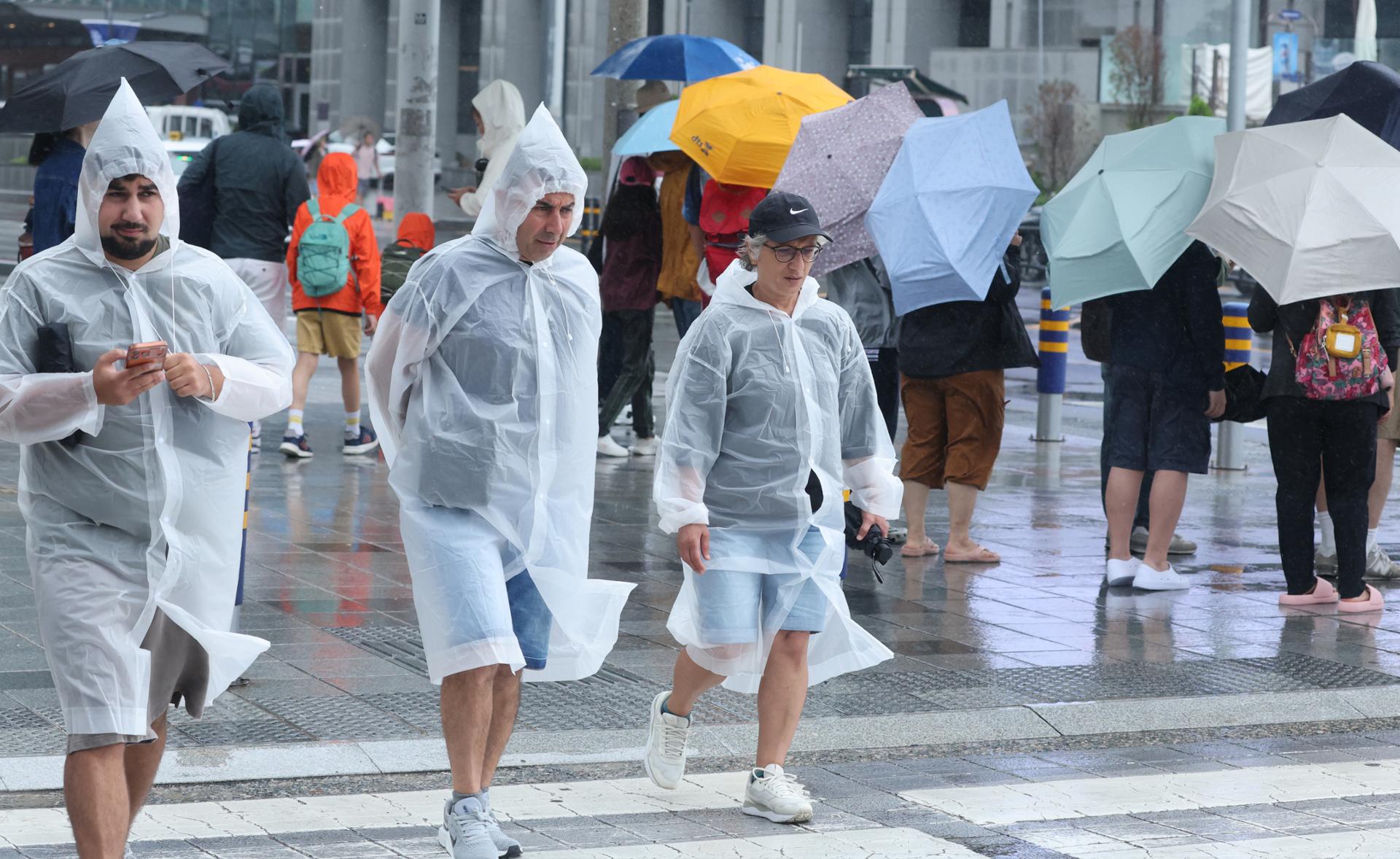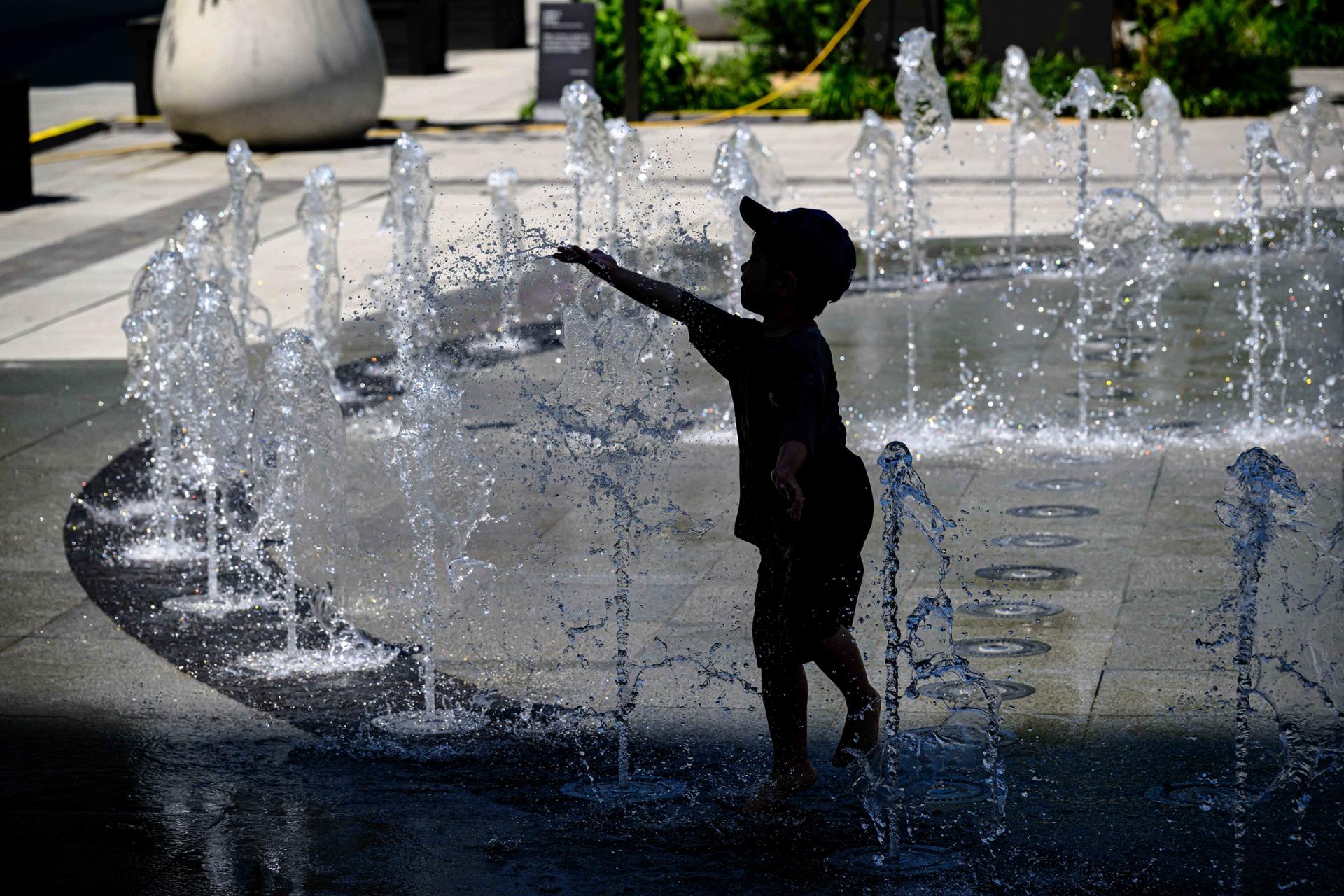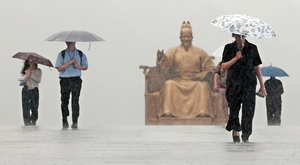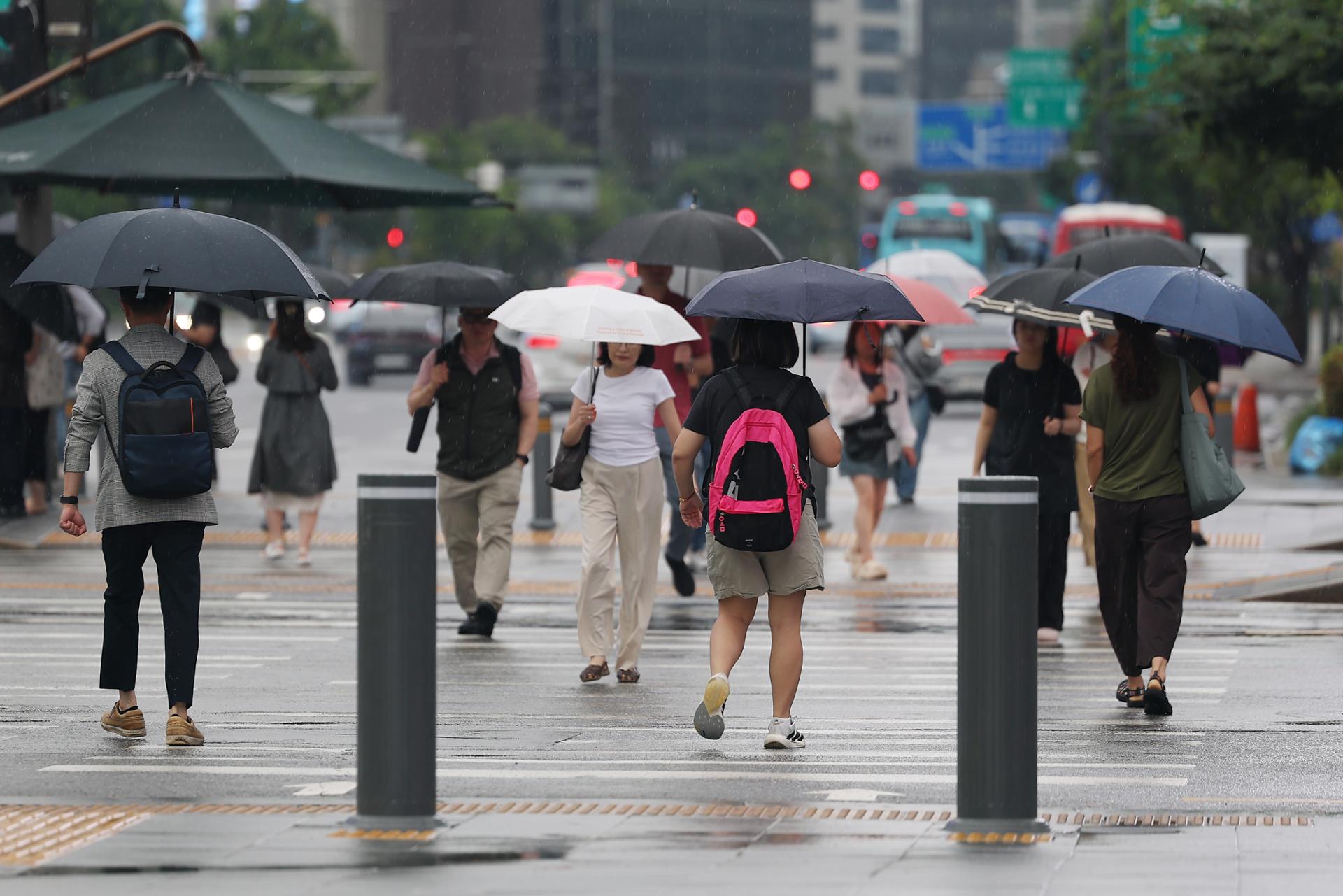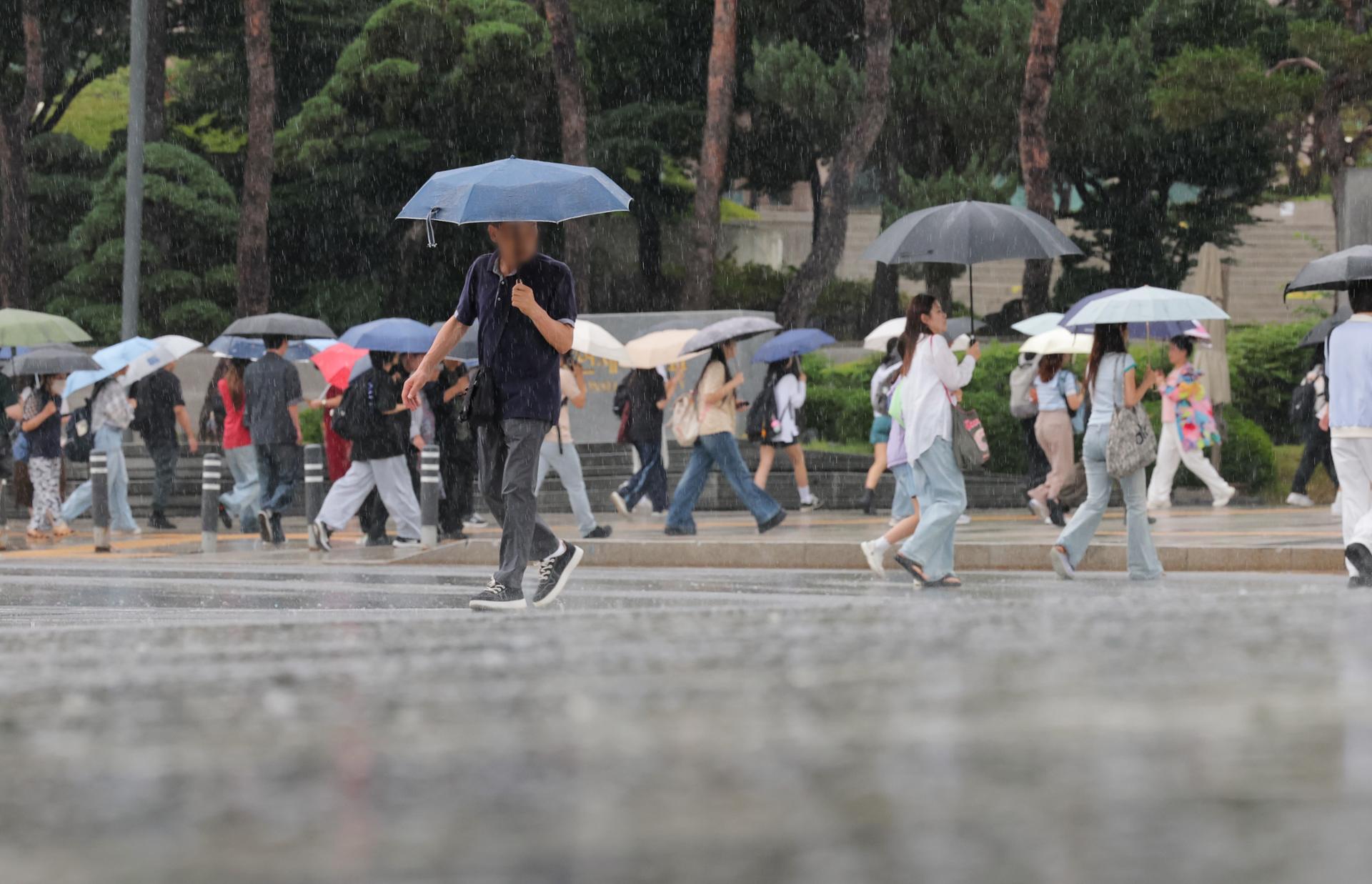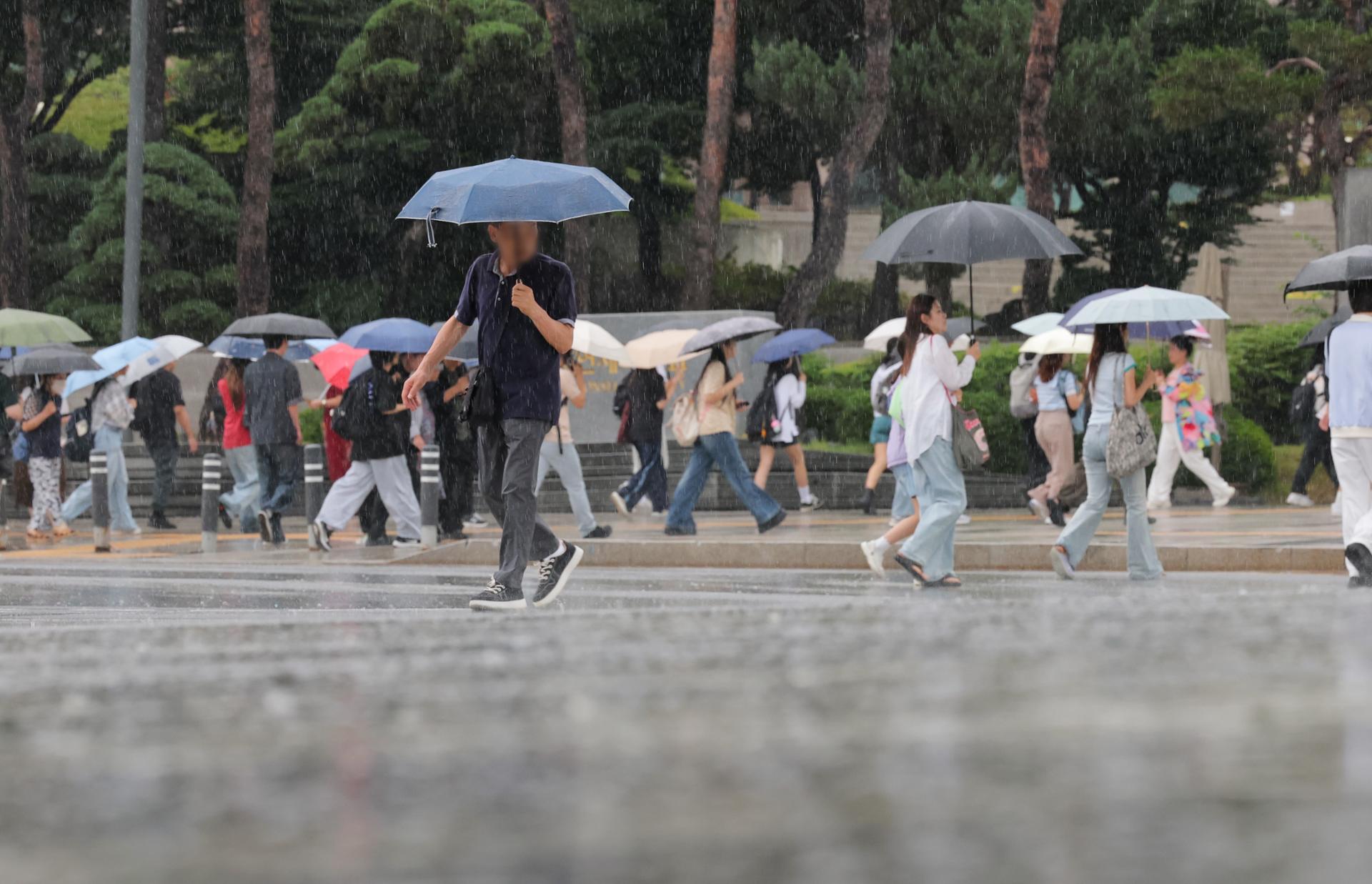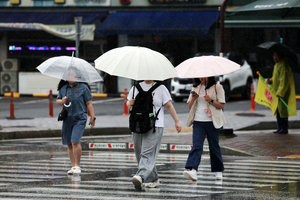
South Korea's annual rainy season began in the country's southern regions on Wednesday, bringing heavy downpours to the south while leaving Seoul and much of central Korea hot, humid and outside the influence of the seasonal rain front. Pedestrians walk with umbrellas along a street in Ochi-dong, Buk-gu, Gwangju, on July 1 as this year's first jangma rain falls in the region. (Yonhap) The Korea Meteorological Administration said the seasonal rain front could produce downpours of up to 30 millimeters an hour in some areas, with heavy rain advisories possible.Seoul, the capital region and much of central Korea, however, remain outside the influence of the rain front. Instead, forecasters expect mostly cloudy skies, isolated afternoon showers and muggy conditions, with daytime highs reaching around 33 degrees Celsius.The KMA said it is too early to determine whether the current rain front will continue moving north and mark the official start of the rainy season in central Korea, as its track remains uncertain.This year's rainy season arrived later than usual, as cold, dry air from the north -- around minus 15 degrees in the upper atmosphere -- delayed the formation of the monsoon front.The monsoon typically begins on June 19 on Jeju Island, June 23 in the southern region and June 25 in the central region, based on the 1991–2020 average.
Rainy season begins in south; Seoul stays hot, humid with isolated showers
South Korea's annual rainy season began in the country's southern regions on Wednesday, bringing heavy downpours to the south while leaving Seoul and much of ce
220 words~1 min read