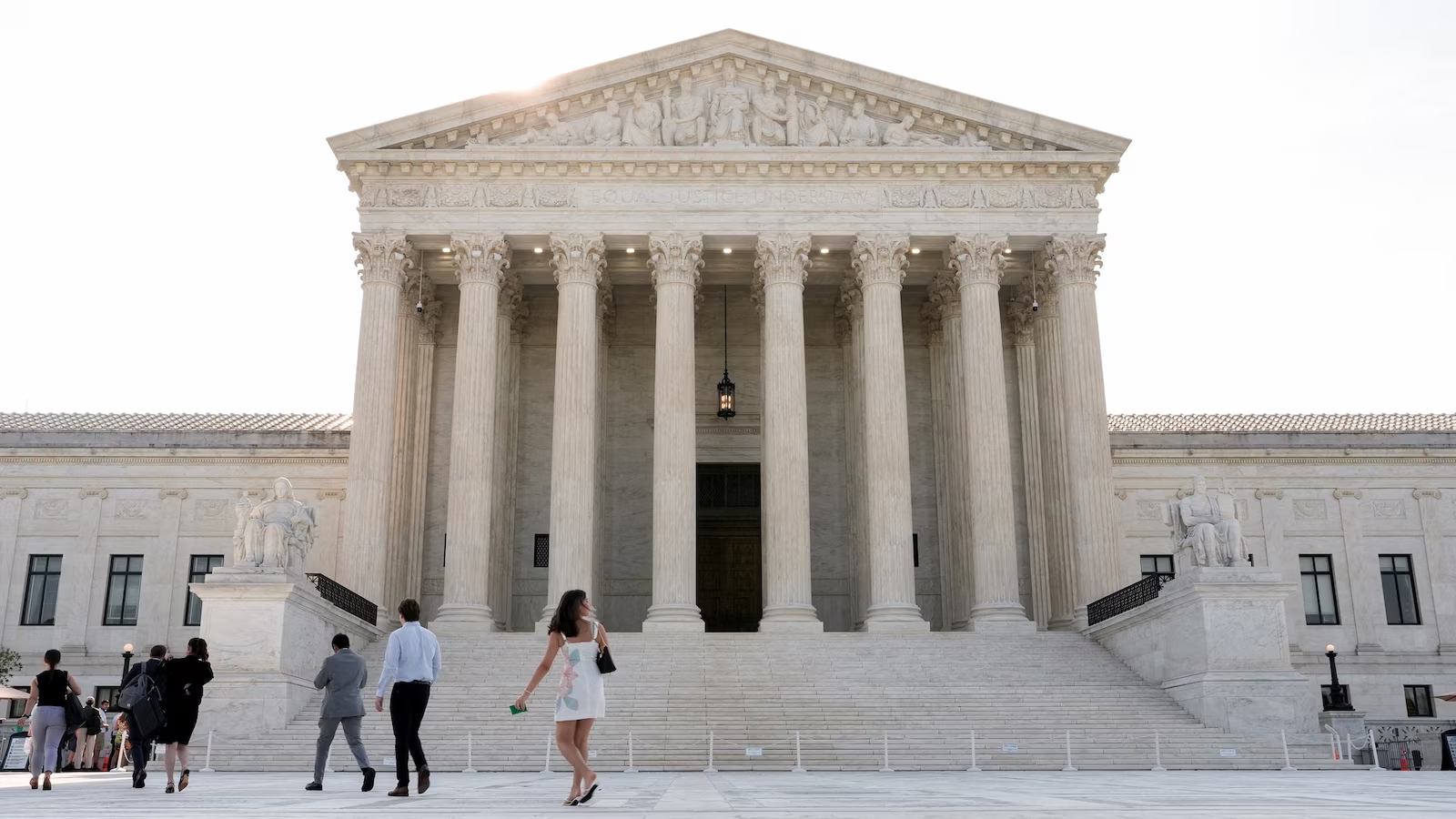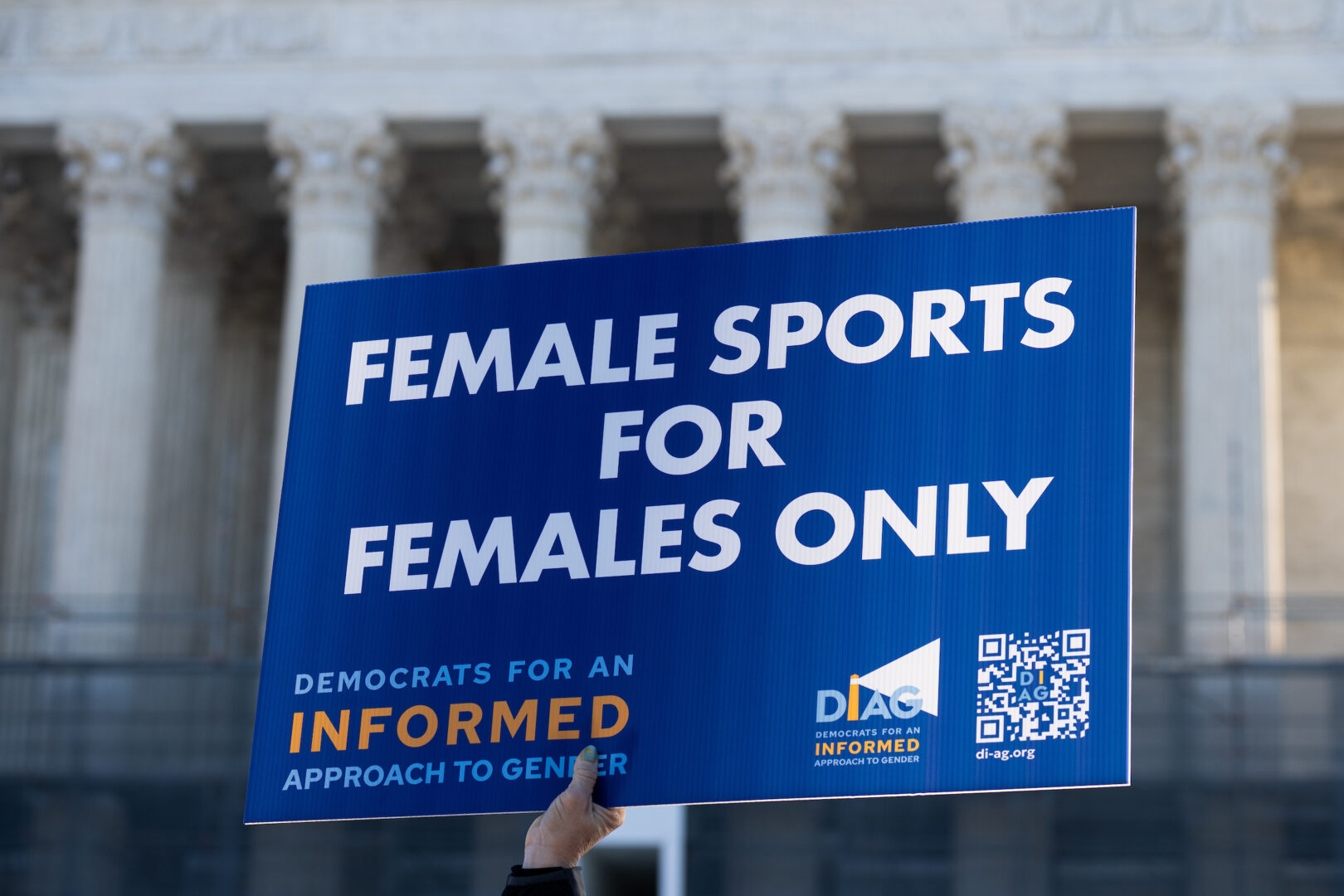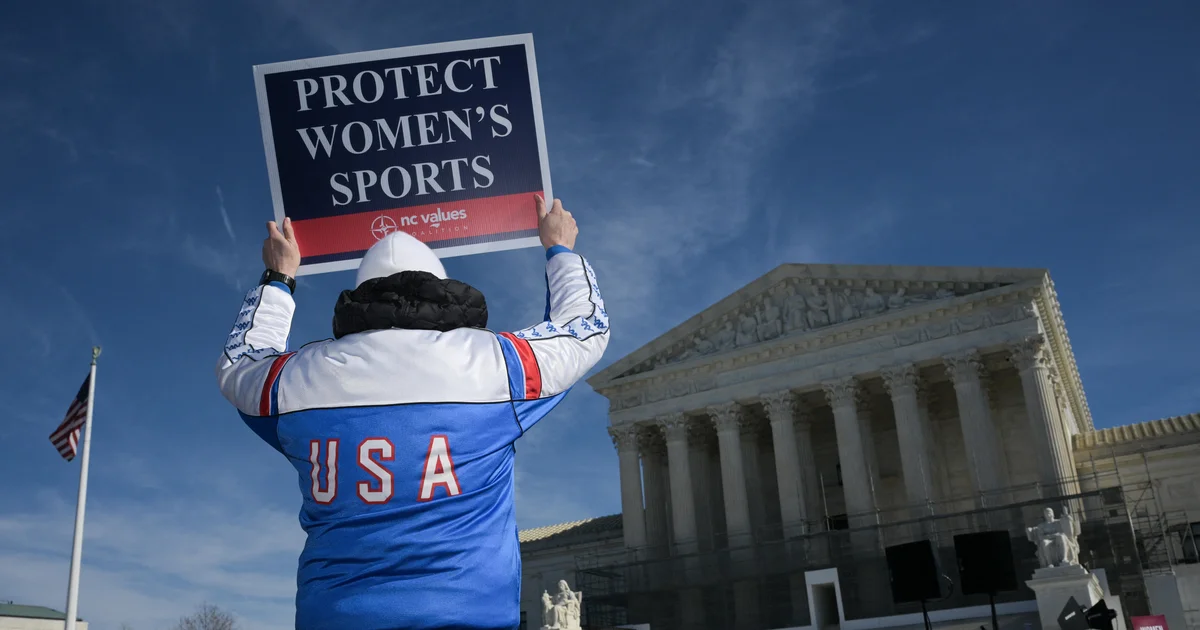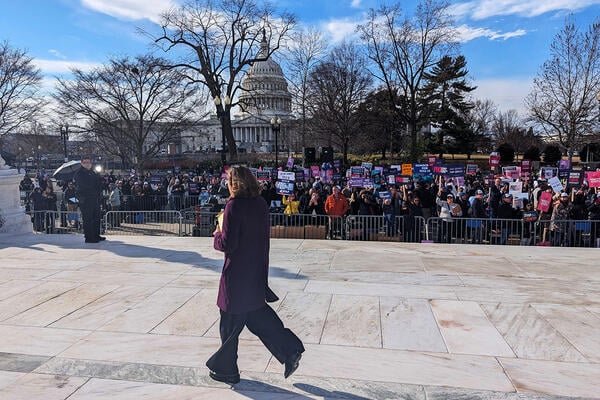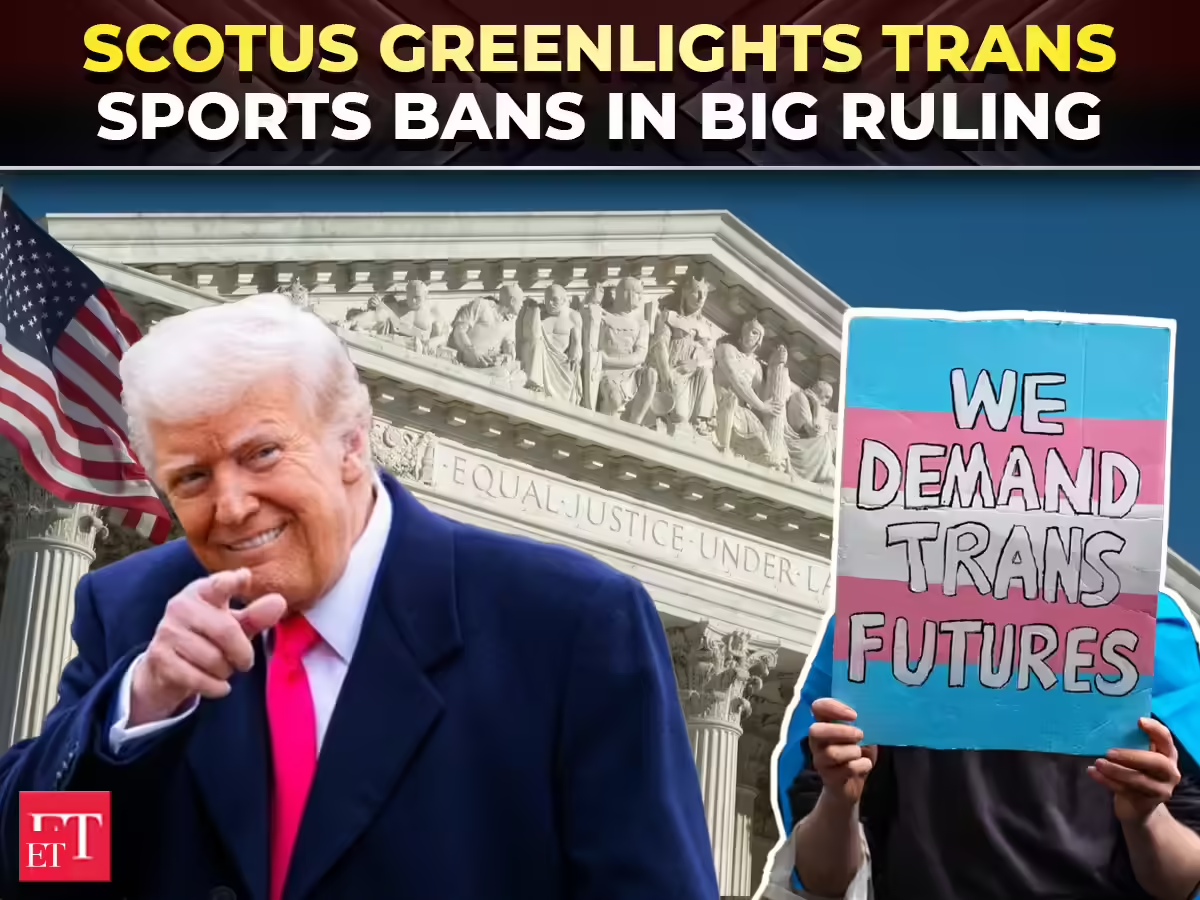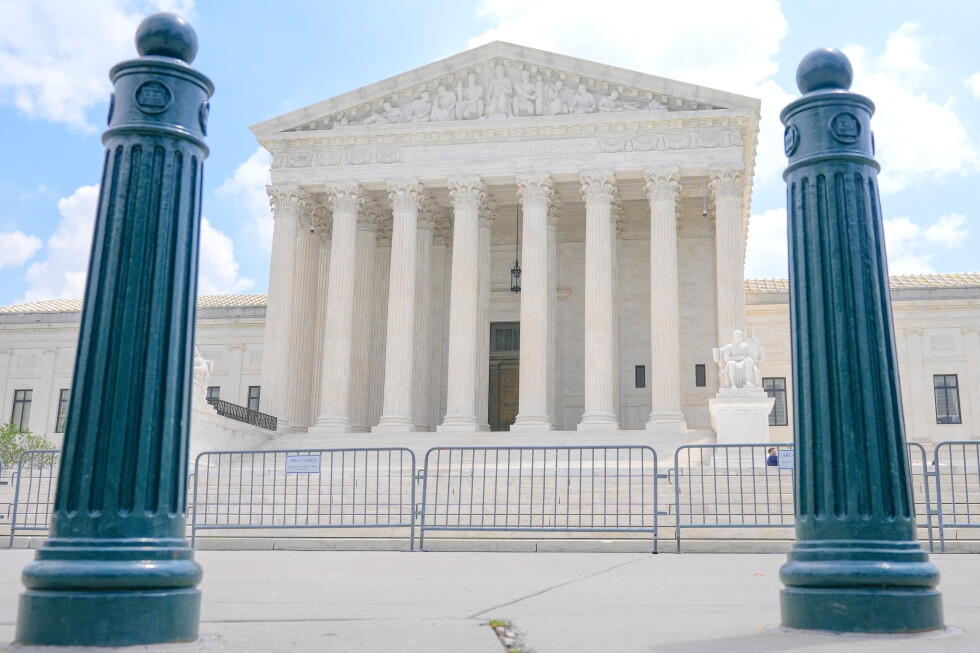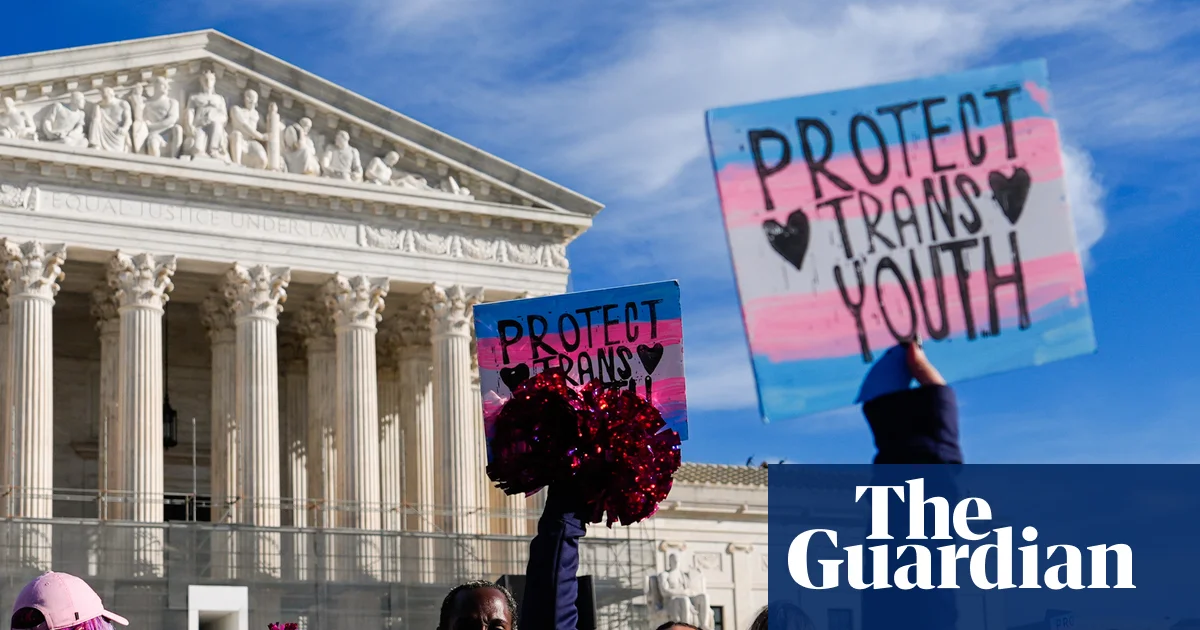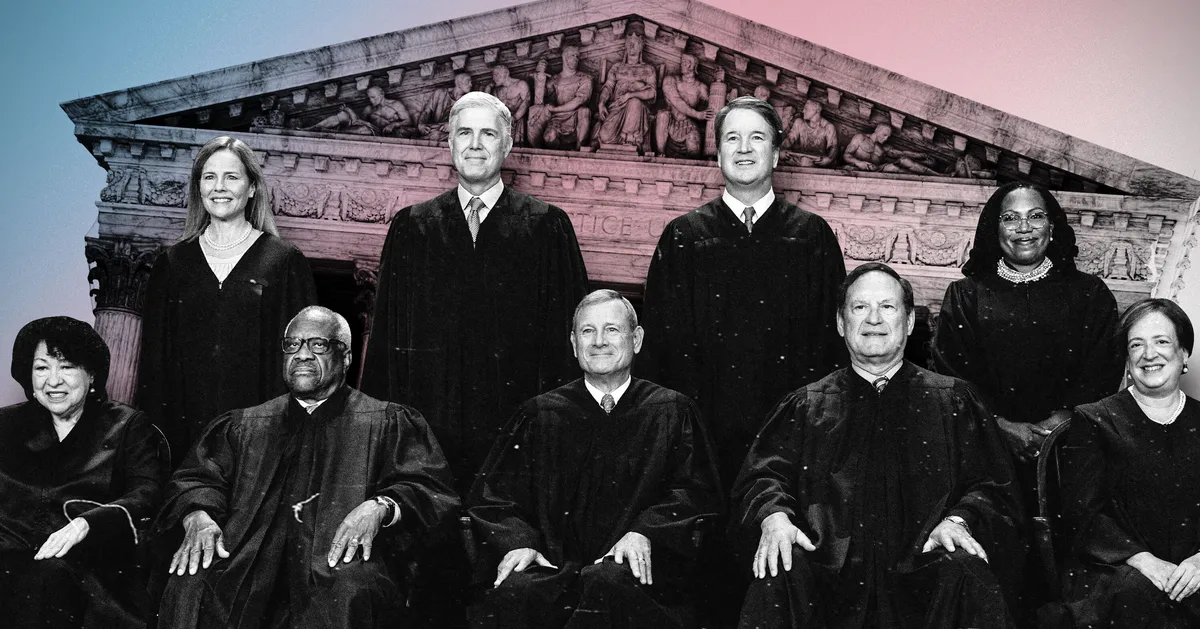
The Supreme Court on Tuesday upheld laws in two states that ban trans girls’ and women’s participation in female sports, in a decision that delivers the latest blow to transgender rights. Justice Brett Kavanaugh authored the majority consolidated opinion, writing that West Virginia’s and Idaho’s laws did not violate Title IX, the federal civil rights law that bars sex discrimination in sports, nor the equal protection clause of the Constitution.The high court, mostly divided 6-3, ruled against the two transgender students, high school shot-putter Becky Pepper-Jackson and college runner Lindsay Hecox, who challenged their states’ laws. “In other words, may schools determine eligibility for women’s and girls’ sports based on biological sex? The answer is yes,” Kavanaugh wrote. He was joined by Justices John Roberts, Clarence Thomas, Samuel Alito, Neil Gorsuch and Amy Coney Barrett. Justices Sonia Sotomayor, Elena Kagan and Ketanji Brown Jackson concurred in part and dissented in part. Sotomayor argued that the majority did not bother to address the “factual question” of whether Pepper-Jackson, the only trans girl asking to participate in girls sports in West Virginia, held any competitive advantage. “The ban is absolute, so B. P. J. cannot practice on girls’ teams, even if she would not take anyone’s spot in an eventual competition, even if everyone who tries out for the team makes it, and even if having the chance to participate could aid immensely in treating B. P. J.’s gender dysphoria,” Sotomayor wrote in her dissent. “Sports, of course, are often zero sum, but the law need not and should not be.”LGBTQ+ legal advocates broadly condemned the decision, which gives a green light to the 25 other states with similar laws to discriminate against transgender athletes. “This is a profoundly sad day. Becky and Lindsay have been fighting for years,” Sasha Buchert, a senior attorney at Lambda Legal, said on a press call Tuesday afternoon. She said the court’s ruling was relatively narrow, as it is limited to sports and still leaves room for individual states to adopt and uphold inclusive policies. “This isn’t a national mandate to ban trans athletes everywhere. It’s going to continue state by state and school by school,” she added. The conservative Christian legal group representing both Idaho and West Virginia, the Alliance Defending Freedom, had tried to make the case to the court for broader restrictions on trans rights by arguing that transgender identity is not the same as sex, and therefore should not be covered by equal protection statutes that prohibit sex discrimination.However, the justices did not weigh in on this question of what level of scrutiny to apply to classifications based on transgender identity, which legal experts say could be resolved in a future case before the high court. In both cases, West Virginia v. B.P.J. and Hecox v. Little, the lawyers for the plaintiffs expressed fairly modest claims. They argued that only trans women and girls who have undergone hormone therapy should be allowed to play on women’s teams. Both Hecox and Pepper-Jackson had done so.In 2020, Lindsay Hecox, a trans woman who was then a first-year student at Boise State University, challenged Idaho’s law — the first of its kind in the nation — claiming it violated her rights to equal protection under the 14th Amendment.Hecox won her case in the district court and the 9th U.S. Circuit Court of Appeals before the Supreme Court granted Idaho’s petition to hear the case in July of last year. Hecox had asked the court to consider her case moot because she no longer plays or intends to play any sports and was concerned about her safety. Pepper-Jackson challenged West Virginia’s similar law and also won at the district and appellate levels. She asked the court to consider whether its ban on trans athletes infringes on Title IX.President Donald Trump applauded the court ruling Tuesday on Truth Social, calling it a “BIG WIN.” Trump has made barring trans women and girls from female sports a top priority of his administration. Last year, he signed a sweeping executive order, pausing federal funding for and investigating several schools with trans-inclusive athletic policies. Since 2020, conservatives have claimed that anti-trans sports bans are needed to protect women’s sports, though they haven’t pushed to address systemic issues — such as pay inequities, sexual harassment, or chronic underfunding — facing the sports.
Supreme Court Rules Against Trans Girls Asking To Play School Sports
Twenty-seven states bar trans girls and women from participating on female sports teams.
721 words~3 min read