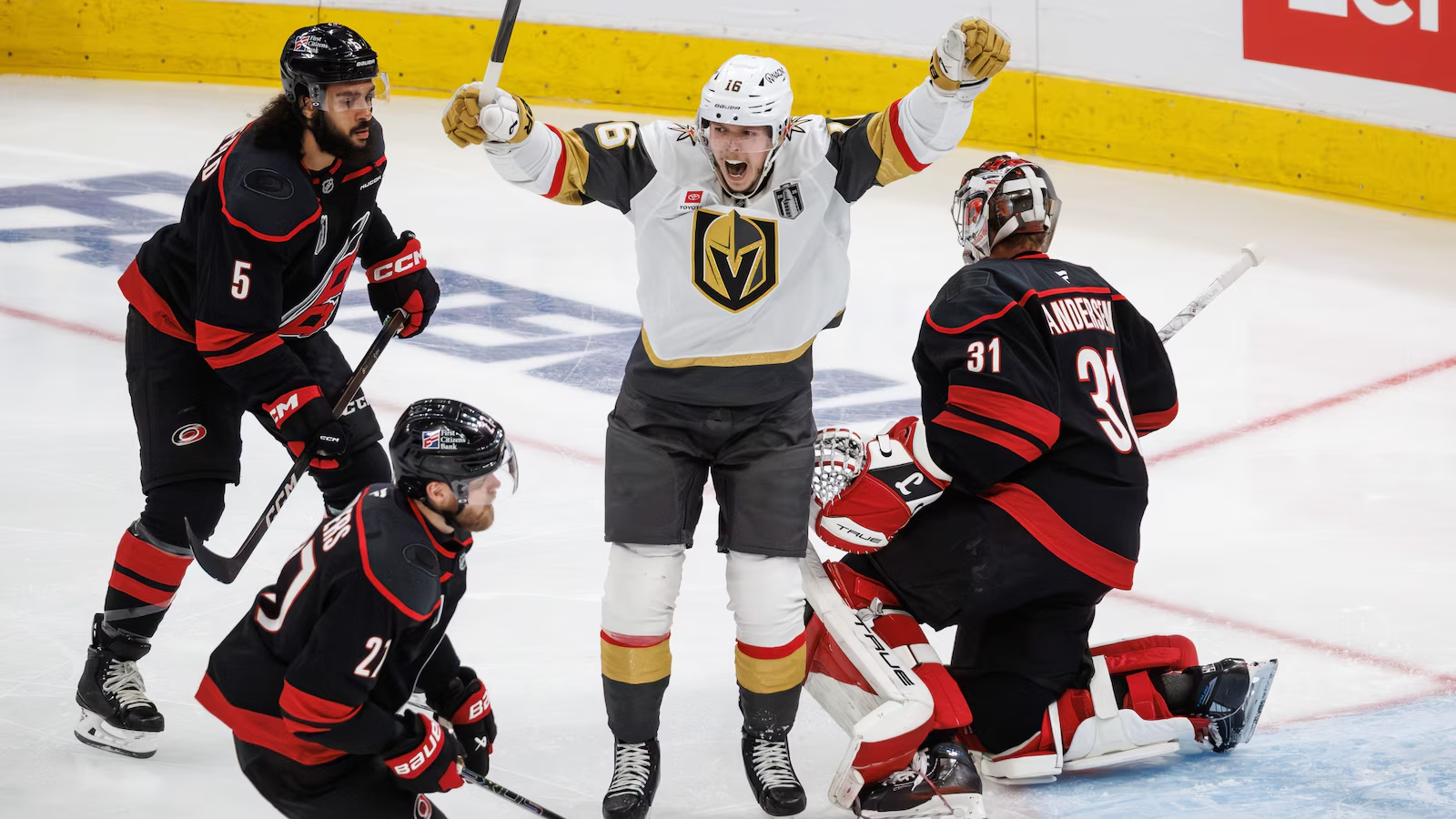
The Ducks acquired the rights to Greer from the Florida Panthers for the rights to defenseman Radko Gudas on Monday. Sarah Stier / Getty ImagesJune 30, 2026 Updated 7:58 pm EDTThe Anaheim Ducks are signing forward A.J. Greer to a four-year contract with a $4.25 million cap hit, according to league sources, granted anonymity to speak about a deal that isn’t public.The deal includes a 10-team no-trade clause in all years.The Ducks acquired the rights to Greer from the Florida Panthers for the rights to defenseman Radko Gudas.Greer recorded 17 goals and 32 points in 78 games last season.Why it’s an overpaymentA four-year, $17 million contract for Greer isn’t back-breaking for a team that still has about $41 million in cap space this summer. But it’s still an avoidable overpayment.To Greer’s credit, he can be effective in his role, between his forechecking, defensive puck touches, and his overall ability to limit offense against. Add in the fact that he stepped up in Florida last season and boosted his scoring, and it makes sense why Anaheim would be interested — especially after a postseason where the Ducks’ fourth line made a real impact. But that production lines up with his shooting percentage jumping to 16 percent, when his career average is only 10 percent. The sustainability factor is a real question mark when his track record is closer to being a fourth-line value. Another question mark is whether he can deliver at a $4.25 million value over the next four years; he doesn’t project to be worth it even when accounting for salary cap growth.The timing hurts, too. It would be one thing to sign this contract with a ton of entry-level talent. Instead, this lines up with Leo Carlsson and Cutter Gauthier’s salaries more than likely exploding. If both sign long-term deals, AFP Analytics projects a collective $20 million cap hit between them. That leaves the team with $21 million to sign three or four defensemen, plus another few forwards. And then there’s the later years to consider.How many general managers can’t afford to go after star talent because their bottom-six contracts aren’t cost-effective or flexible? The Trent Frederic situation is obviously more extreme in Edmonton, but the same line of thinking should apply here, too. Teams, especially in the early stages of their playoff windows, should not be committing this much money or term to role players — or handing out any sort of trade protection. So while it’s easy to blame the growing cap and market trends for this, the real problem is that so many general managers can’t help but overpay sandpaper types with playoff experience (and in Greer’s case, a Stanley Cup ring). — Shayna Goldman
Ducks sign A.J. Greer to 4-year, $4.25 million AAV contract: Why it’s an overpayment
The Ducks acquired the rights to Greer from the Florida Panthers for the rights to defenseman Radko Gudas on Monday.
466 words~2 min read