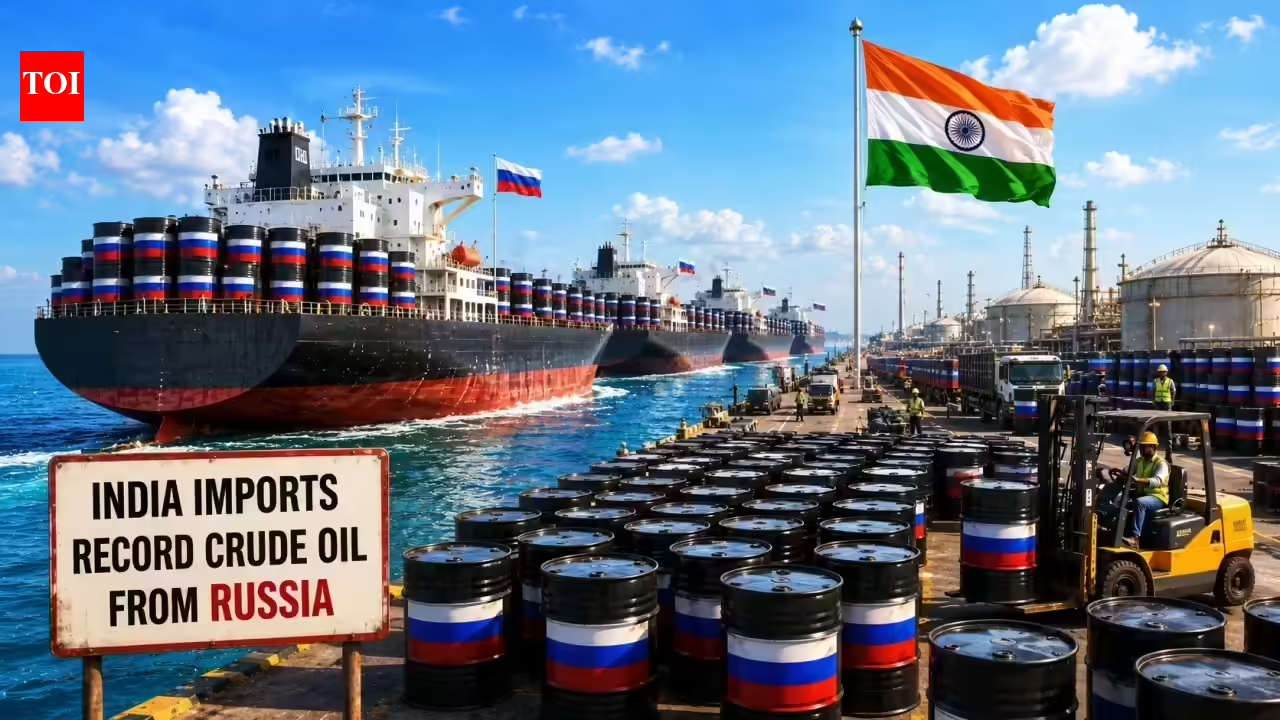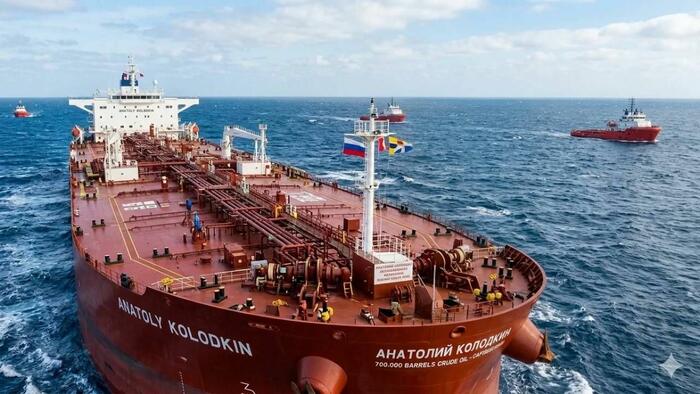
Indian crude imports set several records in June. Total inflows reached about 5 million b/d, the highest level ever recorded for the month. Of that, 2.6 million b/d came from Russia, equivalent to 54% of India’s total crude imports and a historic record for Russian-Indian trade. Russian supplies, which had fallen to around 1.1 million b/d in February under sanctions pressure from Washington, more than doubled within four months and became a key pillar of India’s energy-security strategy.India’s overall import volume suggests refiners have largely compensated for the collapse in Gulf supplies caused by the disruption in the Strait of Hormuz. This mattered greatly because the country’s SPR system remains extremely limited. Even when fully stocked, it can cover only around 9-10 days of normal domestic crude demand, versus the 90-day benchmark based on previous average net oil imports, as suggested by the IEA. India’s weaker import volumes in March-May were therefore caused by scarce availability rather than by a deliberate effort to avoid high prices (as China appeared to do).Since the closure of the Strait, New Delhi has been searching for ways to replace Gulf-origin crude, which accounted for 52% of Indian imports in February. Iraq supplied roughly 1/5 of India’s crude in February, but then virtually disappeared from the import mix for three months. Only in late June did the first cargo from Iraq’s Basrah terminal (loaded in February and since than trapped in the Gulf) reach India’s west coast. Kuwait disappeared entirely after the closure, having supplied around 150,000 b/d in February, while Saudi Arabia fell from India’s second-largest supplier, at around 1 million b/d in February, to just 330,000 b/d in June. Although Saudi Arabia’s decline was not primarily a logistics problem. The kingdom could still export pipeline-delivered crude through the Red Sea port of Yanbu. The greater obstacle was pricing: under the current formula, Saudi term barrels became some of the most expensive crude available. The UAE was the only major Middle Eastern exporter to recover quickly from the March shock, shipping an average of 500,000-550,000 b/d to India over the past three months and becoming its second-largest supplier.In this context, India’s return to Russian crude (and the rise in purchases to historic highs) was a matter of necessity rather than preference. Russia filled much of the gap created by the Gulf crisis, supplying a record 2.6 million b/d in June. Indian Oil Corporation was by far the largest buyer, taking more than 900,000 b/d. Reliance Industries’ Jamnagar complex was India’s second-largest buyer of Russian oil, purchasing more than 500,000 b/d. Nayara Energy’s Vadinar refinery, which underwent maintenance in April and much of May, returned to full operations and imported only Russian crude in June, at around 345,000 b/d. Nayara is almost 50% owned by Rosneft and is directly sanctioned by the EU and the UK, so this crude flow is predictable and unlikely to be substituted in any scenario.Russian crude has also become available in greater volumes. Ukrainian strikes on Russian refining infrastructure have unintentionally helped. Lower refinery runs have freed up more crude for export, while at the same time, Chinese crude demand has slowed as Beijing prioritised relying on their SPRs, with domestic consumption weakened due to the refining margins decline. That combination has left more Russian barrels available for India.The key question is what India’s crude-import mix will look like in the months ahead. Middle Eastern barrels are now set for a substantial comeback. Since the US-Iran ceasefire took effect on June 18, traffic through the Strait of Hormuz has been recovering slowly but steadily. Loaded tankers have rushed out of the Gulf, while empty vessels have moved in to load, allowing producers to gradually normalise output and relieve overflowing storage capacity. Gulf exporters need to restore confidence in their cargoes. In addition to reported discounts of as much as $5/bbl below the Dubai benchmark, some producers are attempting to de-risk shipments through ship-to-ship transfers near Fujairah. Under such arrangements, the risk of another Hormuz closure remains with the seller rather than the buyer.That strategy is adding pressure to freight rates already inflated by tankers trapped inside the Gulf. Demand for available vessels is now even stronger as producers try to move stranded barrels through Hormuz quickly. For India, this changes the economics of sourcing. Middle Eastern barrels are geographically closest and increasingly discounted, while longer-haul purchases from Venezuela, Brazil and Colombia are growing more expensive.Price will therefore play a decisive role. There has been recent discussion within Indian state oil refiner circles about the need to diversify away from India's pre-crisis reliance on Middle Eastern oil. However, this looks more like a strategy to push producers toward more sensible discounts than a resolute decision to move away from the country's closest oil source. Iraq, which supplied India with around 1 million b/d before the crisis, is reportedly offering stranded cargoes at discounts of as much as $20/bbl below its OSP simply to clear already-loaded tankers. Other Gulf producers may have to follow the pattern. The regional market is shifting from a shortage of accessible barrels to a fire sale.Iranian crude remains a far more precarious option. Compliance departments are scrutinising the barrels, and few buyers want to move first. The 60-day window provided by the US waiver is short, Iranian banks remain under sanctions, and the fragile ceasefire has left companies more concerned with the legal, financial and physical security of the trade than with the potential discount.Russian crude, by contrast, is viewed as a relatively secure, established supply route. Despite the sanctions waiver expiring on June 17, numerous vessels carrying Russian crude are still heading toward Indian ports. But Russian exporters will have to adapt to a new pricing environment as discounted Middle Eastern barrels return. During the Hormuz closure, Russian barrels reportedly traded at premiums of $5-7/bbl to ICE Brent. They are now estimated to be selling to India at discounts of around $4-6/bbl.Trade with Russia is therefore likely to remain elevated at least until Gulf supply chains fully normalise. India cannot afford a repeat of the March disruption, when the loss of Middle Eastern crude exposed the limits of its SPRs and the vulnerability of its import system. Even if discounted Gulf barrels return aggressively, Russian oil is unlikely to disappear from India’s supply mix. Its role may become less dominant, and its price will have to adjust, but the lesson of the Hormuz crisis is clear: for New Delhi, access to Russian crude become an insurance policy against the next disruption.By Natalia Katona for Oilprice.comMore Top Reads From Oilprice.comAsian Refiners Redirect Middle East Crude to the U.S. as Hormuz Flows RecoverPakistan Pays Premium for Urgent LNG CargoVLCC Earnings Near $470,000 a Day as Hormuz Hopes Drive Tanker Frenzy
India’s Russian Oil Boom Outlives the Hormuz Shock | OilPrice.com
India’s crude imports hit a June record of around 5 million b/d, with Russian supplies surging to an unprecedented 2.6 million b/d.
1,122 words~5 min read