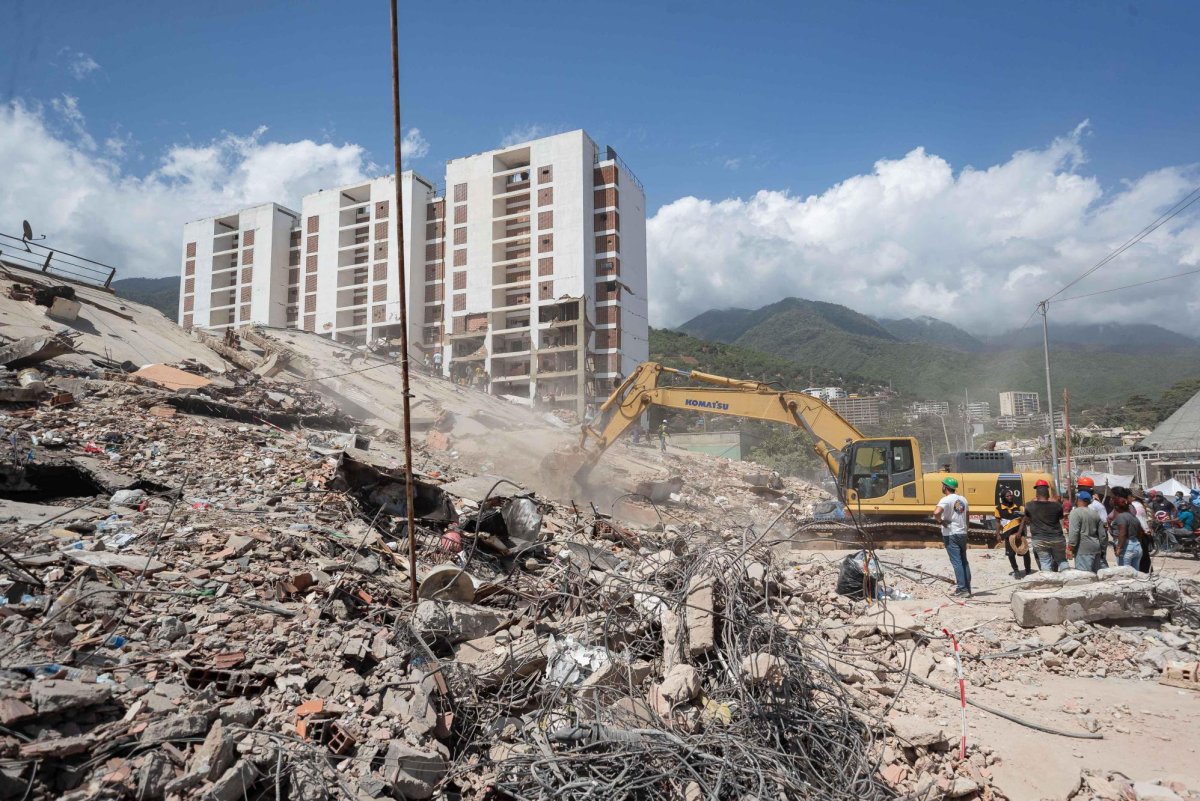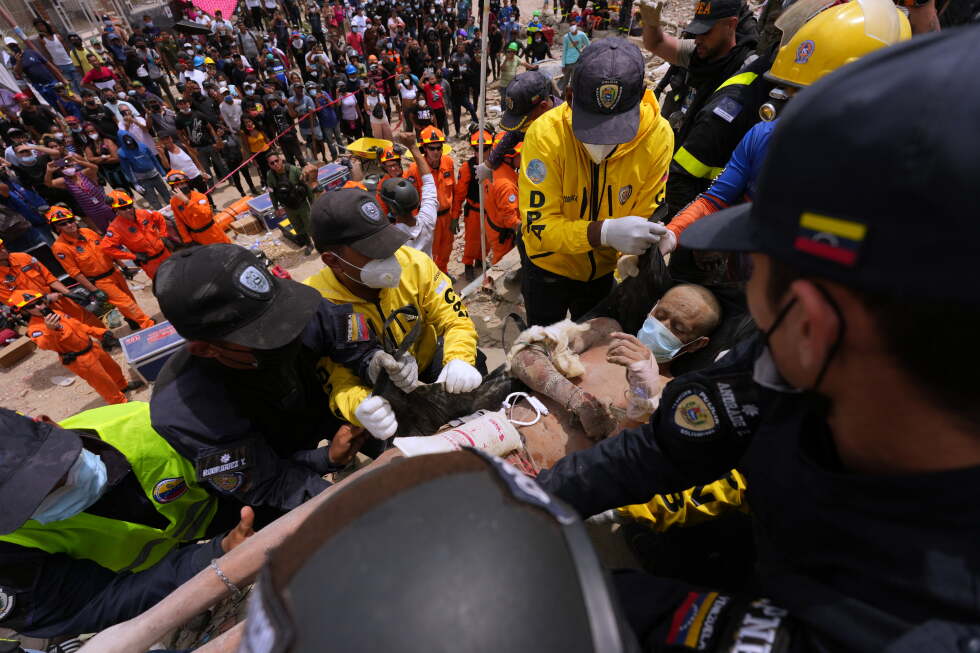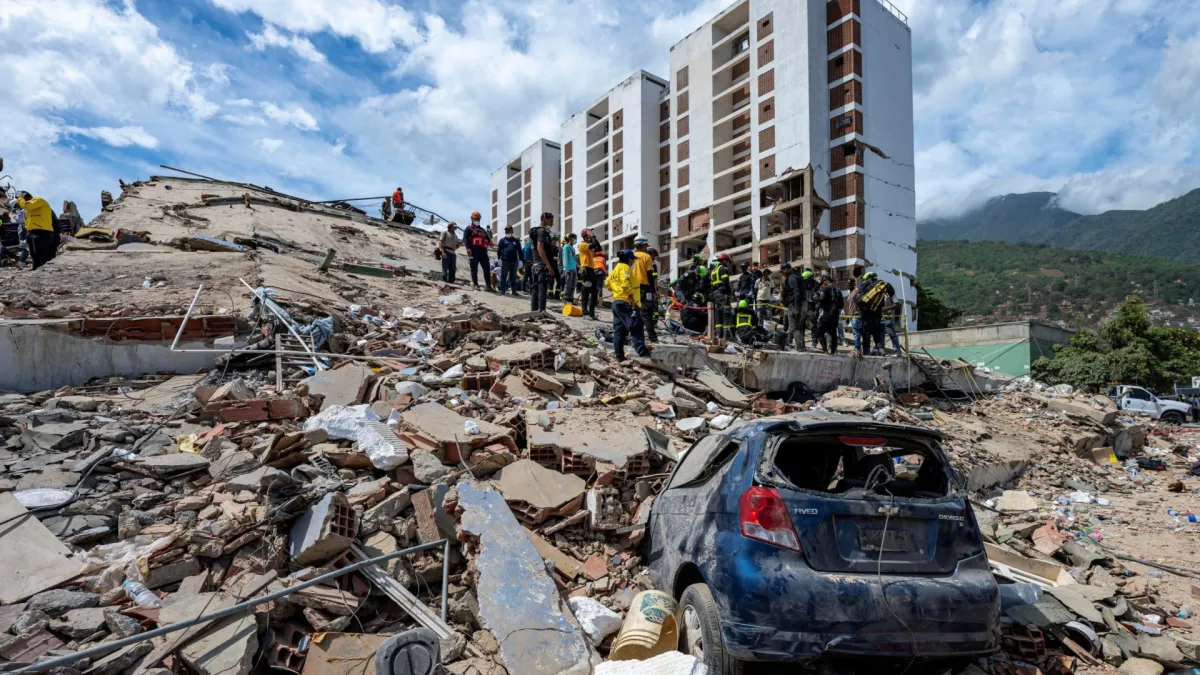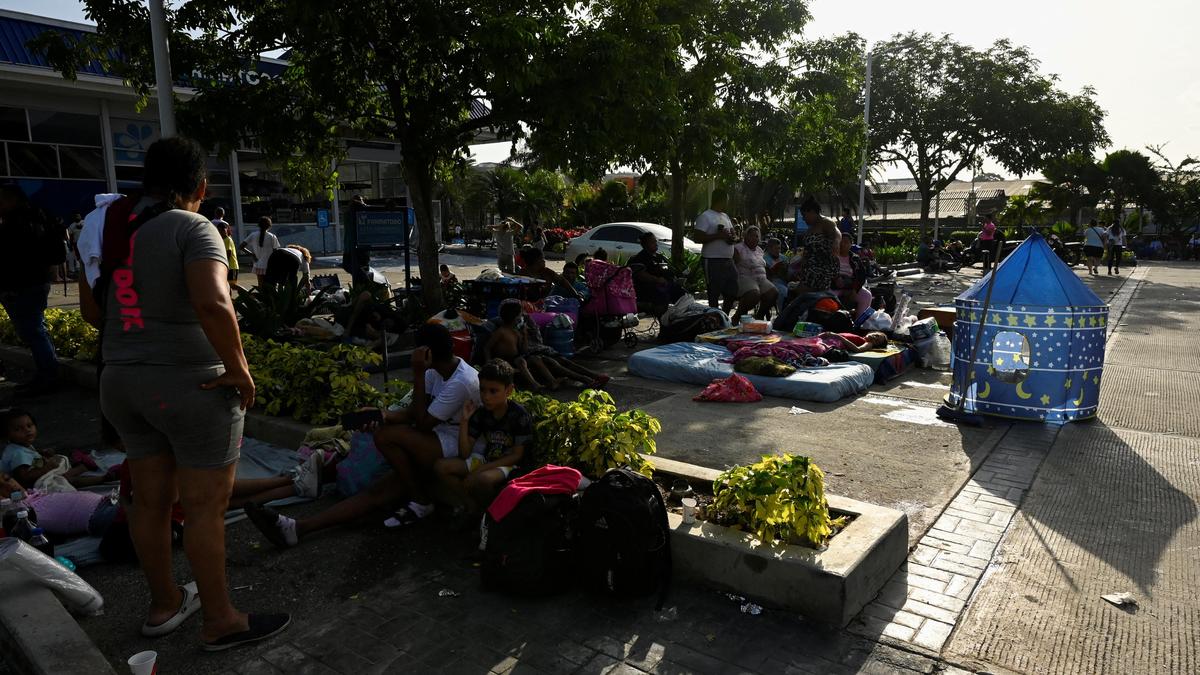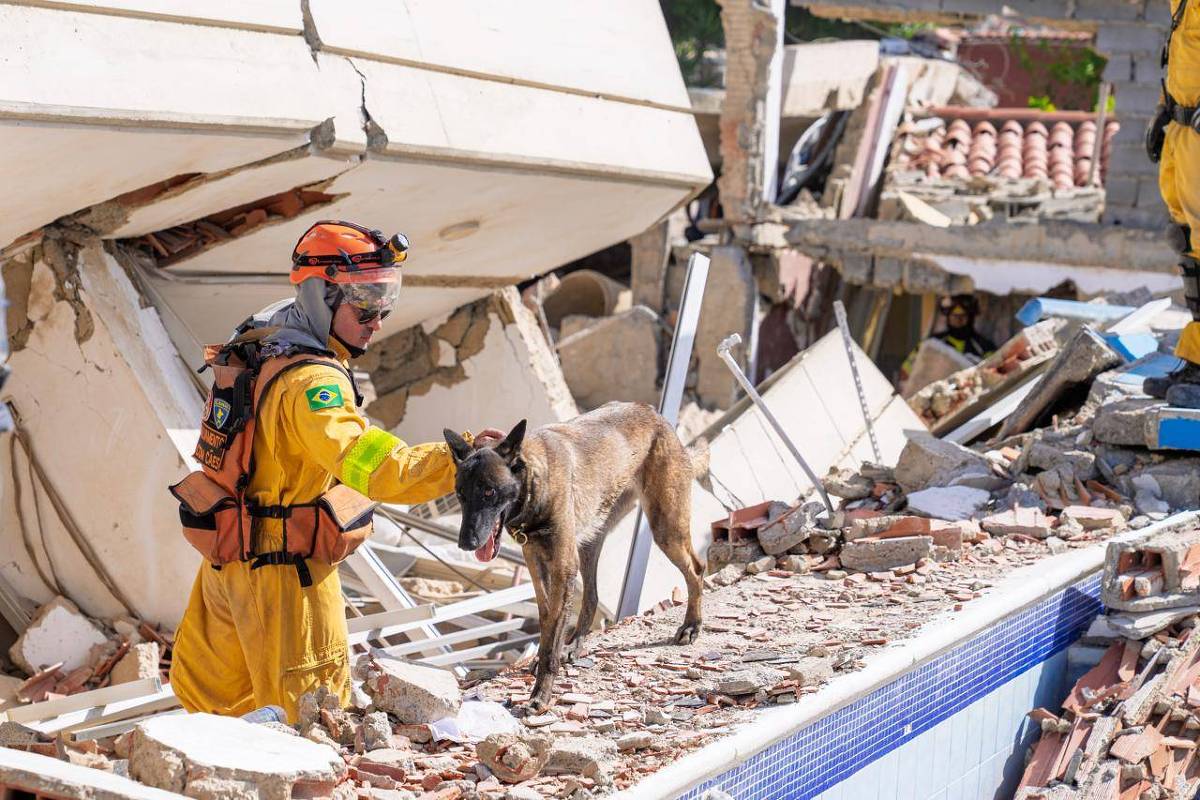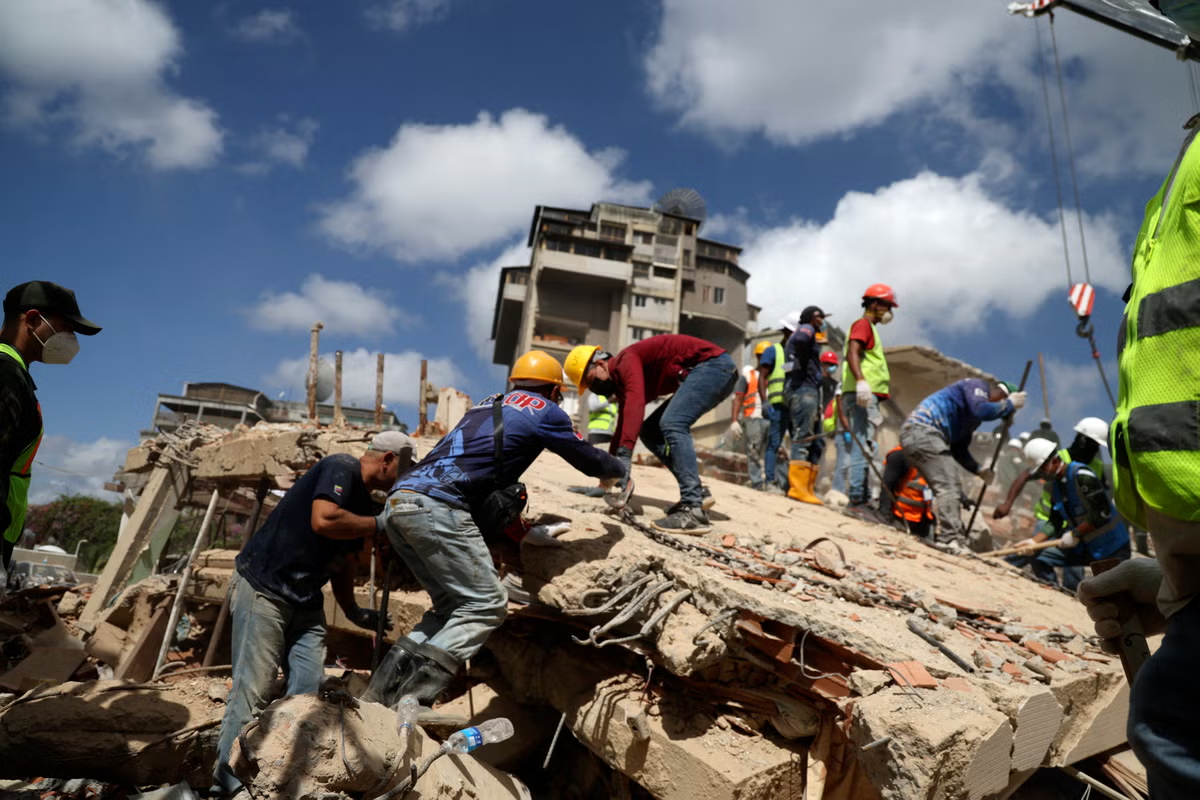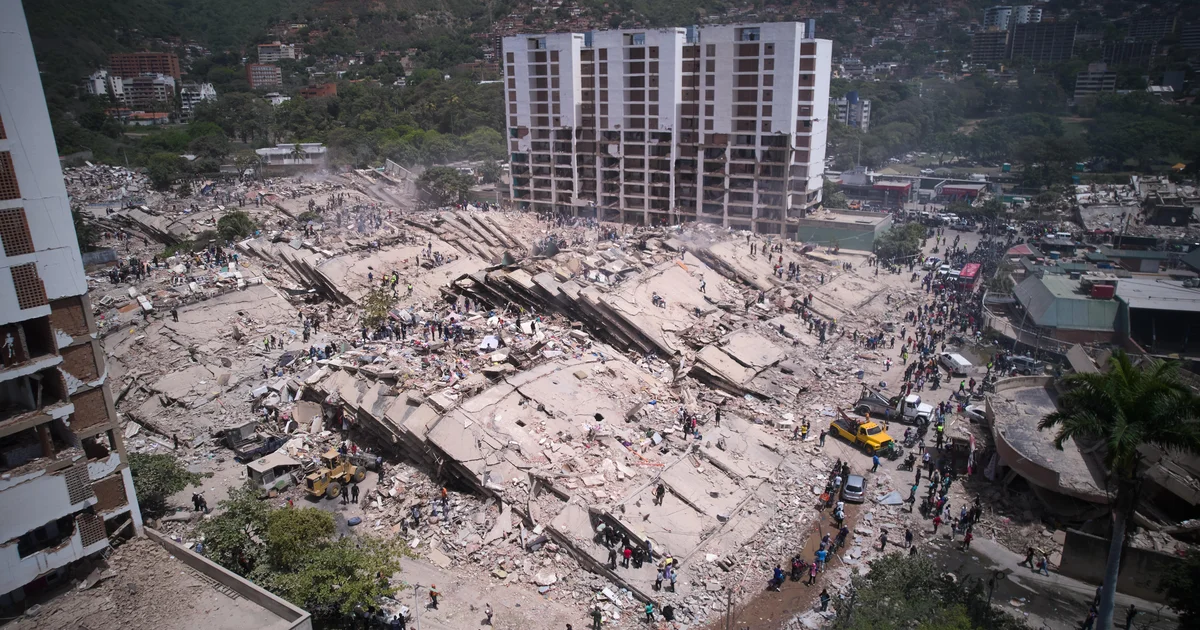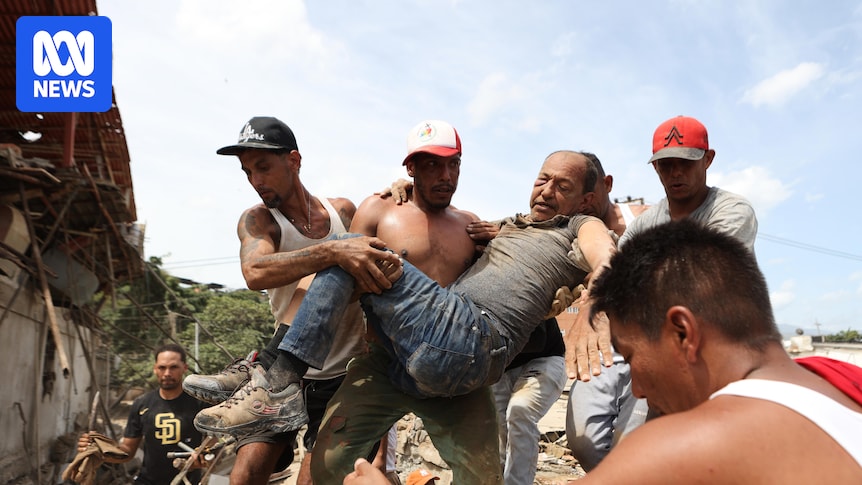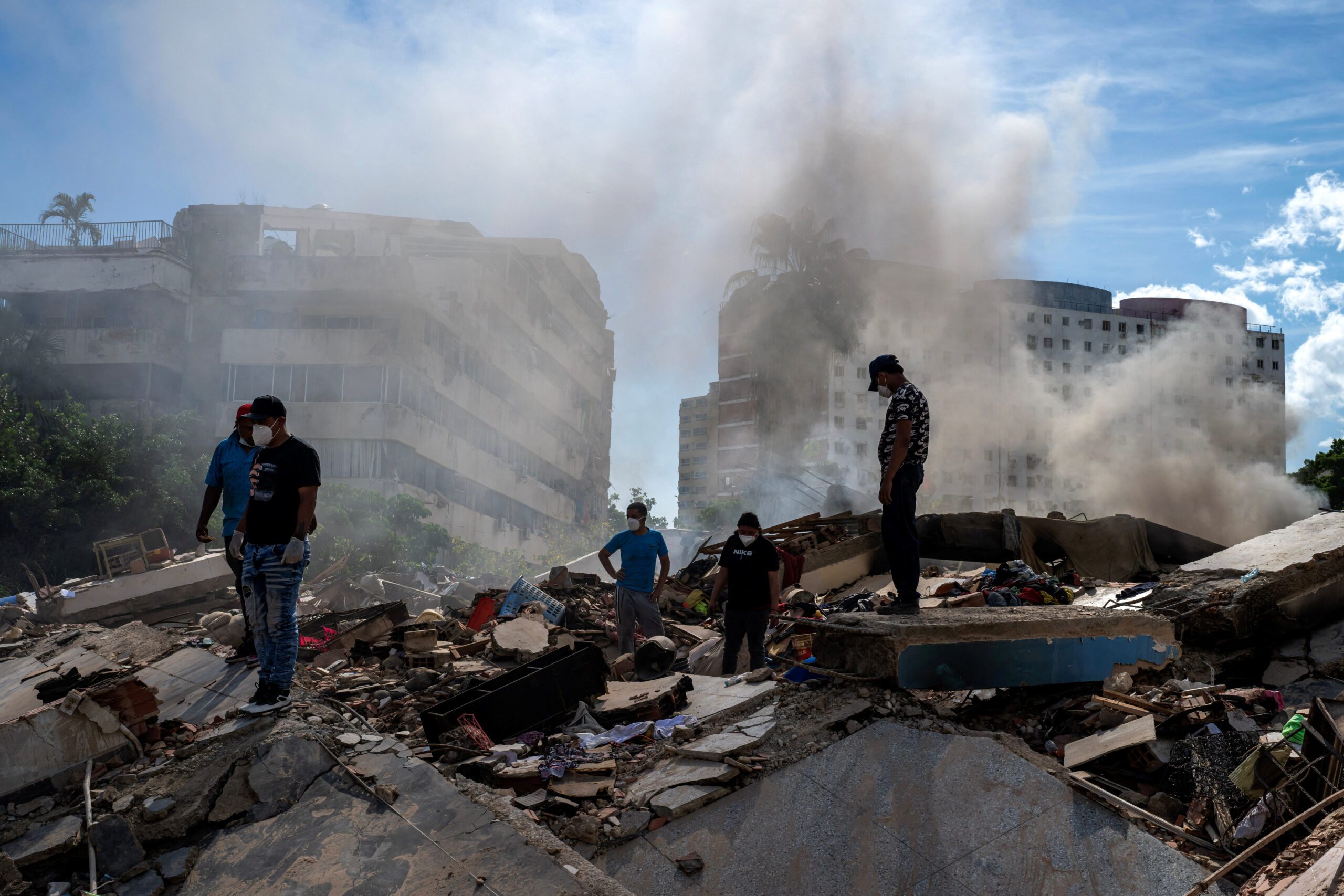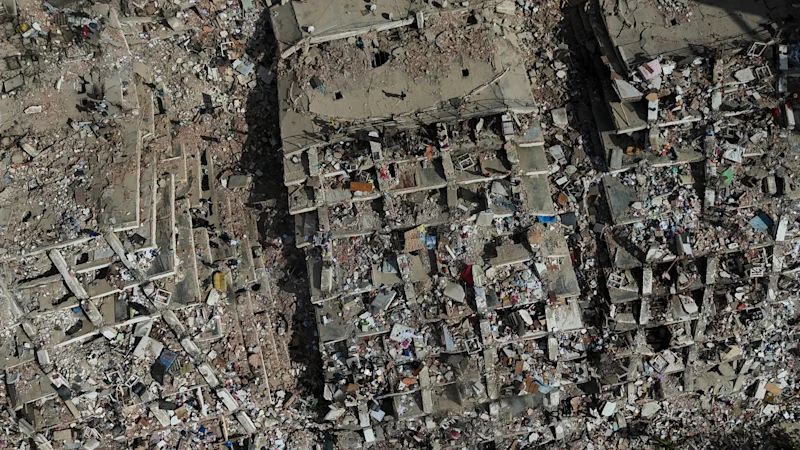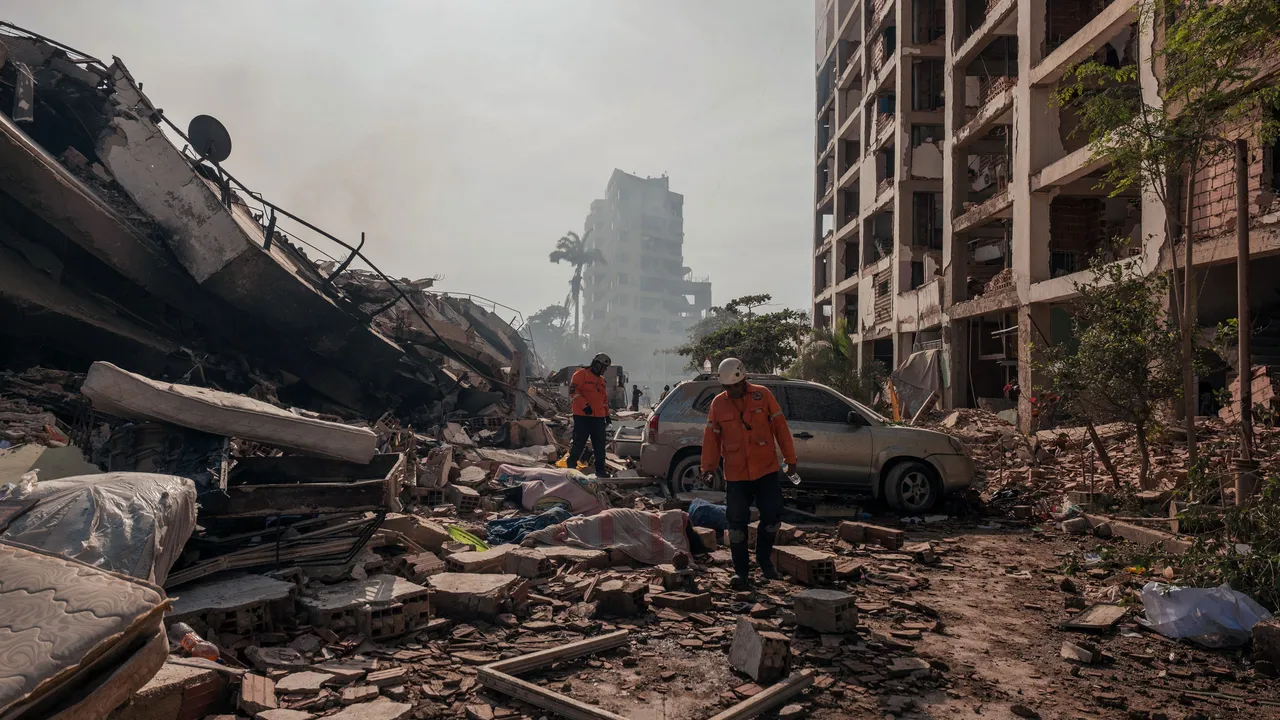
In Venezuela, the coastal state of La Guaira is rich with tradition, carrying a deep connection to its fraught history. Starting in the seventeenth century, Spanish colonists enslaved Africans and brought them to the coffee and cocoa plantations that were concentrated in the area. For generations, they were typically allowed only three days off a year, from June 23rd to June 25th, in a recess mandated by the Catholic Church. During that window, they observed El Día de San Juan Bautista, which became an opportunity to practice the traditions of the communities from which they had been forcibly taken. For their descendants, it remains an occasion for celebration—a way of connecting to their lineage. Drumming, dancing, and singing often continue late into the night.Last week, on June 24th, La Guaira’s residents began the day’s festivities at sunrise. The women and girls wore long, bright skirts, and the men wore formal trousers. At these celebrations, people parade an icon—usually a tan-skinned, dark-haired doll wearing robes and a crown, sitting atop a throne—through the community. Circles form beside drummers, and pairs take turns dancing in the middle, pirouetting around one another. By the evening, the streets in La Guaira were still full. At 6:04 P.M., the first earthquake hit, a magnitude 7.2 that was followed by another, a magnitude 7.5, just thirty-nine seconds later.I was celebrating the holiday in a rural village called Chuao, which is also along the northern coast. Years ago, I taught English there, and I try to return whenever I can. My sister was visiting from London; it was the first time that I’d seen her in a year. We were camping in hammocks on the beach. She had found an abandoned kitten in the forest and was cradling it, pleading with me to let her bring it back to Caracas, where I live, and I was trying to persuade her that she should try drum dancing. When the first earthquake hit, it knocked us into each other. The power cut out, but I was able to connect to the internet at the house of a friend who had a generator, and I began seeing the videos of La Guaira that were circulating on social media. Almost immediately, the village started mobilizing to deliver aid.There is no road to Chuao, and it is surrounded by thick jungle, so everything in the town has to be brought there by boat. Resources are often scarce. Nevertheless, residents pooled together the little that they had, and bodegas donated as much as they could, in order to help. People gathered in the central plaza beside the church, in front of the San Juan icon, forming lines to separate supplies into individual bags that could easily be handed out.It is quickly becoming clear that corner-cutting and corruption made this natural disaster much more devastating than it otherwise would have been. Many of the worst-hit buildings were constructed without proper government oversight or adherence to seismic building codes. Venezuela suffers from the world’s highest inflation rate, and for the past decade it has endured Latin America’s deepest financial crisis, driven by an overreliance on oil exports, chronic economic mismanagement, and U.S. sanctions. Investment in emergency infrastructure has been all but nonexistent, a shortcoming now measured by a death toll that has climbed past seventeen hundred in a matter of days.The U.S. has dispatched naval vessels, transport aircraft, and rescue teams to assist in the recovery efforts, the latest twist in an already strange year for relations between the two countries. Since the U.S. military operation that captured Nicolás Maduro, this January, the Trump Administration seems intent on turning Venezuela into a resource colony, working closely with the acting President, Delcy Rodríguez, after lifting sanctions against her in April, to open the country’s oil sector to American investment. At a public address, in May, Trump claimed that the oil the U.S. has extracted from Venezuela covered the cost of the war in Iran “about twenty-five times over.” At a recent press conference, he remarked that, earthquakes aside, Venezuelans were “happy” and “dancing in the streets.”On June 27th, I joined up with a group of people in Chuao who planned to deliver aid. My sister would stay behind, with the kitten, in a hotel room that had been offered to her for free. There were ten of us, with several large sacks of nonperishable items—canned fish, soap, bottled water—along with more than six hundred arepas that the villagers had cooked the night before. We packed two motorboats with supplies, and drove fast toward one of La Guaira’s old fishing ports. The next morning, almost as soon as we arrived, a man offered to drive us to the hardest-hit sites. We got into his van and set out. The vehicle’s cargo area was windowless, so we took turns hanging out the back to survey the destruction.At the first site we visited, American responders stood atop the heaped remains of an apartment building, searching the rubble. The rescue effort there was particularly intense; the residents had thrown an enormous party to celebrate the holiday, inviting as many of their friends and family as they could fit inside. As we packed up to go to the next location, I caught a glimpse of what looked like a brightly decorated skirt, but, leaning closer, I saw that it was just some tangled sheets.Venezuela is covered in elaborate architectural experiments, large-scale urban projects whose funding was enabled by the discovery of the nation’s immense oil reserves in the early and mid-twentieth century, when it was still the wealthiest nation in Latin America. Parque Central, the brutalist complex that dominates the skyline of Caracas, contains a tower that was, at the time of its construction, the world’s tallest reinforced concrete structure. El Helicoide, an enormous pyramid that was supposed to become a luxury shopping mall but later became a prison, was so celebrated that Salvador Dalí reportedly offered to design the interiors.These buildings are among the world’s foremost landmarks of mid-century modernism, though the country’s more recent socioeconomic isolation has meant that they went largely unnoticed outside Venezuela. As I leaned out of the van, surveying the damage in La Guaira, where hundreds of buildings had been crushed by their own weight, collapsing inward toward their foundations, I thought about how Le Corbusier, perhaps the greatest practitioner of architectural modernism, spoke of houses as “machines for living in.” In La Guaira, it was difficult not to think about the inverse formulation; by dint of disaster and greed, the homes constructed here had become machines for dying in. When we reached the city of Catia La Mar, where, according to some estimates, more than thirty per cent of buildings have been damaged, I began to notice the stench of decomposing bodies.In Caracas, or Maracaibo, or La Guaira, there is a sense that Venezuela has been built, in the words of the playwright José Ignacio Cabrujas, as “an eternal return to the future.” Marcos Pérez Jiménez, the autocrat who ruled the country in the mid-twentieth century, commissioned modern architectural projects to project an image of the country as, if not progressive, at the very least progressing. But these efforts came to seem like a cover for the harsh realities of poverty and inequality. When Hugo Chávez, a charismatic and passionate leader, managed to inspire the public to vote for a socialist revolution, he promised to finally redirect Venezuela’s oil wealth to its poorest citizens. Yet the country’s dysfunctions continued in a different form. The same boom-and-bust dependency on the oil industry, whose profits were now funnelled through the regime and its allies, kept the country lurching from one crisis to the next. The government continued to insist that Venezuela was headed for a great future that never quite arrived.The art and architecture that the Chavismo regime commissioned differed stylistically from what Jiménez had built, but the fundamental message remained the same. Venezuela’s cities are covered in murals—typically portraits of government officials next to hopeful slogans—that urge citizens, in one way or another, to ignore the harsh past and present, and to keep believing in the future. People are reluctant to paint over them, not wanting to interfere with the state’s imagery. Now, in La Guaira, modern skyscrapers and state propaganda are part of the rubble, indistinguishable from each other. I saw a building with only one fragment of wall left standing; some civilian graffiti on it read “SALARIO SUFICIENTE PARA VIVIR DIGNAMENTE”: “a salary sufficient for living with dignity.”There is an enduring faith in the idea of a Venezuela whose prosperity matches its beauty. Long before the earthquakes, derelict towns—empty swimming pools, abandoned hotels—became ubiquitous on the coast. The remnants of a once extensive tourism industry, they came to serve as a symbol, to Venezuelans, of the country’s immense failures and immense potential. But the destruction in La Guaira is something else entirely. The region’s extensive infrastructure is, in almost all cases, completely beyond saving; everything will have to be rebuilt. I met a resident who had lived in the area all her life. “I won’t go back,” she told me. “It is no longer a place for the living.”As the rescue team drove past the remains of an enormous skyscraper, a foreign-aid worker with an ambiguous accent shouted to some civilian volunteers, “How many dead have you pulled out?” The building had been destroyed so completely that asking about survivors would have been naïve. Later in the day, I looked on as local construction workers used their cranes to sift through the rubble, picking it up and dropping it down slowly as they watched for falling bodies. Once the dead reached the surface, the men used blankets or sheets from the debris to cover them; they had already run out of body bags. They used doors from the wreckage to carry the bodies into the bed of a volunteer’s truck. The only hope, for this building, at least, was that the dead might be identified, so that families could begin the long process of grieving. But many of the corpses had been damaged beyond recognition.In the afternoon, the group from Chuao arrived at a collapsed apartment building in Catia La Mar’s Puerto Viejo neighborhood. I heard a baby’s cry echoing in the empty space below the debris. In the detritus, it was impossible to make out individual rooms or apartments. A bra was tangled in structural cables; two support beams had fallen on each other, folding it in half. The infant had been trapped for almost three days; a team of rescuers from Fairfax, Virginia, had been laboring to reach the boy, who was nine months old, for at least six hours. There were firefighters, who had mostly come from Caracas, and a group of Salvadoran armed forces standing in a long row. Minutes after I arrived, they managed to pull the baby out into the midday sun. The men wrapped him in a towel and handed him off to one of his family members. He seemed strangely calm. His family members looked relieved, but anxious: his mother was still missing.According to the Trump Administration, which is engaged in a protracted court battle for the use of wartime legislation to continue to deport Venezuelans, Venezuelan gangs have orchestrated an “invasion” of America. When I first felt the quake, I thought the American military might be bombing us again. But now the two countries were working together; the U.S. brigade was using its expertise to direct Venezuelan civilians. At one point, I saw a Venezuelan fireman and a member of the U.S. task force, both of whom had been at the center of the operation to save the baby, exchange patches in a show of camaraderie. Still, tensions remain. More than a hundred Venezuelans who were deported from the U.S. mere hours before the earthquakes are now missing, after the hotel to which they were shuttled collapsed.At the apartment complex, the rescuers approached the wreckage’s largest opening, which looked like a mouth agape in shock. A few men entered. Everyone else was silent. The team of Venezuelan firefighters stood under the sun; members of the U.S. brigade crowded tightly in the shade of a small tree in what was once the front patio. One of the emergency responders inside the collapsed building called out, asking for water: “The heat, it’s too much.” Someone approached the team with a stretcher, and what appeared to be a tarpaulin bag large enough for a body.I went down into a subterranean garage to help move some tools that the Americans had stored there, relieved to be in the shade and anxious not to be idle. The ceiling had fallen in, and the only car visible was a white Ford, one of its doors ripped from its hinges, entirely crushed except for its hood. It was difficult not to feel amazed by the sheer improbability of the baby’s survival: more than sixty-six hours alone beneath all of this. When we returned, the stretcher was sent inside the wreckage, handed down by two parallel lines of Salvadorans.Since Maduro’s abduction, Venezuela has felt almost on the edge of civil war. But, in a startling display of unity, citizens across the political spectrum, from all over the country, have taken to social media to put together disaster-relief efforts. It is difficult to overstate how impressive this mass mobilization has been. The minimum wage in the country is less than thirty cents per month and the extreme-poverty rate exceeds fifty per cent; nevertheless, donations and deliveries from Venezuelans, largely organized unofficially, have been substantial enough to sustain the tens of thousands who have lost their homes, at least for now. Throughout the wreckage, ordinary people were digging through fragments of brick and concrete with their bare hands, pulling out bodies.Still, it was clear, in La Guaira, that the rescue effort needed stronger direction from the government. The foreign brigades had not supplied nearly enough trained rescuers to meet the needs. Thousands of civilians are eager to pick through the rubble, but they need trained people leading them. The rescuers I followed arrived at a crucial moment, just before the seventy-two-hour mark; after this point, it becomes statistically less likely to find people alive. But that doesn’t mean it’s impossible—there can be survivors for up to two weeks. Almost fifty thousand people are still missing.An hour after the baby was found, the rescuers looked on as a stretcher emerged from the opening. A woman, pale and covered in dust, raised her hand to shield her eyes from the sun. Everyone erupted into collective applause. Someone shouted, “Your baby is alive and well”; the woman’s face broke into a wide smile. Not long after, one of the Americans took the woman’s family members aside to give them more news. The baby’s father was dead, and his body was too deeply embedded in the wreckage to safely extract him. Three family members held one another, standing directly in front of the wreck’s opening, and said their goodbyes. ♦
Searching for Survivors After Venezuela’s Historic Earthquakes
With nearly fifty thousand people still missing, an improvised rescue operation comprising civilians, local firefighters, and foreign brigades is racing to sift through the wreckage.
2,502 words~11 min read