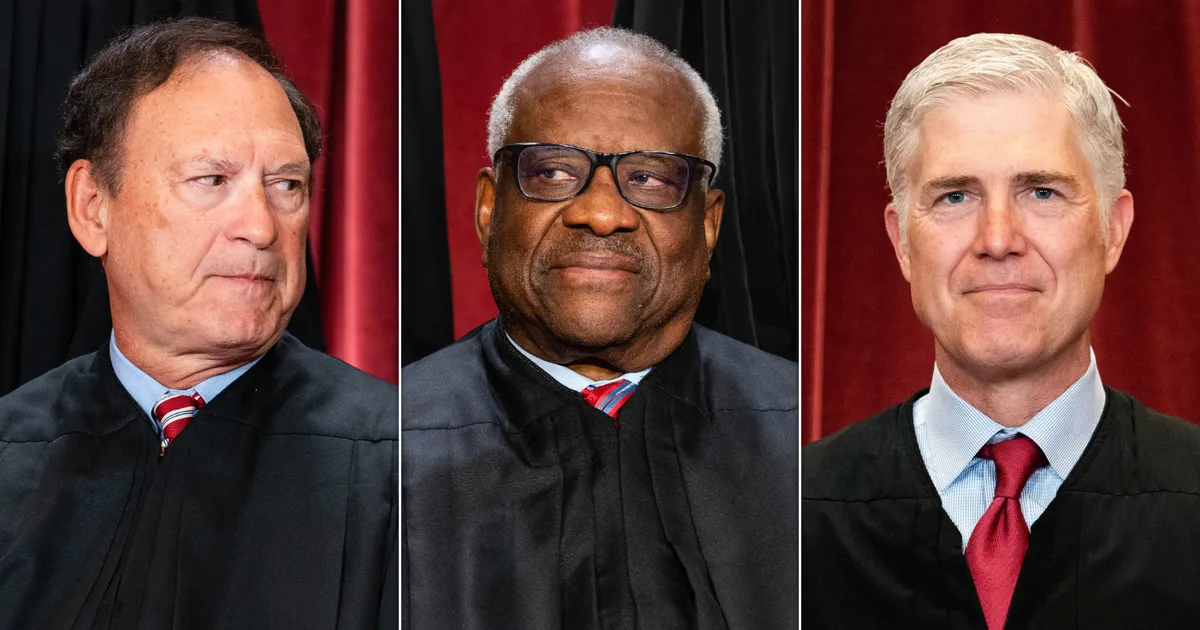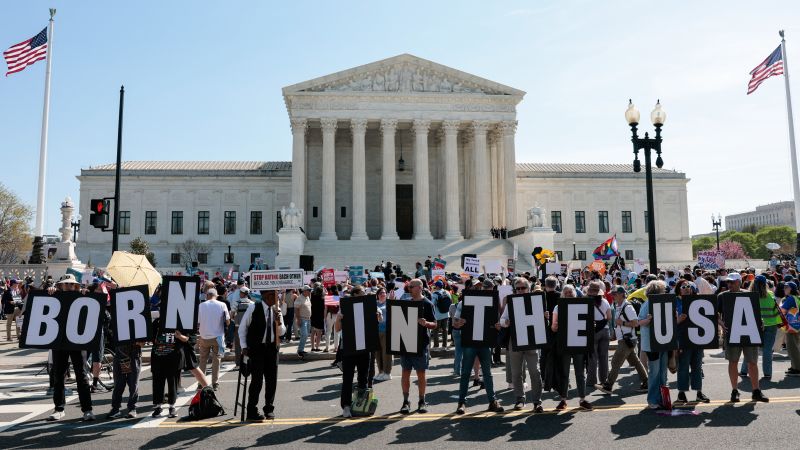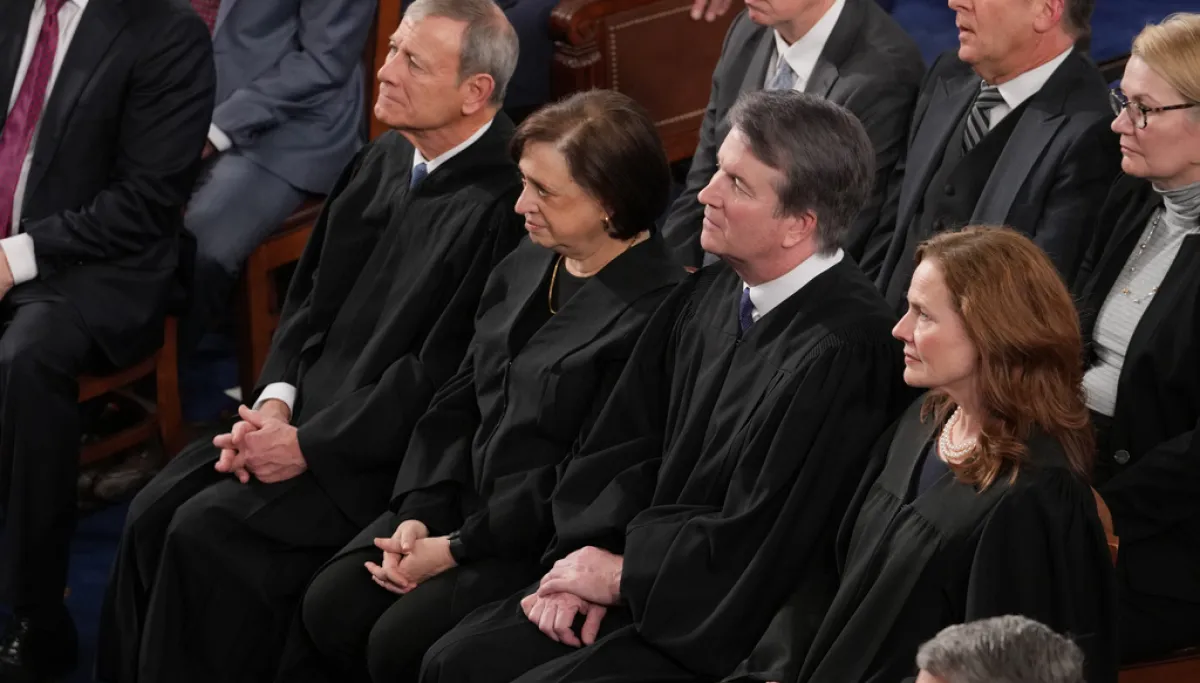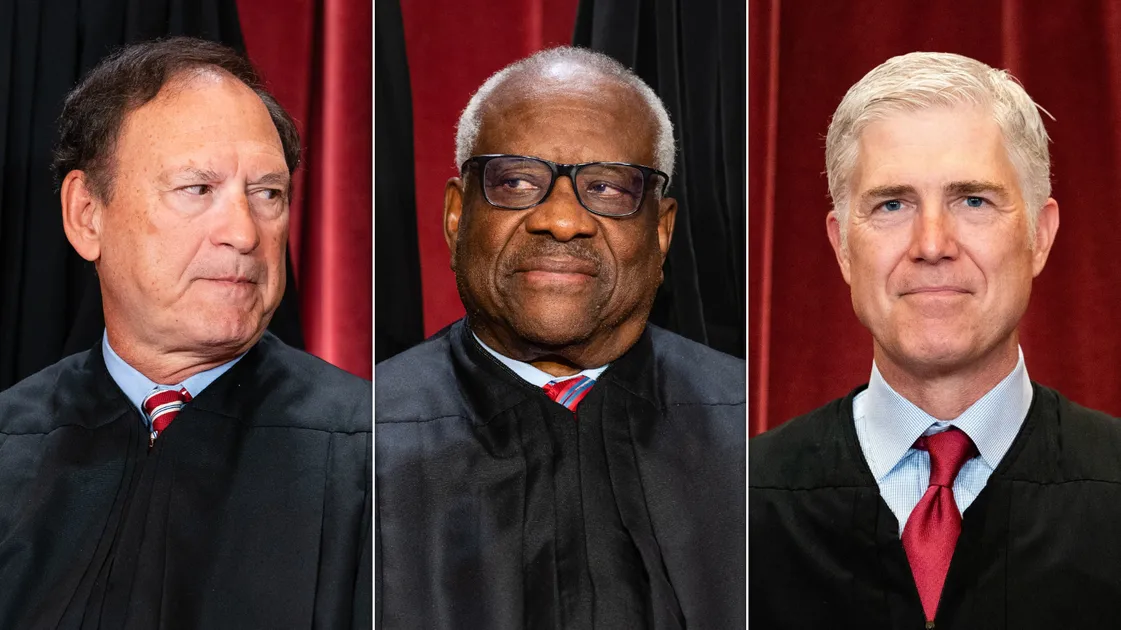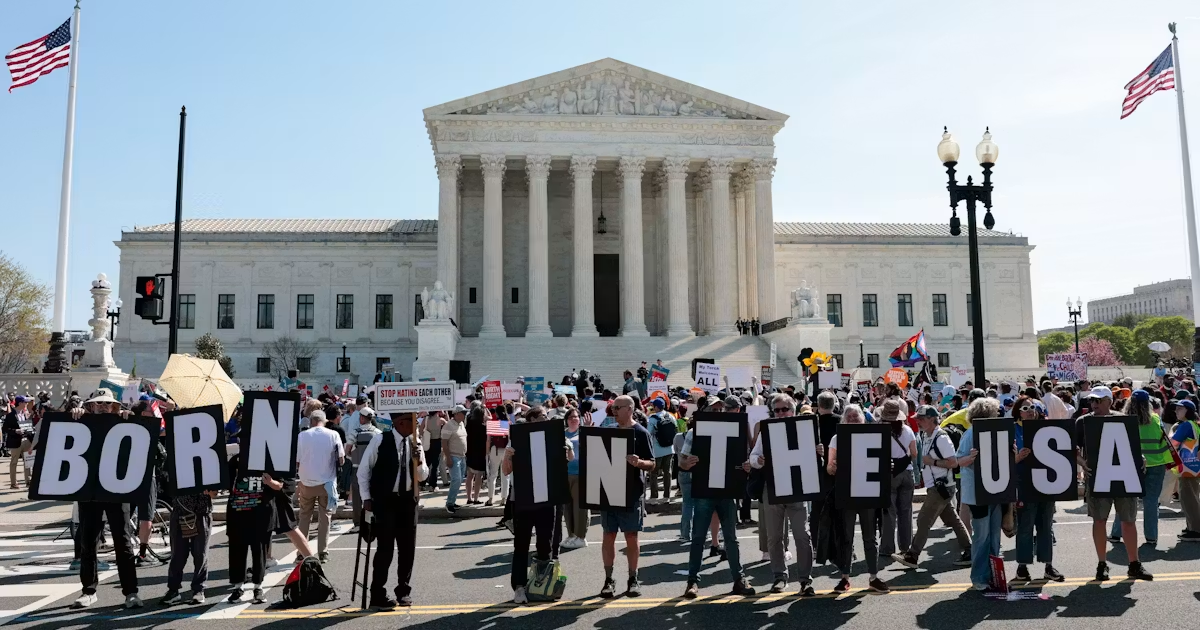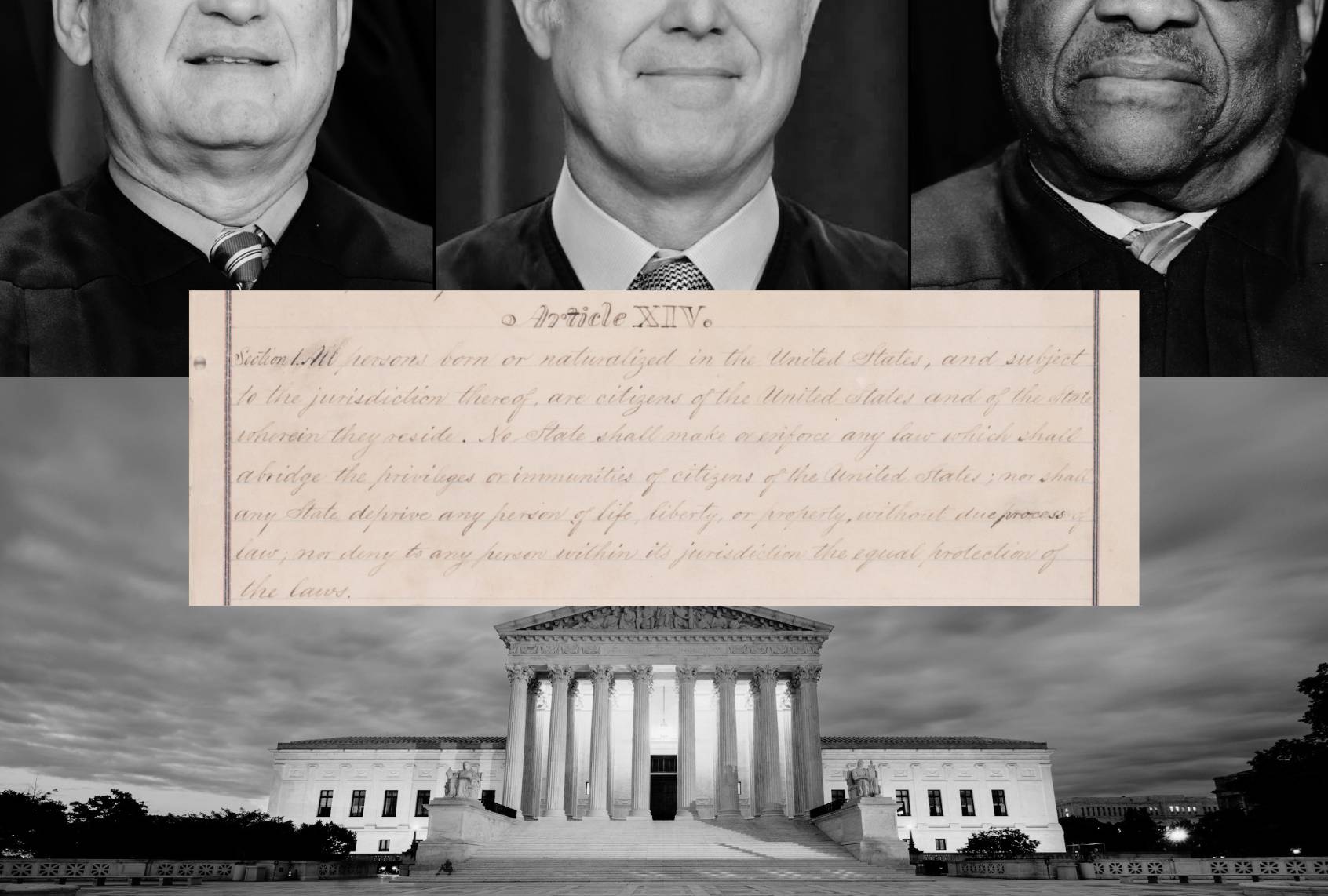
Breathe a sigh of relief, sure. But do not cheer—and do not be cheered by—the Supreme Court’s refusal to let President Trump eliminate the constitutional guarantee of birthright citizenship. That outcome would have been cataclysmic—impossible to administer and likely to create a permanent underclass of millions of American-born children lacking legal status. As the majority opinion, by Chief Justice John Roberts, outlined, it would have flown in the face of English common law, the language of the Fourteenth Amendment, the long-settled precedents interpreting it, and the actions of Congress endorsing that view. But the vote was unnervingly close—closer than the 6–3 bottom line suggested. Four conservative Justices—Clarence Thomas, Samuel Alito, Neil Gorsuch, and Brett Kavanaugh—signed on to the extreme position that the Constitution does not mean what it has long been understood to say: that, with minor exceptions, children born in the United States are automatically citizens. The only thing that saved this case from being a slim 5–4 ruling, vulnerable to the shift of a single Justice, was Kavanaugh’s determination that a separate federal law protects birthright citizenship.The best way to understand this Court’s relationship with the President is that some of the conservative Justices are willing, some of the time, to resist him. Last December, on its emergency docket, the Court blocked Trump’s deployment of National Guard troops to Chicago. In March, the Court rejected his assertion of emergency power to impose tariffs, as Roberts put it, on “any country, of any product, at any rate, for any amount of time.” On Monday, the Justices prevented Trump from firing the Federal Reserve Board governor Lisa Cook over allegations of mortgage fraud. (Cook has said the allegations are baseless.) Again, these moves are not ground for celebration—they are the least that should be expected from a Court dealing with an out-of-control President.But the conservative Justices’ zeal for maximizing executive power means that they are more often inclined to accommodate Trump than to block him. So, on Monday, even as the Court drew the line at Fed independence, it granted the President sweeping new control over formerly independent agencies, with the ability to fire officials for any reason, or none whatsoever. This outcome, which overturned the 1935 decision known as Humphrey’s Executor, has long been on conservatives’ wish list; Trump’s aggressive moves to fire Democratic commissioners at the Federal Trade Commission and other agencies simply teed up the opportunity for the conservative Justices. Roberts, seizing the moment, wrote, “Subordinates who exercise the President’s power are subject to removal by him. Then, and only then, can they remain accountable to the President, and the President to the people.” Justice Sonia Sotomayor, dissenting with the two other liberal Justices, Elena Kagan and Ketanji Brown Jackson, warned that the ruling “distorts the structure of Government to fit the majority’s theory of unitary, total executive control. The result is a President who emerges with far greater power than ever before.” How much greater remains to be seen: some conservatives argue that Trump, as President, has untrammelled power to fire other federal workers, and are urging the President to use the ruling to accomplish that end. Sotomayor warned that the majority’s approach “promises to unleash only chaos,” adding that it “at best consigns these issues to years of future uncertainty and at worst risks the end of the employment protections that apply to members of the civil service.”If anything, this term served to reinforce the dominance of the conservative majority, its willingness to overturn precedents, and the ideological chasm between the Court’s liberal and conservative wings. It saw a doubling, compared with the previous term, of the share of cases in which the Justices split 6–3 along ideological lines. Last week, the Court said a Rastafarian inmate whose dreadlocks were shaved by prison guards, in violation of his constitutional rights, could not sue officials for damages; the ruling put the majority to the right of the Trump Administration, which supported the prisoner, and may set the stage for future restrictions on Congress’s use of federal funds to control state behavior. Two days later, it struck down a Hawaii law barring concealed-carry permit holders from bringing their guns into privately owned spaces without permission. On Tuesday, the Court allowed states to block transgender girls from participating in girls’ and women’s sports. It also freed political parties to spend unlimited amounts in coördination with their candidates, jettisoning a two-decade-old precedent and leaving what Kagan termed “a legal regime increasingly unable to stop political corruption.”For liberals, this term served as a definitive dashing of hopes: that the Chief Justice’s institutionalist tendencies would overcome his innate conservatism; that Kavanaugh’s craving for acceptance from the liberal legal academy would lead him to episodic defections; that Justice Amy Coney Barrett would reveal herself to be more moderate than legal analysts anticipated. Yes, Kavanaugh and Roberts forged a five-Justice majority with the liberals in the Lisa Cook case, in addition to an earlier ruling involving efforts to exclude Black jurors. Yes, Barrett and Roberts sided with the liberals in rejecting the Republican National Committee’s effort to invalidate state laws that accept mail-in ballots that arrive after Election Day. (Their fellow-conservatives appeared less moved by concern for states’ rights than by a Fox News-inspired vision of rigged elections; Alito, in dissent, invoked the spectre of party operatives, ballot harvesters, or Uber drivers collecting absentee votes, warning that the ruling “risks further undermining Americans’ confidence in election integrity.”) But the three, though they pass for swing Justices, are not swinging very often.According to data compiled by the website SCOTUSblog, ten per cent of rulings from the 2005 to the 2024 terms divided along ideological lines; since the 2020 term, when Barrett joined the Court, fourteen per cent of cases have been ideologically split. This year’s line-hardening—by my count, some twenty-three per cent of cases—is both remarkable and troubling. A Court in which outcomes can be confidently predicted in advance, at least in the most politically charged cases, is as unhealthy as a Congress composed almost entirely of safe seats.Conservative Justices, bristling at insinuations of bias or partisanship, like to point to the significant share of cases that are decided unanimously. “Nine old people appointed by five different Presidents over the course of thirty years from all around the country, and we are able to resolve cases lower courts disagreed on unanimously forty per cent of the time,” Gorsuch said in an appearance at the Ronald Reagan Presidential Foundation last month. “I think that’s something.” In her book, “Listening to the Law,” Barrett cited statistics from the Court’s 2022 term: “forty-seven percent of the cases were decided unanimously,” she wrote, and “only five of fifty-eight decisions broke down by party of appointing president.”In an interview last month at the George W. Bush Presidential Center, Barrett was asked about those statistics and perceptions of the Court as a polarized institution. “It bothers me because it’s not accurate,” she said. “The thing about the partisan breakdown is—that’s just not true.” But the focus on unanimity is misleading. Many of the cases the Justices hear are mind-numbing, as in this ruling last month: “The provisions of ERISA governing the calculation of withdrawal liability—§§1391 and 1393—do not require the actuarial assumptions underlying that calculation to be selected on or before the measurement date.” Unanimity doesn’t prove much in these instances. (A more interesting moment occurred this term when the Court ruled unanimously that it violated the Second Amendment to prosecute a marijuana user for gun possession.) More to the point, Barrett’s claims about partisanship as an inaccurate media “narrative” have been overtaken by reality. Her five of fifty-eight party-line rulings swelled this term to thirteen of fifty-six.The defining moment of the term—the one that exposed what this Court is about and that will reverberate for decades—was not birthright citizenship but the Court’s lunge, in a redistricting case from Louisiana, to undo the remaining protections of the Voting Rights Act. Namely, Section 2 of the law, which bars election practices that prevent voters from electing the candidate of their choice. No matter that in 1982, Congress, seeking to reverse an earlier Supreme Court ruling that limited Section 2, made clear that it was supposed to cover practices that had a discriminatory effect, whatever their intent. No matter that the Court, in its 2013 ruling in Shelby County v. Holder, in eviscerating a different part of the Voting Rights Act, pointed to the continuing protections of Section 2. No matter that, just three years earlier, the Court had upheld the use of Section 2 in a redistricting case from Alabama, with Roberts and Kavanaugh in the majority. “Nothing has changed,” Kagan wrote, dissenting from what she termed “this latest chapter in the majority’s now-completed demolition of the Voting Rights Act.”Demolition is the business of this Court. It is, though maybe not as quickly as Trump bulldozed the East Wing, inexorably and perhaps irrevocably erasing the work of previous Courts with which it disagrees. In the past five years, it has eliminated the constitutional right to abortion, outlawed affirmative action in higher education, and abandoned the forty-year-long practice of deferring to administrative agencies’ interpretations of the laws they enforce. This term, the Court, while claiming a mere “updating,” effectively did away with its precedents on redistricting in the Voting Rights Act decision. It was more straightforward in explicitly overruling the campaign-finance case and Humphrey’s Executor. Roberts’s opinion in the latter case mocked the liberals’ dissent as an “ode to stare decisis,” the legal doctrine that affirms, as Kagan has put it, “today’s Court should stand by yesterday’s decisions.” Today’s Court is not about standing by; it is about suiting up. Long after Trump is gone, the Court he helped build—a Court that at times enrages the President and more often enables him—will remain in power. ♦
The Supreme Court’s Check on Trump’s Power Was Too Close for Comfort
If anything, this term served to reinforce the dominance of the conservative majority, its willingness to overturn precedents, and the ideological chasm between the court’s liberal and conservative wings.
1,634 words~7 min read