For a while my deploy pipelines all worked the same way. Generate an IAM user, copy its access key and secret into GitHub repo secrets, and let the workflow use them. It deploys fine. It also means a long-lived credential to my AWS account is sitting in a third party's vault, valid until I remember to rotate it, which I never do.
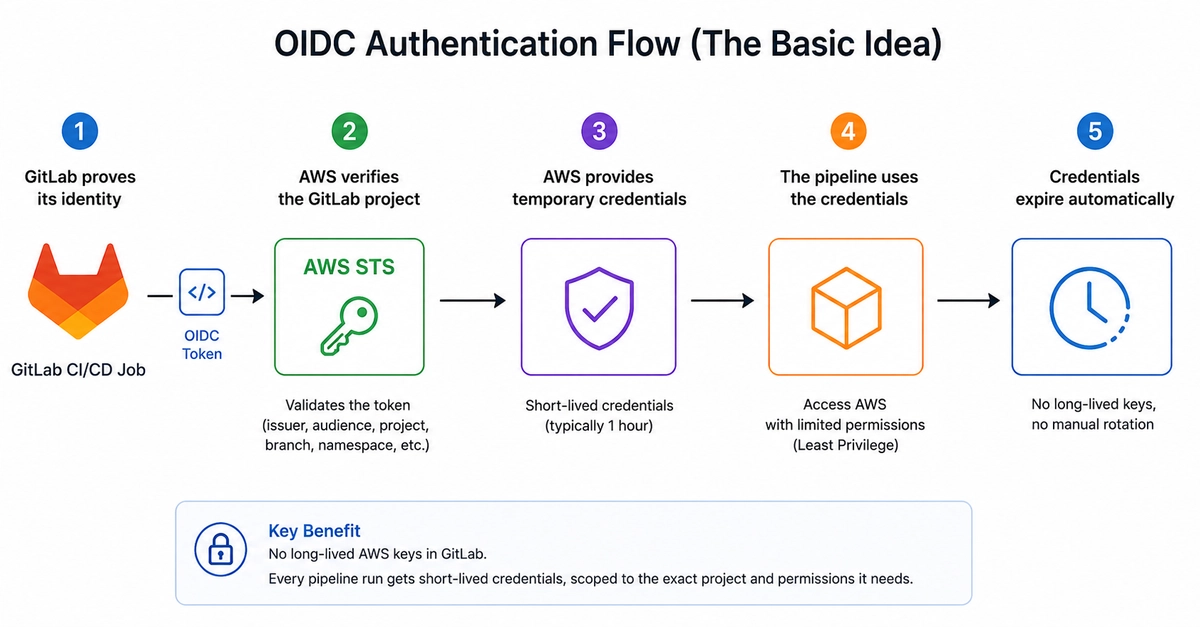
For Wingman I cut that out. The GitHub Actions workflow holds zero AWS keys. It asks GitHub for a short-lived token at runtime, hands that token to AWS, and AWS gives back temporary credentials that expire when the job ends. This is OIDC federation. Below is how it's wired, the parts that are easy to get wrong, and one decision I'm still not happy about.
The problem with the old way
An IAM user access key is a static secret. Once it exists, anyone who can read it can use it from anywhere, forever, until it's rotated or deleted. Storing it in GitHub Secrets means the blast radius of a GitHub breach now includes my AWS account. It also means I own a rotation chore I will forget.
What I actually want: GitHub should be able to deploy this one repo to this one account, prove who it is on each run, and never hold a credential longer than the run takes.