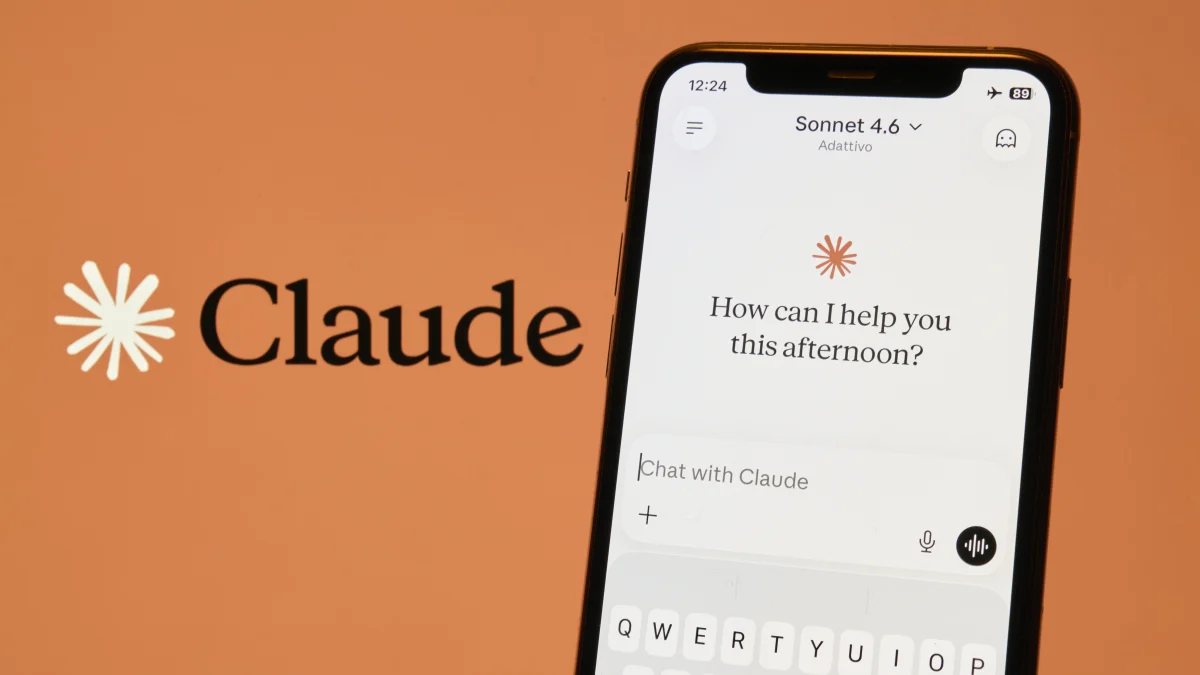
AI developers today face a dual challenge: build state-of-the-art models that deliver big benefits at the lowest possible cost, and do so in a way that you won’t attract the ire of the federal government. Anthropic—which knows that ire better than any other company in Silicon Valley—has tried to thread that two-eyed needle with its latest model, Claude Sonnet 5. Released on Tuesday, the new model is designed to balance agentic capability with frugality. Its performance across a suite of benchmarks is comparable to the more powerful Opus 4.8, but with a smaller price tag: When accessed through Claude Code, Sonnet 5 costs $2 per million input tokens and $10 per million output tokens—less than half the price of Opus 4.8. Sonnet 5 “can make plans, use tools like browsers and terminals, and run autonomously at a level that, just a few months ago, required larger and more expensive models,” Anthropic wrote in its announcement. Sonnet 5 is now the default model on Claude’s free and Pro tiers, and also available to Max, Team, and Enterprise subscribers.
It arrives at a time when tech developers have been facing mounting pressure to provide customers with cheaper AI tools. That’s largely been driven by the proliferation of so-called AI agents throughout the business world, which can autonomously handle complex tasks over relatively long time horizons. They therefore tend to gobble up many more tokens—the basic unit measuring AI usage—than more limited systems, like a chatbot trained only to, say, field customer service questions. Both Anthropic and OpenAI have reportedly been considering big price cuts in order to attract new users, and keep current ones.