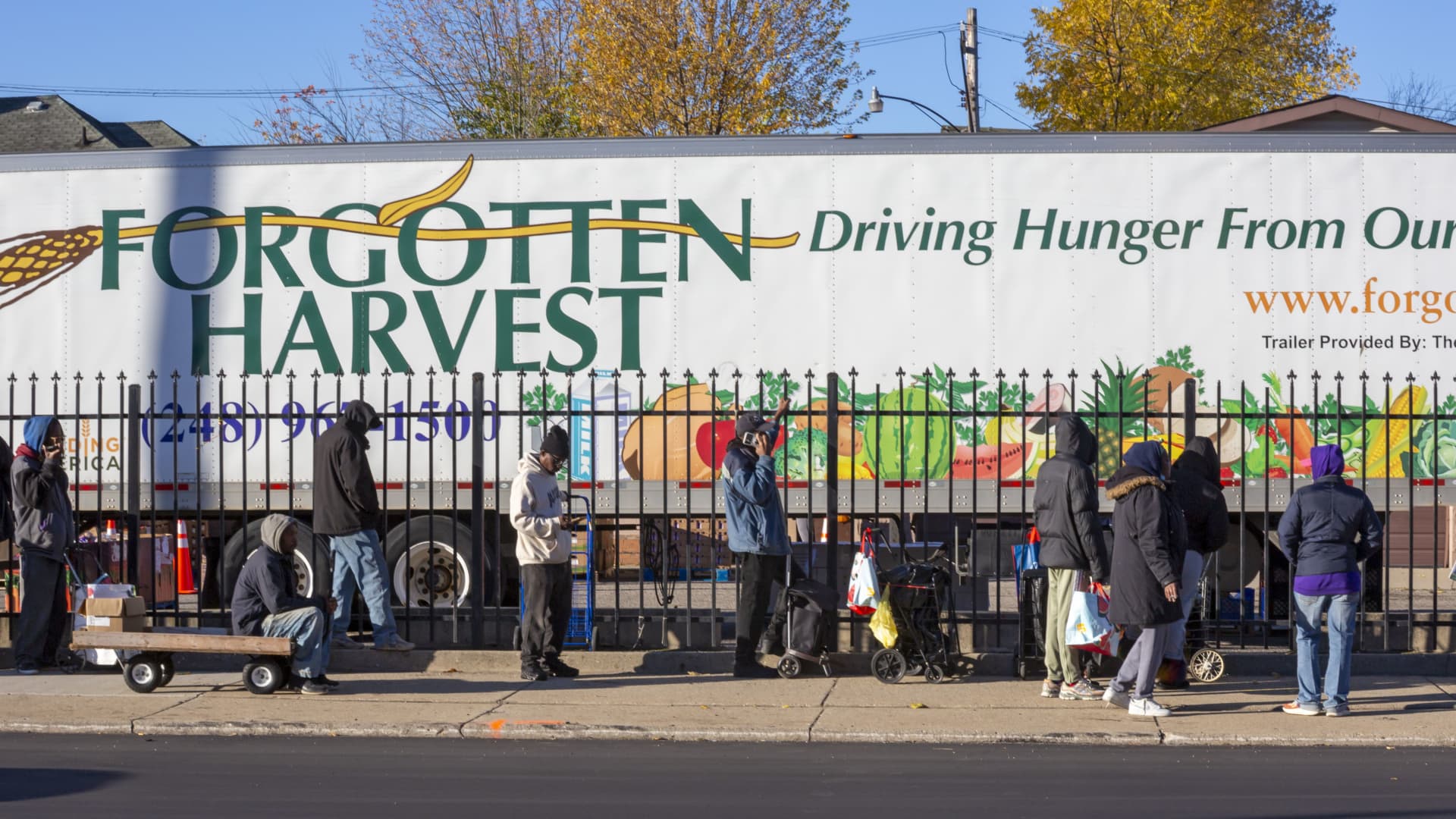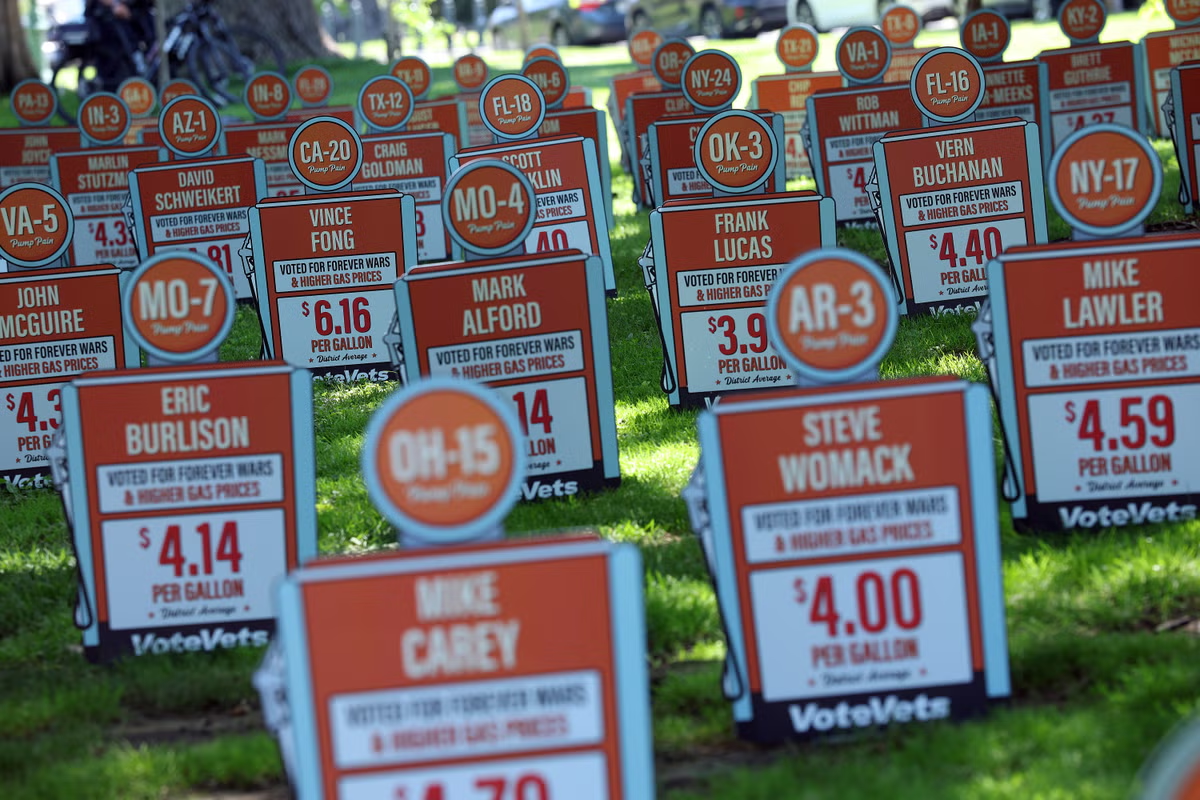
More than a third of working Americans are left with no money from their paycheck at the end of the month, according to a new poll, a red flag on the precipitous nature of millions of people’s finances. What’s more, nearly 40 per cent of people are left with less than $50 margin, according to a survey of 1,183 Americans by financial services firm Self Financial.”The cost-of-living crisis continues to put a heavy financial strain on many Americans,” the study said. To make ends meet, roughly 60 percent of consumers are going into debt, and 95 percent of those living paycheck to paycheck have pulled from savings over the past 12 months to cover spending shortfalls, according to the research.The desperate situation is being driven by a disparity between inflation and wage growth rates, the survey noted. Nearly 40 per cent of people are left with less than $50 margin at the end of each month, a survey has found (AFP/Getty)The average American’s pay increased by 3.7 percent from May 2025 to May 2026 but inflation rose 4.2 percent over that same time, according to nonpartisan data analysis firm USA Facts. With wages lagging behind inflation, consumers’ dollars can’t keep up with the cost of everyday items.People have coped with rising costs by cutting back on what they buy. Nearly half of Americans have reduced spending on daily expenses to make room for climbing gas prices, and another 44 percent said they were driving less, according to an April poll fromWashington Post/ABC News/Ipsos.Several grocery staples cost at least 10 percent more in May 2026 than they did in May 2025, according to the Bureau of Labor Statistics. Uncooked ground beef prices were up 12.1 percent, fresh vegetables rose 11.9 percent and roasted coffee was up 16.1 percent compared to a year earlier.Gas alone cost Americans an extra $59 billion from the start of the Iran war on February 28 through the end of May, CNBC reported. The Iran war has cost consumers around $1,000 per household since it started February 28, according to Mark Zandi, chief economist at Moody’s credit ratings and research group. President Donald Trump has tried to downplay the average American’s dire financial situation. In May, the president told reporters at the White House that he didn’t think about consumers’ affordability problems when negotiating with Iran.“I don’t think about American financial situation ... I think about one thing: We cannot let Iran have a nuclear weapon,” he said. President Donald Trump has tried to downplay the average American’s dire financial situation. In May, the president told reporters at the White House that he didn’t think about consumers’ affordability problems when negotiating with Iran (AFP via Getty Images)On Monday, the president demanded that gas retailers drop their prices to help struggling Americans. “Gasoline Retailers must get their Prices down, IMMEDIATELY!” he wrote on Truth Social.In the meantime, Americans’ outlook on their finances has only slightly improved from May to June as gas prices started to fall.Consumer sentiment hit an all-time low in May - 44.8 percent - according to the University of Michigan’s Survey of Consumers. Sentiment improved by 10 percent in June, as gas prices inched away from multi-year highs, the survey noted. Consumers still feel pressure on their wallets, though.“The cost of living remains at the forefront of consumers’ minds; for the third straight month, over half of consumers spontaneously mentioned that high prices are weighing down their personal finances,” the June edition of the consumer survey noted.
A third of working Americans say they are left with $0 at the end of every month
‘The cost-of-living crisis continues to put a heavy financial strain on many Americans,’ study finds
582 words~3 min read