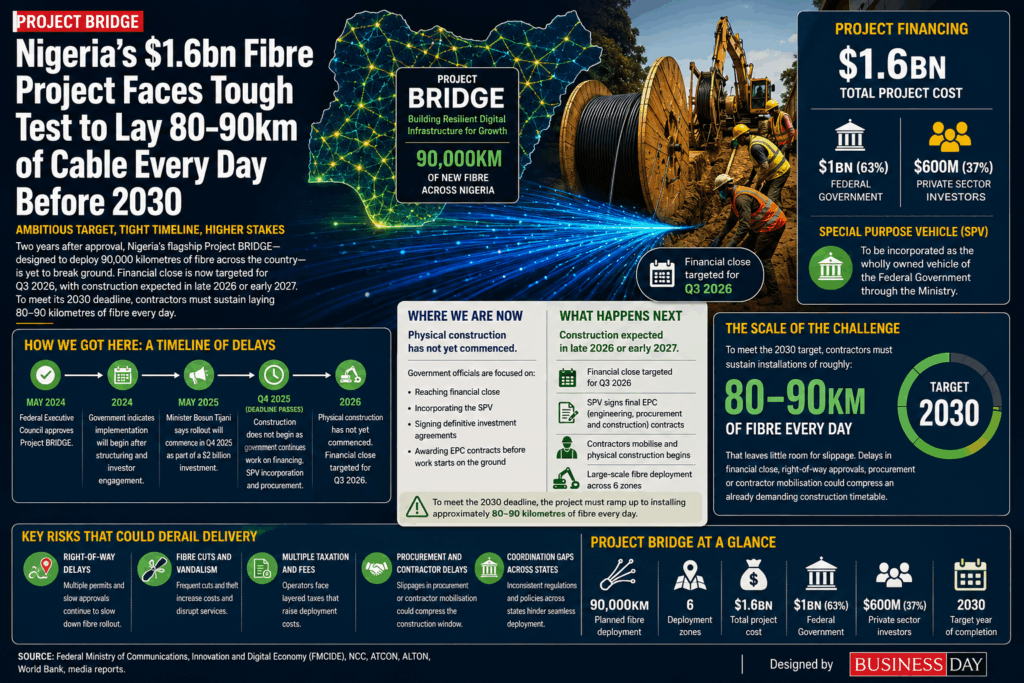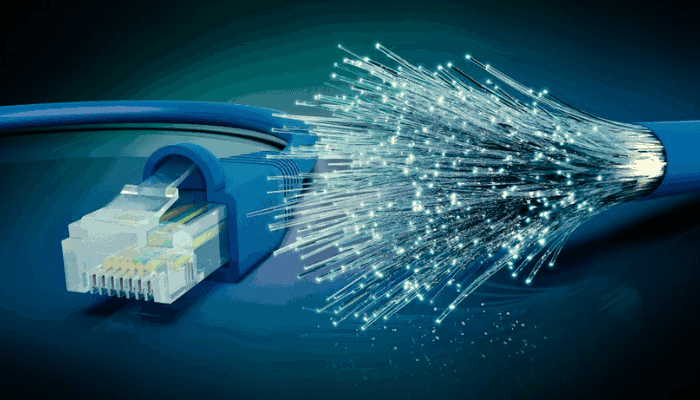
Nigeria’s impressive broadband growth is concealing a major weakness in the country’s digital infrastructure, with only about 265,000 homes connected to Fibre-to-the-Home (FTTH) services despite more than 154 million active internet subscriptions nationwide, BusinessDay findings revealed.
This stark disparity highlights a digital infrastructure paradox in that, explosive mobile-driven growth conceals severe weaknesses in fixed, high-capacity connectivity essential for the modern economy.
While overall broadband penetration climbed to 55.67 percent from 48.81 percent the previous year, and monthly data consumption surged to an average of 1.4 million terabytes, fueled by video, cloud services, e-commerce, remote work, and AI, the vast majority of users rely on mobile networks ill-suited for reliable, symmetrical high-speed needs at scale.
Read also: Broadband boom meets wallet crunch as data consumption falls
The home has evolved into a multifaceted hub for learning, work, business, and services, yet most Nigerians cannot access the stable, low-latency connections required.