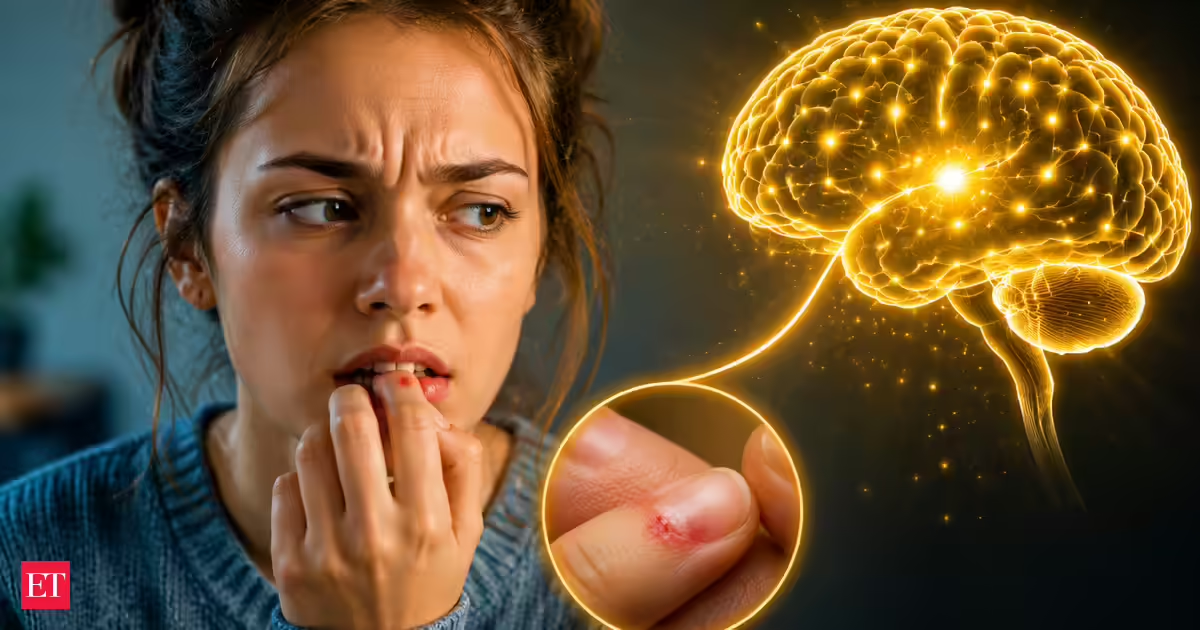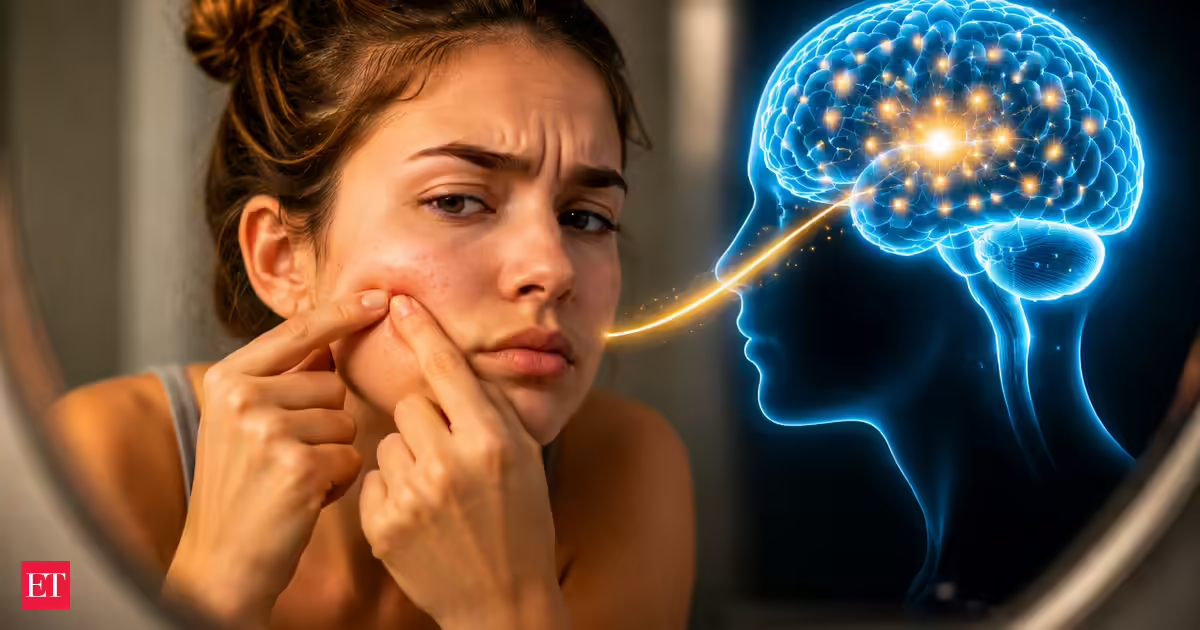
Many people know they probably shouldn't pop a pimple. Dermatologists often warn that squeezing blemishes can increase the risk of infection, scarring, or prolonged healing. Yet despite knowing this, millions of people still find themselves reaching for the mirror and trying to pop every visible blemish. Psychology suggests that this common habit isn't simply about appearance or self-control. For many people, it reflects how the brain responds to temporary relief, habit, and the desire to resolve something that feels incomplete.That doesn't mean everyone who pops pimples has a psychological disorder. In fact, occasional pimple popping is extremely common. However, researchers have identified several psychological processes that help explain why the behavior can become repetitive.The brain rewards behaviors that bring immediate reliefOne of the strongest explanations comes from Operant Conditioning, developed by psychologist B. F. Skinner. Behaviors that produce an immediate reward are more likely to be repeated. When someone pops a pimple, they may experience a brief feeling of satisfaction or relief because the visible blemish has changed.Even if the long-term outcome is worse for the skin, the brain often responds more strongly to the immediate reward. Over time, this short-term satisfaction can reinforce the habit.You Might Also Like:Negative reinforcement can strengthen the behaviorPsychologists also describe Negative Reinforcement, which occurs when a behavior removes something unpleasant. For example, a raised pimple may feel uncomfortable or draw constant attention.Popping it may temporarily reduce that feeling of discomfort or eliminate the urge to keep looking at it. Because the unpleasant feeling decreases, the brain learns that squeezing provides relief. This increases the likelihood that the same behavior will happen again the next time a blemish appears.Habits develop through repetitionAnother explanation comes from Habit Formation Theory. Researchers have found that repeated behaviors performed in similar situations gradually become automatic. Imagine someone who checks their face in the bathroom mirror every evening.At first, they pop an occasional pimple.After months of repeating the same routine, seeing a blemish automatically triggers the urge to squeeze it. Eventually, the behavior may occur with very little conscious thought.Some people are especially sensitive to visual imperfectionsPsychologists have found that people naturally pay attention to features they believe stand out. A small pimple that other people barely notice may feel highly noticeable to the individual looking in the mirror.You Might Also Like:This reflects Selective Attention, where the brain focuses intensely on one specific feature while ignoring the overall picture. For example, someone may spend several minutes examining a tiny blemish that friends or coworkers never even notice. The more attention the blemish receives, the stronger the urge may become to "fix" it immediately.Stress can increase repetitive behaviorsResearch suggests that stress can make many repetitive habits more likely. Some people tap their feet. Others bite their nails. Some twist their hair. Others begin picking at their skin. For certain individuals, popping pimples may temporarily reduce feelings of tension during stressful moments.Psychologists refer to these patterns as Body-Focused Repetitive Behaviors (BFRBs) when they become frequent, difficult to control, and cause noticeable distress or physical damage. However, occasional pimple popping alone does not mean someone has a BFRB.The desire for completion may also play a roleAnother psychological concept that may help explain the urge is the Zeigarnik Effect. This theory suggests that unfinished or incomplete tasks tend to remain active in our minds.A visible whitehead or raised blemish may feel like something that needs to be completed or resolved. For example, someone may find it difficult to stop thinking about a noticeable pimple until they have attempted to remove it. The urge often fades after the action feels "finished," even if the skin becomes temporarily worse.Popping pimples doesn't automatically indicate a mental health problemA common misconception is that everyone who pops pimples has obsessive tendencies or a psychological disorder. Psychology does not support that conclusion.Many people occasionally squeeze a pimple simply because they want clearer skin or dislike the appearance of blemishes. Mental health professionals generally become concerned only when skin-picking becomes repetitive, causes injury, creates significant distress, or interferes with daily life.Psychology suggests that the urge to pop pimples is often shaped by the way the brain responds to habits and rewards. Factors such as stress, learned routines, selective attention, and the desire to eliminate visible imperfections can all make the behavior feel compelling. For many people, squeezing a pimple provides a brief sense of relief or satisfaction, reinforcing the habit over time. Rather than being a simple sign of poor self-control, it is often the result of psychological processes that make the behavior feel rewarding, even when someone knows it could harm their skin. FAQsWhy do people enjoy popping pimples?Psychologists say the brain may experience temporary satisfaction or relief after removing a visible blemish, reinforcing the behavior over time.Why is it so hard to stop popping pimples?Habit formation, reward learning, selective attention, and temporary emotional relief can all make the behavior feel automatic.
Psychology says people who always pop their pimples don’t have the urge for clear skin, they may be responding to their brain's reward system
Popping a pimple creates a short-lived feeling of relief or accomplishment for many people, which can strengthen the behavior each time it happens. Rather than reflecting poor self-control, the habit is often reinforced because the brain begins to associate it with a temporary sense of satisfaction, making the urge increasingly difficult to resist.
812 words~4 min read