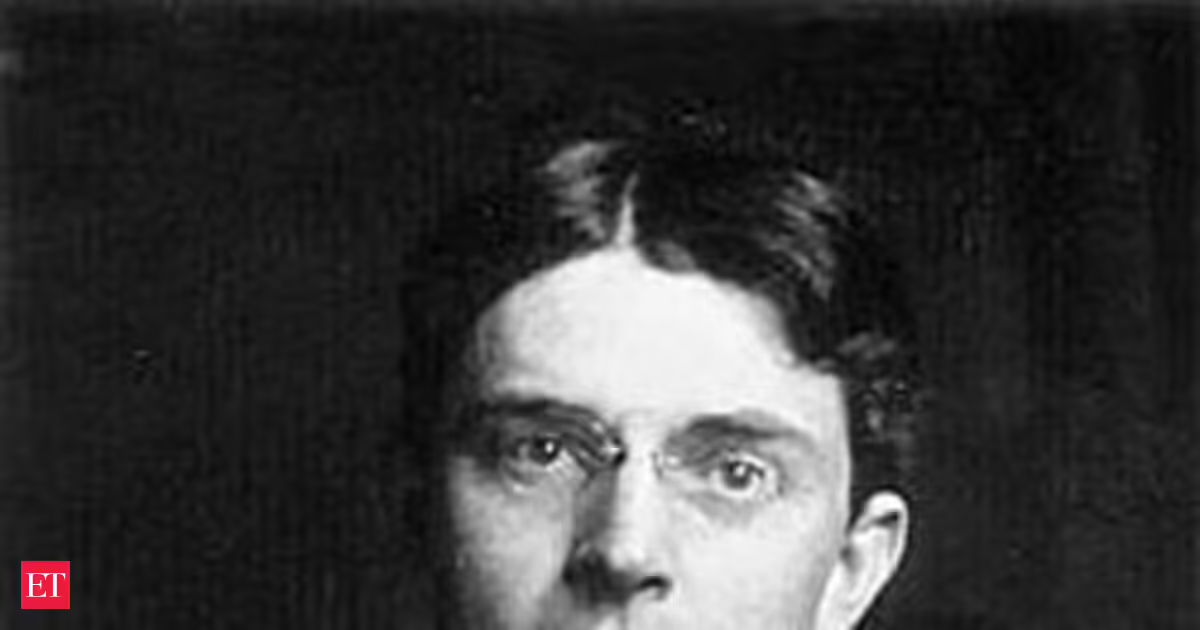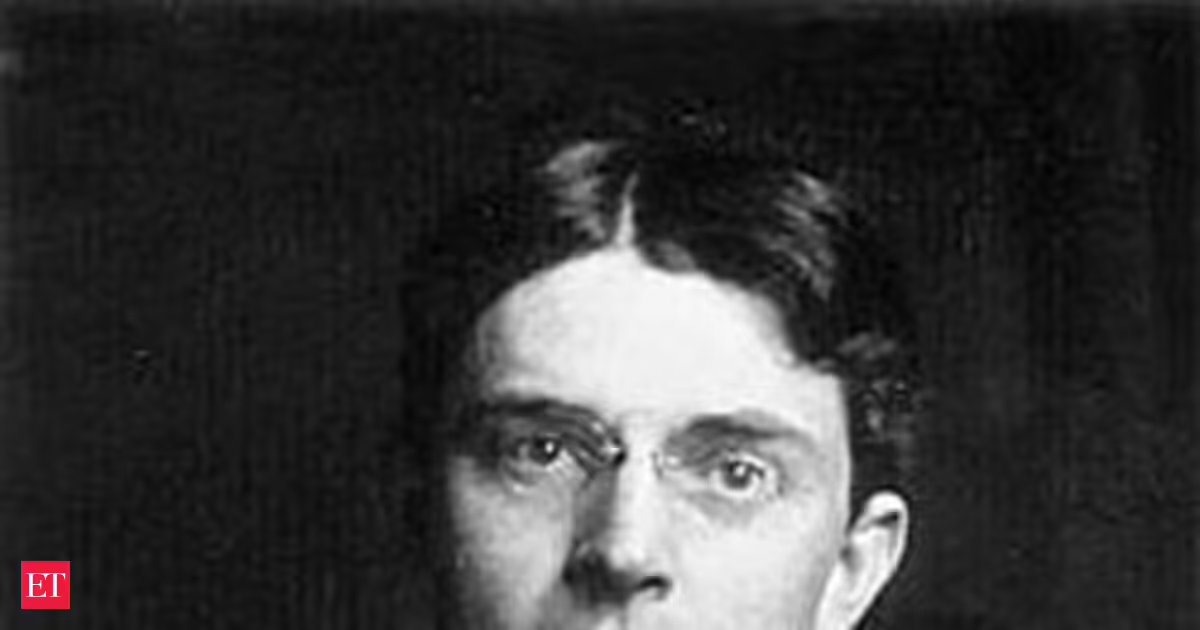
Quote of the Day by John B. Watson: Human behavior is shaped through learning, environment, and the experiences people are exposed to from childhood. Watson’s quote, “The universe will change if you bring up your children, not in the freedom of the libertine, but in behavioristic freedom” explores the importance of structured upbringing and guided learning in forming responsible individuals.The quote suggests that children should not be raised in unlimited or uncontrolled freedom, but within a framework of discipline, reinforcement, and behavioral guidance that helps shape positive habits and socially responsible behavior. In today’s world of psychology, education, and child development, this idea remains highly relevant. It reminds us that the foundation of a stable and progressive society begins with how children are raised and conditioned during their formative years. Watson’s words continue to emphasize the role of environment, learning, and structured freedom in shaping human behavior and future generations.Quote of the Day by John B Watson: “The universe will change if you bring up your children, not in the freedom of the libertine, but in behavioristic freedom”Meaning of John B. Watson’s Quote About Child DevelopmentJohn B. Watson’s quote, “The universe will change if you bring up your children, not in the freedom of the libertine, but in behavioristic freedom,” explores the importance of structured upbringing, environmental influence, and learned behavior in shaping human development. The phrase “freedom of the libertine” symbolizes completely unrestricted freedom, where children are allowed to act without guidance, discipline, or behavioral boundaries. Watson suggests that such an approach can lead to instability in behavior and poor social adjustment.However, the deeper meaning of the quote emphasizes “behavioristic freedom,” where children are given freedom within a structured system of learning, reinforcement, and discipline. This approach helps shape habits, responsibility, and socially acceptable behavior through consistent guidance. A well-balanced upbringing, according to Watson, does not remove freedom but channels it through structure and conditioning. Ultimately, the quote highlights that human behavior is not random—it is shaped by environment, teaching, and early experiences, which together influence the future of both individuals and society.Early Life of John B. WatsonJohn B. Watson was born on January 9, 1878, in Travelers Rest, South Carolina, USA. He grew up in a modest rural environment, where early life experiences shaped his interest in understanding human behavior. His family background was not academically privileged, but Watson showed strong determination and curiosity from a young age. These early experiences later influenced his belief that environment plays a crucial role in shaping personality and behavior.Education and Academic DevelopmentWatson studied at Furman University, where he initially focused on philosophy and psychology. He later earned his PhD in psychology from the University of Chicago. During his academic journey, he became deeply influenced by experimental psychology and the study of observable behavior. This led him to challenge traditional approaches that focused on the mind and instead promote behaviorism, which emphasizes measurable actions and environmental influence.Rise as a Psychologist and Behavioral TheoryJohn B. Watson rose to prominence as the founder of behaviorism, a major school of psychology. He argued that psychology should focus on observable behavior rather than internal mental states. His famous experiments, including the “Little Albert” study, demonstrated how fear and emotional responses could be conditioned. Watson’s work reshaped modern psychology and influenced education, parenting, advertising, and behavioral science.Impact, Controversy, and Later LifeWatson became a leading figure in early 20th-century psychology, but some of his experiments and views later faced ethical criticism. Despite controversy, his ideas on conditioning and environmental influence remained highly influential. He eventually left academic psychology and worked in advertising, applying behavioral principles to consumer behavior. Watson passed away on September 25, 1958, but his theories continue to shape modern psychological thought.Legacy and Lasting InfluenceJohn B. Watson is remembered as one of the pioneers of behaviorism. His ideas emphasized that human behavior is largely shaped by environment, learning, and conditioning rather than innate traits alone. His work laid the foundation for later psychologists like B.F. Skinner continues to influence education, therapy, parenting styles, and behavioral research. Today, Watson’s legacy remains central to understanding how experience shapes human behavior and development.Life Lessons from John B. Watson’s Famous QuoteJohn B. Watson’s quote highlights that human behavior is strongly influenced by environment, learning, and early upbringing. His idea of “behavioristic freedom” suggests that true development does not come from unrestricted freedom, but from structured guidance where behavior is shaped through discipline, reinforcement, and consistent learning. This approach emphasizes that habits, attitudes, and actions are not random but formed through experience and conditioning. In modern education and parenting, this message is especially relevant because it shows how important structure and guidance are in shaping responsible individuals. Watson’s words remind us that freedom is most effective when it is balanced with boundaries, helping individuals develop discipline, emotional control, and social responsibility. True growth comes not from lack of limits, but from learning how to function within them.Why This Quote Still Matters TodayJohn B. Watson’s quote remains highly relevant today because it connects directly to education systems, parenting styles, and child psychology. In a world where freedom is often misunderstood as the absence of rules, this idea reminds us that structure is essential for healthy development.Modern society often deals with behavioral challenges, lack of discipline, and emotional imbalance, which makes Watson’s message even more important. It highlights that children learn best when guidance, consistency, and reinforcement are present. Healthy development requires a balance between freedom and responsibility, not total independence without direction. Watson’s perspective continues to influence how we think about learning, habits, and behavior formation, showing that early experiences play a crucial role in shaping future success.Behavioral WisdomJohn B. Watson’s quote reflects a deeper truth about human development and self-control. Behavior is not only a result of choice but also of environment and repeated learning experiences. Understanding this helps explain why habits form and how they can be changed. True behavioral wisdom lies in recognizing that discipline and structure are not restrictions, but tools for growth. When individuals learn within a guided system, they are more likely to develop stability, responsibility, and emotional balance. This wisdom remains important in both personal development and social life, as it shows how behavior is shaped and improved over time.
Quote of the Day by American psychologist John B. Watson: “The universe will change if you bring up your children, not in the… — Inspiring lessons on child development, parenting, learning, discipline and why structured upbringing shapes responsible individuals by the founder of behaviorism known for his deep insights into human behavior and conditioning
Quote of the Day by John B. Watson: John B. Watsons quote, “The universe will change if you bring up your children, not in the freedom of the libertine, but in behavioristic freedom” explores the importance of structured upbringing, learned behavior, and environmental influence in shaping human development. The quote suggests that children should not be raised in complete unrestricted freedom, but within guided boundaries where behavior is shaped through discipline, learning, and conditioning, leading to more responsible individuals and a better society.
1,035 words~5 min read