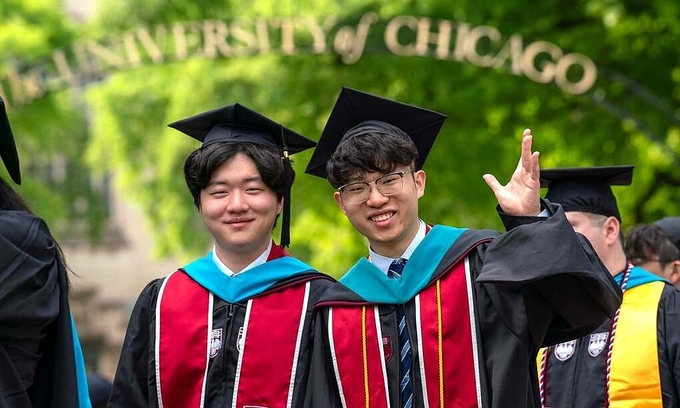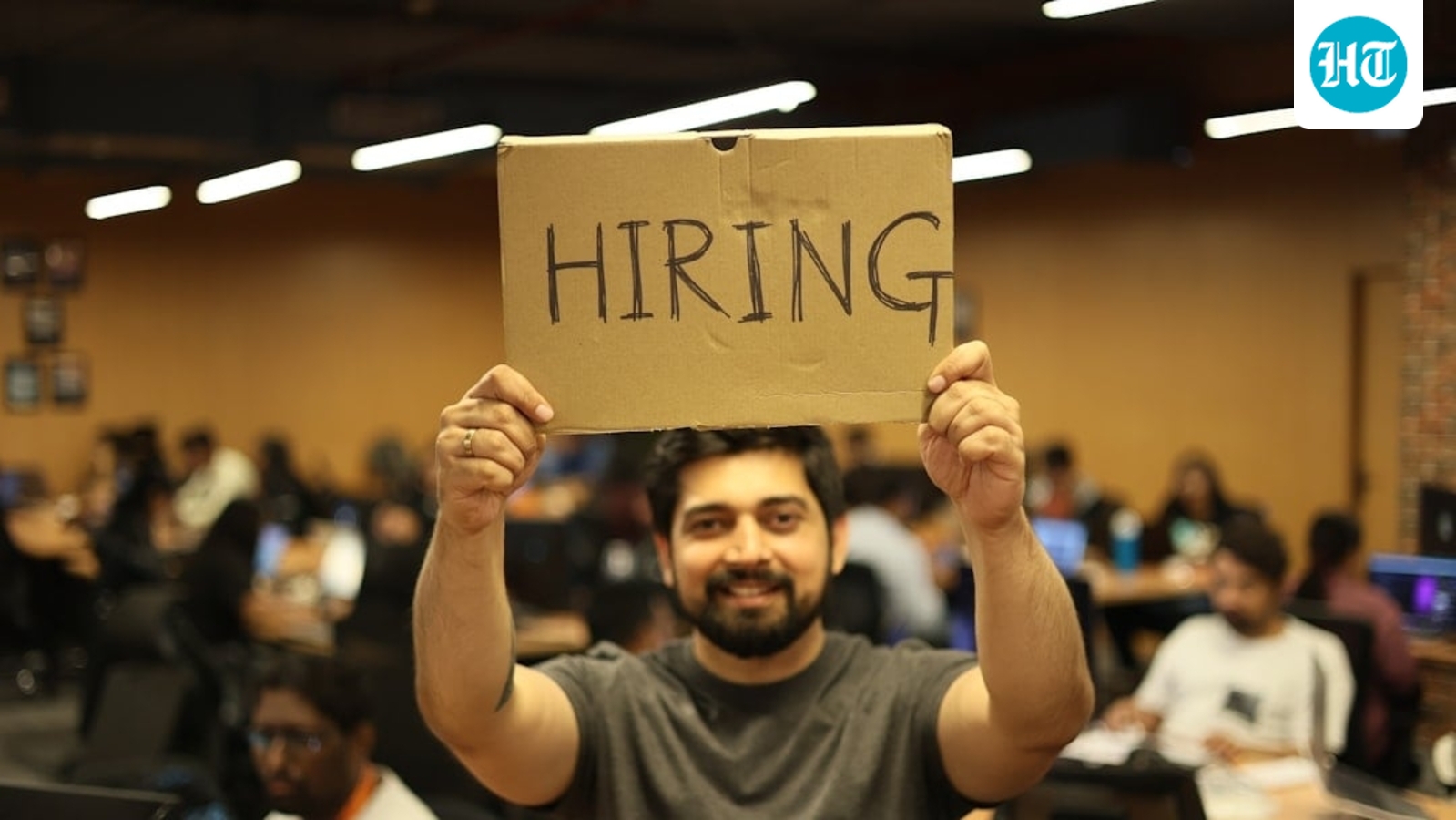
GettyChoosing a college major has always been a big life decision, influenced by not only personal inclinations and talents, but also by starting salaries. In today’s labor market, however—where hiring has slowed, artificial intelligence is reshaping industries, and many once-booming job categories have cooled off—young people should be asking themselves an additional question when selecting a major: How many career paths can I take with my chosen degree?New LinkedIn data, provided exclusively to Forbes, shows that the key to young professionals successfully navigating today’s uneven job market may depend on whether their degree is flexible enough to land them a job in multiple industries. With overall hiring down 20% from pre-pandemic levels and 5% from last year, LinkedIn analyzed the 20 most common majors on their platform among recent bachelor degree graduates and looked at two factors: hiring conditions in the industries most traditionally related to a major and versatility to pivot to other industries.According to the data, engineering graduates, who likely thought they’d picked a safe and lucrative major, not only face a weak hiring market, but also have more specialized skills that aren’t as versatile or as useful in as many industries. Meanwhile, professionals with social sciences and humanities degrees are in a “sweet spot,” said LinkedIn’s Head of Economics, Americas, Kory Kantenga, because even if they can’t find a job in their desired field, over 60% have been able to find work in other industries despite today’s low-hire market. He points to English majors as a specific example, where 69% have found jobs outside of their traditional industries. During a time when AI is automating more routine tasks, Kantenga emphasized that human skills that can’t be duplicated by tech are increasingly important. “When I was in college, it was this running joke that English majors would be unemployed, and it turns out that communication is actually an essential skill for so many jobs that a lot of folks do not have,” Kantenga said. “So at the moment, that major is really where there’s just a lot of versatility, and there’s enough versatility to where they can capture some of the hiring momentum from other industries.” Read more here to see which college majors offer the most career flexibility and why experts say versatility may be one of the biggest competitive advantages for new graduates today. This is a published version of Forbes’ Careers newsletter. Click here to subscribe and get it in your inbox every Tuesday. WORK SMARTER Practical insights and advice from Forbes staff and contributors to help you succeed in your job, accelerate your career and lead smarter.If you want constructive feedback after a job rejection, here is the right way to ask for it, with advice from business professor Andy Molinsky.Is there office politics at your workplace? Odds are the answer is yes. Discover the playbook and three crucial traits to navigate and thrive in an office environment from psychology expert Jason Walker.If you want to build a more secure career, you need one that doesn’t rely on a single job. Here is an action plan to grow your skills and income diversification from career coach Sho Dewan.Are you being managed out of your job? Learn five warning signs and key ways to protect your career, with strategies from executive coach Caroline Castrillon.GettyDeep Dive: Court Hands Graduate Nursing Students A Temporary Borrowing ReprieveGraduate nursing students recently scored a temporary legal victory after a federal judge blocked the U.S. Department of Education from enforcing a new definition of a “professional degree,” reopening the fight over financing nursing education and the future primary care workforce. Forbes’ education staff writer Lisa Chambers reports that the decision comes just days before the July 1 enforcement of a law to dramatically reduce what graduate students can borrow. The ruling, which is in favor of a coalition of healthcare organizations, does not strike down the new graduate loan limits enacted by Congress or restore the now-eliminated Grad PLUS loan program, which allowed students to borrow the full cost of their programs. Under the new caps, most graduate students are limited to borrowing $20,500 annually and $100,000 overall, while those studying for “professional” degrees can borrow $50,000 a year or $200,000 in total. The restrictions were part of President Donald Trump’s One Big Beautiful Bill Act, which Republicans passed on a party-line vote last summer.Instead, the ruling temporarily prevents the Education Department from using its narrower definition of “professional degree,” which said that NPs and PAs, who can practice independently in some states but not in others, weren’t professionals. That limited graduate nursing students to borrowing $20,500 a year, while students in clinical psychology, optometry and podiatry, as well as medicine, dentistry and law, could borrow $50,000.“The idea that anyone could both live on and pay for tuition with $20,500 a year is not workable,” said Sarah Szanton, dean of the Johns Hopkins University School of Nursing. “It’s a victory for the health of the nation. There’s nobody who thinks there needs to be fewer nurses.”For the upcoming fall 2026 academic year, Hopkins maintained the same number of graduate student applicants as the prior year, Szanton said, but had been bracing for withdrawals once students confronted the reality of the new loan caps “We were certain that starting in July, we would see people who had applied and gotten in realize they couldn’t afford nursing school. Those students can now breathe a sigh of relief.”TOUCH BASENews from the world of work. Despite consumer sentiments nearing record lows, a new survey released by global workforce management firm Deputy found that 78.9% of workers feel good about their job, up a half percentage point from last year. CNBC reports that while several other surveys have shown consumer anxiety about finances and finding work, Deputy’s survey—which included Gen Z as a substantial sector of its surveyed group—signals a workforce shift where workers at different life stages report very different experiences at work.A new study from the Federal Reserve Bank of St. Louis found that a shortage of job openings in the U.S. is contributing more to young professionals’ unemployment rate than their lack of AI skills. According to Bloomberg, the unemployment rate for 18- to 24-year-olds increased 2.9 percentage points between April 2023 and December 2025 because of a lack of job openings. That number is more than double the 1.1 point increase seen from employers making the shift to AI-related jobs.
College Majors That Offer The Most Career Opportunities Today
This week’s careers newsletter looks at why choosing a versatile major is a competitive advantage for grads. Plus, nursing students get a temporary borrowing reprieve.
1,068 words~5 min read