Last month I watched a teammate debug an auth bug by pasting a production JWT into the first "base64 decode online" result on Google. The token was a live bearer credential — valid for another 50 minutes, signed for our payments service. He pasted it into a text box on a server he'd never heard of, hit decode, and read the payload. The bug got fixed. The token also got handed to a stranger's web server, where it sat in request logs neither of us will ever see.
That's the quiet problem with online base64 tools, and it's worth understanding why it happens — plus the two things even experienced devs get wrong when they try to skip the tool and just use the browser console.
Why pasting a JWT into a random decoder is a credential leak
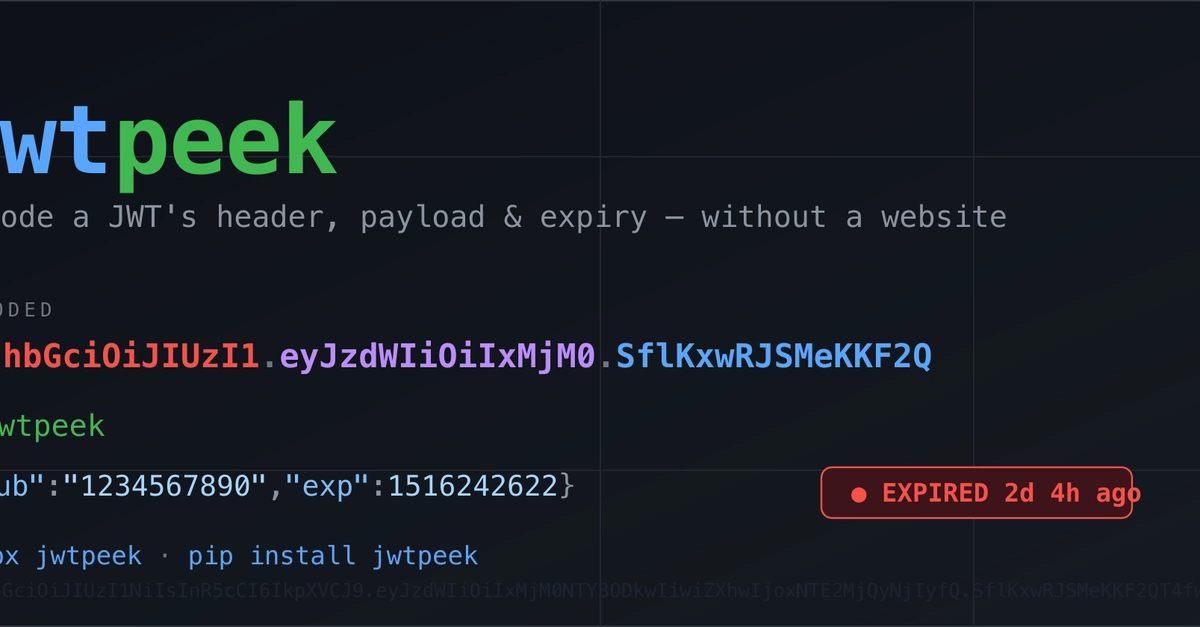
A JWT is three base64url segments joined by dots: header, payload, signature. The first two decode to plain JSON. The third is the HMAC or RSA signature. Decoding it doesn't "crack" anything — but that misses the point: the whole string is the credential. If your decoder runs server-side, you just POSTed a working bearer token to a third party.
Most "free online" decoders are server-side. You can tell because: