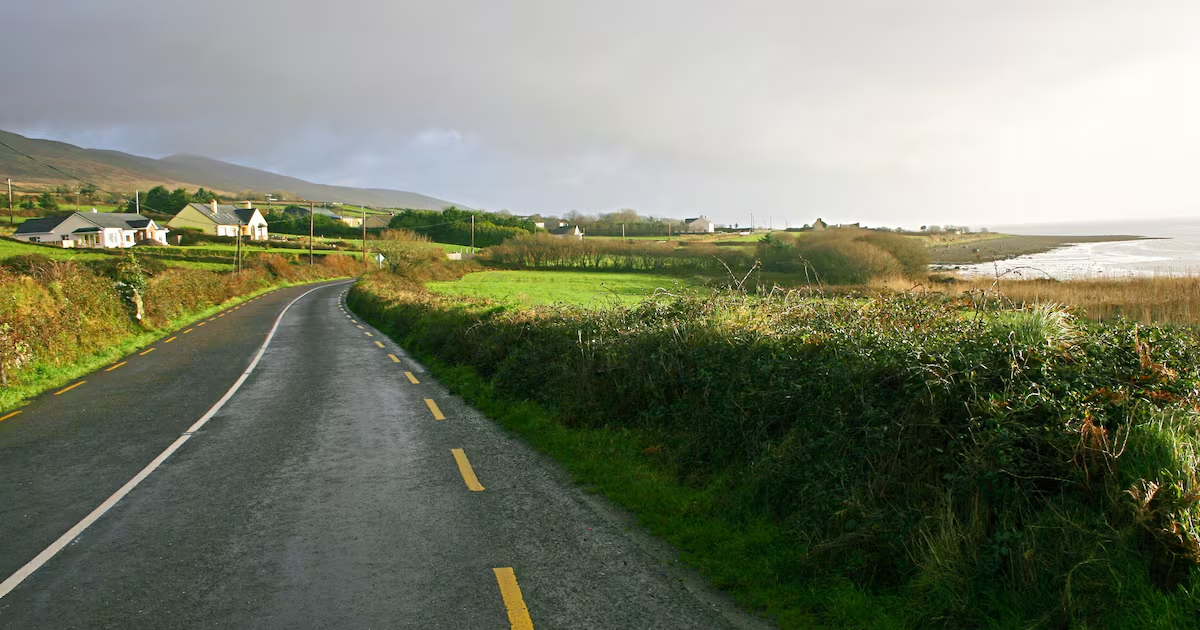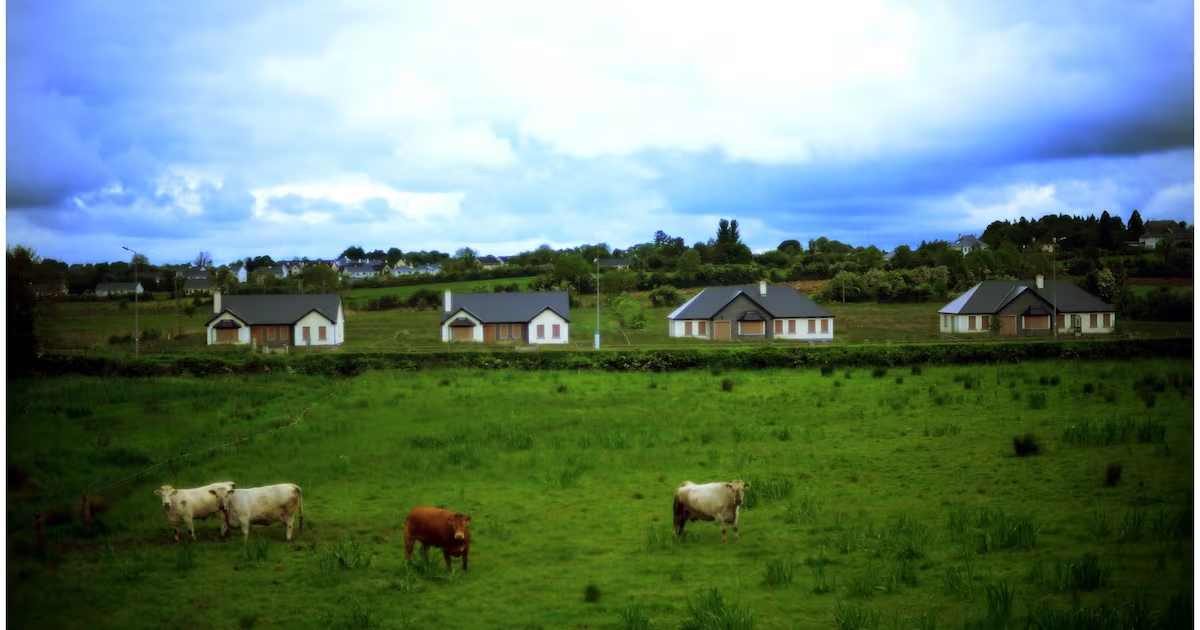
A new policy for the construction of one-off rural housing will end an “Eircode lottery” approach to planning whereby local authorities apply their own “often arbitrary” rules to decision-making, Minister for Housing James Browne has said.Launching the plan on Tuesday, Browne said the policy, when rubber-stamped, would replace current guidelines with a “clearer, more consistent national approach” to the delivery and assessment of new housing in rural and Gaeltacht areas.This, he added, would ensure planning decisions were “transparent, evidence-based and applied consistently” across all local authorities. “We are removing arbitrary and prescriptive local rules and ensuring each application is assessed fairly on its merits,” he said.“Crucially, this will end the current Eircode lottery where a house may be permitted in one part of the country while down the road in a neighbouring county, permission would be denied for the exact same development.”Between 4,000 and 5,000 new single rural dwellings are currently built each year. Browne said local authorities would have to assess each planning application on its merits through a lens that supports people living in their own rural communities.In rural areas within city or commuter town catchments, people who live or work permanently in a rural area will be prioritised over those who do not. Remote workers will be excluded.Local authorities will be permitted to apply a “local needs” criteria in areas under high development or holiday home pressure, the policy states.The policy gives preference to people whose main job depends on living in a rural area and those who need to live close to their workplace. This includes jobs in farming, the equine sector, forestry, essential services such as local schools, or people starting or running a rural business.Minister of State with responsibility for the Office of Public Works Kevin “Boxer” Moran said widening the economic need criteria beyond farming “will help keep our towns and villages vibrant”.Irish Rural Link, the national network representing rural community interests, welcomed the changes. It called the current planning regulations “overly restrictive”, and said the new policy should provide greater certainty and fairness for people who want to live in the rural areas they grew up in.Minister for Rural and Community Development and the Gaeltacht Dara Calleary said the policy also strengthened the planning system’s support for the Irish language in Gaeltacht areas, making it “clearer and more consistent”.He said it did this by setting out the language criteria which may be submitted with applications for new single rural dwellings and requiring a proportion of multi-unit developments to be lived in by Irish speakers.In Gaeltacht areas, an applicant must live within 3km of the site and have lived there for 10 years. However, this can be relaxed to five years for Irish speakers who can show a local need. However, Bánú, the Irish language housing advocacy group, said the new policy may make it more difficult for Irish speakers to get planning permission in an Irish-speaking area.Bánú spokesman Donncha Ó hÉallaithe called it a retrograde step for Irish speakers, and said it was more restrictive than the rules currently applied by Galway County Council within the south Connemara Gaeltacht.The draft policy will now be assessed under the relevant European Union environmental directives and associated public consultation prior to its final approval by the Government.
New rural housing policy will end ‘Eircode lottery’ approach to planning, Minister says
New system may make it more difficult for Irish speakers to get planning permission in Irish-speaking areas, advocacy groups say
542 words~2 min read