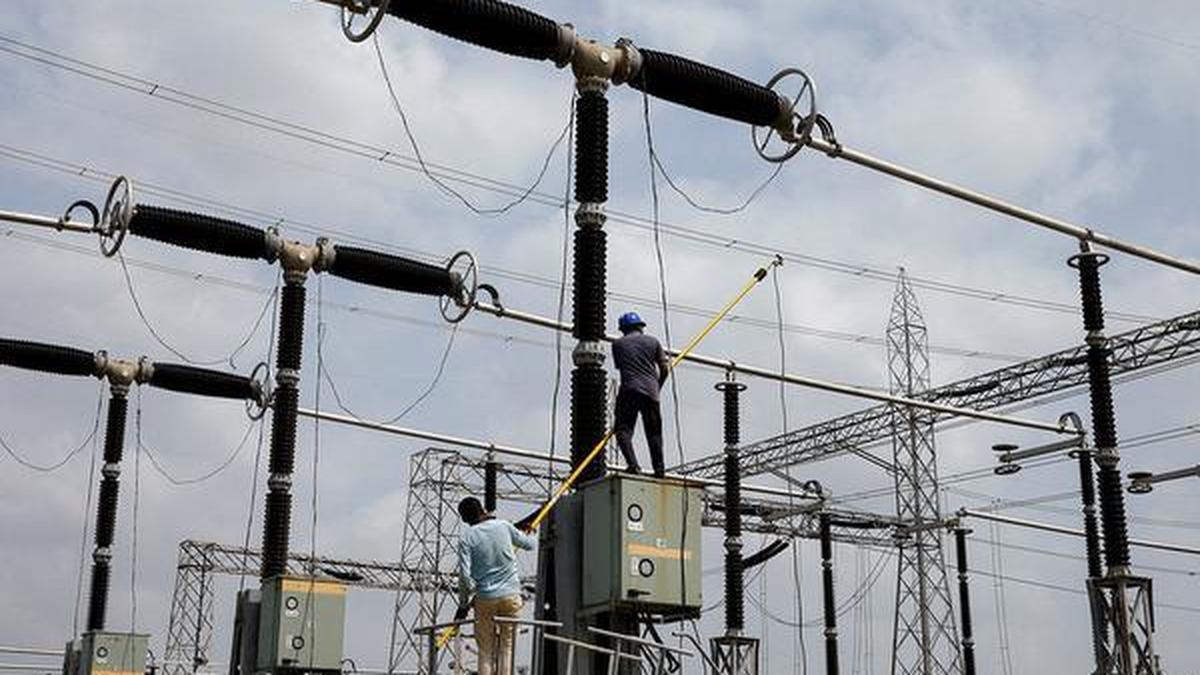
Discoms: Getting the fixed costs right
| Photo Credit:
The Central Electricity Authority recently released a report that dwells on rationalising the fixed charges of power distribution companies (Discoms). The issue at hand is that fixed charges — arising from payment to generators, transmission costs, employee salaries and infrastructure costs — account for 38-56 per cent of Discom fund requirements, but form no more than 9-20 per cent of their actual revenue. The report makes a case for rejigging the fixed cost component in bills — and not merely because Discom finances are broken. That is just one of the issues at hand; discoms should also address major operational inefficiencies while seeking to recover fixed costs. Discoms’ finances have been hit by structural shifts in the power generation landscape. The report points out how they have been saddled with ‘stranded assets’ because high paying industrial or even residential consumers straddle captive power and open access while also being reliant on the grid. Despite their reduced offtake from Discoms, the latter needs to incur infrastructure costs. They also get a raw deal in ‘net metering’ scenarios, if the tariffs are not fixed right. Here too, their infrastructure costs remain uncovered. While electricity reforms are predicated on consumer choice and price discovery, Discoms should get their due if their infrastructure is used. The report, however, does not look into whether there are alternatives to tinkering with the bill design.Going beyond Discom finances, there are three broader objectives to be considered while rationalising fixed charges — equity, energy efficiency and reasonable tariffs to secure economic output. To be fair, the report does not advocate a blanket rise in fixed charges as a share of the bill for all consumers. Rather, it looks at different solutions for industrial and regular consumers. Even within the former, the report tries to consider different consuming intensities. As for equity considerations, fixed charges should be linked to power usage, as Uttar Pradesh has done. Rewarding energy efficiency implies that there is a limit to raising fixed charges. There is, however, some scope for re-examining fixed charges for users with a high load factor (average power consumption as a ratio of peak power), without necessarily raising the overall tariff level, except incrementally over time. Energy use, particularly of fossil fuels, should be gently discouraged. Industry needs reliable, quality power — and utilities should be financially equipped to deliver that.However, the best efforts at apportioning fixed costs to reconcile various objectives and stakeholder concerns will come to nought, if States continue to promise free power. It is notable that some States, such as Rajasthan, have chosen to subsidise fixed charges more than energy usage. States should stop subsidising power without discretion, and instead address the needs of multiple stakeholders with tariff redesign.Published on June 30, 2026