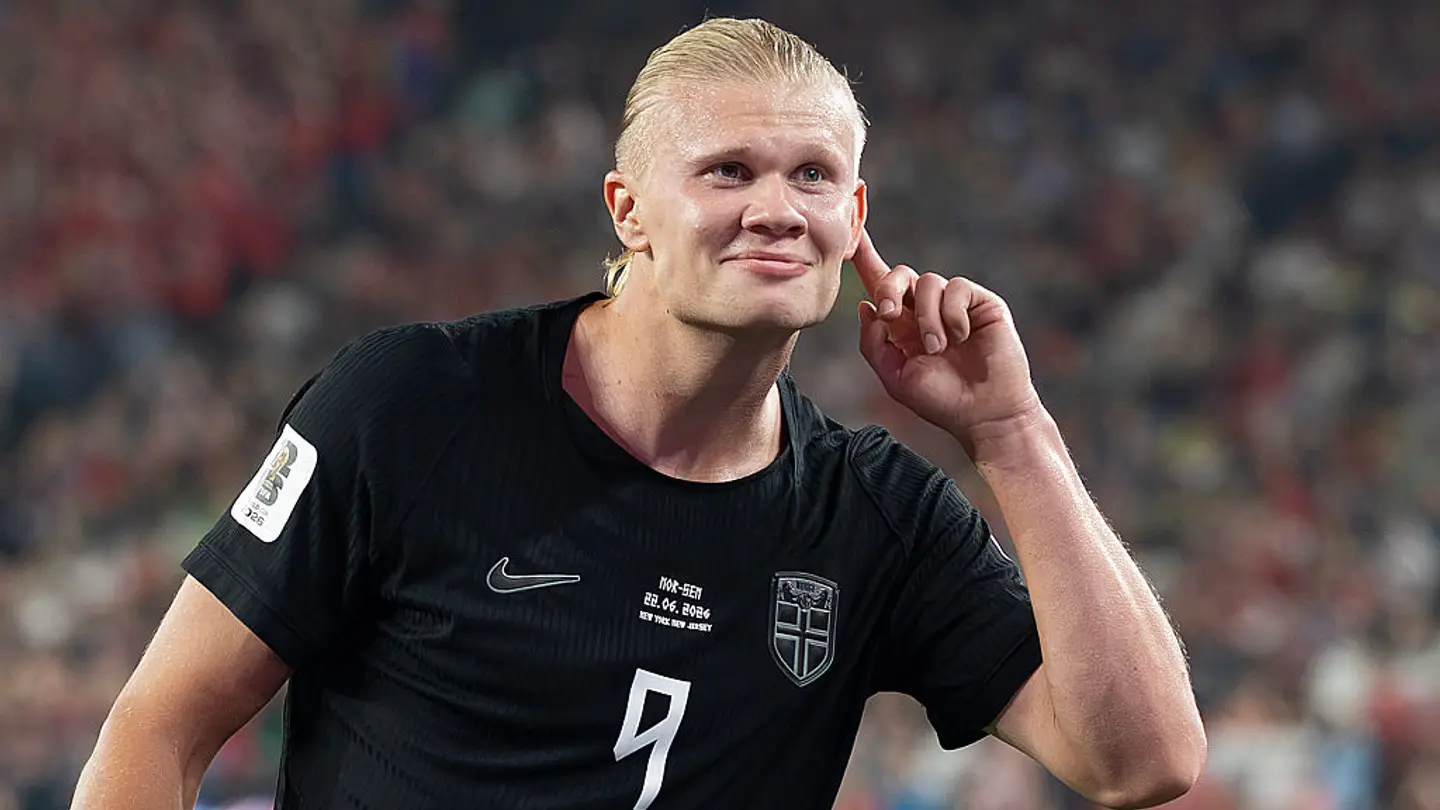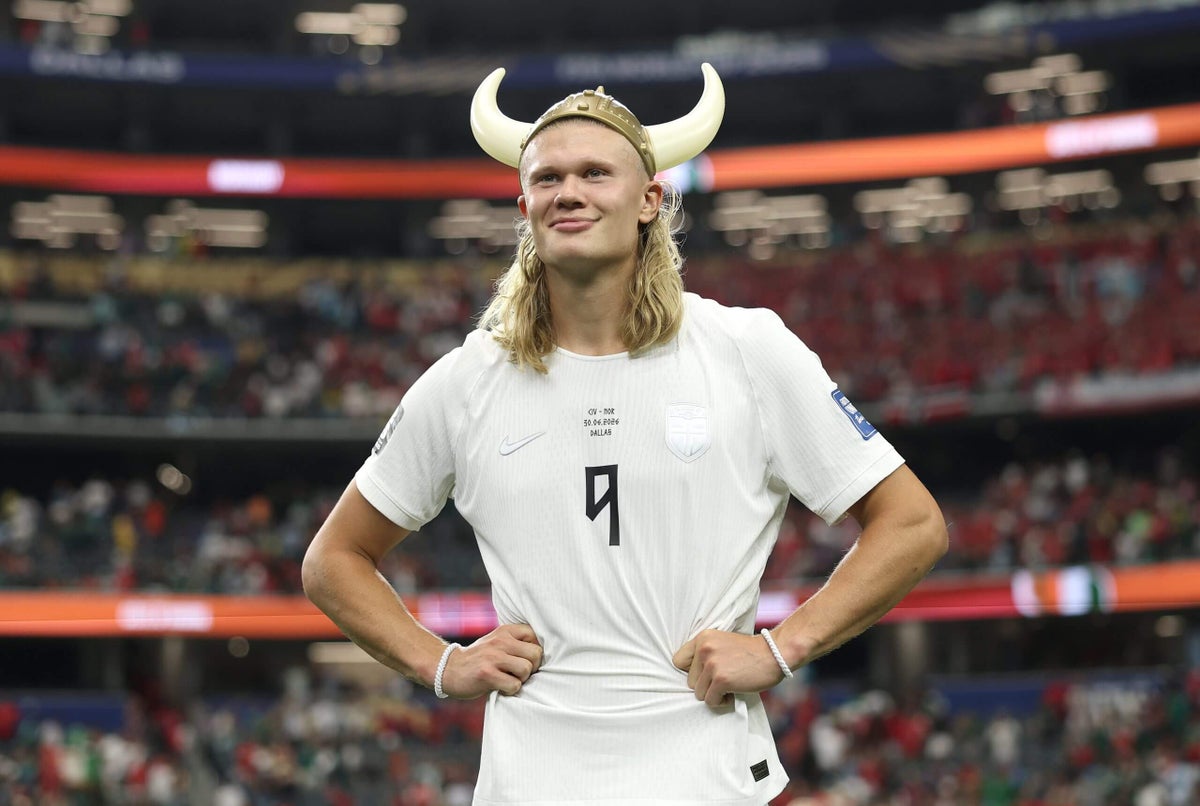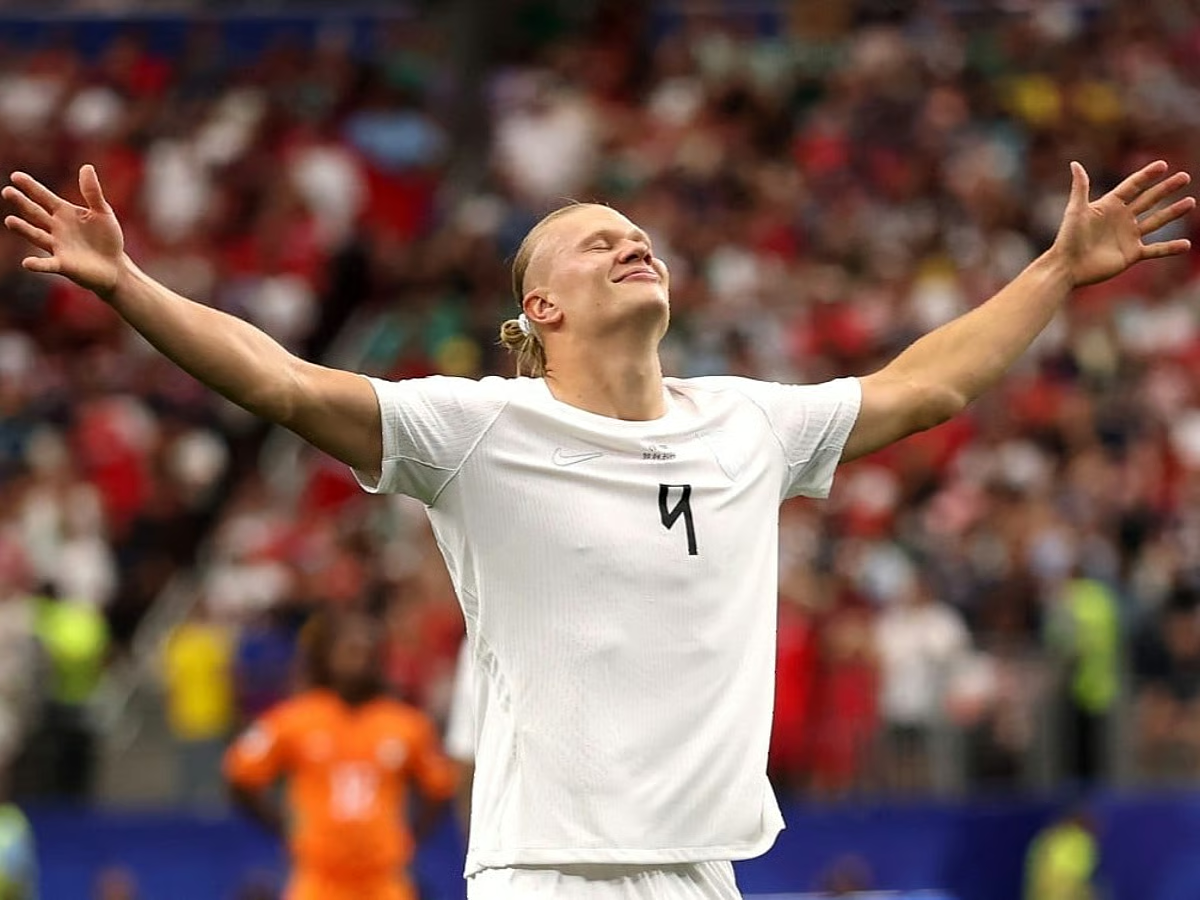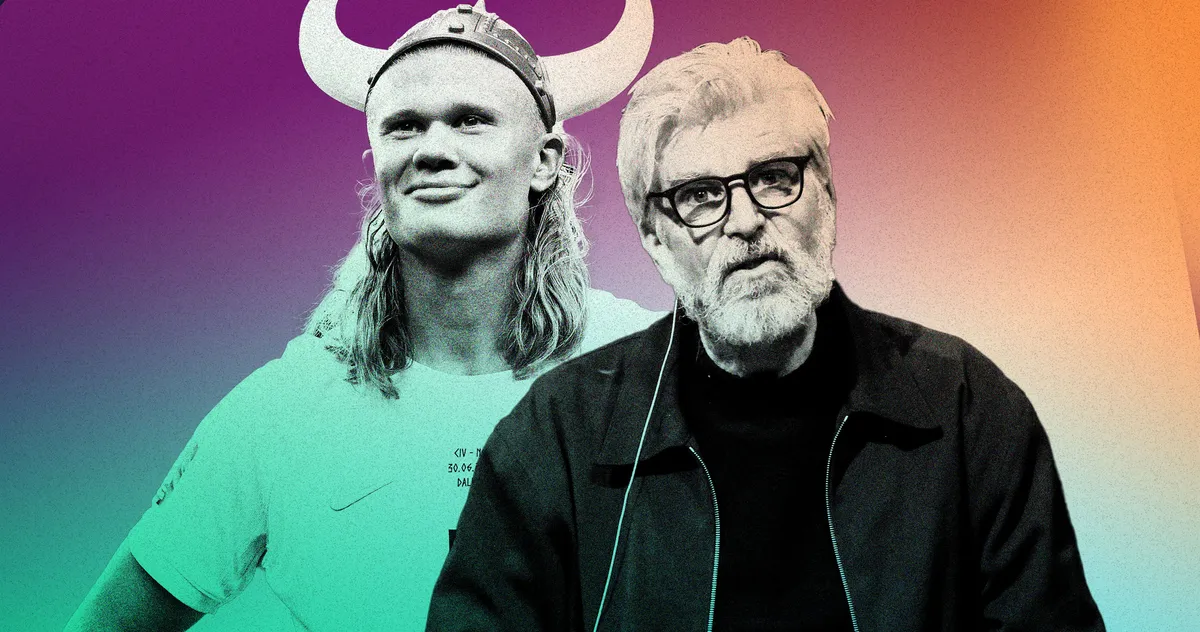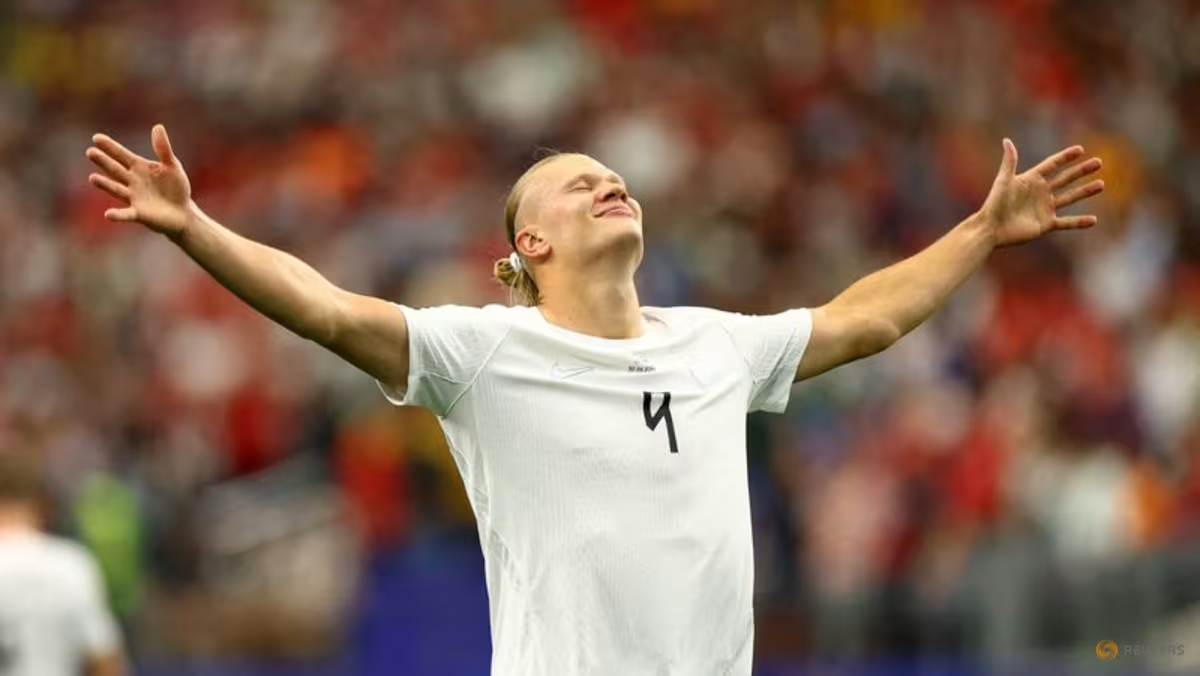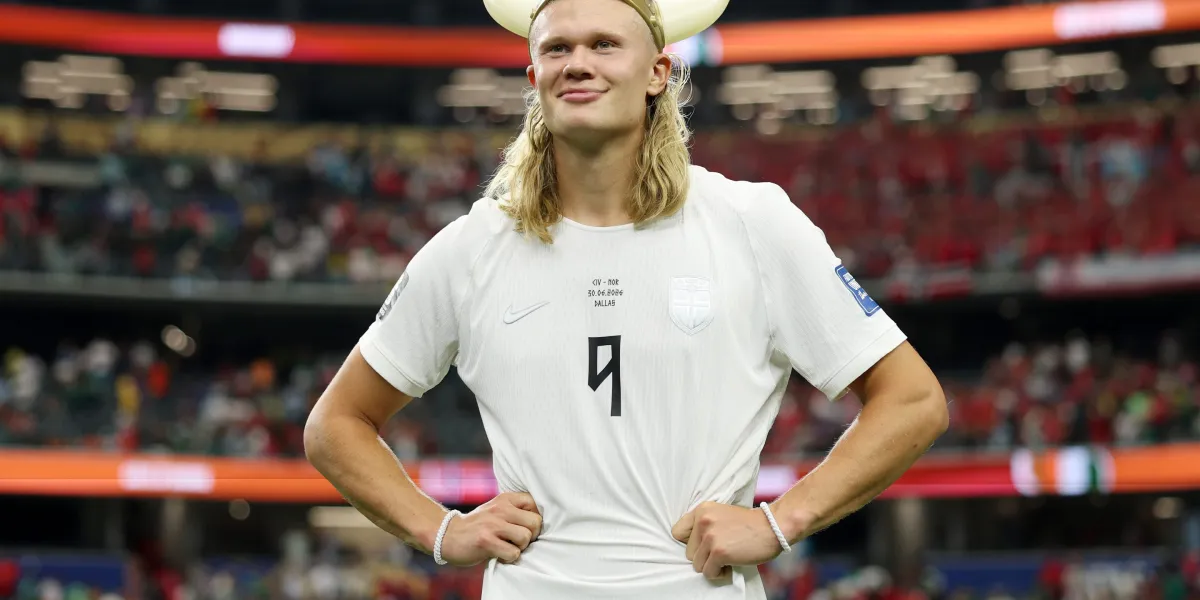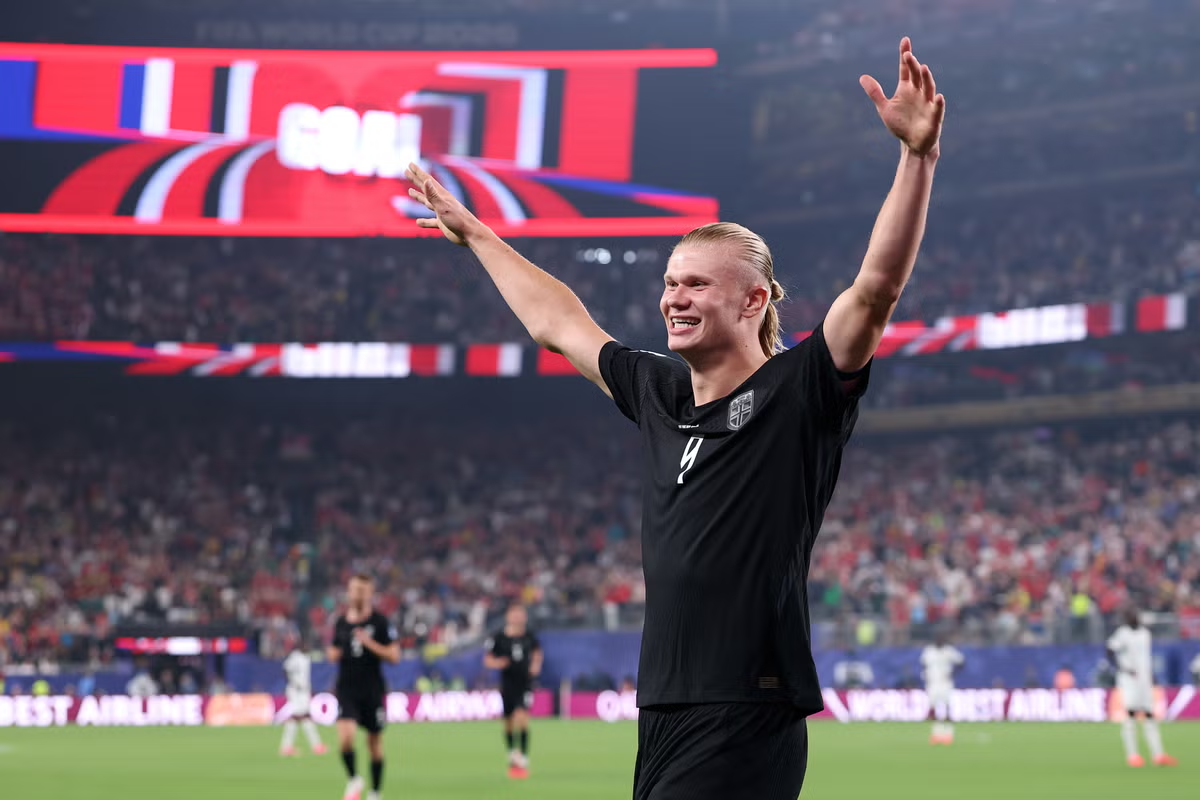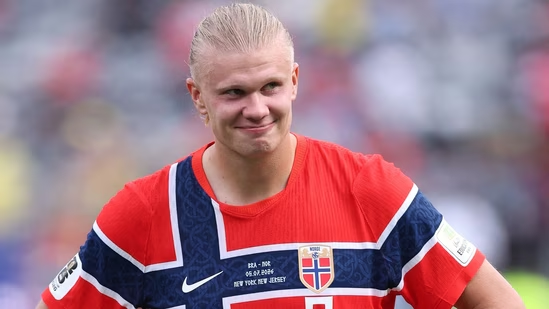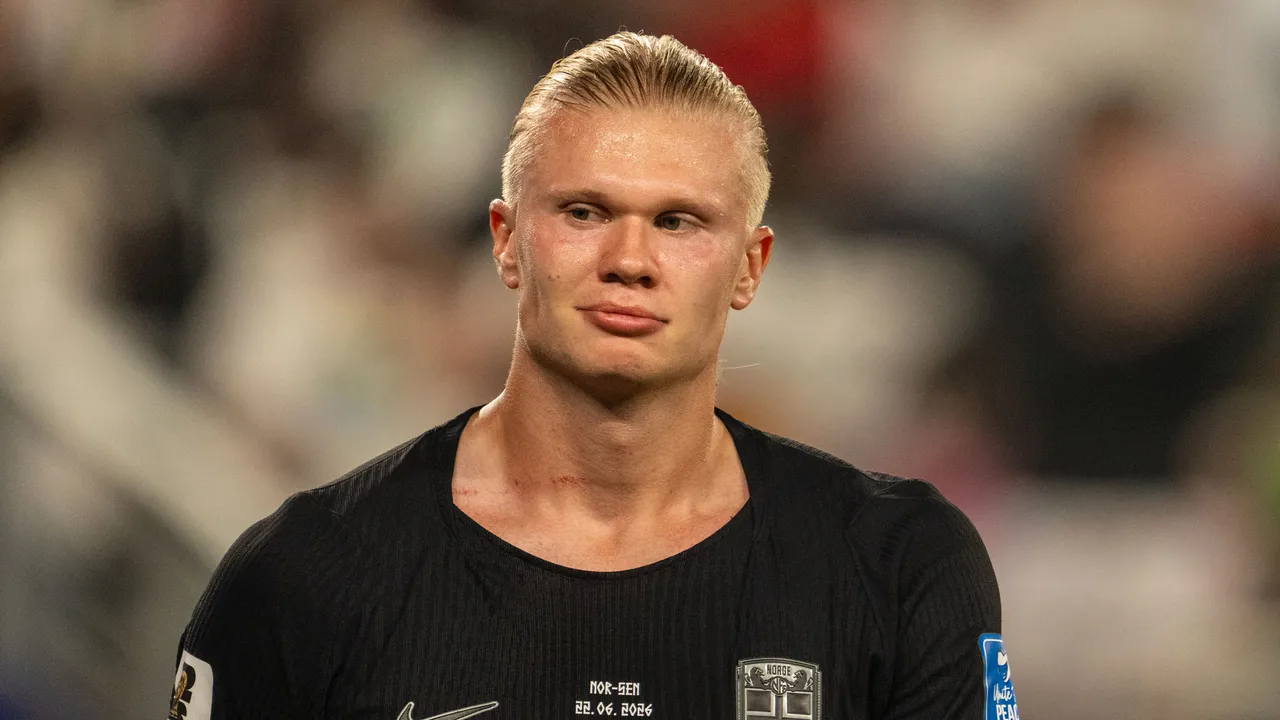
Erling Haaland, Norway’s large, maniacal striker, has several exceedingly Norwegian traits. He sometimes exercises by chopping wood in the forest. He consumes six thousand calories a day. (He’s fond of beef heart.) After training sessions, he drinks raw milk. He owns a tax-sheltered investment company in Luxembourg named Pillage. He bought an edition of the “Heimskringla,” a thirteenth-century Old Norse saga, for a hundred and thirty thousand dollars—then donated it to his local library because, he explained, “I’ve never been much of a reader.” He has flowing blond hair, often compared to a Viking’s. He brings the intensity of a raiding party to the sport. Haaland scores goals at a higher rate than almost any soccer player ever. (In a junior game, he scored nine goals against Honduras, and some Honduran players cried.) He has said, “I think of football all the time.” His wake-up alarm plays the theme song for the Champions League. He once posted a photo of himself on a plane, staring ahead intensely, with the caption “Just raw dogged a 7 hour flight no phone no sleep no water no food only map.” The Guardian once called him a “ravenous Nordic goal-yeti.”International soccer sometimes produces a weird essentialism: the Germans succeed only with ruthless organization; the Brazilians are gifted and cursed with flamboyance; the English delude themselves into thinking they are still internationally relevant. Norway has never been particularly successful in World Cups—this year’s is only the fourth tournament the country has qualified for. (For an entire generation, Norway’s best player, Tom Lund, never appeared for the national team in a match outside of Europe because he was afraid of flying.) The team is unburdened by identity, so Haaland has been free to create it. He plays soccer how Norwegians might dream that Norwegians play soccer.Haaland’s style of play elicits not wonder but terror. He is enormous: six feet five, two hundred pounds, about the size and speed of the N.F.L. wide receiver Randy Moss. Watching him, I sometimes find myself giggling as I might over a big, obscene crash at a demolition derby. The play that did this to me most recently came in Norway’s first World Cup game, against Iraq. Haaland had already scored twice; Iraq’s Marko Farji was moving the ball across his box, with Haaland twenty yards away, until he suddenly broke into a sprint of bizarre ferocity—he has a quirk in his running form that causes his arms to thrash from side to side—heading straight at Farji, who, though still far from Haaland, seemed to abandon all soccer instinct and took off with the ball in the opposite direction, toward the sideline, while Haaland, for some reason, just kept chasing, and caught up to Farji right before they both went out of bounds, but in his overexuberance, before he could dislodge the ball, he knocked Farji to the ground and earned a foul, which caused him to let out a long scream, whether in frustration or as some battle-cry catharsis, I’m not sure. I’d never seen anything like it. I wanted to see more.Norway’s second match, a night game against Senegal, was in New Jersey. Win, and Norway would advance to the knockout rounds. I’d arranged to go with a Norwegian friend, Erlend Mørch, who has been following the team around the U.S. and hosting a podcast for the national broadcaster, N.R.K. Mørch is a comedian and writer. For his TV show “Hellerudsvingen,” an animated series in the “South Park” mold, he wrote a two-episode arc featuring a version of Haaland, who more or less just grunts around like an animal. (Haaland eventually becomes the hero by sacrificing himself to save the protagonists.) Before the game, Mørch came by my apartment, in Brooklyn, to watch the afternoon matches. “This is the most important national event of our lifetime,” he said solemnly.He’d brought Mímir Kristjánsson, a frequent podcast guest and travelling companion for the trip, who showed up in a wrinkly T-shirt and old sweatshorts, as though he’d just spent a couple of days in the woods. Mørch explained that Kristjánsson is actually one of the most popular politicians in Norway. He’s a member of the Storting, Norway’s Parliament, representing the Reds, the Marxist Party, but has broad personal appeal even among conservatives. With some help, Kristjánsson had elevated his party from the fringes to a crucial bloc in the governing coalition. “He’s been the Mamdani,” Mørch said. Kristjánsson represents Haaland’s district in Parliament, but, he told me, “I think the chances Haaland voted Red are slim.”Kristjánsson drank a Coke and watched the games. “In Norway, we have this word folkelig, which means an ordinary, average Joe,” he said. It’s an aspirational term, one that explains the appeal of both Kristjánsson and Haaland. Kristjánsson is from Stavanger, an oil city in the southwest. Haaland is from Bryne, a nearby farming town in the country’s rural lowlands, near the North Sea. Bryne people are not big talkers. A Norwegian author from the region once described the locals as “a heavy folk who dig their way through life with ponder and toil.” The local soccer club had its original pitch on a split in a river. A hunter once mistook a flying ball for a duck and shot it. “They have this farming identity,” Kristjánsson said. “When a player is the man of the match, they give him, like, eggs. They gave lamb to one player after scoring a hat trick. They have an area where you can sit in your tractor and watch the game for free.”Norway is one of the world’s wealthiest countries, with the world’s largest sovereign-wealth fund, mainly thanks to its oil reserves. Per capita, it has among the highest concentrations of millionaires. Culturally, though, it favors Scandinavian egalitarianism. “There’s this idea that you don’t want to think too highly of yourself,” Mørch said. “Even rich and successful people are encouraged to keep it down. You don’t want to brag.” Haaland, who plays for Manchester City, is a soccer megastar. But he still hangs out in Bryne. He still goes to the local kebab shop, Yummy Time. He speaks with a distinctive rural accent. He seems happiest when his teammates score. “It all makes you seem like a modest, humble guy even though you’re flying in a private jet and doing tax avoidance,” Kristjánsson said. I thought that Kristjánsson, being a Red, might harbor some ambivalence toward Haaland. He doesn’t. He loves him unreservedly.We watched Argentina take on Austria; Lionel Messi scored two goals. The men were delighted. Messi, who is thirty-nine, remains the sport’s singular player. “They’ve been talking about who’s going to take the throne from Messi for ten years,” Kristjánsson said. “There’s ‘New Messi’s who’ve retired.” But, eventually, his time would be over. Cristiano Ronaldo, Messi’s great rival, who is forty-one and diminished, showed the danger of staying too long. “He reminds me more and more of Joe Biden,” Kristjánsson said. Of the new class of superstars—Kylian Mbappé of France, Lamine Yamal of Spain—Haaland, who is twenty-five, is unique. Messi is a short-king soccer genius who dominates the ball. Haaland is big and physical and goes long stretches without any touches. He usually scores in quick, lightning-strike attacks. His physicality obscures preternatural vision and instincts. “I once saw him celebrate before he scored,” Mørch said. “It was an easy tap-in, and he was, like, Oh, right, I have to do the goal first.”Norway has leaned into Haaland’s Viking thing. The team staged an official photograph at the mouth of a fjord, with three longships and the players dressed like Norse warriors; Haaland held a sword. The government sent the team off to America with three hundred kilograms of Atlantic salmon and whitefish and a hundred kilos of Norwegian cheese. Norwegian fans have done the “Viking Row”—in which everyone sits down, someone bangs a drum, and everyone shouts “Ro!” and pretends to row, as if on a longship—in Times Square and on an escalator in Boston, where the team played its first game. It seems like an old tradition, but it was invented a few months ago, partly as a nod to Leif Eriksson’s reaching North America centuries before Columbus did.Not everyone was happy with the Viking shtick. “There was a big debate,” Mørch said. “The critics said it’s cringe and right-wing coded, and associated with the Nazis.” Kristjánsson has met the complaints with eye rolls. “When Charlie Kirk was killed, Kash Patel said, ‘See you in Valhalla.’ That was weird because Kash Patel is Indian American, and Charlie Kirk was really, really Christian. No one is going to Valhalla there,” he said. “But it just happens to be our actual history.”At MetLife Stadium, we went to a Norwegian Fan Fest at the horse track. Mørch and Kristjánsson were hounded. Kristjánsson signed someone’s soccer jersey. Mørch took constant selfies. I’ve known Mørch for years, but he’d never let on that he’d become a celebrity—folkelig, I guess. It was raining, but spirits were high. Bud Lights were bountiful. One guy had ripped off the horn from a plastic Viking helmet and was using it to chug beers. Two others hopped into a giant muddy puddle and did the Viking row. Everyone chanted, “Ro!”The game began amid a drizzle. In person, a proper soccer pitch is surprisingly vast. It’s much bigger than a football field. The players look like tiny ships on a sea. Haaland almost appeared normal-sized. The Norwegians, in Viking style, went on the attack, but they weren’t organized defensively. They looked nervous. Periodically, the drum sounded, and we broke into the row.At the hydration break, it was 0–0. Haaland had barely touched the ball—ponder and toil. Mainly, he lurked. Haaland can call to mind a shark circling dark waters. Mørch said he thinks of the pulsing strings from “Jaws.” In the forty-third minute, Marcus Holmgren Pedersen, an injury substitution from Hammerfest, a city above the Arctic Circle, scored a surprising goal: 1–0 Norway. Moments later, Haaland suddenly made one of his almost demented charges, at Senegal’s goalkeeper. He won the ball and shot from a tight angle but hit the post.Halftime was tense. A one-goal lead wasn’t very safe. Haaland doesn’t get many opportunities, and he’d already missed a big chance. “There’s so much waiting, waiting, waiting, hoping, hoping, hoping,” Mørch said.In the forty-eighth minute, Martin Ødegaard, Norway’s other star, sent a pass into the box. Haaland streaked after it: 2–0. Everyone screamed and flung beer into the air. Mørch and Kristjánsson hugged. Senegal got a goal back, but Haaland scored again in a flash, kicking a feed out of the air, again, with just one touch. The Norwegians looked woozy with glee. The next hydration break hit. Fans have been critical of the hydration break—a desecration that allows FIFA to cram in extra advertisements—but the men bellowed the words to “Don’t Stop Believin’.” They were in ecstasy. Kristjánsson clapped and shouted, “Hydration break! Hydration break!”This team has been called Norway’s golden generation. The roster has benefitted from a new, socialized athletics program. But Haaland was something else. “In Norway, we may struggle every day, but we know we can rely on the oil funds,” Mørch said. “In football, Haaland is our oil fund.”The game ended 3–2. Norway had clinched a spot in the knockout rounds. Nobody could believe it. Haaland was asked about the next and final match of the group stage, against France, which no longer mattered much. “They’re probably going to win,” Haaland said. Everyone stuck around and sang Norway’s soccer anthem, “Farmers from the North.” Haaland and his teammates sat on the wet pitch as Ødegaard banged the drum. They rowed along with tens of thousands of fans. I rowed too. It was electrifying. Kristjánsson pointed out that the whole thing was kind of a sham. “Leif Eriksson was Icelandic,” he said. “His father, Erik the Red, was driven out of Norway after his father murdered someone—and then driven out of Iceland when he murdered someone himself.” But Kristjánsson didn’t care, and nobody else did either, so we kept rowing. ♦
Erling Haaland Plays Like a Viking
Norway’s hulking striker brought his country back to the World Cup for the first time in almost thirty years. How far can they go?
2,008 words~9 min read