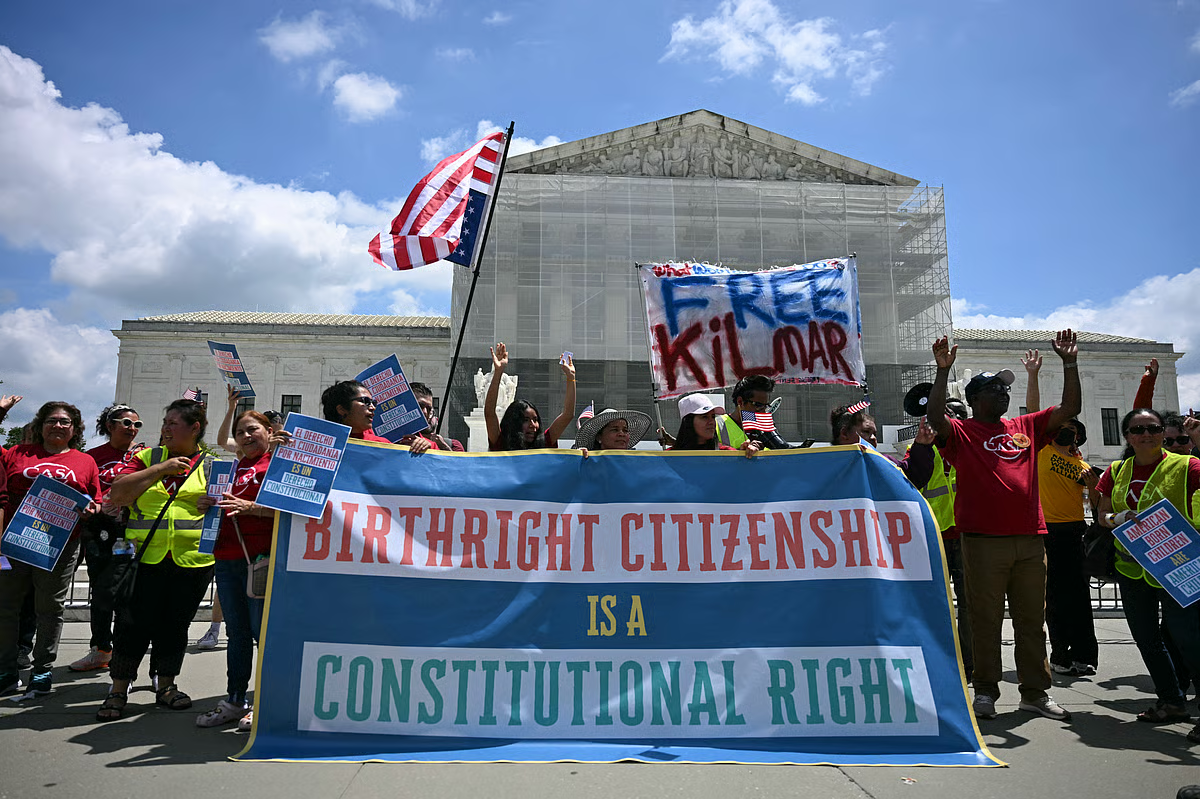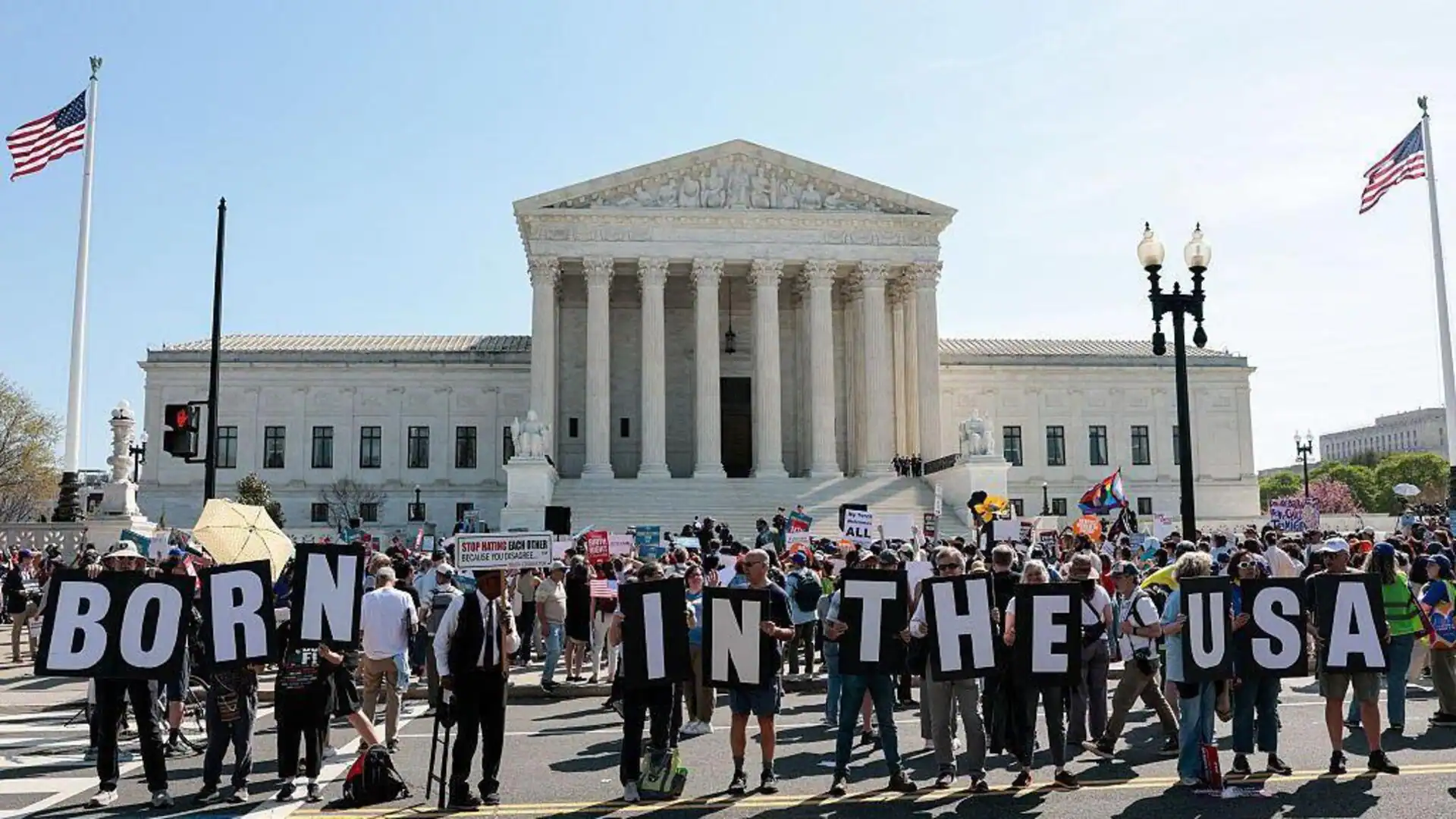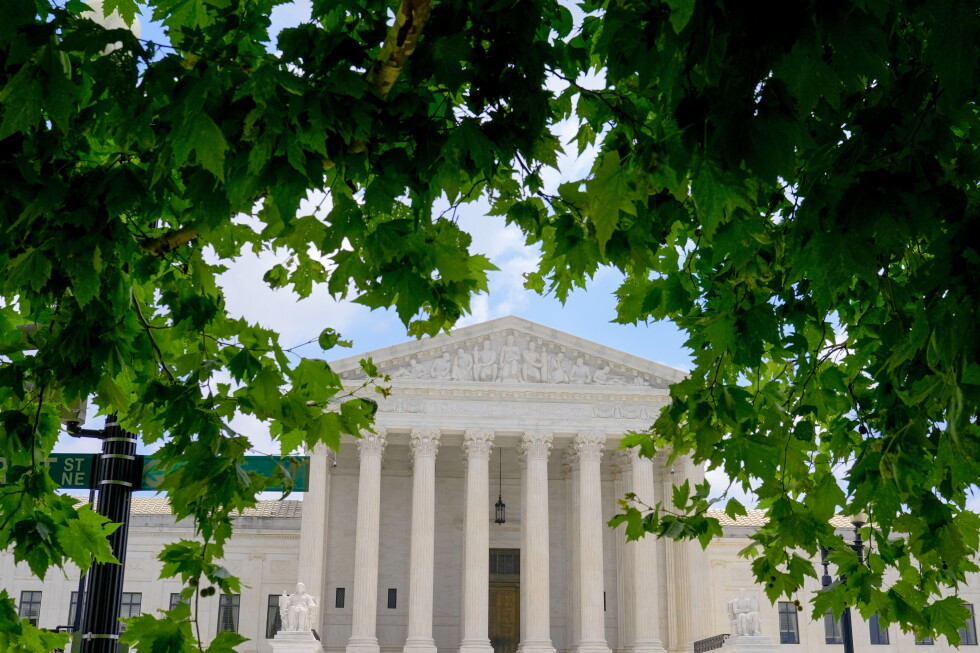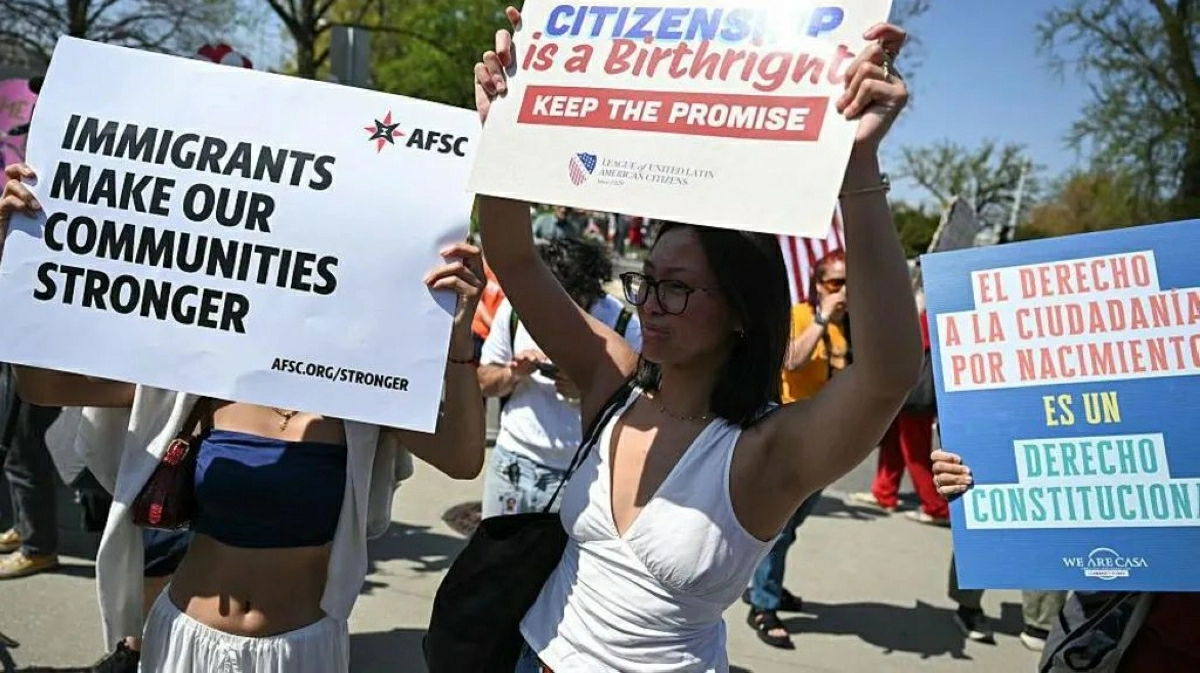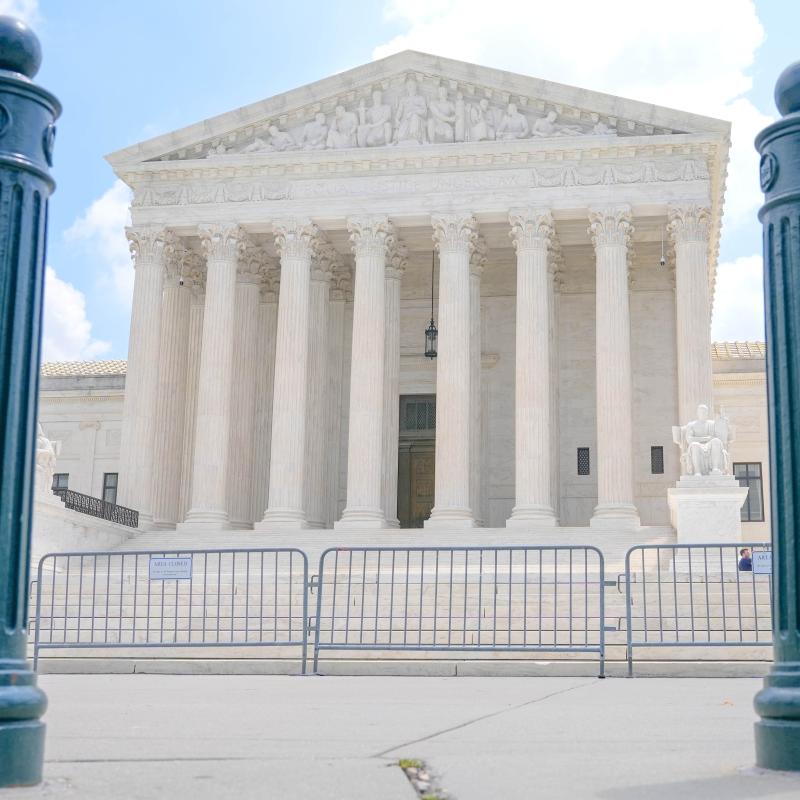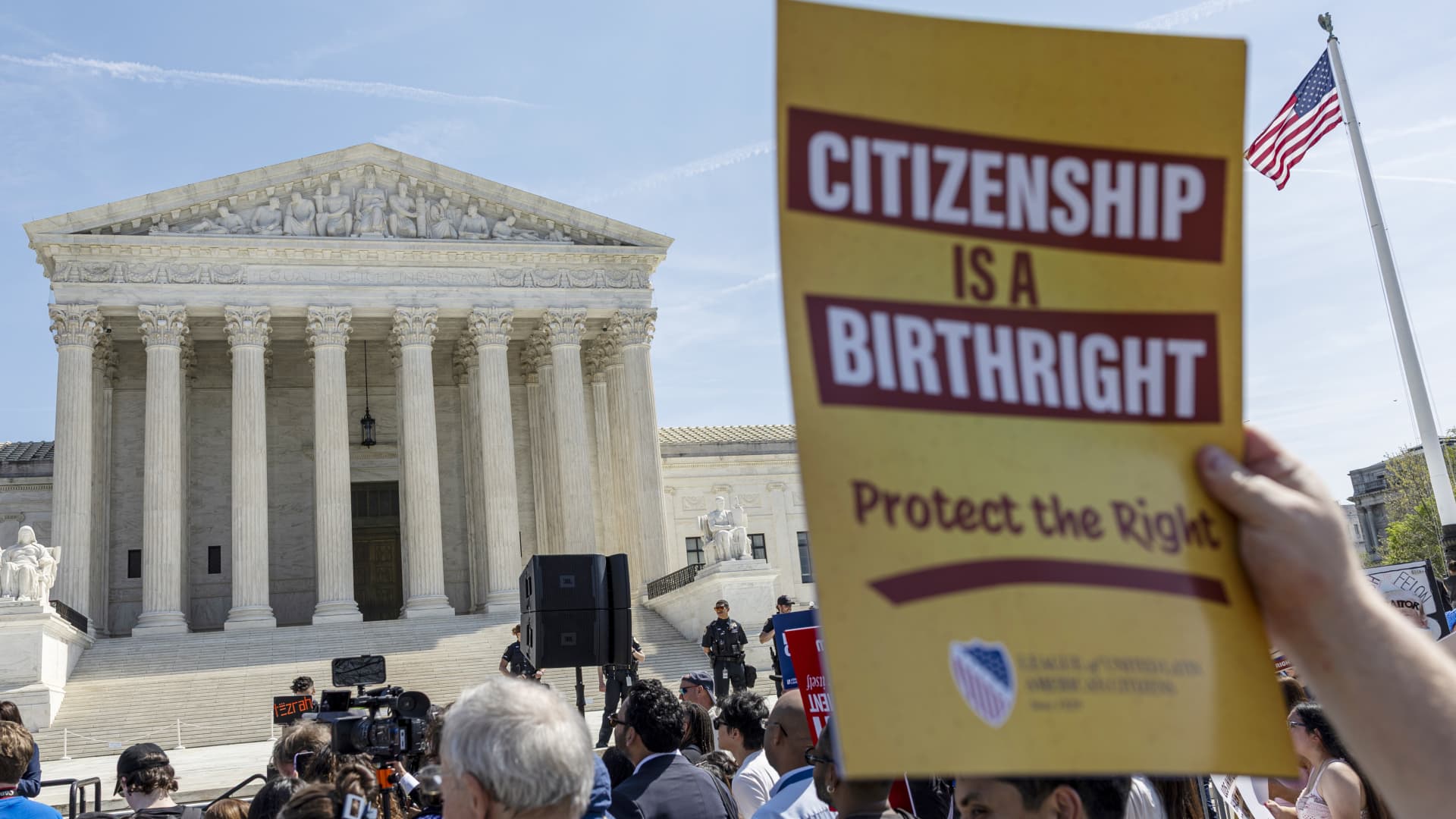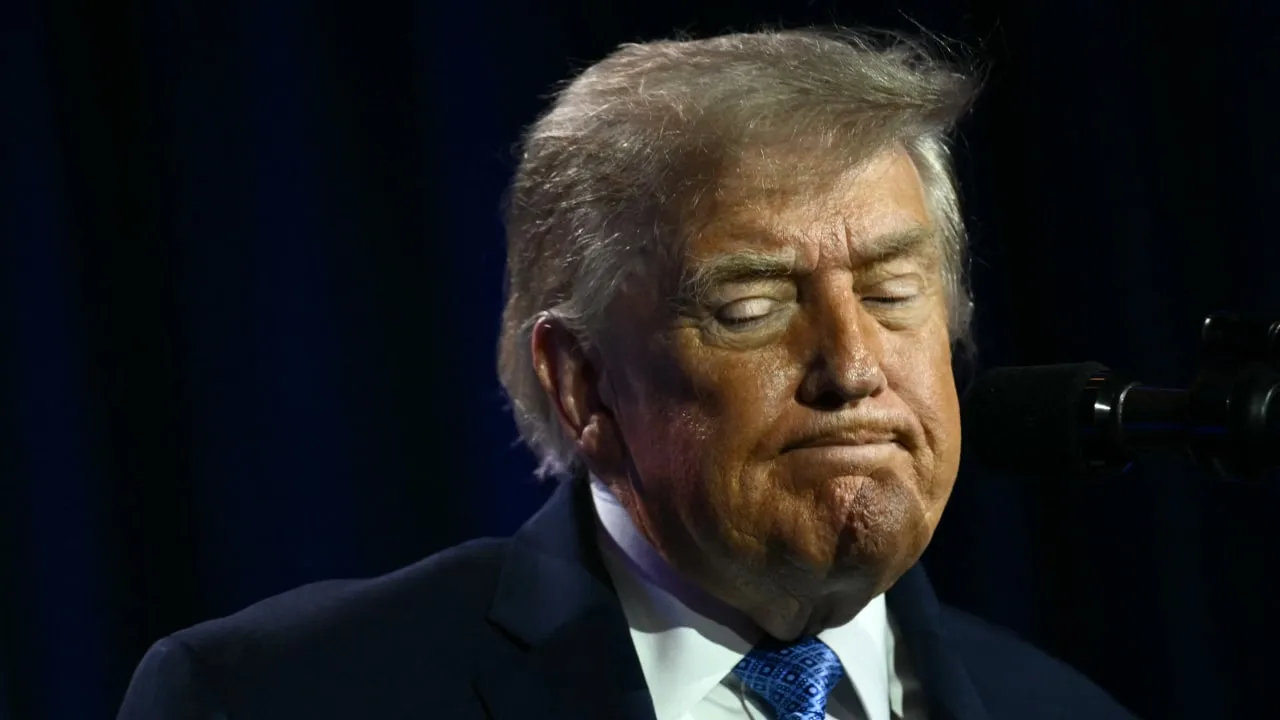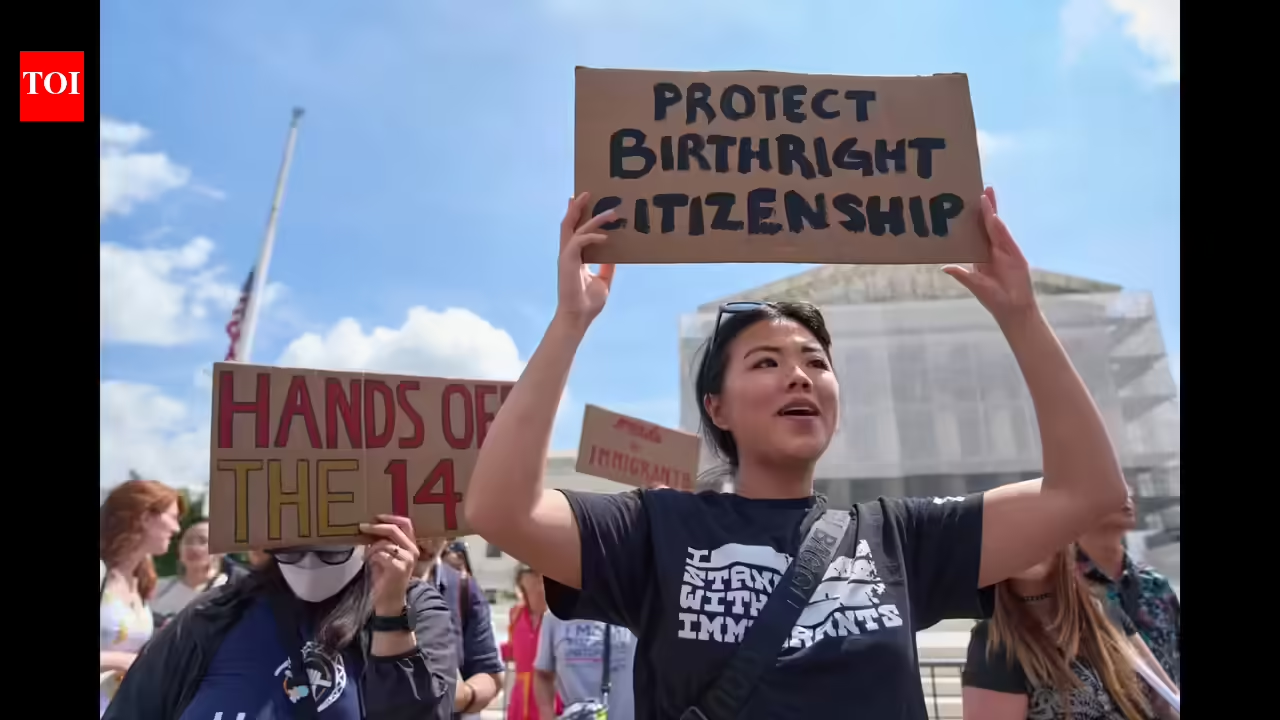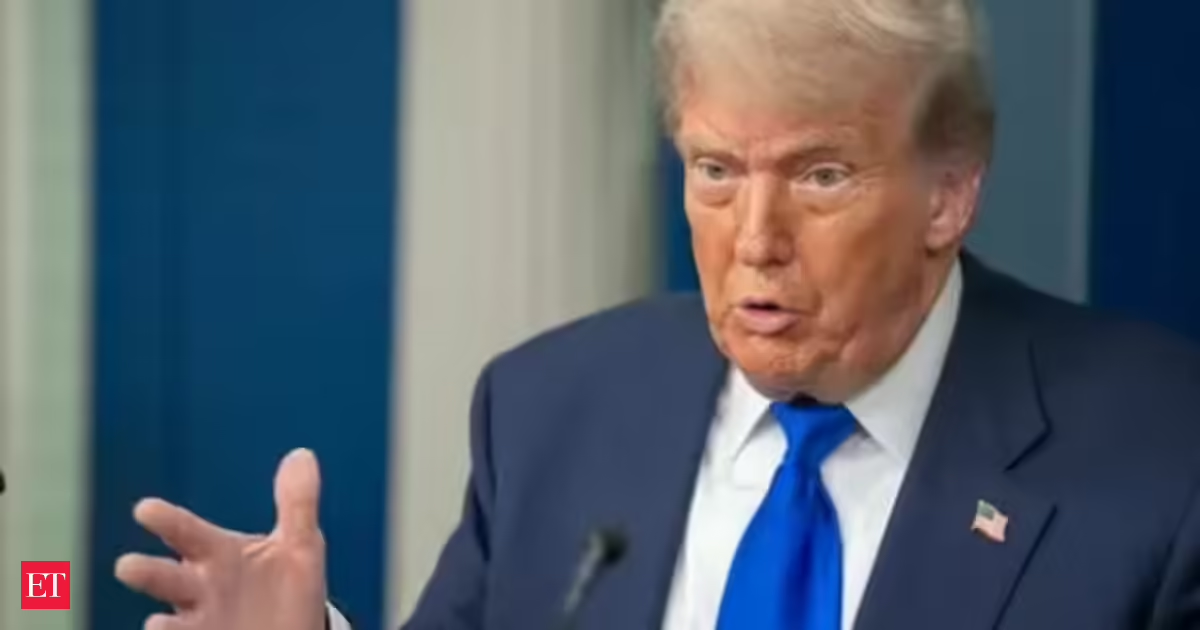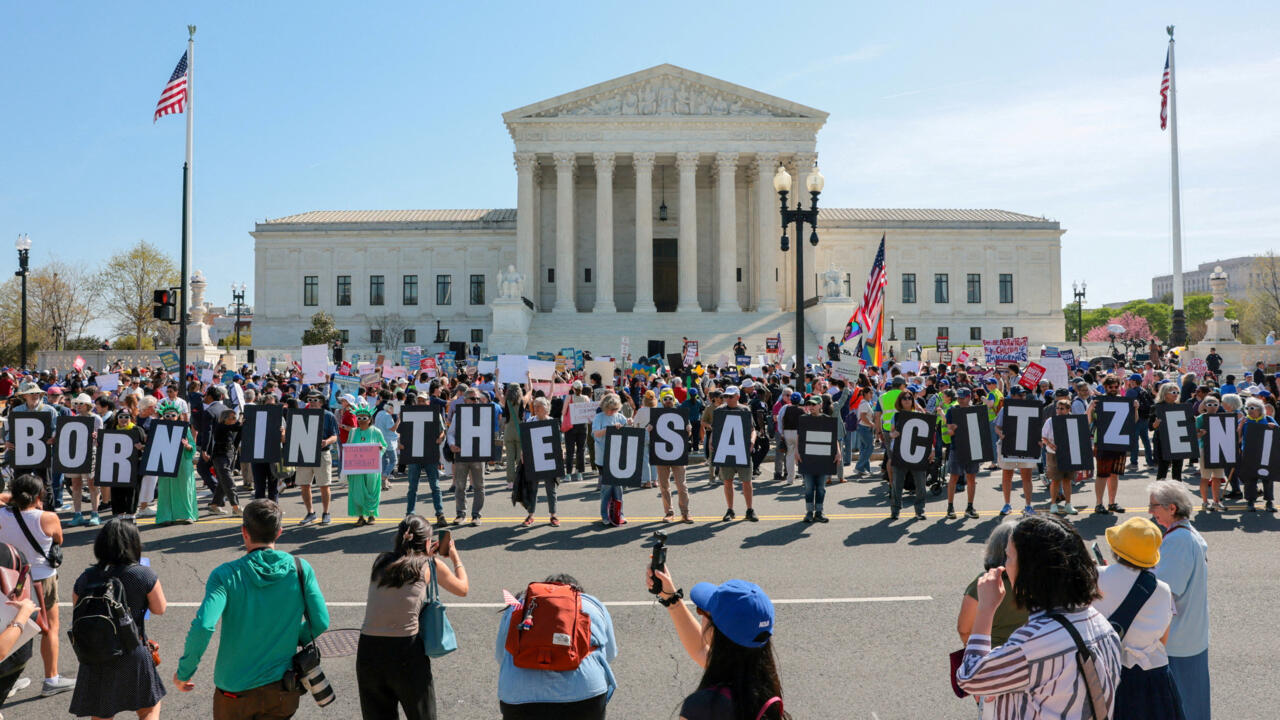
The Supreme Court upheld birthright citizenship, rejecting Trump's order that denied citizenship to children born to undocumented immigrants. The Supreme Court on Tuesday affirmed a comprehensive interpretation of birthright citizenship, dismissing President Donald Trump’s executive order that stated children born to individuals residing in the United States illegally or temporarily would not be considered American citizens.The Supreme Court confirmed birthright citizenship for individuals born in the U.S., ruling against Trump's executive order aimed at children of undocumented immigrants, (AP Photo/Jacquelyn Martin)The Justices based their decision on a well-established interpretation of the 14th Amendment, which was enacted following the Civil War, as well as more contemporary federal statutes, concluding that anyone born within the country, with very few exceptions, is a citizen.The restrictions imposed by the POTUS had been halted by multiple lower courts and had not been implemented anywhere across the United States.Also Read: US birthright citizenship at risk? Here's what happens if it's abolished; all we know as Trump faces major setbackUS birthright citizenship: 5 things to know“Children born in the United States to parents unlawfully or temporarily present are ‘subject to the jurisdiction’ of the United States and are citizens at birth under the Fourteenth Amendment’s Citizenship Clause,” the ruling written by Chief Justice John Roberts stated.Chief Justice Roberts was accompanied by his conservative colleague Justice Amy Coney Barrett, as well as the court's three liberal justices—Elena Kagan, Sonia Sotomayor, and Ketanji Brown Jackson—in the majority decision based on the 14th Amendment.Justice Brett Kavanaugh, another conservative, expressed his view that while he did not think Trump's executive order infringed upon the 14th Amendment, it nonetheless "does contravene a federal statute" enacted in 1940 concerning the citizenship of individuals born in the United States. The remaining three conservative justices on the court—Clarence Thomas, Samuel Alito, and Neil Gorsuch—each issued dissenting opinions.Justice Alito remarked, “The Court has made a serious mistake.” During oral arguments in April, the justices indicated their inclination to uphold the principle that individuals born in the United States to non-U.S. citizens are automatically conferred citizenship.Trump was present during the oral arguments, marking the first time a sitting president has done so. The case is referred to as Trump v. Barbara. The citizenship clause of the 14th Amendment to the U.S. Constitution, ratified in 1868, states, “All persons born or naturalized in the United States, and subject to the jurisdiction thereof, are citizens of the United States and of the State wherein they reside.”Trump's executive orderOn January 20, 2025, Trump, upon his return to the White House, enacted an executive order aimed at reversing that right.The order stipulated that, 30 days following its effective date, infants born in the United States would not be eligible for citizenship documents if their parents had entered the country illegally or were undocumented workers.Later, several U.S. district court judges determined that Trump's order was unconstitutional.Moreover, two federal appellate circuit courts confirmed injunctions that prevented the order from being implemented.Shweta Kukreti has over 8 years of experience in covering Indian and world politics. She joined the Hindustan Times in 2024 and is primarily assigned to the US desk. She currently works as Deputy Chief Content Producer and reports on a wide range of topics, including US politics, immigration issues (especially H-1B visa) and major global events. Shweta strongly emphasizes team operations, which encompasses monitoring news, delegating tasks, editing, developing comprehensive coverage strategies, and crafting engaging, and data-informed narratives. She received the Digi Star Award at the Hindustan Times within a year of joining for her broad coverage of US politics. In 2025, she earned both a promotion and a redesignation, a significant achievement recognising her contributions and the strong value she brings to the team. She has previously worked with the Indian Express, HTDS, ANI and Republic World. Seniors in all the media organisations recognised her work. Regarding education, she earned a BA (Hons.) in Political Science and a master's degree from Delhi University, and she pursued a PG Diploma in English Journalism from the Indian Institution of Mass Communication (IIMC). She also holds a diploma in Women's Empowerment and Development from IGNOU University and a French certification course from Alliance Française de Delhi. If not working, you can find her exploring the hills and engaging in adventurous activities in Rishikesh and Himachal Pradesh. She loves to play badminton, volleyball, and chess, and spend time with her friends and family. She also enjoys spiritual activities.Read MoreSee Less
US birthright citizenship: 5 things to know as SC blocks Trump's controversial order in major ruling
The Supreme Court upheld birthright citizenship, rejecting Trump's order that denied citizenship to children born to undocumented immigrants.
735 words~3 min read