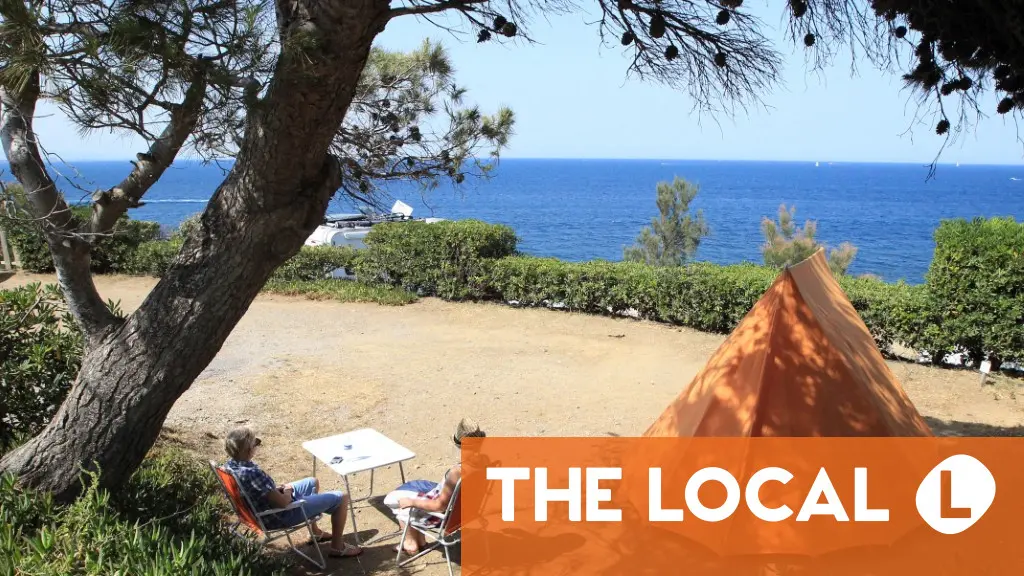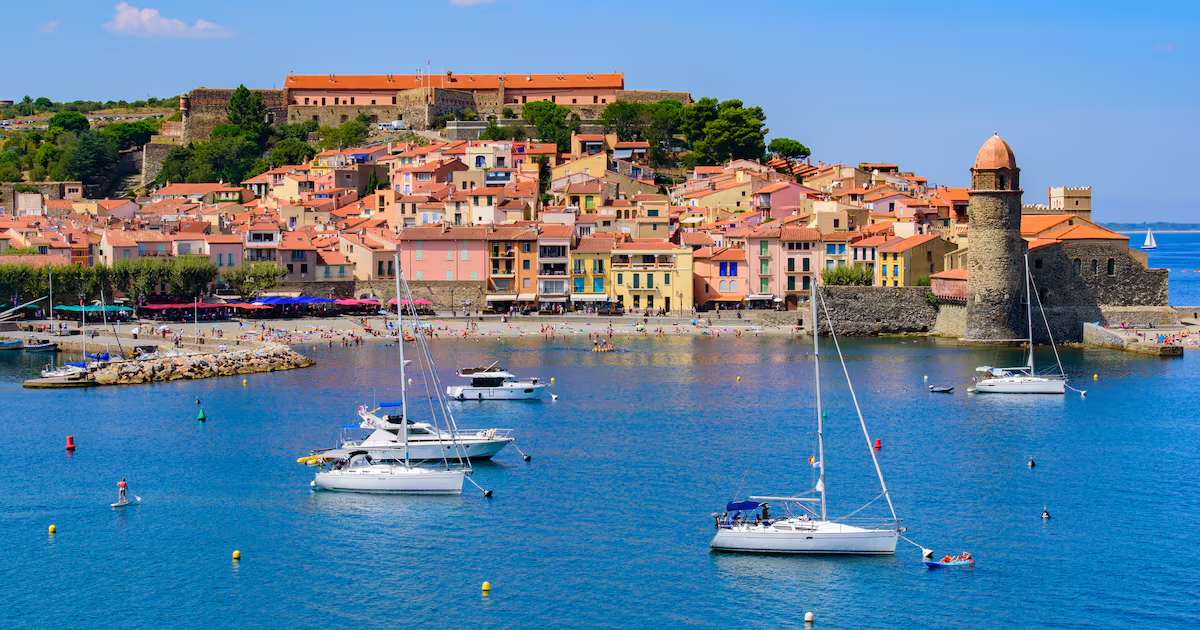
Having first camped in France as a teenager, European campsites are the holiday destination of choice for Emer Roche when travelling with her own childrenThe old town of Collioure, near Camping La Chapelle in the south of France. Photograph: Getty Images Emer RocheTue Jun 30 2026 - 16:01 • 5 MIN READWhen it comes to family holidays, people rarely speak as nostalgically as they do about camping. It seems to truly be some families’ favourite holidays together before older kids break away or parents want to lean into something else. I was introduced to camping as a teen in the 1990s. My best friend’s family took me with them on a three-week Eurocamp holiday to the south of France. We boarded Irish Ferries in the wee hours of the morning at Dún Laoghaire harbour before making our way to Calais, where, bleary-eyed, we took to the motorway heading towards the south of France in my friend’s dad’s car, swapping Smashing Pumpkins and Green Day cassettes to listen to on our Sony Walkmans, until the landscape shifted into pine, heat and the light of the Riviera. We stayed at La Baume in Fréjus. An oasis of mobile homes, shaded by trees and dappled with sunlight, with swimming pools and what felt like an entire world to explore. At 16, there was a particular sense of freedom to it. Meeting other teenagers on site, moving between mobile homes and pool areas, and evenings that often ended at the campsite disco, sometimes with karaoke, and everyone singing along to “Hey Jude”. Mornings were slower, usually croissants picked up from the site shop or bakery, still warm enough to eat before the day properly began, my friend and I speaking our own private language, on holiday with the adults but separate as well. Even to teenagers, the beauty of the south of France outside the campsite is unique and thrilling. The Côte d’Azur is home to some of the most beautiful beaches in France and playground to the rich and famous since the 1800s. As well as the glimmering ports waiting to be explored, there are the lavender fields of Grasse and the literary history of Antibes. Camping La Baume in Fréjus, on the French Riviera A sister site to La Baume, which I revisited as an adult with my own children last year and found just as gorgeous as it was in 1995, is Esterel Caravaning. Set back in the red rock Esterel hills near the village of Agay, Esterel Caravaning feels slightly removed from the busier rhythm of the Riviera while remaining close to the beaches of Saint-Raphaël and Fréjus. Surrounded by a pine forest and dramatic landscape, it has long been one of the best-known campsites in southern France for families seeking a resort feel. Camping La Baume The campsite is expansive, with large pool complexes, restaurants and entertainment spaces that become their own small world during the summer months. What distinguishes Esterel most, though, is its setting. Even at the height of summer, the pine-covered hills and rust-coloured rock formations give it a sense of enclosure that feels very different from campsites sitting directly on the shoreline. Like La Baume, it captures something of the classic Riviera camping holiday. Further along the coast, Camping La Chapelle, at Argelès-sur-Mer, sits close to the border with Spain and the Costa Brava. Often referred to as a good starter campsite due to its compact size, it was the first one I visited with my family when my children were younger. Camping La Chapelle, at Argelès-sur-Mer Situated within the Argelès-sur-Mer area and close to Collioure, La Chapelle is set in a landscape where the Pyrenees begin to meet the Mediterranean, with vineyards, pine and hillside campsites overlooking the coast. [ How to enjoy your holiday this summer: An expert guide to taking a proper breakOpens in new window ]The village-style site is clean and well laid out, with mobile homes arranged under mature trees and a sense of separation between pitches. It has a pool area with slides and a bar, and a layout that makes it easy to move between accommodation, swimming and the beach without much planning. La Chapelle seems to be as popular with French families as it is with incoming travellers. It’s a joy to sit out on your mobile’s veranda and people watch; often multigenerational French families playing endless games of Uno or breaking bread over languorous lunches or dinners. The pretty port of Collioure An Intermarché supermarket is nearby for groceries and barbecue supplies, and the wider promenade leads into a busy stretch of coastline with restaurants and small markets. La Chapelle has its own on-site boulangerie, ensuring each morning begins with the aroma of delicious baked goodies and coffee. Bikes are commonly used in the area, making it easy to move between campsite and town without needing the car. However, it is worth using a car to visit the nearby fishing village Collioure, the beauty of which inspired Fauvist painters including Henri Matisse and André Derain. Wine lovers might enjoy bringing back a bottle of Languedoc rosé for their mobile-home fridge. The Château Royal de Collioure La Chapelle’s position south of Perpignan places it in a stretch of coast that begins to shift into Catalan influence, giving that rare cultural overlap where French and Spanish elements merge in architecture, signage and food. As you continue into Spain, the same camping structure takes on a slightly different feeling. Just across the border, and within easy reach of Barcelona airport, Vilanova Park sits in the hills above the coastal town of Vilanova i la Geltrú. It is one of the larger campsites in the region and, like the other sites, functions in a self-contained manner, with extensive pool areas, spa facilities, restaurants and regular shuttle access down to the beach and train links into Barcelona. The setting changes noticeably from the French side of the border. The landscape opens out into wider, drier hills and olive groves, and the campsite feels more spread out, with a stronger connection to both coast and city. Families often use it as a base for combining beach days with trips into Barcelona itself, where the joy of visiting the city sits alongside its cultural landmarks, most notably the work of Gaudí and the Sagrada Família, still in its long period of construction and nearing completion after more than a century. Further afield, Lake Garda offers one of the most established camping regions in Italy, and Piani di Clodia near Lazise is one of its best-known sites. Set directly on the lake shore, the site combines the scale of a large holiday resort with a landscape that is very different from the Mediterranean coast. Mountains rise directly behind the campsite, while the lake stretches out in front, creating a sense of enclosure that is defined by water rather than forest or beach. The site itself is large and well organised, with multiple pool complexes, restaurants and family facilities, but the atmosphere is shaped by the setting as much as the infrastructure. The lake is the focus here, rather than the coast. It embodies the same idea of the self-contained holiday village, albeit adapted to a different, though equally beautiful, landscape. [ Get away with the gang: 13 staycation choices for big family or friend groupsOpens in new window ]IN THIS SECTION
Camping on the Continent: An Irish family’s favourite summer holiday
Having first camped in France as a teenager, European campsites are the holiday destination of choice for Emer Roche when travelling with her own children
1,227 words~6 min read