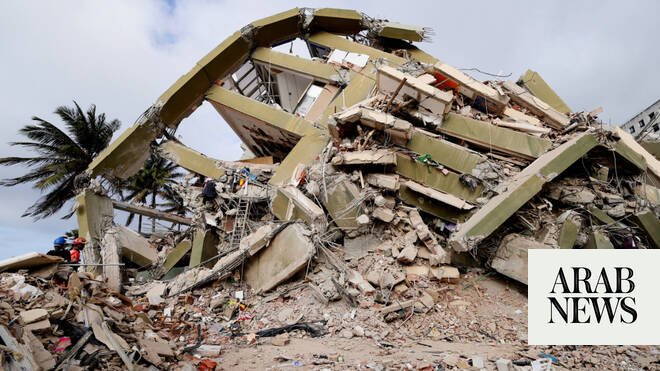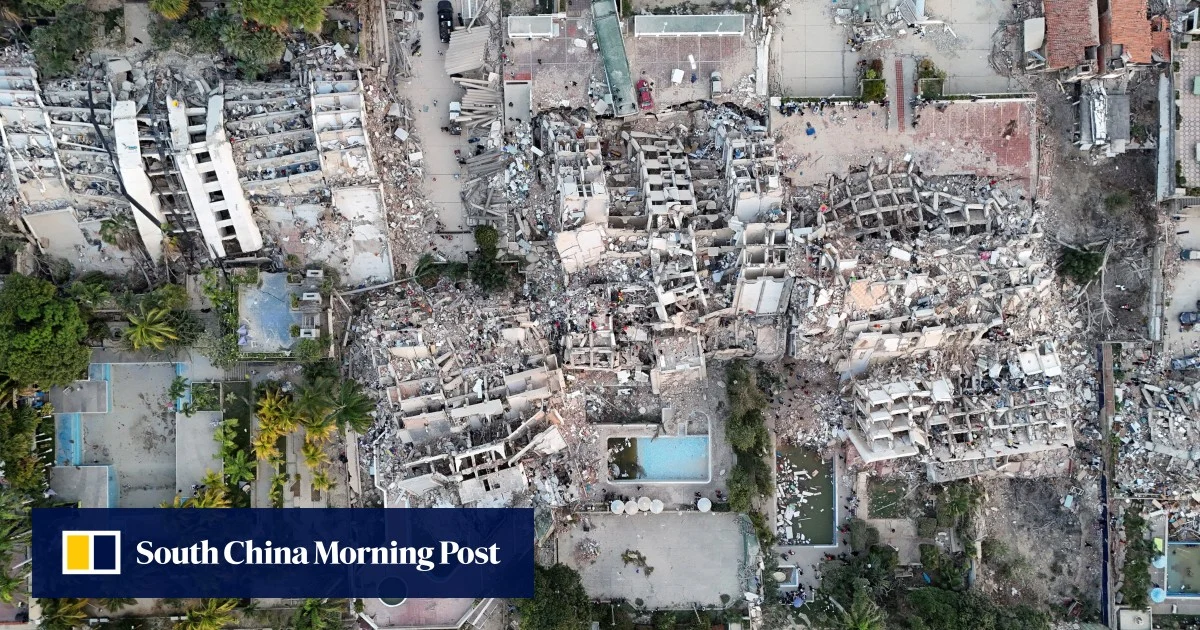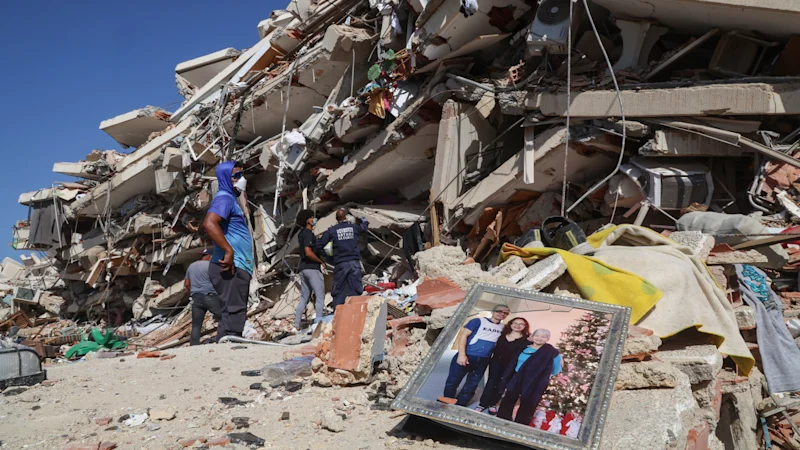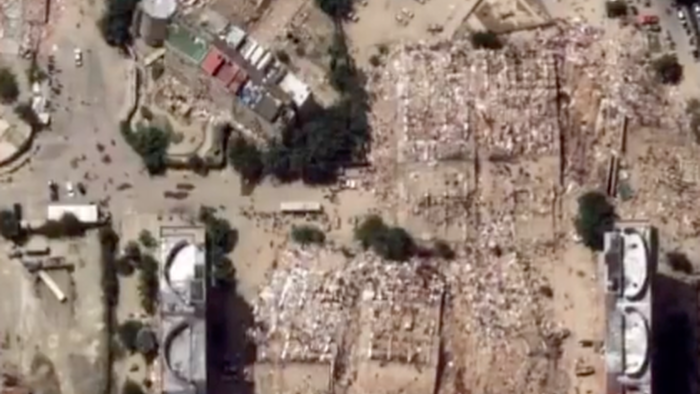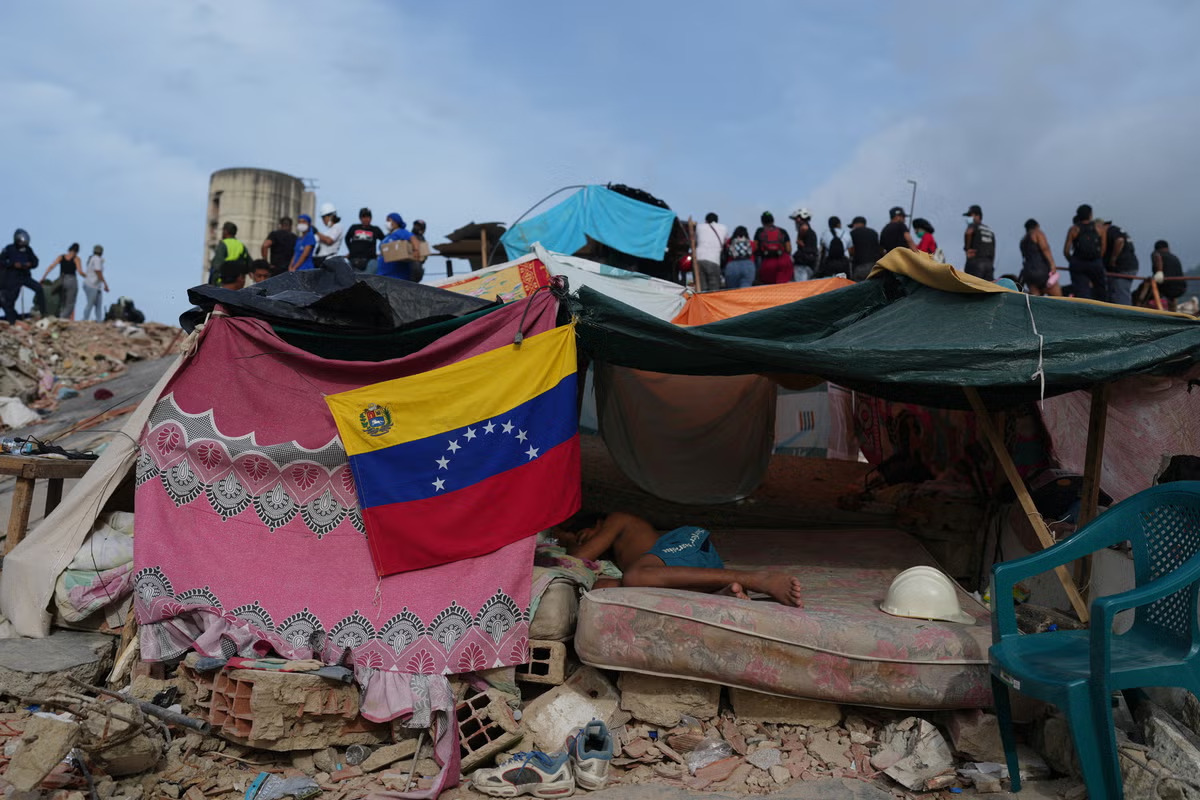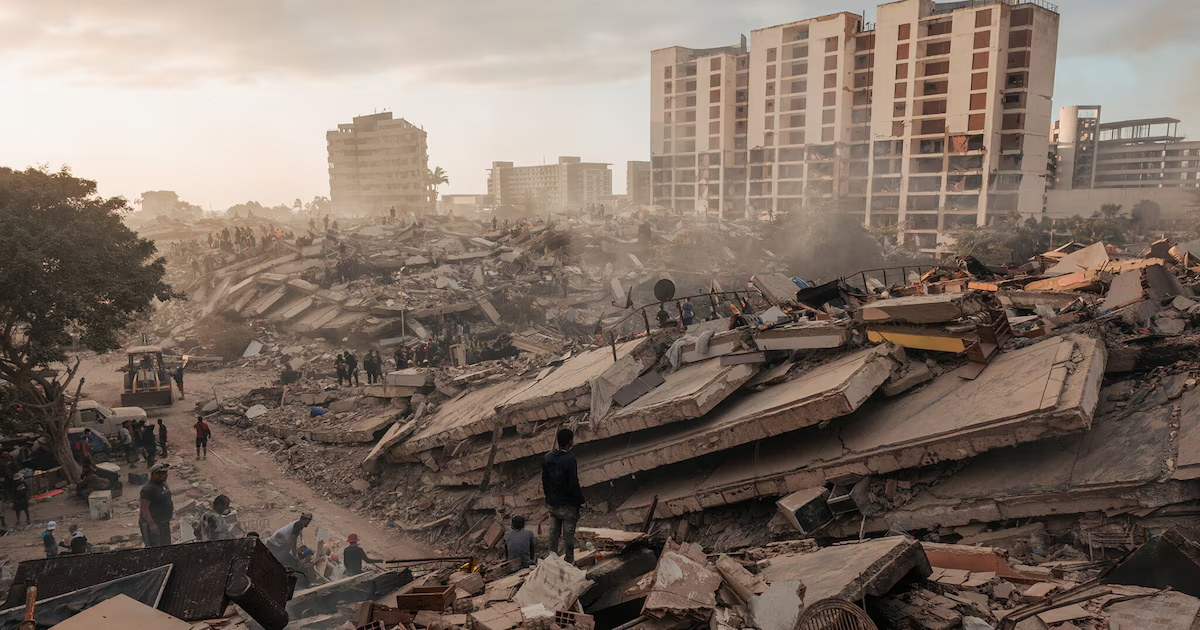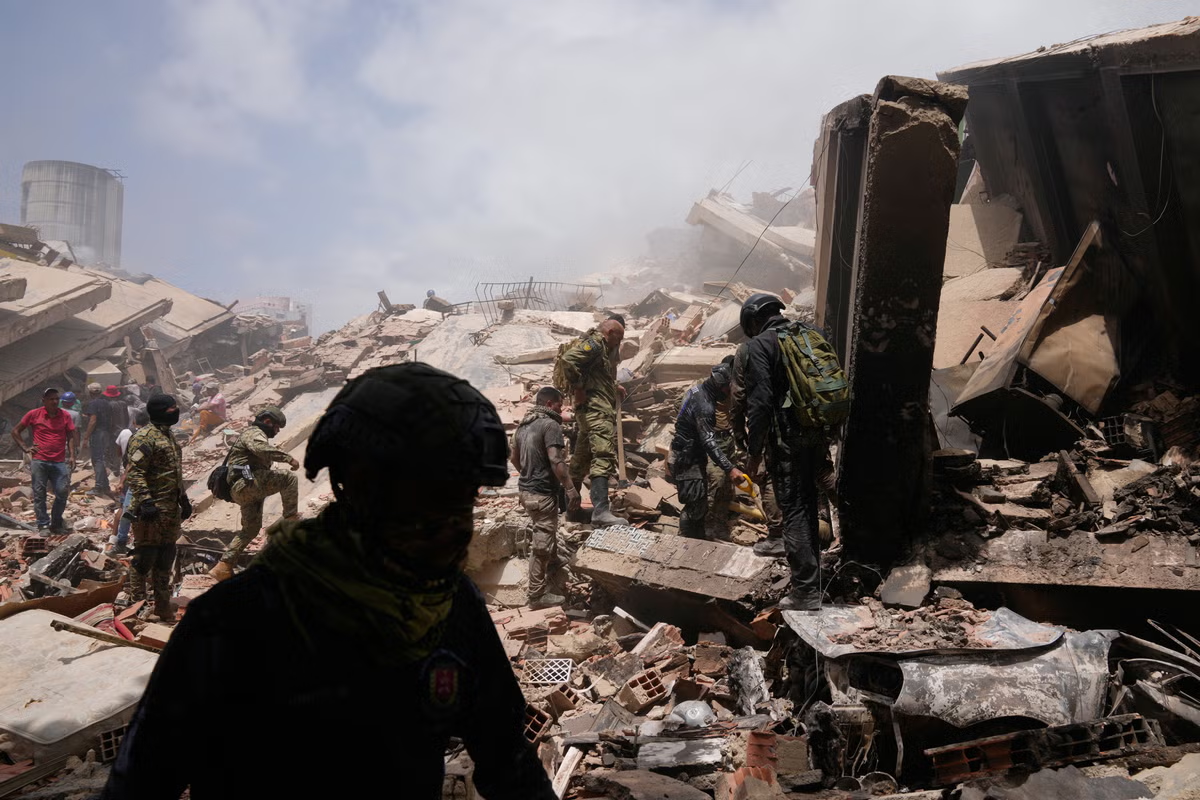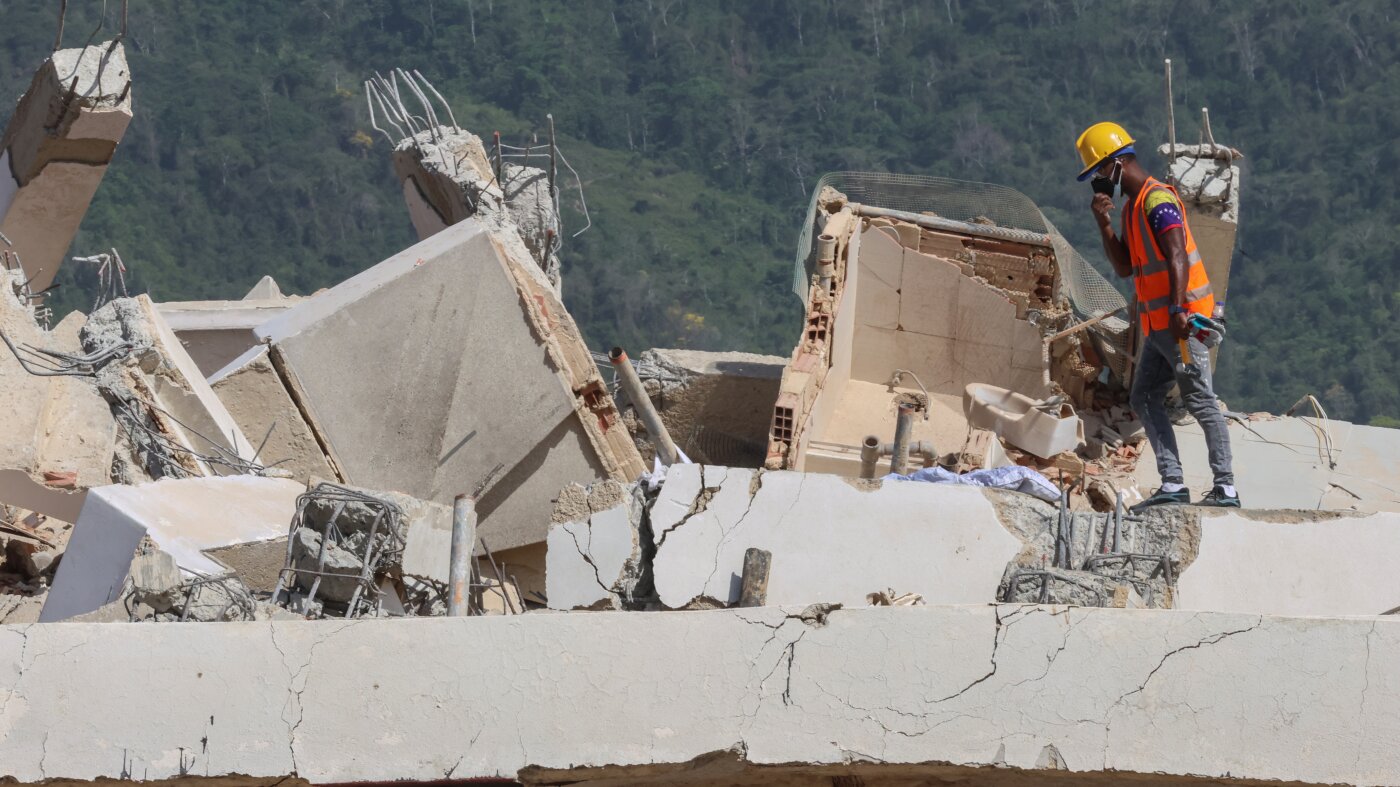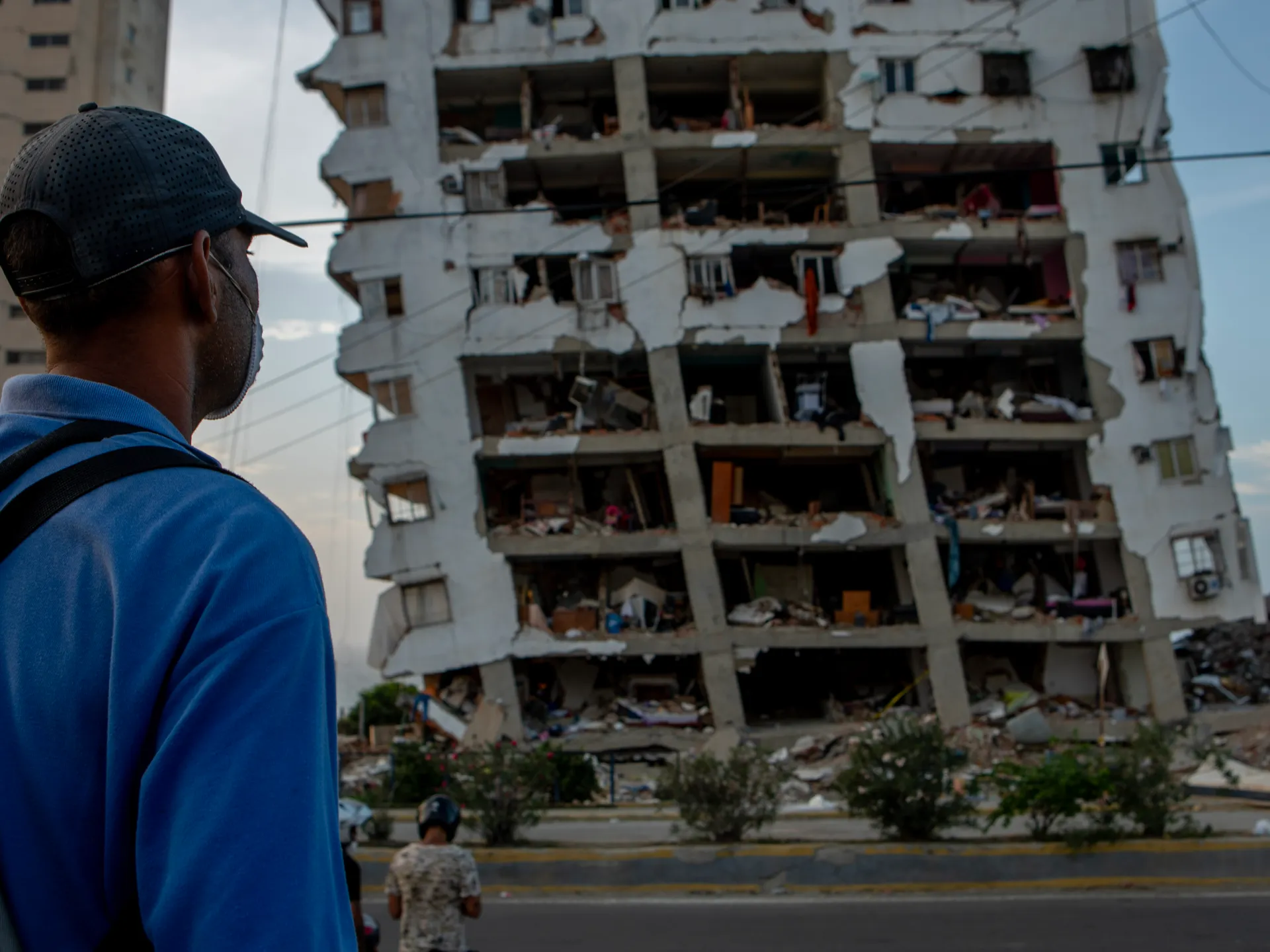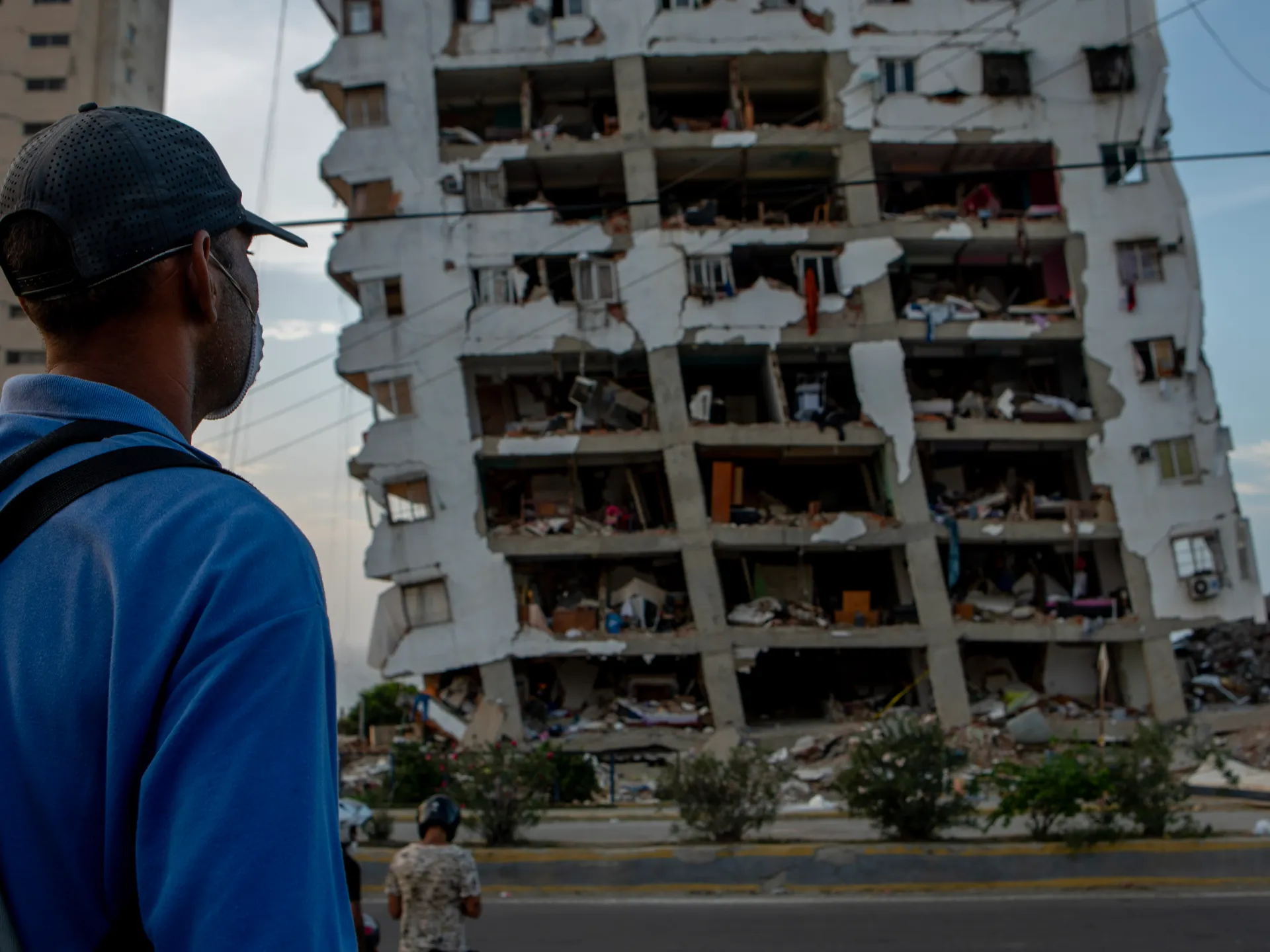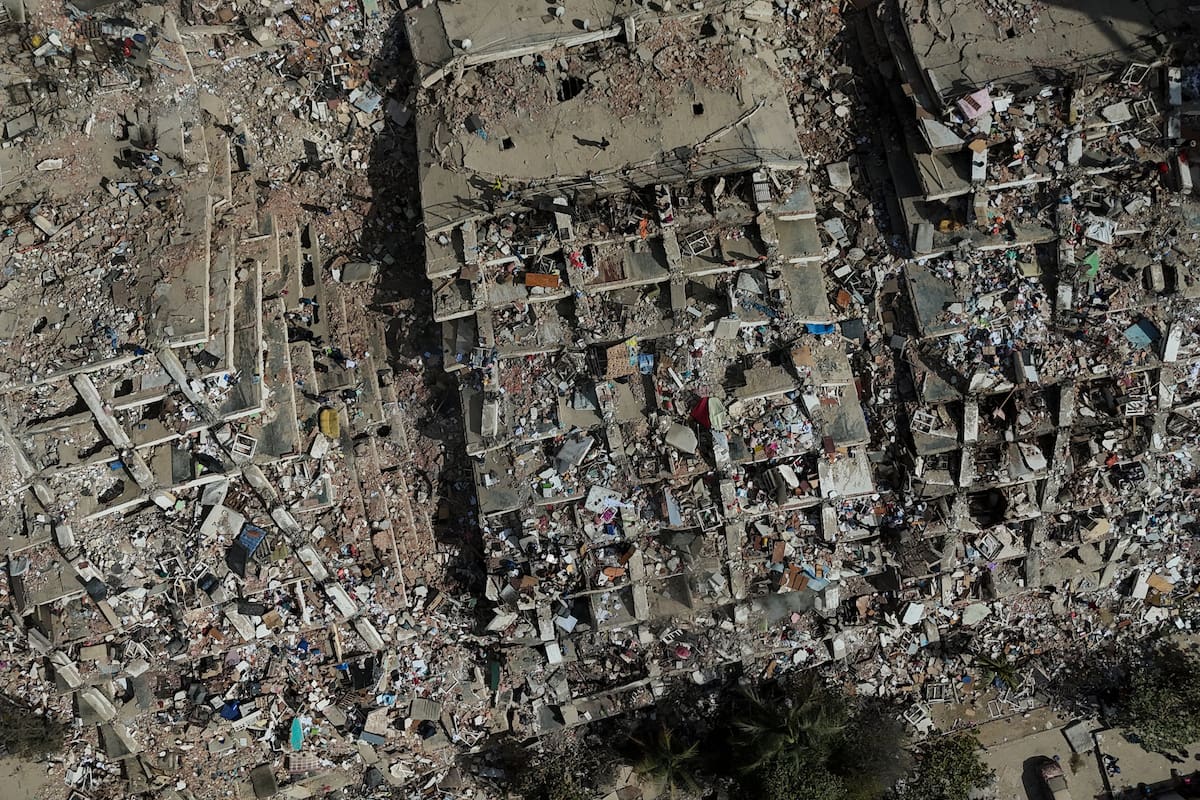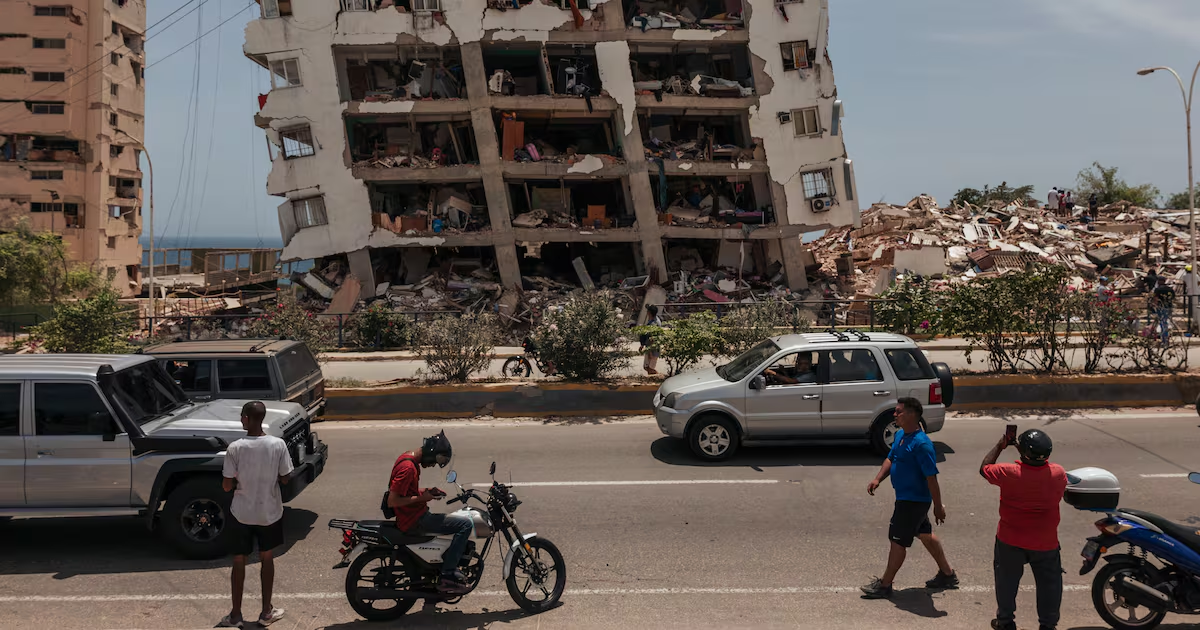
The coastal apartment complexes along Venezuela’s northern coast offered residents privileged, almost idyllic views.Built as part of late Venezuelan leader Hugo Chávez’s socialist revolution, they gave residents a fresh start after deadly floods had decimated the area more than a decade earlier.Today, following last week’s earthquakes, survivors find themselves in the midst of yet another disaster.Some of the buildings have been pancaked into a dense tangle of debris. Many others sit wildly askew. There is no reliable toll for the dead in the apartments along Jorge Luis García Carneiro Avenue – named after a former leader governor and close ally of former president Chávez – in the Catia La Mar sector of La Guaira.With so much debris from the apartment complexes pressed tightly together, and a shortage of heavy machinery to remove the rubble, estimates of how many people might still be trapped inside vary widely.Doris Romero was at work when the earthquake struck. By the time she returned, her home in the Luisa Cáceres de Arismendi tower had already collapsed. Her daughter was in the apartment.She describes confusion and neglect in the aftermath: heavy machinery passed through the area en route to other sites, but says her building received no timely assistance.Residents affected by the earthquakes queue to receive medicines and basic supplies distributed by volunteers in Catia La Mar, La Guaira, Venezuela. Photograph: Federico Parra/Pool/AFP via Getty Images “There were people still alive in there, but they died later because when we asked for help, we were ignored,” she says. “We had to block the road to stop the machines because we want to recover our relatives. My 17-year-old daughter, Branda Mora, is still inside.”Ricardo Pérez is among those waiting outside what remains of the residential buildings, guarding what little he has left. He lost his home a decade before and had sought stability in the Hugo Chávez housing complex. Now, he says, he is frustrated at the pace of the recovery operation.“There is no co-ordination among the authorities, neither local nor state. They just tell us, ‘Pack up, because we have to get you out of here.’ They haven’t carried out a complete census or told us where we’re supposed to go. No machinery has arrived here.”“I lost my whole apartment,” said Yelsa Rojas, who since 2015 has lived on the second floor of the building colloquially known as Los Cocos, for its proximity to a beach of the same name.“We think everyone on the second floor is dead,” she said. The only reason she is alive is because she was at a medical appointment when the quakes hit, she added.[ ‘They’ve abandoned us’: Anger as hope of finding survivors of Venezuela earthquakes fadesOpens in new window ]Chavez’s government began building complexes like Los Cocos right before the country’s 2012 elections as part of a push to erect millions of cheap units across the nation. Maduro continued the project, expanding access to housing for low-income Venezuelans. But as Chavez and then Maduro centralised power, institutions became weaker and so did quality controls over new construction and maintenance of existing structures, say architects and engineers.Developments were built quickly by a mix of state agencies and contractors from China, Turkey and Belarus under military oversight but with little public disclosure, said Richard Casanova, director of Venezuela’s College of Engineers.A heavily damaged multi-storey building in the Playa Verde sector of Catia La Mar. Photograph: Federico Parra/AFP via Getty Images A collapsed concrete structure with crushed floors and debris, with a car partially buried beneath, in Catia La Mar. Photograph: Federico Parra/AFP via Getty Images A lack of enforcement of the more stringent codes in public buildings also signalled to private builders they could get away with cutting corners, Casanova said, in contrast to countries like Chile where such rules were more rigorously enforced and death tolls have been relatively low.A magnitude 8.8 earthquake in Chile in 2010 killed about 525 people, an outcome widely attributed to strict, well-enforced building codes. By contrast, a weaker magnitude 7 quake in Haiti in 2010 killed hundreds of thousands. Shoddy construction and corruption schemes linked to public housing in Venezuela have been reported by several organisations and news outlets in recent years. Independent reporting and studies found several buildings were constructed in geologically risky areas, some with cracks and leaks, and a range of other deficiencies.“The history of Chavez’s public housing is one of corruption and low-quality constructions built without supervision, inspection or adherence to specific codes in many cases,” said Casanova.While engineers and construction specialists said it was too soon to declare exactly why individual buildings collapsed, decades of neglect, a lack of enforcement of building codes and shoddy licensing practices under successive governments may have exacerbated the disaster’s human cost.They also point to soil instability in the worst-hit state of La Guaira, making it an especially risky location to build.As rescuers race to find those buried in the rubble, civil engineers fear other buildings might still be vulnerable after the quakes and want to help the government ensure they are structurally sound and that residents can safely live there.[ Some areas of Venezuela hit by earthquakes yet to receive aidOpens in new window ]So far the government has met the country’s main professional engineer association, but has not begun assessments, frustrating some.“It’s criminal that the government is not taking up offers from engineers and universities more quickly,” said Enrique Larrañaga, an architect and urban planner at Simón Bolívar University who has provided guidance to the government on national development.On Sunday, interim president Delcy Rodríguez announced she was putting together a commission to evaluate damaged housing structures. She did not say when the evaluations would begin.The government has already been criticised for not deploying much-needed heavy equipment and search-and-rescue teams earlier. That left residents on their own, using their hands, shovels and ropes as they scrambled to find relatives in the crucial first days after the disaster.A man looks at a damaged residential building after the twin earthquakes in Catia La Mar. Photograph: Miguel Medina/AFP/Getty Images Larrañaga said many developments, rushed by the government for political purposes, have proven to be safety hazards over the years, while the country also lost much of its engineering know-how during its economic collapse starting in 2013. “They need to give people that have know-how access to information and resources,” he added. – Additional reporting: Reuters
Venezuela earthquake: Model homes with views of the sea – now reduced to rubble
Construction failures and risky geography are key factors in the scale of the country’s rising death toll
1,059 words~5 min read