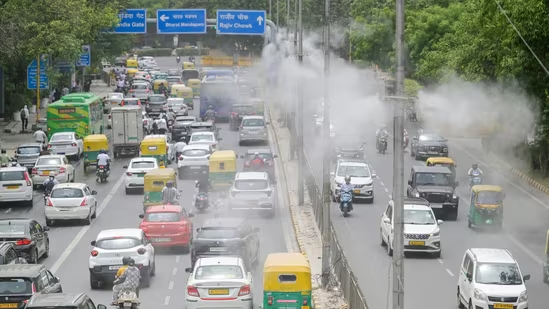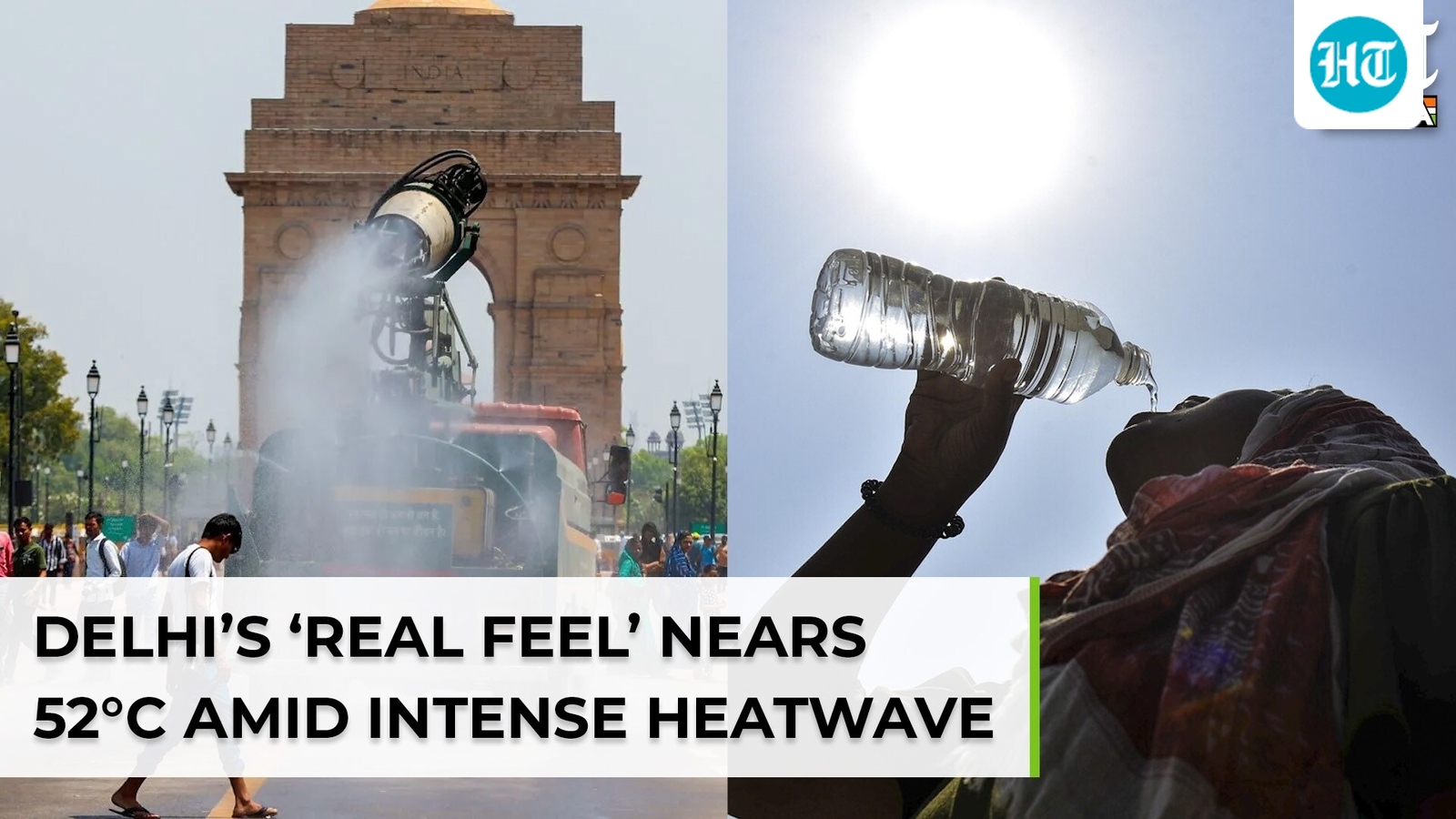
Delhi on Tuesday recorded a ‘real feel’ temperature of 53°C.Delhi recorded heat index above 50°C for three consecutive days from June 28. Humidity was 50%. (Arvind Yadav/HT Photo)The day’s high on the thermometer was 37°C.The difference between the two captures the discomfort that comes with high humidity levels, a phenomenon that isn’t common for much of north India.Meteorologists say this mugginess is the result of southwesterly winds off the Arabian Sea feeding moisture into northwestern India, even as the monsoon, delayed past its normal Delhi onset of June 27, is yet to arrive.Until it reaches, the combination of humidity and heat may only be broken by scattered, short-lived relief from thunderstorms in the region.Heat index‘Real feel’ temperature or heat index (HI) is the estimate of how hot the temperature feels to a person. The concept was anchored on the idea that high humidity slows evaporation of sweat, affecting the human body's ability to cool down.American meteorologist Robert Steadman, in the 1970s and early 80s, came up with a formula that quantified the physiological effects of high heat and humidity on human beings. The US National Weather Service fitted a regression equation – called the Rothfusz equation – to Steadman’s tables in 1990, and it is this format that most meteorological agencies use till date.Also read: Delhi logs 55.6% rain deficit in June amid heatwave; monsoon likely in 4 daysWhy is it dangerousThough uncommon in the northern plains, humidity levels rise ahead of monsoon’s onset every year.And this poses a unique health risk than just hot and dry conditions because high humidity disrupts the body’s main cooling mechanism: sweating.As body temperature rises, the brain triggers sweating and a widening of blood vessels in the skin that redirects blood from the body’s core to its surface, so heat can escape into the air. This only works when moisture in the air is low enough for moisture on the skin to evaporate readily. As humidity climbs, sweat simply pools on the skin and drips off without cooling anything at all.With evaporation impaired, the body leans harder on its other channel — pumping more blood to the skin — which makes the heart work harder. This is why cardiovascular strain, rather than a heatstroke, is considered a more common consequence of exposure to humid heat.Wet-bulb temperatureA related but separate indicator is wet-bulb temperature, which measures – in effect – the human body’s ability to cool down when exposed to heat and humidity.Between June 28 and June 30, as Delhi’s heat index crossed the 50°C-mark, wet-bulb temperatures inched close to 30°C, Met department data showed.In its elementary form, this reading was captured with a thermometer bulb wrapped in a water-soaked wick, then exposed to the air and allowed to cool to the lowest temperature that evaporation can achieve.When wet-bulb temperature is low, sweat evaporates easily. But when it nears skin’s temperature, evaporation – the body's main route for releasing heat – grinds to a halt.The body cannot survive prolonged exposure to the hot and humid weather once wet-bulb temperature exceeds 35°C, scientists say.The threshold may be even lower than this. Researchers have warned that core body temperatures in young, healthy adults can begin rising uncontrollably after the wet-bulb reading crosses 31°C, putting them at risk of heat-stress and heatstrokes.Also read: Delayed monsoon slows down paddy transplantation in HaryanaHow well do these parameters work for India?Heat index was calibrated to a roughly 67kg adult walking at an easy pace in light, Western-style summer clothing, in the shade, with a gentle breeze. This ‘normal’ type was drawn from the western world, not India’s climate or dress.Applying this to a country where a vast number of people work outdoors in direct sun could potentially understate the risk of heat-related illnesses.In 2023, researchers from IIT Delhi tried to close this gap by building a separate India Heat Index (IHI). “All existing indicators were developed based on data from developed countries,” the study’s co-author Sagnik Dey said.
Delhi's temperature read 37°C. It felt like 53°C. Here's why that is dangerous
Humidity levels, as they go up ahead of monsoon, pose a unique health risk. | India News
657 words~3 min read