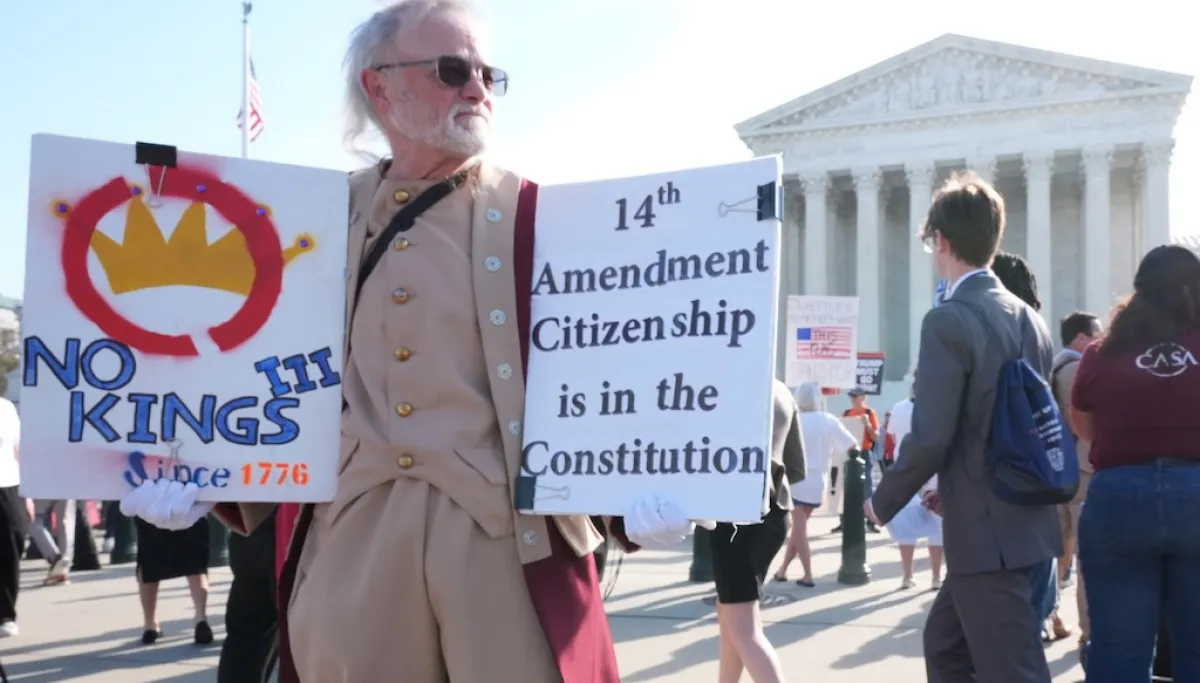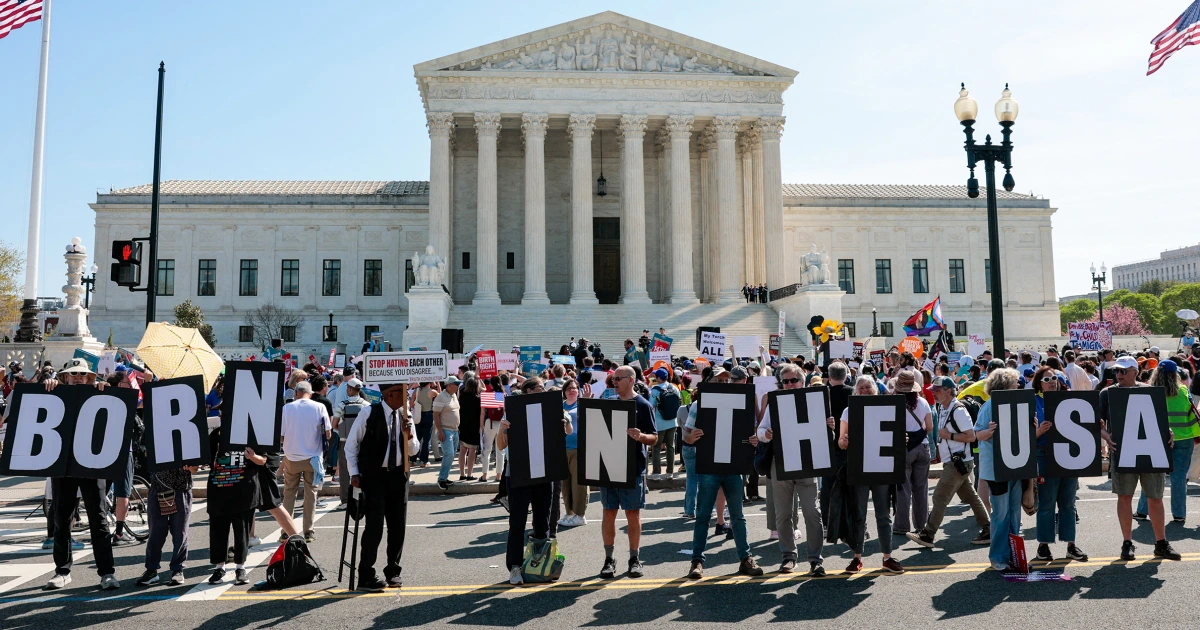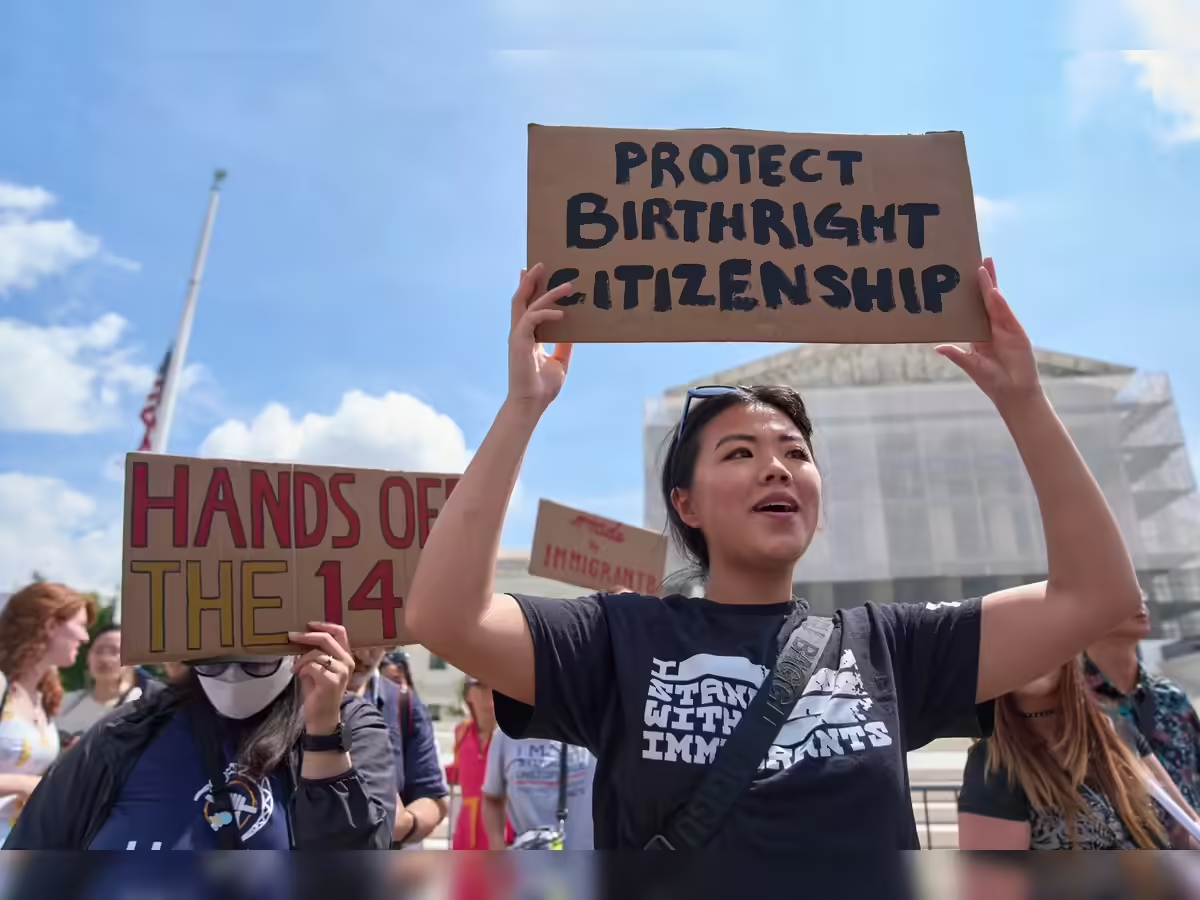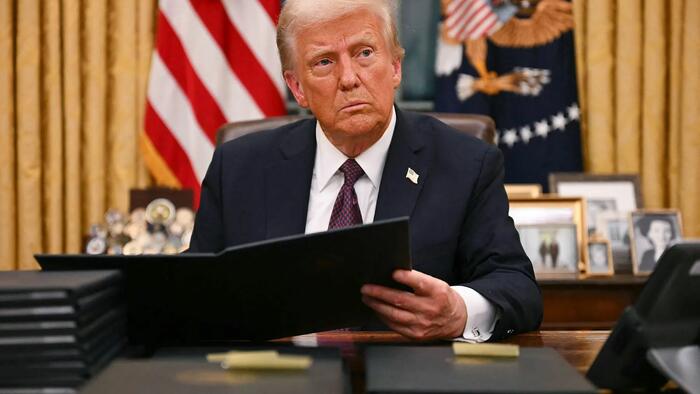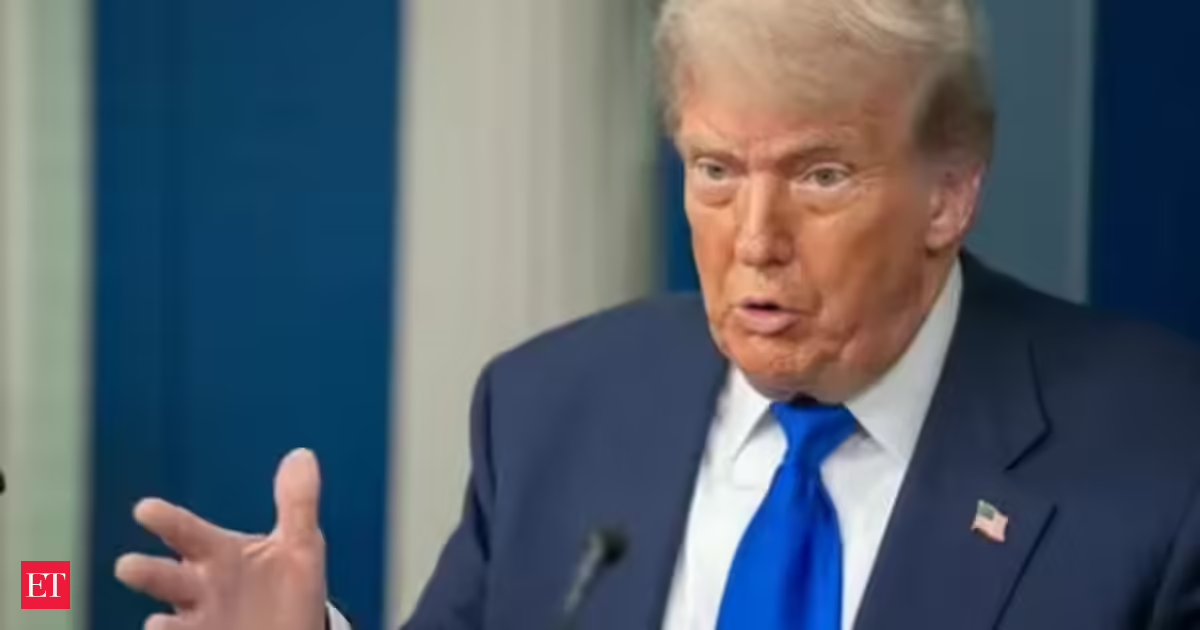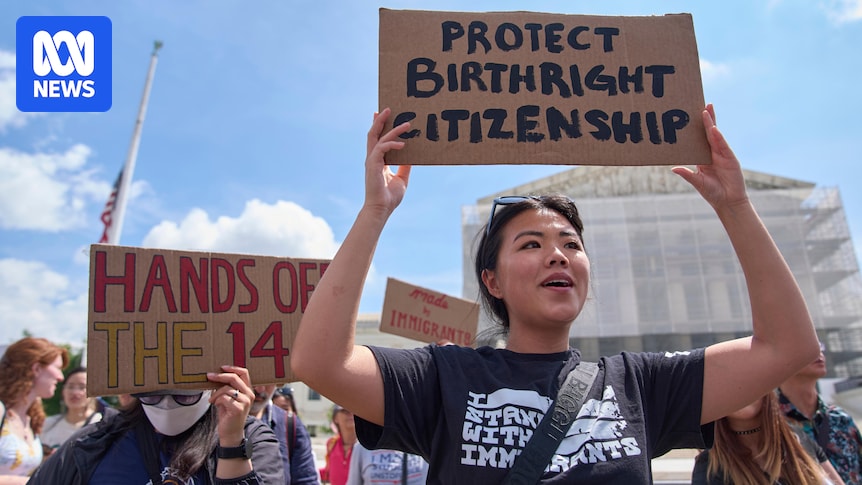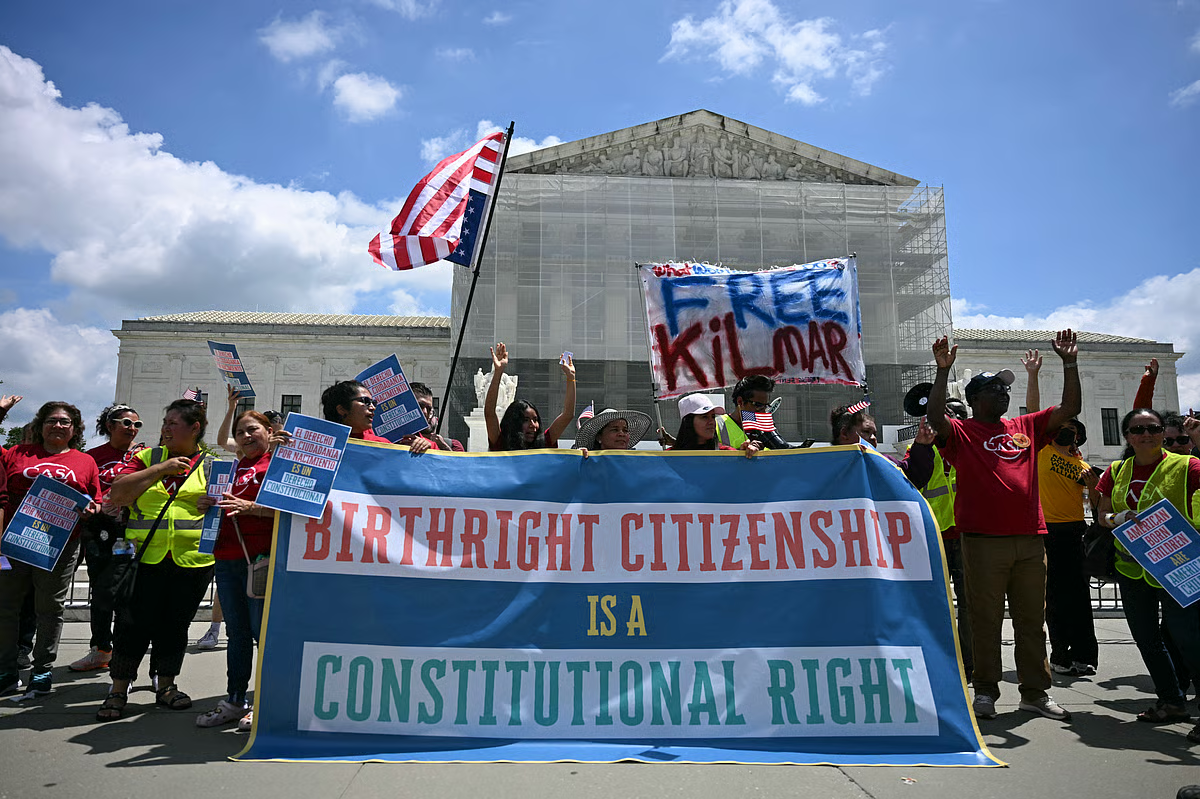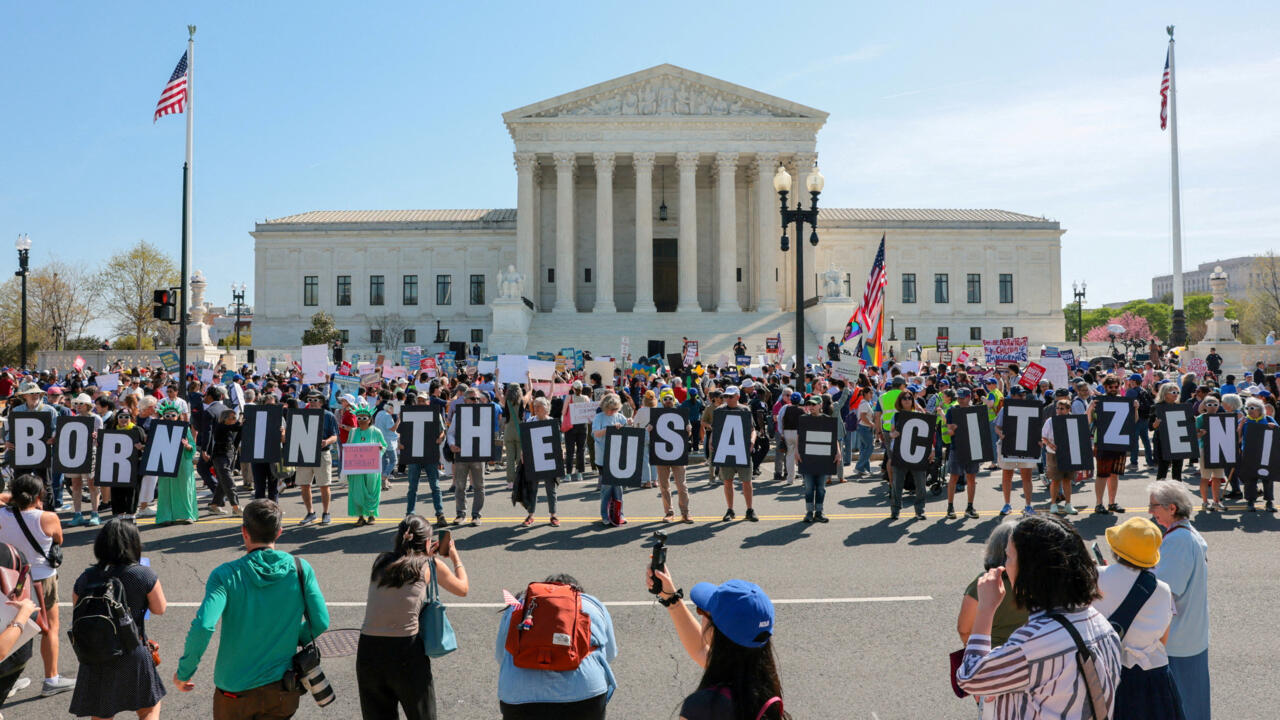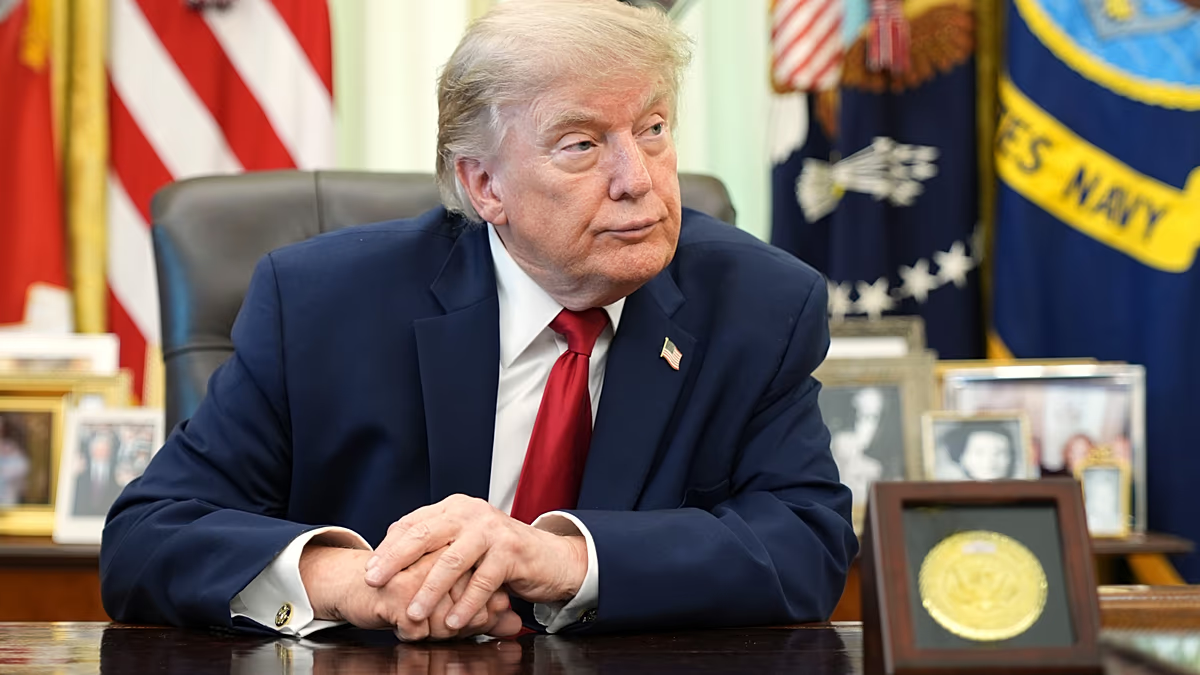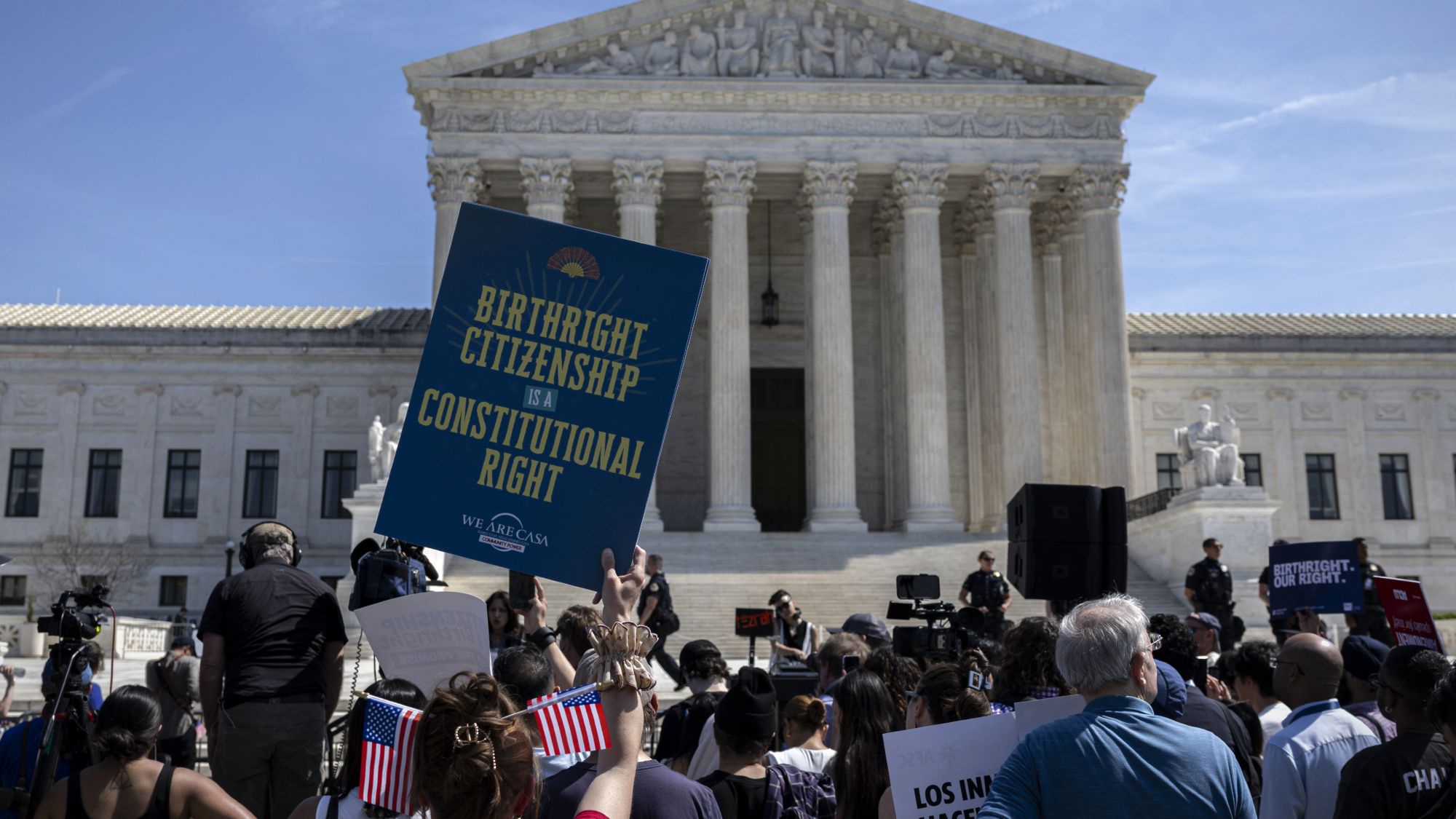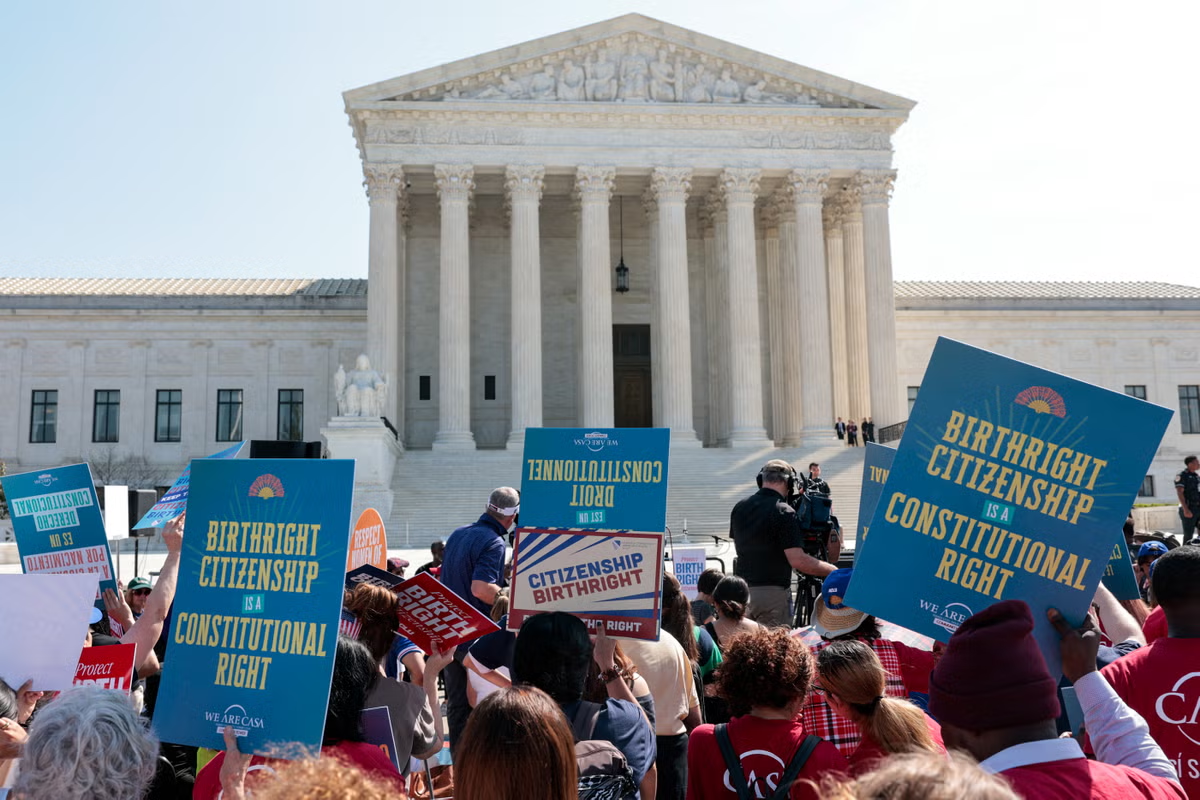
The Supreme Court has struck down Donald Trump’s attempt to block automatic birthright citizenship to newborns in the U.S., dealing a massive blow to the president’s anti-immigration efforts and his spurious attempt to rewrite the Constitution.The 14th Amendment’s citizenship clause states that “all persons born or naturalized in the United States, and subject to the jurisdiction thereof, are citizens of the United States and of the state wherein they reside.”For more than 100 years, the Supreme Court has upheld the definition to apply to all children born within the United States, and Congress codified that language into law in 1952.But in an executive order, Trump sought to unilaterally redefine that amendment to state that babies born on U.S. soil would be denied citizenship at birth if their mother was “unlawfully present” or had “lawful but temporary” status, and if the father “was not a United States citizen or lawful permanent resident at the time of said person’s birth.”In a 6-3 ruling from the nation’s high court, authored by Chief Justice John Roberts, the majority determined that children born in the United States to parents unlawfully or temporarily present are “subject to the jurisdiction” of the United States and are citizens at birth under the Fourteenth Amendment’s Citizenship Clause.”After losing several legal challenges, the administration asked the Supreme Court to settle the issue and determine whether the 14th Amendment “provides that those ‘born in the United States, and subject to the jurisdiction thereof,’ are U.S. citizens.”Key justices on the nation’s nine-member court — including three appointed by the president — were skeptical of the administration’s defense during oral arguments in April. U.S. solicitor general D. John Sauer argued that the Constitution “does not extend citizenship to temporary visa holders and illegal aliens,” arguing that the “new world” of illegal immigration is out of step with the historical record.“It’s a new world,” Chief Justice John Roberts fired back, “but it’s the same Constitution.”Trump’s legally dubious attempts to rule by fiat in an avalanche of executive orders have fueled his attacks against the judiciary, and he has repeatedly reprimanded justices on the conservative-majority court — including those he appointed — that he believes are insufficiently deferential to his agenda. Trump has labeled them “lap dogs” who are “bad for the country.”The president even drove to the Supreme Court to watch his administration’s defense of his birthright citizenship order in person. He abruptly left the building in the middle of oral arguments after the government’s top lawyer, his own former personal attorney, struggled under questioning from skeptical justices, including three Trump appointees.No sitting president has ever watched oral arguments at the nation’s high court. After he left, he wrote a one-sentence post on his Truth Social calling the country “stupid.”If allowed to take effect, Trump’s executive order would devastate immigrant families and upend how all families give birth in the U.S., where children have been granted citizenship at birth with only rare exceptions for more than a century.Families feared not just the abrupt revocation of their child’s constitutional rights but the challenges of mixed-status families and newborns entering a stateless limbo that forces them to navigate complex legal and humanitarian issues in an already-byzantine immigration system.In their briefs to the court, Trump administration lawyers cited several scholars who campaigned against birthright citizenship in the 1800s, a movement fueled by anti-Black and anti-Chinese racism in the aftermath of Reconstruction and a rise in anti-immigrant views.At the time, a group of anti-immigrant scholars advanced the argument that the 14th Amendment’s phrase “subject to the jurisdiction thereof” excluded the children of Chinese immigrants.The Supreme Court was unpersuaded, and the landmark decision in the case of United States v Wong Kim Ark in 1898 held that the 14th Amendment grants citizenship to virtually everyone born in the country.With the court’s latest decision, that remains unchanged.
Trump loses on birthright citizenship after Supreme Court strikes down order
The Supreme Court has struck down Donald Trump’s attempt to block automatic birthright citizenship to newborns in the U.S., dealing a massive blow to the president’s anti-immigration efforts and his spurious attempt to rewrite the Constitution.
637 words~3 min read