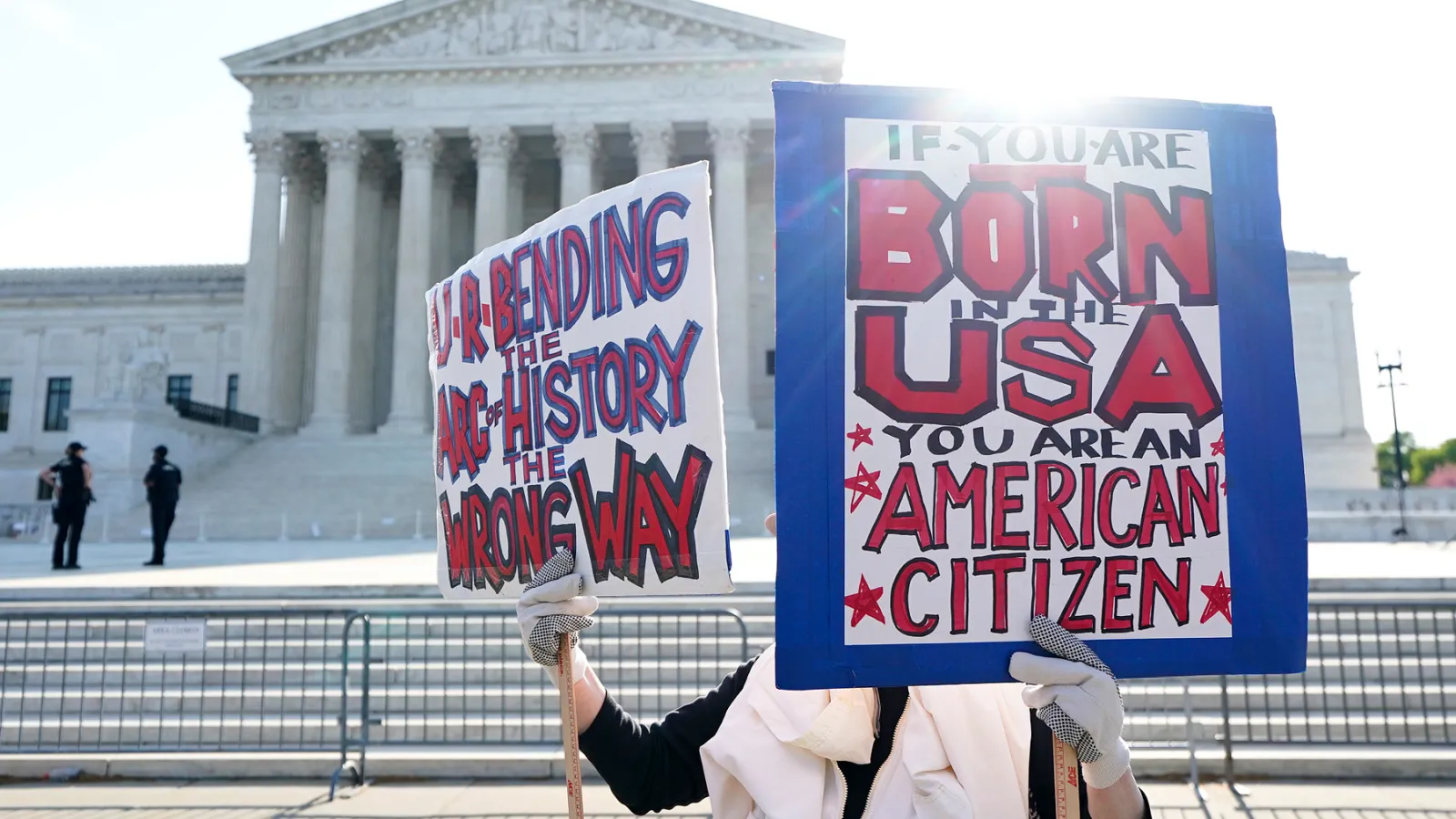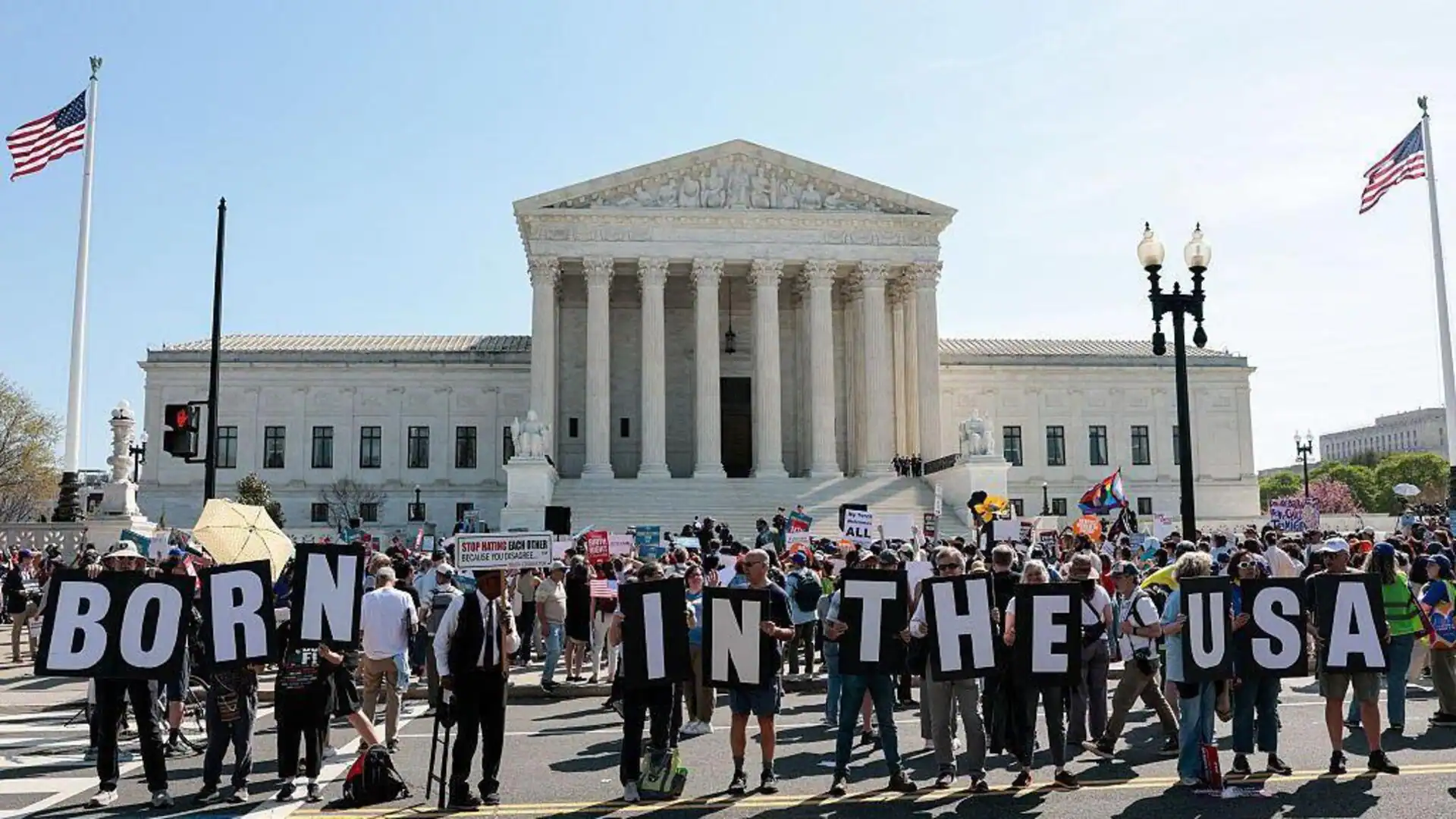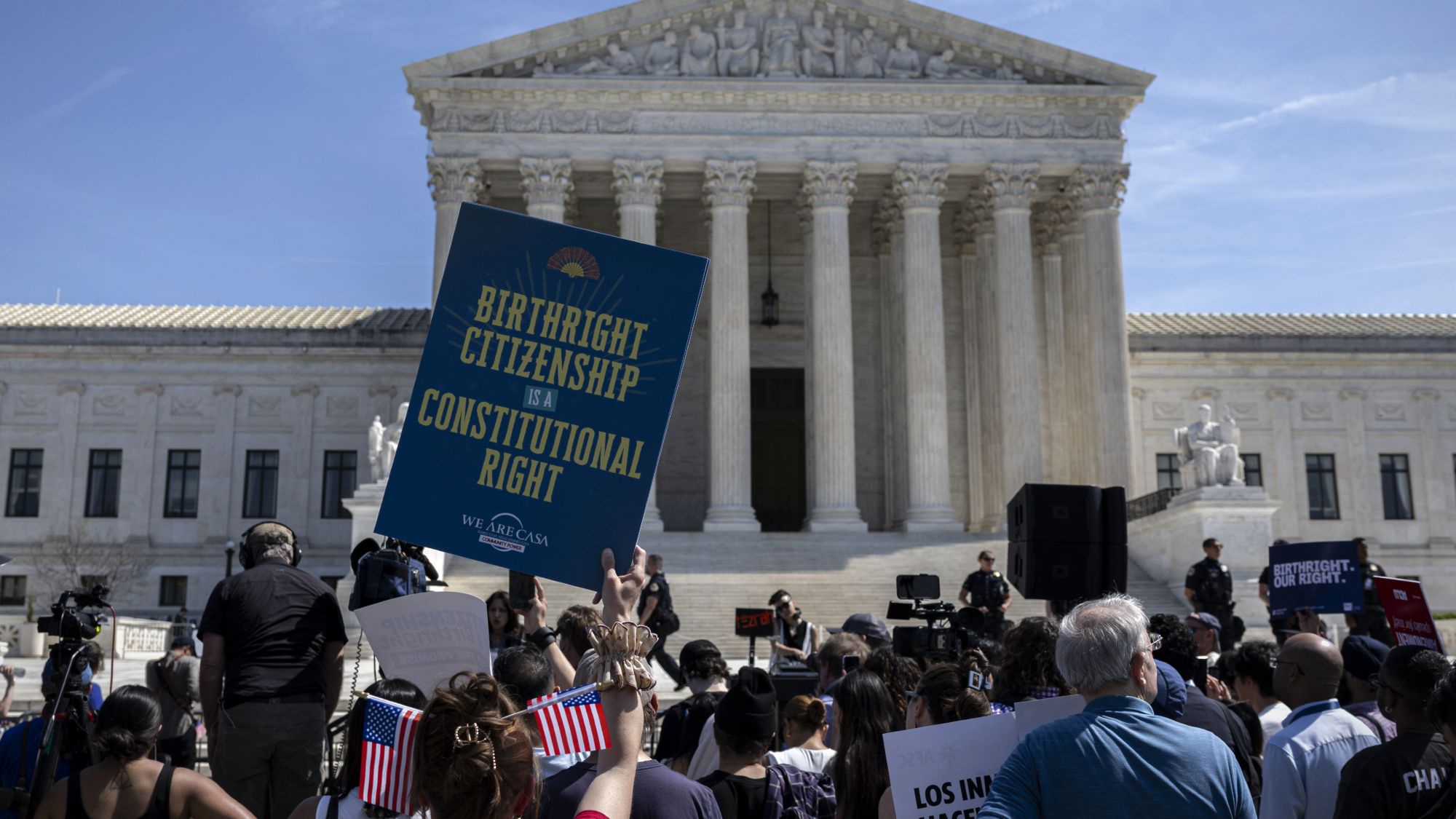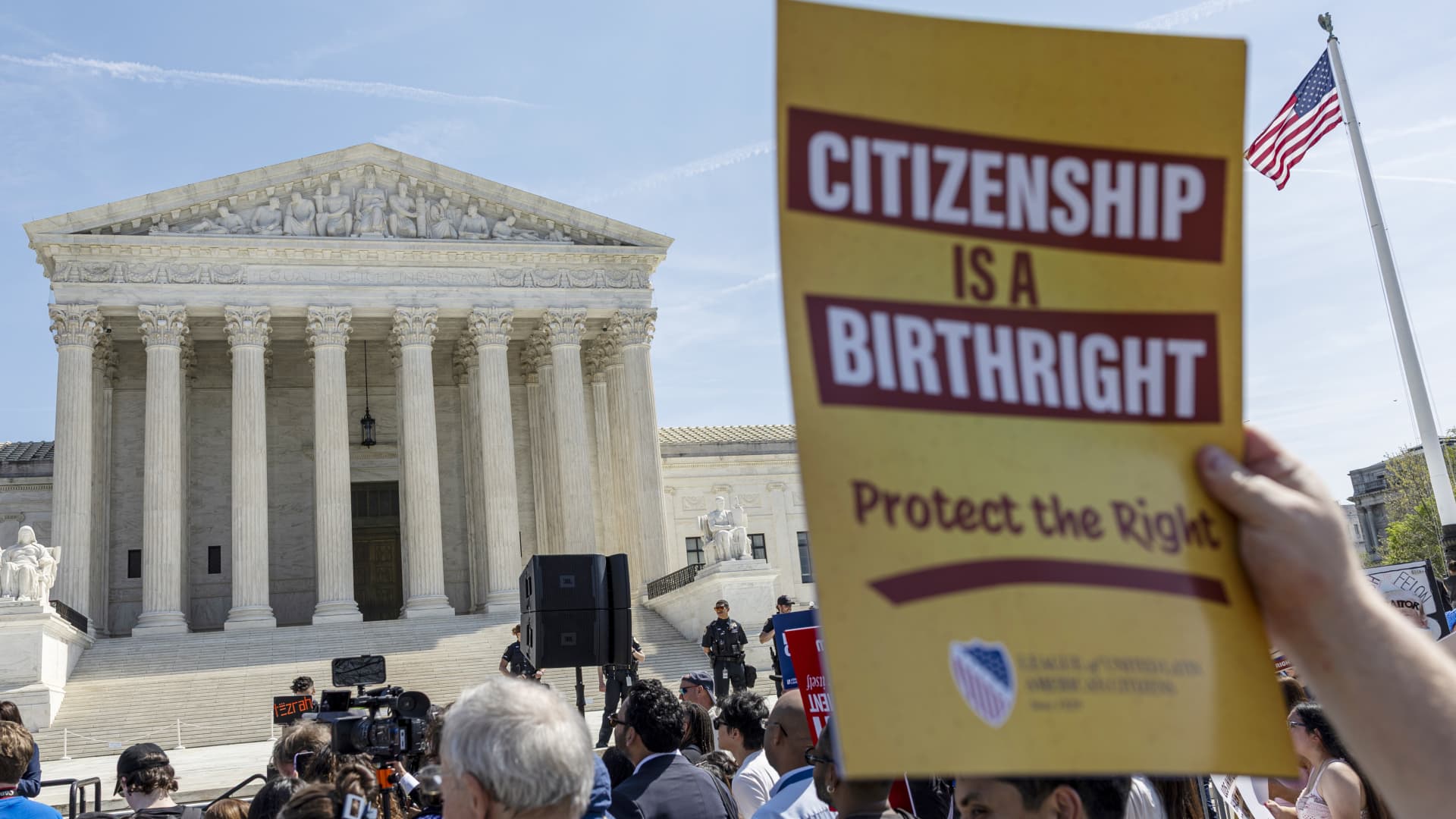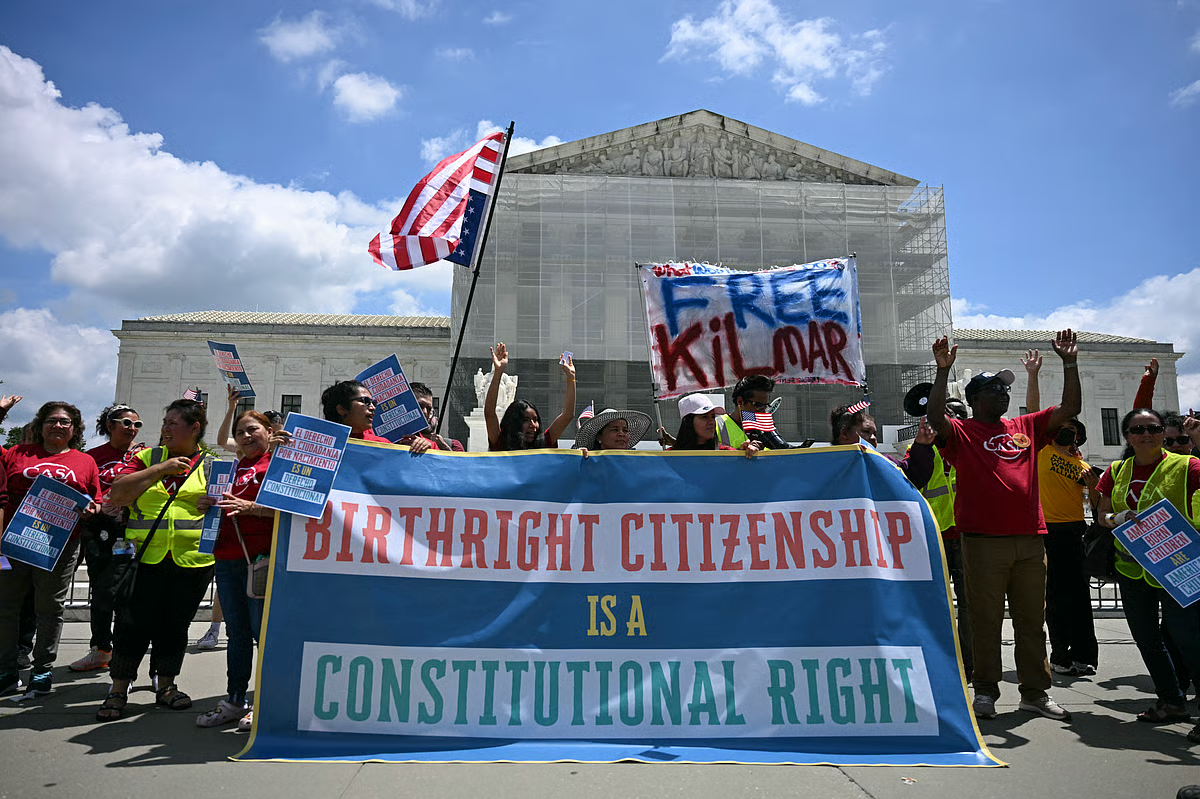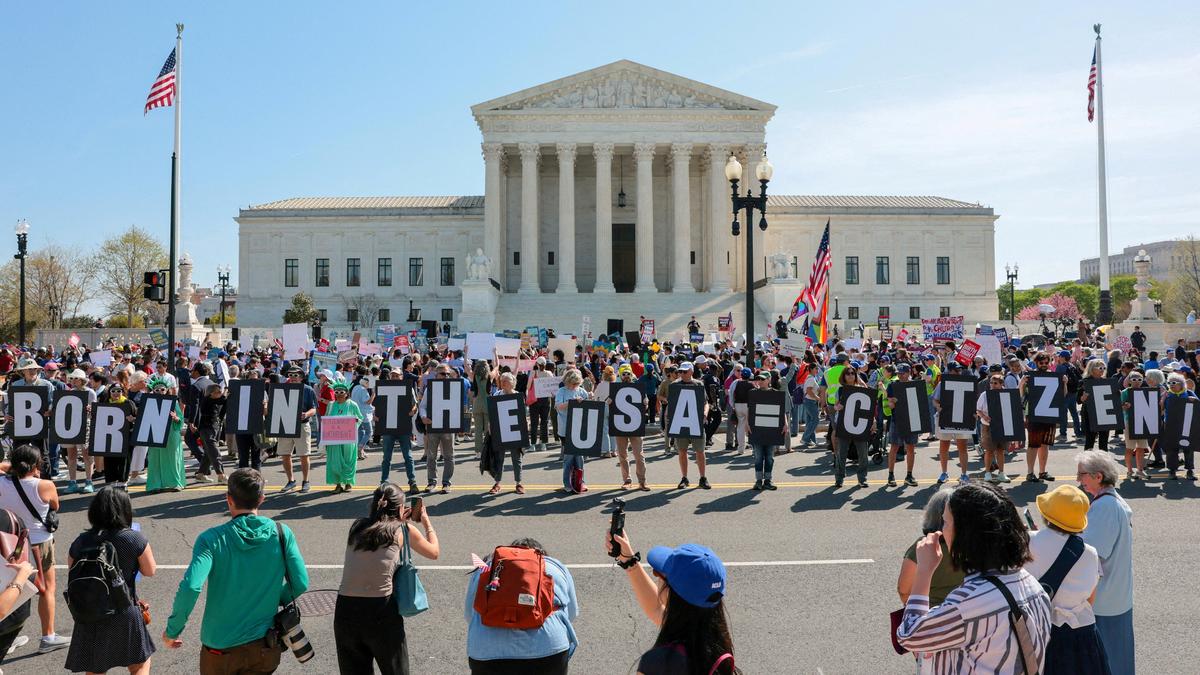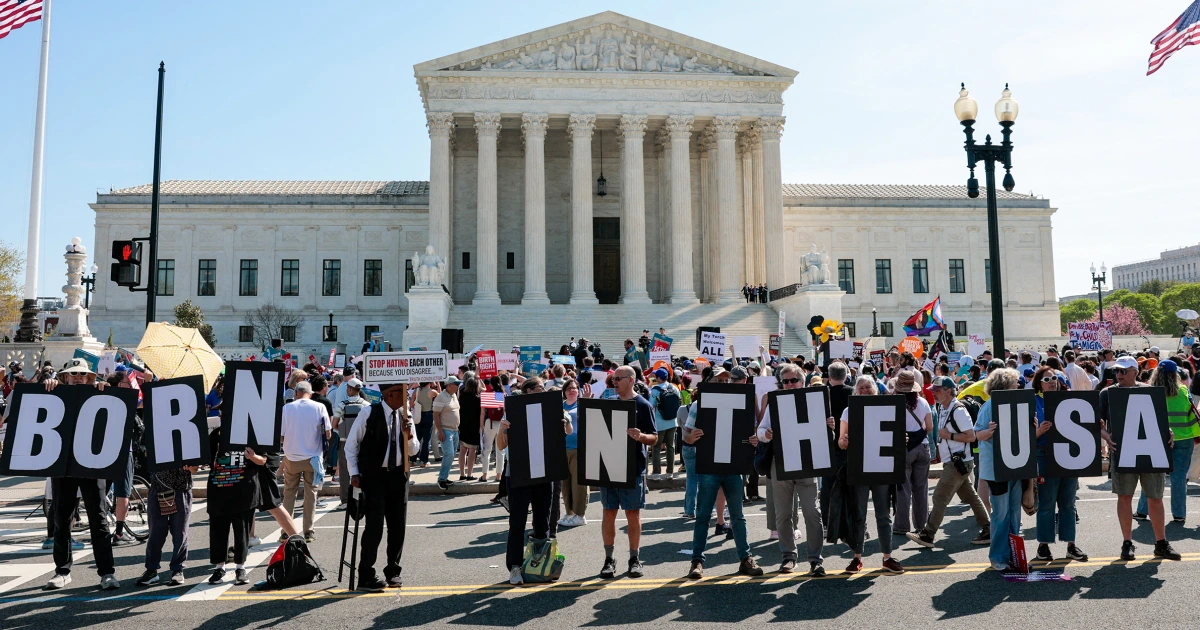
President Donald Trump’s attempt to rewrite the Constitution’s guarantee that those born in the United States are automatically U.S. citizens was struck down by the Supreme Court on Tuesday.“Children born in the United States to parents unlawfully or temporarily present are ‘subject to the jurisdiction’ of the United States and are citizens at birth under the Fourteenth Amendment’s Citizenship Clause,” Chief Justice John Roberts wrote in the 6-3 ruling. Justice Brett Kavanaugh concurred in part. Justices Clarence Thomas, Samuel Alito and Neil Gorsuch dissented.The 14th Amendment states that “all persons born or naturalized in the United States, and subject to the jurisdiction thereof, are citizens of the United States and of the States wherein they reside.” Trump, however, issued an executive order last January asserting that the amendment was never meant to apply to children born to parents living in the U.S. temporarily or illegally. The administration argued the use of phrase in the 14th Amendment, “subject to the jurisdiction thereof” referred only to people who were lawful subjects of America or had what is known as “domicile.” Solicitor General John Sauer argued at oral arguments in April that a person can only be considered as “domiciled” in the U.S. if they have permission to legally reside in America. Notably, however, the word “domicile” appears nowhere in the text of the 14th Amendment.This narrow interpretation was rejected by four federal judges before the question finally came before the Supreme Court. Judges, legal scholars and Constitutional experts alike panned Trump’s executive order, emphasizing how it was entirely against over 100 years of precedent. In 1898’s Supreme Court case U.S. v. Wong Kim Ark, the high court affirmed that children born in the United States to parents who were not diplomats or foreign officials had the right to citizenship. The ruling comes nearly a year after the Supreme Court ruled 6-3 to mostly block nationwide injunctions that lower courts had put on Trump’s birthright citizenship order. The court’s conservative majority wrote last June that the nationwide injunctions, or court orders that universally restrict or stop a party from acting, were an affront to executive power and that they were too powerful a tool for the judiciary to wield. The birthright citizenship order was quickly challenged on other grounds, and returned to the Supreme Court to have them weigh in on the broader question of the order itself. This is a developing story. Please check back for updates.
Supreme Court Upholds Birthright, Denies Trump's Bid To Rewrite Citizenship
The Constitution’s promise of what makes an American an American remains.
405 words~2 min read