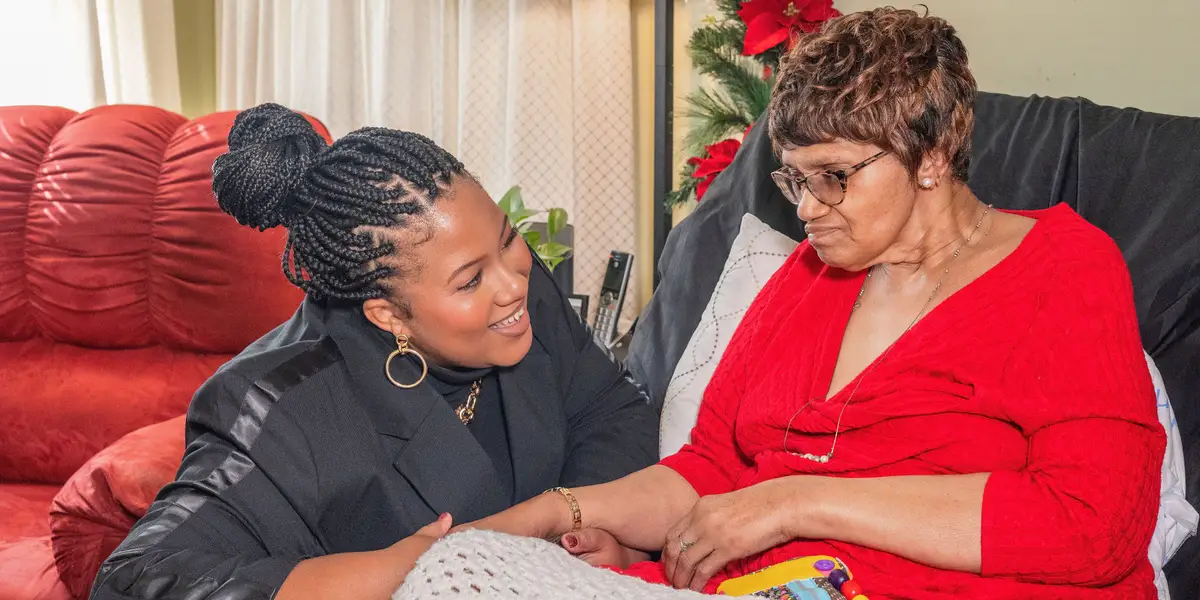
In 2008, John Pittas got a bill for $93,000. It was for his mother’s Pennsylvania nursing home, where she stayed for six months after a car accident. His mother had already left the facility — and the country — and filed a Medicaid application. Pittas, who was 47 at the time and expecting his second child, had never signed anything agreeing to pay her bills. He didn’t even know this law existed. State filial responsibility laws date back to colonial times, and yet are sometimes — although rarely — invoked in 2026. While the language can vary state to state, generally, filial responsibility laws state that adult children can be held financially responsible for their older parents’ bills and debts, especially for nursing home costs or other long-term care expenses that the parents cannot pay. When Medicaid was introduced in the 1960s, states began repealing these laws. But now, with the Trump administration’s pending Medicaid cuts, there could be a significant shift in charging caregiving costs to older Americans’ relatives, thanks to these filial responsibility laws. Illustration: HuffPost; Photos: GettyAs of now, less than 20 states have filial support statutes.There are a few reasons why an older parent might not be able to pay for their bills, Katherine Pearson, a professor at Penn State Dickinson Law School, told HuffPost. The parent could be indigent and unable to pay for their own care, they have an illness that prevents them from working or covering the costs, or they simply cannot work because of their age.“The claims tend to be made because the parents have gone into some type of care facility, usually a nursing home, and the bills aren’t being paid by the parents,” Pearson said. “So if there is a gap in private payment by the resident, and public payment by Medicaid law, then somebody is going to say, ‘Well, let’s see if the adult children are obligated to pay.’” As of now, less than 20 states have filial support statutes, according to Pearson. (Some sources claim that it’s closer to 26 to 28 states, but Pearson argues those numbers are including states that only make children liable for burial costs specifically, which is part of the old filial support law.) But very few states “actually permit support, or pursue these claims,” Pearson added, for a couple of reasons. “Most of the time, the parent does not want to sue their children, and they’re the party who could make the claim under most of the laws,” she said. “But some states — and Pennsylvania is probably the leading state on this point — give what we call a ‘standing to sue’ to recover certain costs for care to anyone who has provided the care.”“Most of the time, the parent does not want to sue their children, and they’re the party who could make the claim under most of the laws.- Katherine Pearson, professor at Penn State Dickinson Law SchoolSo, if a parent passes in a nursing home in Pennsylvania with outstanding bills, the nursing home can file the claim that the parent’s child needs to pay for those bills. “If you qualify as a statutory family member, you’re liable,” Pearson said. “We’re not required to offset just because there’s another child out there who could pay — and that’s true of most of the states that do have a filial support law.” In Pittas’ case, he qualified as the statutory family member responsible for his mom’s nursing home care, even though his and his wife’s joint annual income was around $85,000, and he had multiple siblings and a stepfather. His mom’s Medicaid application was not approved in time, and the nursing home claimed his mom was “indigent.” In May 2012, the Pennsylvania Supreme Court affirmed that Pittas was liable for his mother’s nursing home debt under the state’s filial responsibility law. It also noted that if Pittas wanted to split the cost burden with his other family members, that was up to him, not the court or the nursing home. What exactly are the details in filial responsibility laws? Like in Pittas’ case, adult children do not need to sign any legal documents specifying that they will be financially responsible for their parents’ nursing home bills. They don’t even need to physically be there to check their parents into the nursing homes. “You are related to them; you are their children,” Pearson said, noting that the children are responsible under these laws. There is no common-law obligation for children to pay their parents’ bills — that only exists if there’s a statute or contract requiring it. Filial support laws are that statute.Even if the child does not sign a contract to pay bills when putting their parents in a nursing home — or even if they’re not responsible for why their parents were placed in a nursing home — if that parent is not paying for the bills, the state is not paying, and Medicaid is not paying, the nursing home is not getting paid. So the nursing home can argue that, under the filial support law, the child is financially responsible. “There is one major defense,” Pearson said, “and that is if the parent abandoned the child for at least 10 years while the child was a minor.” Jiratcha Piamnoppacun via Getty ImagesThere's no common-law obligation for adult children to pay their parents’ bills — that only exists if there’s a specific statute or contract requiring it.When it comes to whether the child may have been the victim of abuse or estrangement from their parents growing up, “the courts are sensitive to why somebody didn’t pay or doesn’t want to pay, and most courts have the power of equity, which is to say, ‘OK, those parents did not deserve this child’s financial support,’” Pearson said. “That’s pretty rare, to be honest, but it can happen.” Things also get more complicated when the parent and child live in different states. There is no federal system for enforcing filial laws across state lines, so someone living in a state without filial laws may have some protection — even if their parent lives in a state that does have those laws in place. But Pearson says it’s not a complete guarantee. Which states still have these laws in place?The states that have some form of filial responsibility laws in effect are: Arkansas, California, Delaware, Georgia, Indiana, Kentucky, Louisiana, Mississippi, New Hampshire, New Jersey, North Carolina, North Dakota, Ohio, Oregon, Pennsylvania, South Dakota, Tennessee, Vermont, Virginia, and West Virginia. In Massachusetts and Rhode Island, the law specifically states that any child over 18 “who refuses to support a parent when they reasonably can may be fined up to $200 and face up to one year in prison.”In Alaska, the law applies only to adult mental care; in Connecticut, the law applies only if the parents are younger than 65; and in Nevada, the law mandates filial liability only if there is a written, signed agreement for the child to pay for care. Why do these laws stay on the books?A question that often comes up among people who learn about filial laws is: Why do states still have them in place? “We sometimes have laws on the books that I would call a ‘scarecrow law,’” Pearson said. “It has some moral quality to it, and that was a good moral to reinforce; therefore, we’ll just leave it on the books, but we don’t have to enforce it. That’s why I think some states have it.” There’s also the financial cost of moving legislation through the statehouse. “[These laws are] rarely used, so it’s really not a big deal,” Pearson added. “The biggest reason [they’re not repealed] is that they’re just such small potatoes, that there’s not a lot of time and money invested in either revising, repealing or making them stronger.” The staying power of these laws isn’t an accident for some states. In 2022, both houses of the Virginia legislature voted to repeal the law following a series of controversial cases. Sen. Adam Ebbin (D), who introduced the bill to repeal the law, pointed to cases where a “brother who had run his mother’s finances into the ground, sued his sister for support of the mother” and another where “the law provided a forum for a stepfather to retaliate against his wife’s adult children for not supporting her when they didn’t want him to be her guardian.” But Gov. Glenn Youngkin (R) vetoed the repeal, and the legislature couldn’t override the veto. Youngkin’s signing statement argued that filial laws protect elderly people during bankruptcy proceedings and, without filial laws, there is a “grave risk of unforeseeable and unintended consequences, which may harm people going through some of the most difficult times in their lives.” “I think it’s because in conservative states, they like the laws with moral qualities to them, and they think that somehow the moral qualities are being enforced,” Pearson said. What should you do if you think you’re affected? As Medicaid cuts go into effect, it’s unlikely filial laws will be more commonly enforced, Pearson said. It’s more likely that middle to low-income nursing homes will lose funding, fewer beds will be covered, and more families may find themselves caring for parents at home. For people living in states with filial laws, Pearson said it’s best to consult with elder law attorneys about your specific situation.“[These attorneys] have the expertise to guide families in figuring out how to pay for things in advance, or even after a crisis happens,” she said. “There’s lots of crisis planning that will work, that will avoid the need for these kinds of filial support law cases to occur.”
These States Can Require You To Support Your Elderly Parents, Whether You Like It Or Not
Your state might have a law like this on the books that you don't know about.
1,615 words~7 min read