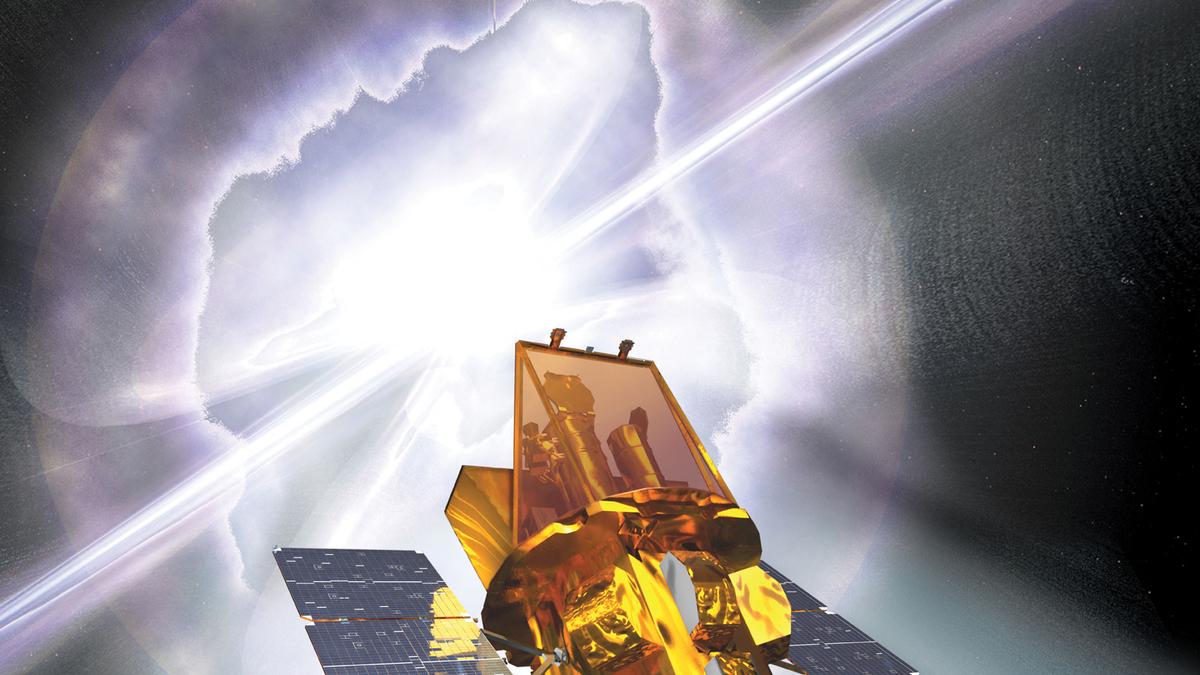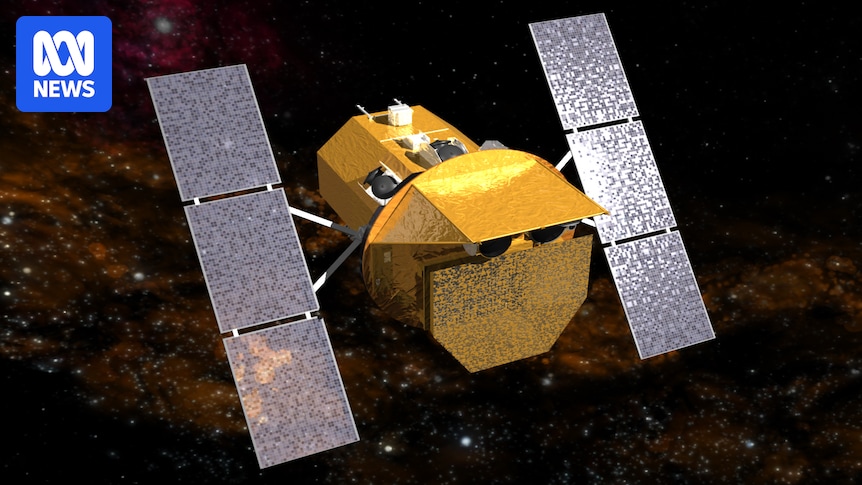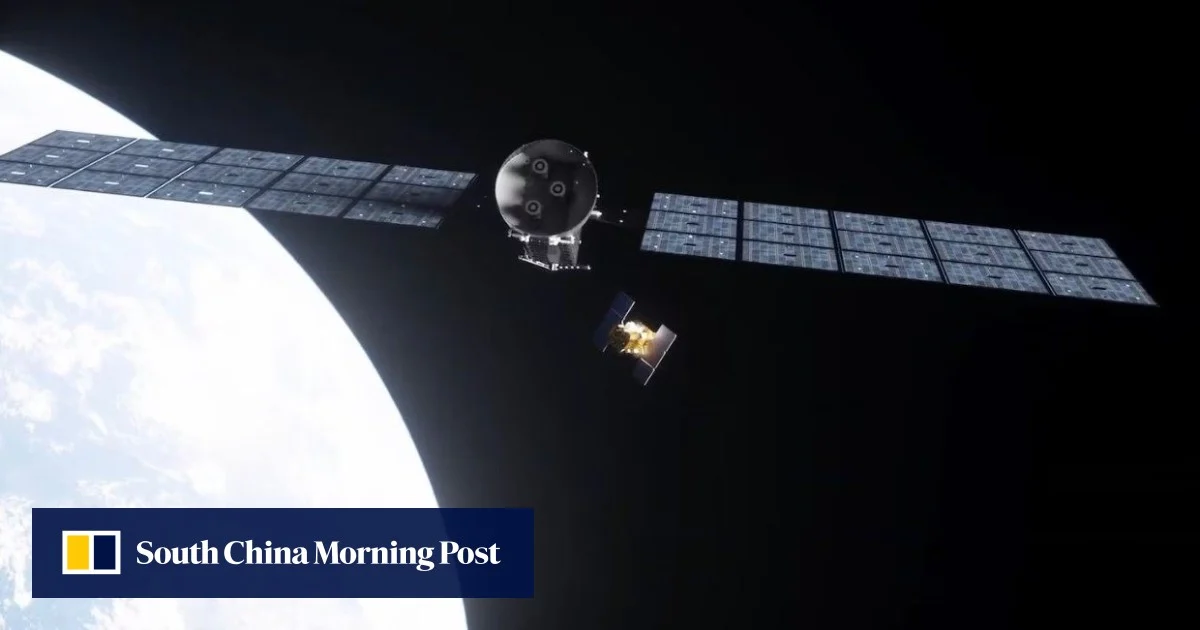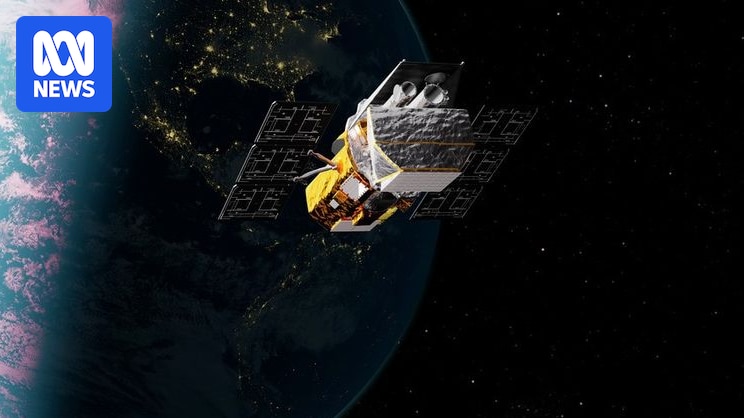
NASA is set to launch a daring robotic rescue mission to prevent one of its ageing telescopes from vanishing into dust. If successful, the effort could pave the way for giving other satellites a second life. The operation is set to last several months, kicking off with the launch of a robot designed to rescue the Swift space telescope that's currently falling towards Earth. Without intervention, Swift is expected to soon burn up in the atmosphere. The rescue spacecraft developed by the US startup Katalyst was slated to lift off Tuesday at 1023 GMT from a Pacific Ocean atoll aboard a small rocket named Pegasus. But NASA postponed the launch, citing unfavourable weather conditions, and set the next launch attempt for "no earlier than Wednesday, July 1" at 0943 GMT. The rocket-propelled launch vehicle will not take off from a launch pad. Instead, it will be released from a jet.
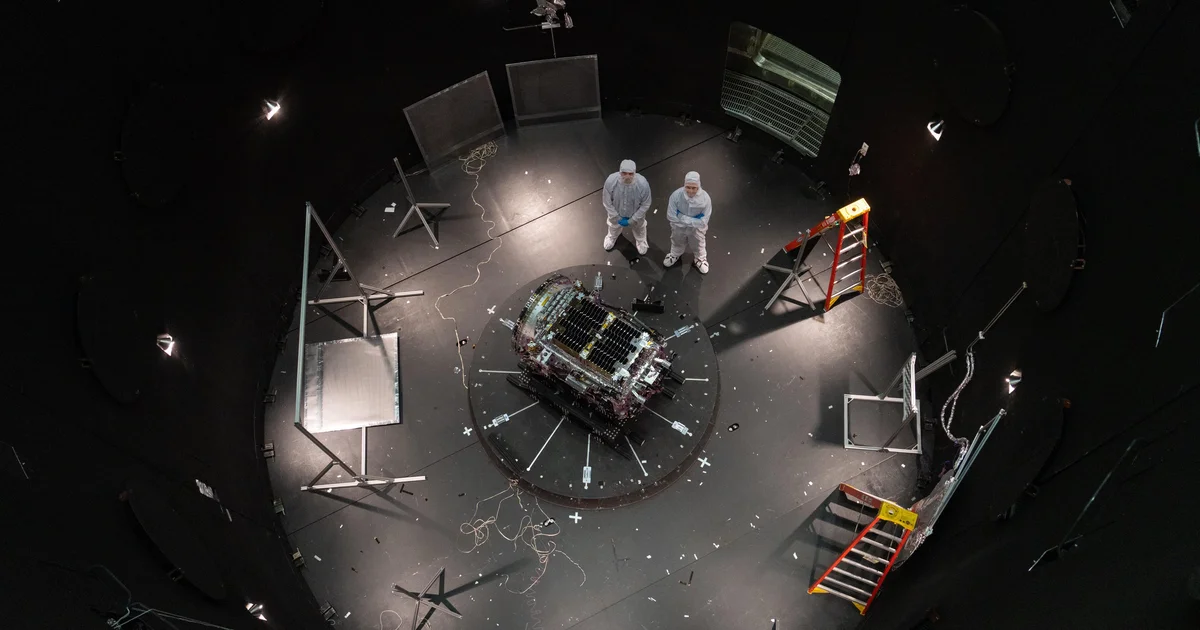
This photo provided by NASA shows Kieran Wilson, LINK's principal investigator, and Hunter Robertson, a space systems engineer, both at Katalyst Space, standing next to their spacecraft inside the SES (Space Environment Simulator) at NASA's Goddard Space Flight Center in Greenbelt, Maryland, April 17, 2026, ahead of thermal vacuum testing. © Sophia Roberts, NASA via AP