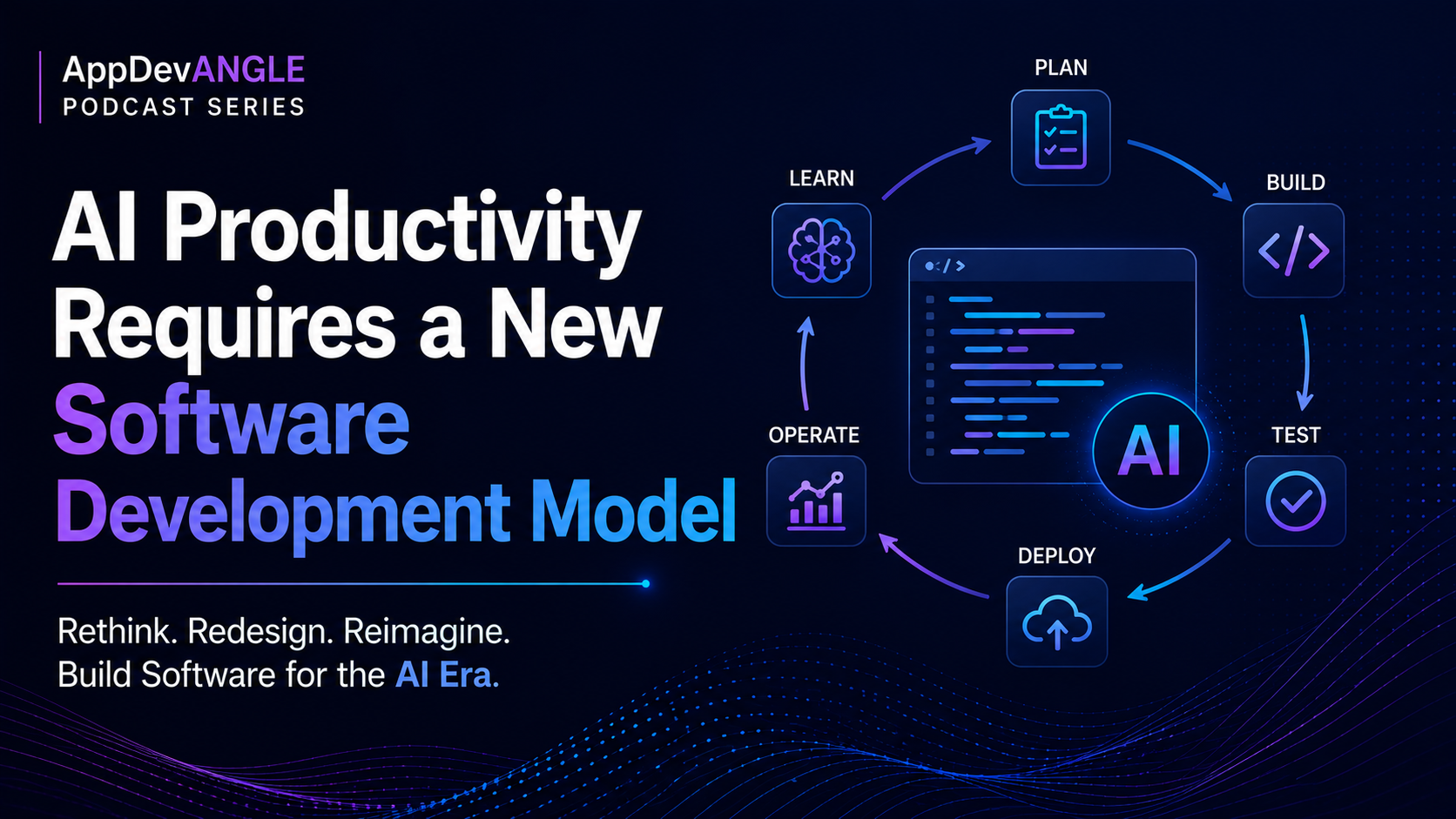
Ameya Kanitkar is the Co-founder and CTO of Larridin, a Bay Area-based startup building an organizational platform powered by AI.gettyFor over a decade, engineering leaders have relied on frameworks like DORA and SPACE to understand developer productivity. These models brought rigor to a field that once relied heavily on intuition. They helped organizations improve deployment frequency, reduce failure rates and build stronger cultures.But today, we are working in a fundamentally different world, one where the pace of innovation and change has accelerated beyond what these metrics were designed to capture. AI-native development represents a structural transformation, and in this new reality, these standard metrics no longer reflect the true velocity or evolving nature of modern development teams, nor are they sufficient to move companies forward. DORA And SPACE Are IncompleteDORA and SPACE were designed for a world where humans wrote all the code. Their core questions reflect that assumption: How fast are developers deploying? How often do changes fail? How satisfied are engineers? Those are still useful questions, but they are no longer the most important ones.Today, some of the highest-performing engineers are orchestrating AI systems by defining specifications, creating and guiding agents, validating outputs and continuously improving workflows. Productivity is shifting from code writing to orchestration.Traditional frameworks don’t capture this shift. They have no way to measure how effectively a developer collaborates with AI, how much of the codebase is generated by agents or whether AI-driven output is actually improving long-term quality.McKinsey’s analysis of nearly 300 publicly traded companies shows that a small group of top performers is already achieving 16% to 30% gains in developer productivity. But our experience at Larridin suggests the real differentiator is how effectively AI is operationalized. Teams that get this right aren’t just incrementally better; they can be 10 times to 50 times more productive.Developer Productivity With New LensesDeveloper productivity has quickly become a boardroom priority as AI tooling evolves from an experiment into a meaningful line item in engineering budgets. CIOs and CTOs are now being asked tougher questions: Are we seeing real returns on AI? Which teams are actually improving? Is AI driving innovation? Frameworks like DORA and SPACE were not built to answer these questions.AI can generate massive volumes of code, which might make them look productive when measured by the older frameworks. But more commits and more pull requests don’t necessarily translate into progress. Instead, the statistics can obscure deeper issues such as technical debt, redundancy or low-quality “AI slop” that passes automated tests, but lacks long-term integrity. That’s why organizations should be moving beyond velocity alone and focusing on innovation rate, code turnover, AI code share and other metrics that reflect true impact. Together, these signals offer a far clearer view of whether teams are genuinely advancing or simply moving faster without direction.The Good News For The Next Generation Of DevelopersAt first glance, the addition of new ways of measuring productivity might simply sound like added scrutiny, but for the next generation of software engineers, these new measurements signal a fundamental change in what it means to be great at this job.AI-native development is reshaping the role. Early-career developers are no longer spending years grinding through boilerplate code, repetitively debugging their own and others’ work, and completing other low-impact tasks because AI removes much of that friction. As a result, the next generation of developers will be better-equipped and faster. They’re likely to develop higher-level skills sooner, to think more like architects than implementers and to contribute meaningful ideas earlier in their careers. What’s emerging is a fundamental shift in the talent landscape, with a clear divide taking shape. The most in-demand developers are either AI-native, working fluently alongside these tools or innovative individuals with exceptional judgment—in other words, those who know what to build, when to ship and what truly matters. The developers who combine both are quickly becoming the golden talent in the market. This new career path is all about doing better work, earlier. These developers are redefining what great looks like.Better measurement frameworks are accelerating this shift by recognizing the contributions that actually drive impact. Instead of rewarding volume, they elevate creativity, judgment and strategic thinking, giving the next generation a clearer blueprint for how to grow, stand out, deliver meaningful value and advance their careers.3 Steps IT Leaders Can Take NowFor CIOs and CTOs looking to modernize how they measure developer productivity, the path forward does not require a complete overhaul. Change starts with a few practical steps:1. Expand Beyond Velocity MetricsLayer in new metrics, beyond DORA and SPACE, to capture AI-native realities such as AI code share, innovation rate and code turnover. This provides immediate visibility into how AI is actually impacting your teams.2. Measure Quality In A New WayIntroduce signals that detect AI-specific risks, such as rework rates, complexity trends and patterns of low-quality AI-generated code. This helps prevent short-term gains from turning into long-term liabilities.3. Focus On Behaviors, Not Just OutputsThe biggest drivers of AI productivity are behavioral: writing clear specs, investing in testing and validating outputs rigorously. Instrument and observe these practices where possible, and reinforce them culturally. Once you start measuring performance with these additional metrics, you can systematically improve it. The Bottom LineThis moment is redefining what engineering work looks like, how value is created, what seniority truly means and how high-performing teams operate. It’s a test of adaptability in a landscape where innovation is faster than ever. Organizations that can consistently measure and understand real impact in different scenarios and conditions will be the ones best positioned to succeed.Forbes Technology Council is an invitation-only community for world-class CIOs, CTOs and technology executives. Do I qualify?
Rethinking Developer Productivity In The Age Of AI-Native Engineering
AI-native development is changing how engineering teams create value. Here's why traditional productivity frameworks are no longer enough, what new metrics leaders should track, and how CIOs and CTOs can measure real impact in the age of AI-assisted software development.
939 words~4 min read