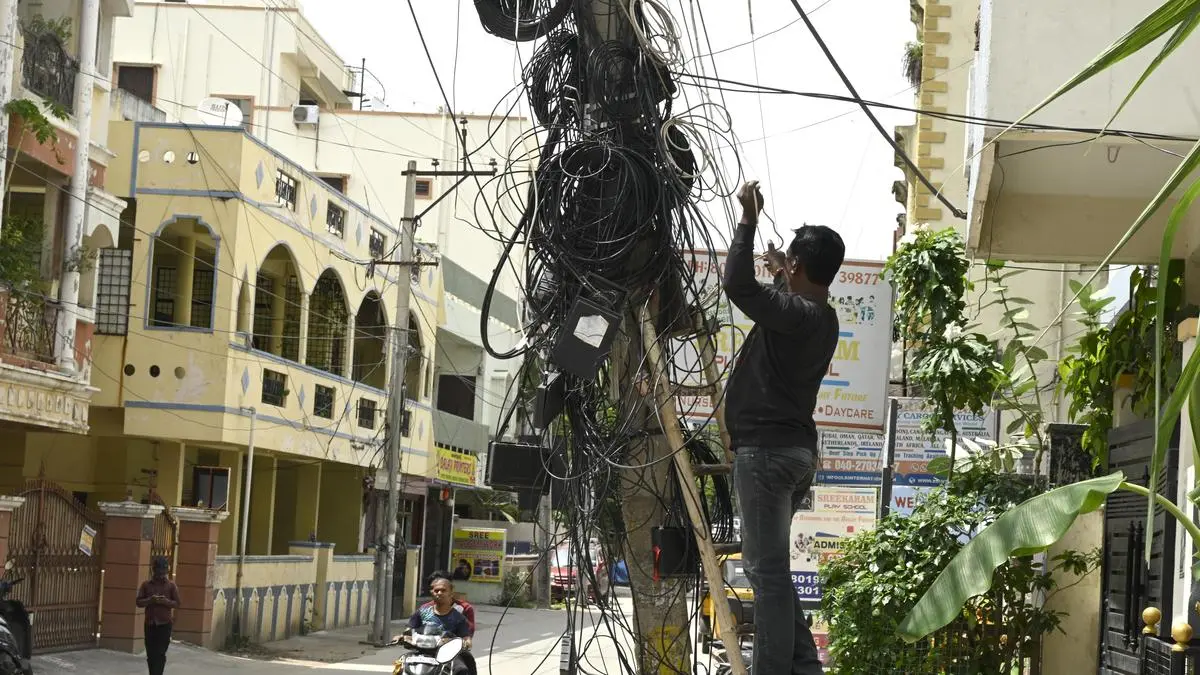
Pure internet services were brought under the Unified Licensing regime around 2013 when the regulations were revised
| Photo Credit:
Internet Service Providers Association of India (ISPAI) has urged the government to remove the levy of license fee on revenues generated from pure internet services, as per a letter accessed by businessline.“On the heels of the government consideration of Vodafone Idea’s AGR dues, ISPAI asked the government to extend the same courtesy to internet service providers and exclude the revenue from pure internet services from the ambit of license fee under the Unified License regime, and other laws,” said ISPAI, stating that the exemption would help maintain competition and safeguard consumer interest.Noting recent government interventions aimed at addressing financial challenges in the telecom sector, ISPAI said that excluding pure internet services from the licence fee regime could similarly ease the burden on the ecosystem, thereby enhancing competition, expanding consumer choice, and accelerating broadband expansion.Prolonged UndertaintyPure internet services were brought under the Unified Licensing regime around 2013 when the regulations were revised. Under the 2016 version of the regime, companies are required to pay 8 per cent of their Adjusted Gross Revenue (AGR) as a licence fee. According to ISPAI, these requirements have affected ISPs’ investment planning, access to capital, network expansion decisions, and their ability to deploy additional broadband infrastructure. To support its argument, ISPAI pointed out that in January 2026, GTPL Broadband, a subsidiary of GTPL Hathway, was slapped with a licence fee demand of ₹357 crore for FY25. Faced with such high levies, companies have sought legal recourse.Such litigations and DoT’s retrospective demands over the years, have created prolonged uncertainty and imposed a significant legacy burden on operators affecting investment sentiment across the ecosystem.For these reasons, the industry body asked the government to withdraw all demands, litigation and related proceedings arising from such levies and refund, or adjust the amounts paid under protest by the companies.Broadband Infra“ISP operations support substantial direct and indirect employment across network deployment, fibre infrastructure, technical services, customer support and allied activities. Continued investment in broadband infrastructure contributes to job creation, local economic activity and the development of digital ecosystems that increasingly underpin commerce, education, healthcare and public service delivery,” said ISPAI, adding that a license-free ISP environment would further government initiatives like Bharat Net, Digital Bharat Nidhi-supported programmes, PM-WANI, e-governance services, digital education, telemedicine and e-commerce.Prior to 2013, the absence of such a levy allowed the growth of internet access. According to ISPAI, a timely and principled resolution of this issue would reinforce policy certainty, reduce litigation, support investment in broadband infrastructure and further strengthen the foundations of Digital India.“Given its relatively limited fiscal implications and its potential benefits for broadband expansion, competition and consumer welfare, such a decision would deliver outsized public-interest gains while providing long-overdue clarity to a sector that remains a critical enabler of India’s digital economy,” the industry body said in its letter.Published on June 30, 2026