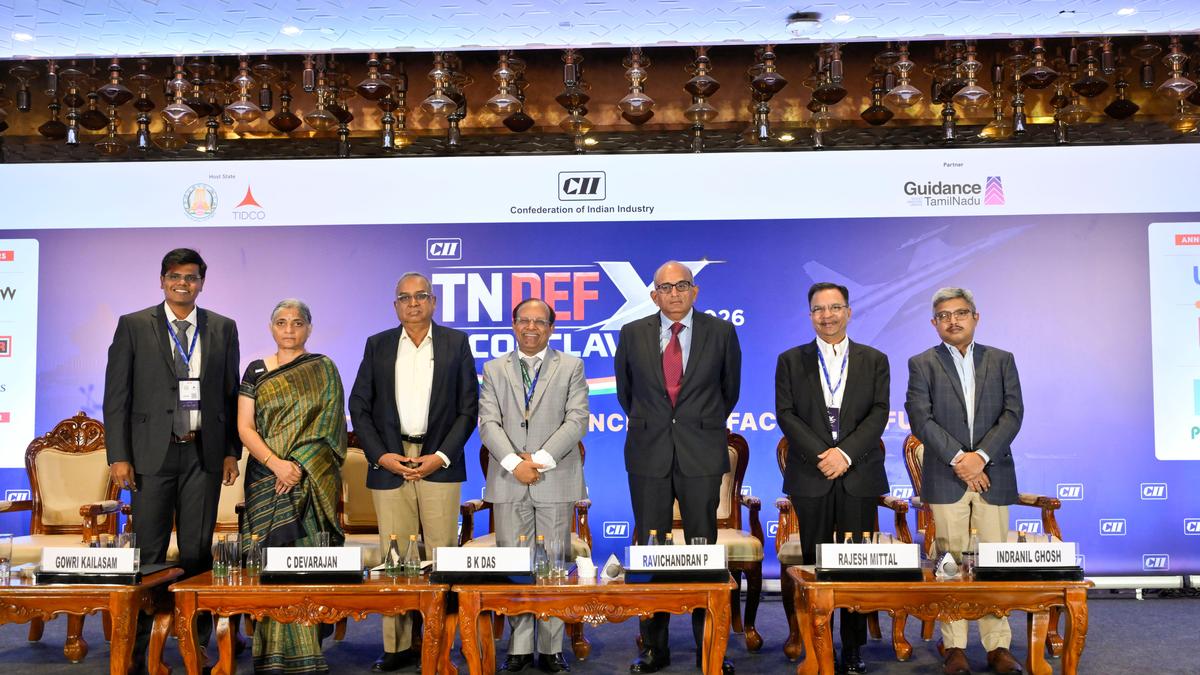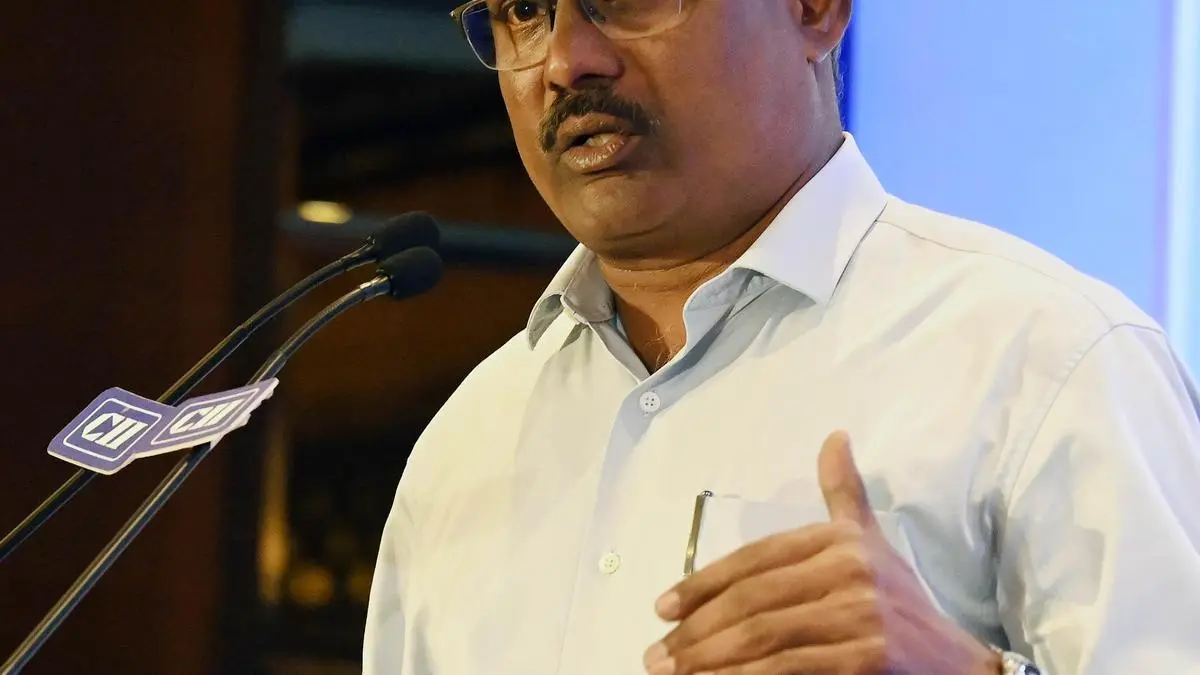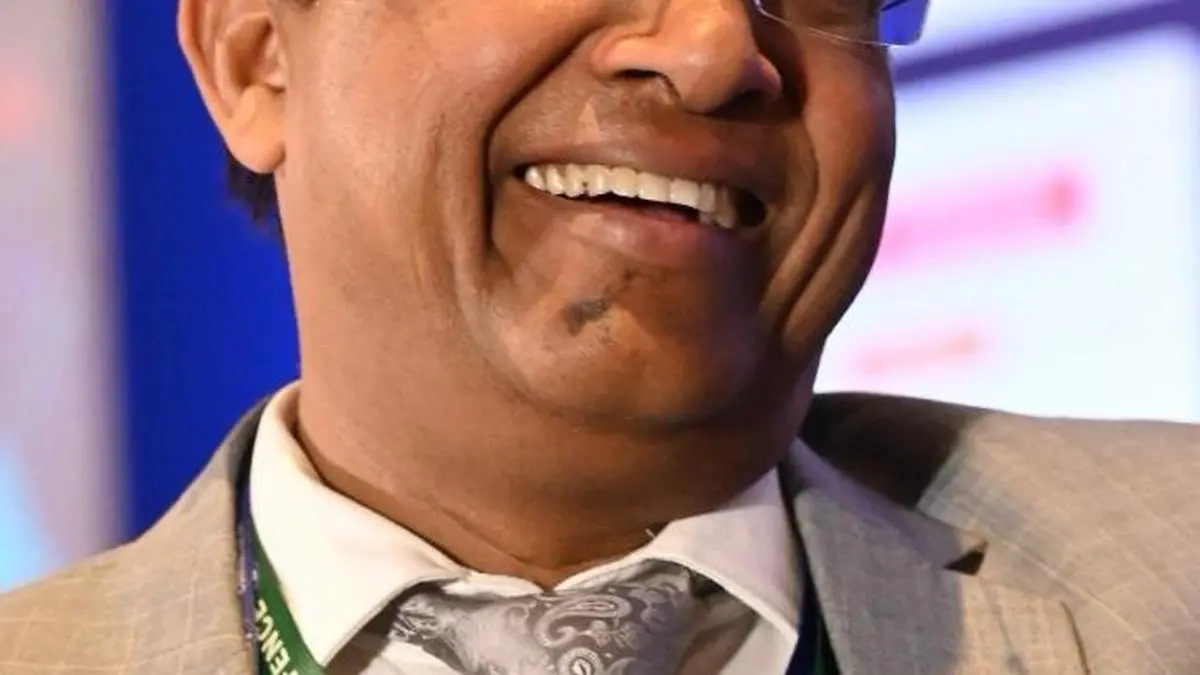
BK Das, DRDO Distinguished Scientist and Director General (Electronics and Communication Systems), at the CII TNDefX Conclave 2026 on Tuesday.
| Photo Credit:
Bijoy Ghosh
Tamil Nadu has the potential to emerge as India’s defence electronics capital by 2040, with an annual production opportunity of ₹37,000 crore and exports of up to ₹10,000 crore, according to a strategic roadmap presented by BK Das, DRDO Distinguished Scientist and Director General (Electronics and Communication Systems), at CII TNDefX Conclave 2026 on Tuesday.Tamil Nadu is at the centre of India’s push towards defence self-reliance, arguing that the State’s well-established electronics, semiconductor, aerospace and automotive manufacturing ecosystem gives it a unique advantage over other States in developing next-generation defence technologies.India’s defence electronics market will expand to around ₹1.49 lakh crore by 2040 , driven by growing demand for artificial intelligence-enabled systems, electronic warfare, autonomous platforms, secure communications and space technologies. Tamil Nadu, Das said, can realistically capture 20-25 per cent of this market, translating into annual production worth ₹37,000 crore.Das said defence electronics will account for an increasing share of modern weapon systems as warfare becomes more software-driven and network-centric. Technologies such as surveillance electronics, radar and RF systems, electronic warfare, autonomous systems, AI-enabled mission computers, secure communications and satellite payloads are expected to dominate future defence spending.Das identified six high-priority product segments for Tamil Nadu—surveillance electronics, autonomous systems, radar and RF electronics, electronic warfare systems, secure communications and software-defined radios, and space electronics. Together, these segments could generate between ₹34,500 crore and ₹37,000 crore in annual production by 2040. Surveillance electronics alone represents a ₹9,500-crore opportunity, followed by autonomous systems electronics and radar technologies, he said.Significant defence exporterTamil Nadu is also expected to emerge as a significant defence exporter with annual exports of ₹8,000-10,000 crore by 2040, with products targeting markets in ASEAN, the Middle East, Africa, South Asia and Latin America.Das said to achieve the vision, he proposed that Tamil Nadu should create a network of specialised Centres of Excellence across the state. Chennai is identified as the hub for AI, secure computing and naval electronics; Hosur for semiconductors and aerospace electronics; Coimbatore for radar, microwave, RF and electronic warfare technologies; Tiruchirappalli for precision manufacturing and power electronics; and Thoothukudi for space electronics and satellite integration. These could be built on the existing Tamil Nadu Defence Industrial Corridor and the State’s manufacturing strengths, he said.Competitive advantagesTamil Nadu already possesses several competitive advantages, including a mature electronics manufacturing ecosystem, semiconductor design capabilities, global manufacturing companies, defence PSUs such as BEL and HAL, DRDO facilities, and premier academic institutions including IIT Madras, Anna University and NIT Tiruchirappalli. These assets, coupled with the state’s deep-tech start up ecosystem, position Tamil Nadu to become a preferred destination for defence electronics investments, he said.Later talking to newspersons, Das said, there are a number of programmes on the anvil. Details cannot be shared now, but there will soon be lots and lots of opportunities for industries,” he said, adding that companies across Tier-I, Tier-II and Tier-III supply chains stand to benefit.Das said several leading companies in DRDO’s supply chain, including those involved in radars, defence systems and armoured vehicles, are already based in Tamil Nadu, making the state a key contributor to India’s defence manufacturing ecosystem.He also indicated that the Hosur-Bengaluru belt could evolve into a major defence industrial cluster, with manufacturing and R&D complementing each other.Stressing the need for self-reliance, Das said India has already achieved 60-80 per cent indigenisation in many Defence systems, but the focus should now be on ensuring that critical technologies, particularly in semiconductors and electronics, are developed domestically to build a resilient supply chain.Published on June 30, 2026