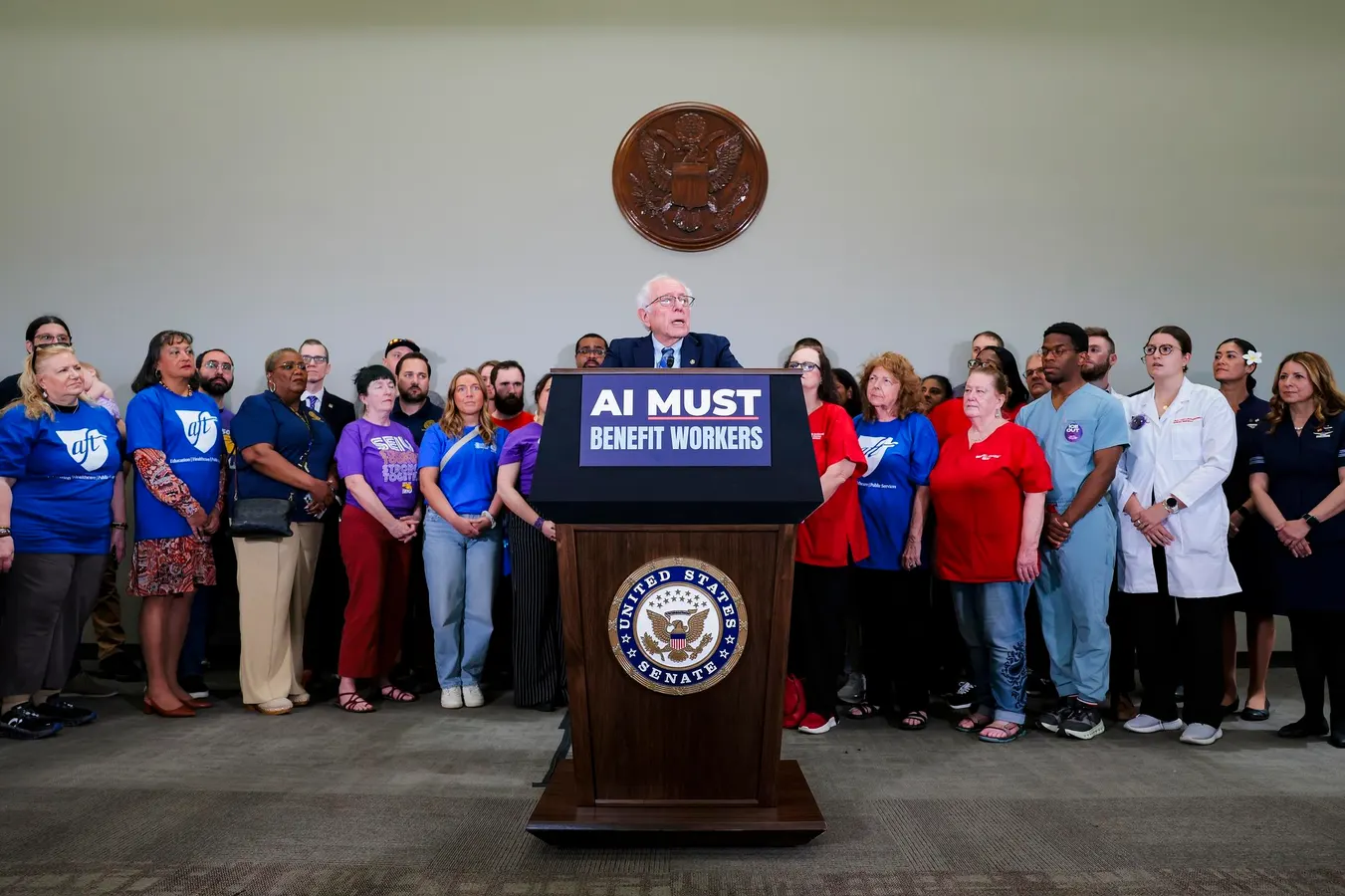
After advocating a national data center moratorium, Sen. Bernie Sanders (I-VT) is now promoting an even more sweeping proposal, giving the United States a 50% stake in the largest AI companies. With stock ownership, Sanders’s plan would establish a sovereign wealth fund to provide citizens with shares in the growth of these companies. His idea may sound appealing, but it falls apart under the least bit of scrutiny.The first problem is that Sanders wants the government’s stake to be held directly through equity ownership rather than profits generated by a sovereign wealth fund. In this way, the plan already diverges from most of the common, stable sovereign wealth funds internationally. Plans like those in Norway, China, Saudi Arabia, and others get funding from real surpluses generated by profit, which then get invested into other funds. Sanders is tying the value directly to the stocks of the companies themselves, putting the U.S. in a position where it will most certainly have incentive to artificially weigh the scales in favor of those companies at the taxpayer’s expense.
One of the reasonable critiques of the AI revolution currently is that the major companies are not profitable. Much of their valuation reflects expectations of future profitability rather than current earnings. This might be a risk investors are willing to make, but once the U.S. claims stakes in those companies, it is in the national interest to make sure that happens, creating companies that are “too big to fail,” which could lead to bailouts at the expense of the taxpayer. Remember the 2008 housing crisis?