The United States today is trying to help Cubans regain their liberty by applying unprecedented pressure to the communist regime that has repressed them for 67 years. It is not the first time America has assisted its smaller neighbor. But Cuba, too, played a role in helping America gain the independence that we rightly commemorate this weekend.Cubans helped finance the war effort when it was most needed. But Cubans, including members of my own family, also took part in the fighting, including key battles that exhausted the British and led to their surrender at Yorktown.In one of the most touching parts of this multifaceted story, the upper-class women of Havana sold off their jewels to fund the American war effort at a critical moment, the Battle of Yorktown, raising 1 million French pounds, or livres.
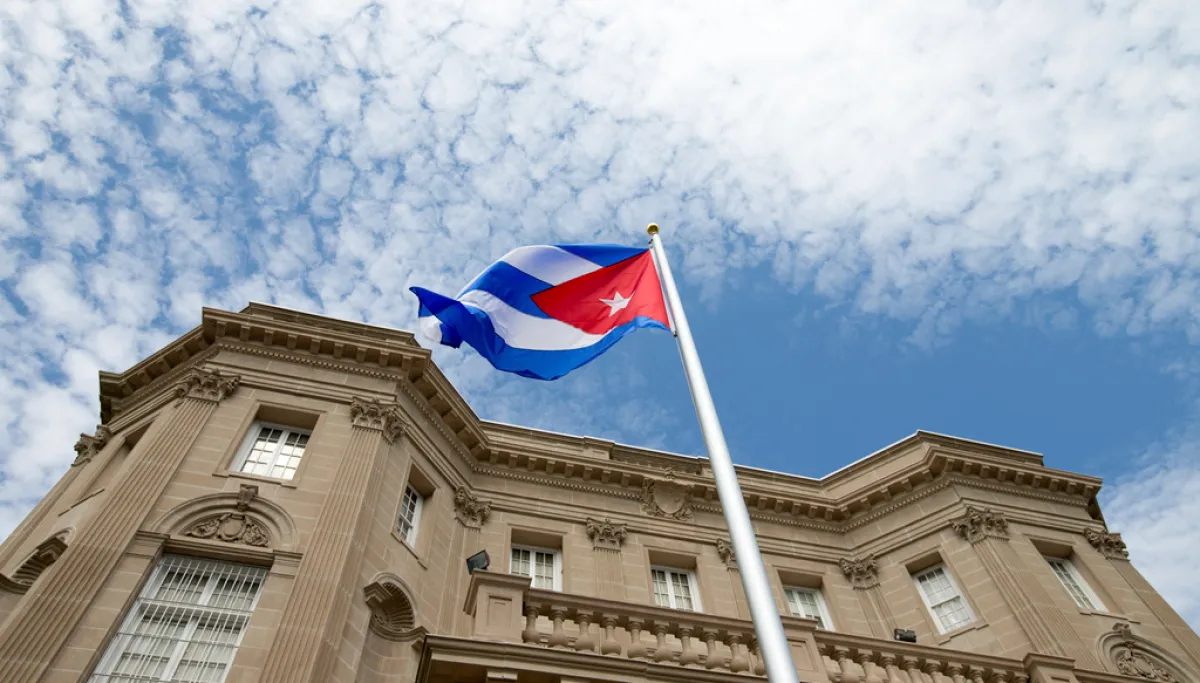
“The million that was supplied … by the ladies of Havana, may, with truth, be regarded as the ‘bottom dollars’ upon which the edifice of American independence was erected,” historian Stephen Bonsal wrote in When the French Were Here.There was palpable affection for colonists intent on creating their own nation. But this was not altruism, necessarily. Spain, the Catholic power that then ruled Cuba, had been engaged in hostilities with Protestant Britain on and off dating back to the Reformation, if not earlier. For Spain, defeating Britain was a priority. The inhabitants of Havana had also not forgotten the eight-month British occupation of Havana in 1762-63 during the French and Indian War.Nor is U.S. help to Cubans today altruistic either. Getting rid of Cuba’s communist regime is the most “America First” thing to do. Cuba’s regime has sown disorder inside America since its start and remains an ever-present danger.The U.S. will most likely not have to get kinetically involved in Cuba this time, since Cuba’s communist regime is like a putrid mango that will fall on its own. The package of 176 economic reforms passed on June 18-19 by Cuba’s rubber-stamp National Assembly — which supposedly aims to decentralize the economy — is an act of desperation that will not save the government.But Spain and Cuba did get involved in the American revolutionary effort 119 years earlier after King Charles III declared war on Britain in 1779. Spain’s contribution is much less well known than that of France, but proved substantial nonetheless.The effort was led by Bernardo de Galvez, who was governor of the Spanish colony of Louisiana from Jan. 1, 1777, on, and after whom the Texas city of Galveston is named. News that Spain had declared war on Britain on June 21 reached the Spanish colonies before the British colonies, and Galvez launched a surprise attack to retake the colony of West Florida, which Spain had lost to Britain in 1763 when it traded it for Havana.Fort Bute fell on Sept. 7 to a force of 1,427 men made up of Spanish, Cubans, and Mexican officers and soldiers, and many people of different ancestry who resided in Louisiana, such as Canary Islanders, and including also American volunteers (comprising some free black soldiers) and Cajuns.Galvez then marched a short 15 miles to Baton Rouge, arriving on Sept. 12 to face British soldiers and German mercenaries. Galvez started bombing the combined forces on Sept. 21, and after a few hours, British Lt. Col. Alexander Dickson surrendered the fort at Baton Rouge and another one at Natchez.Galvez turned triumphantly to New Orleans and went back and forth to Havana to beef up his forces and coordinate strategy. He finally departed New Orleans in January the following year with about a dozen ships and approached Mobile in late February. On March 12, Galvez opened bombardment, hitting the fort’s walls. Capt. Elias Drummond raised the white flag a day later, and Galvez captured over 1,000 soldiers and civilians and took control of Mobile Bay. The Cuban flag is raised over its new embassy in Washington, July 20, 2015. (AP Photo/Andrew Harnik, Pool, File)