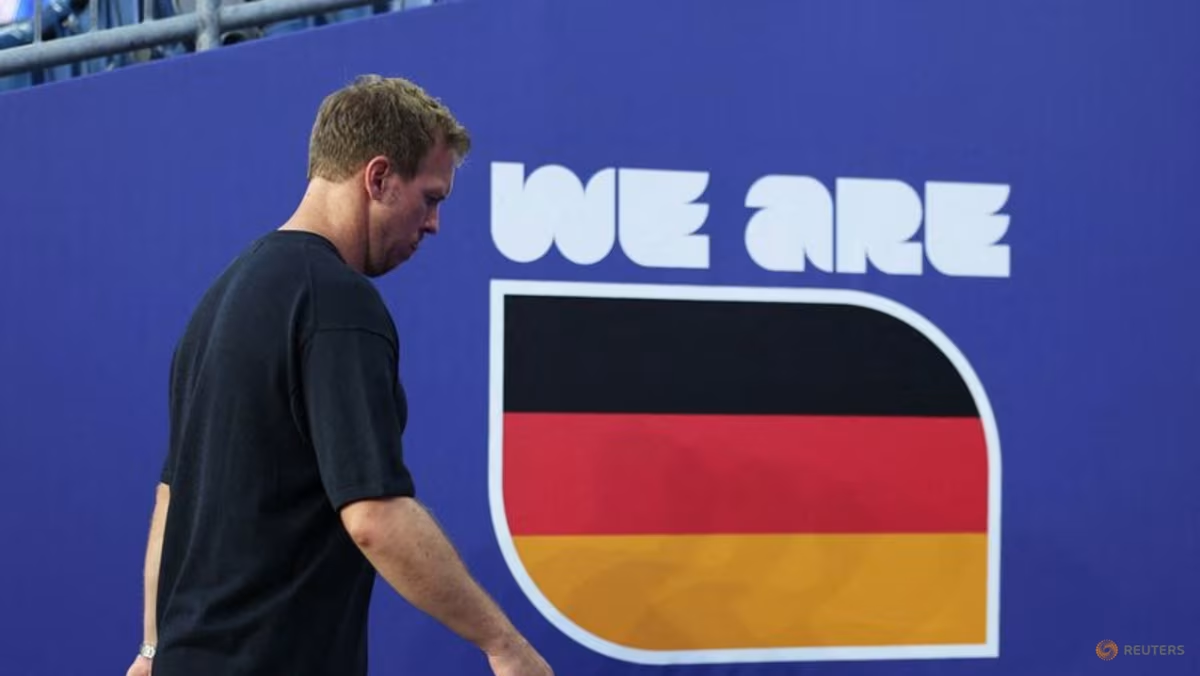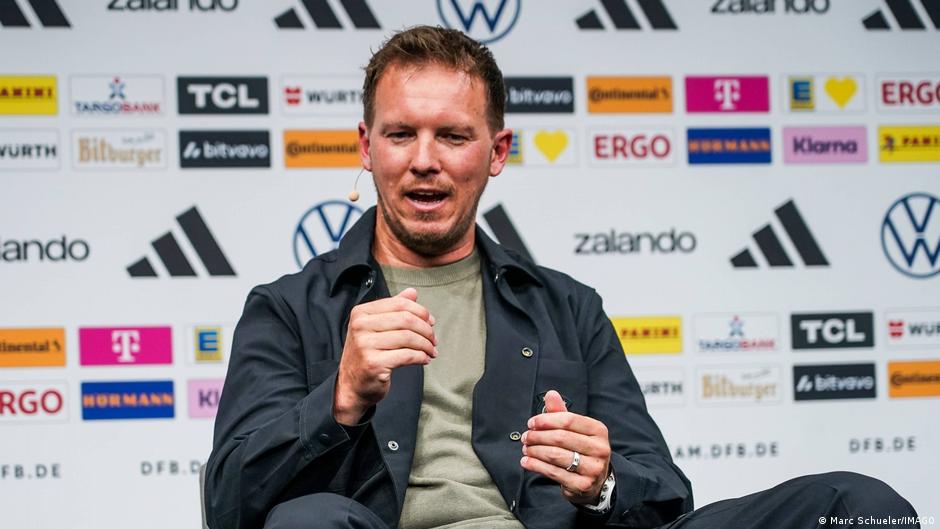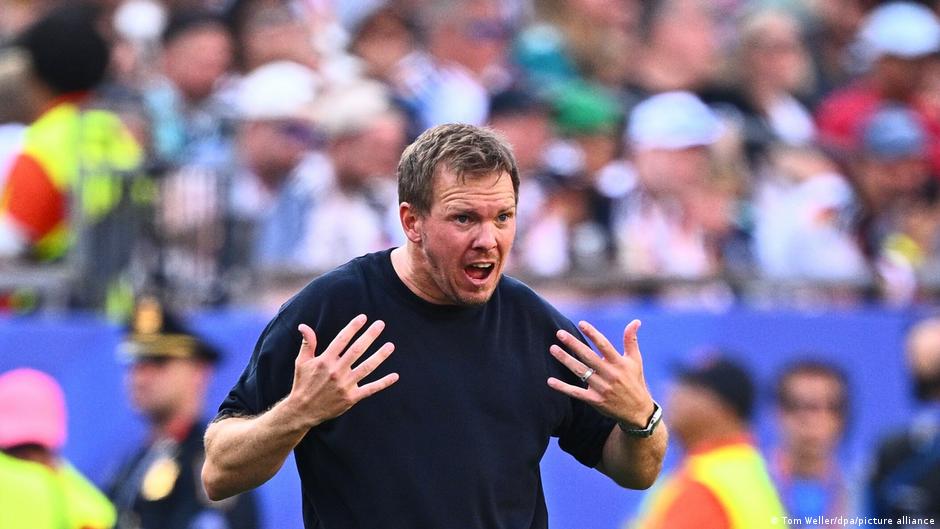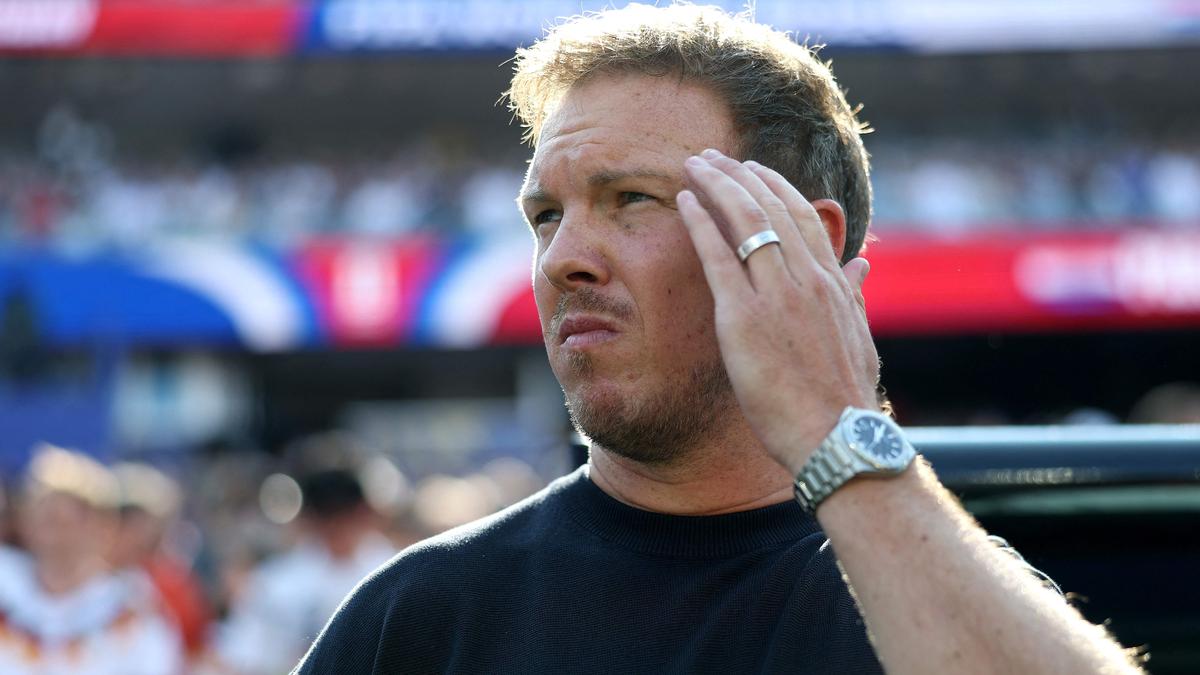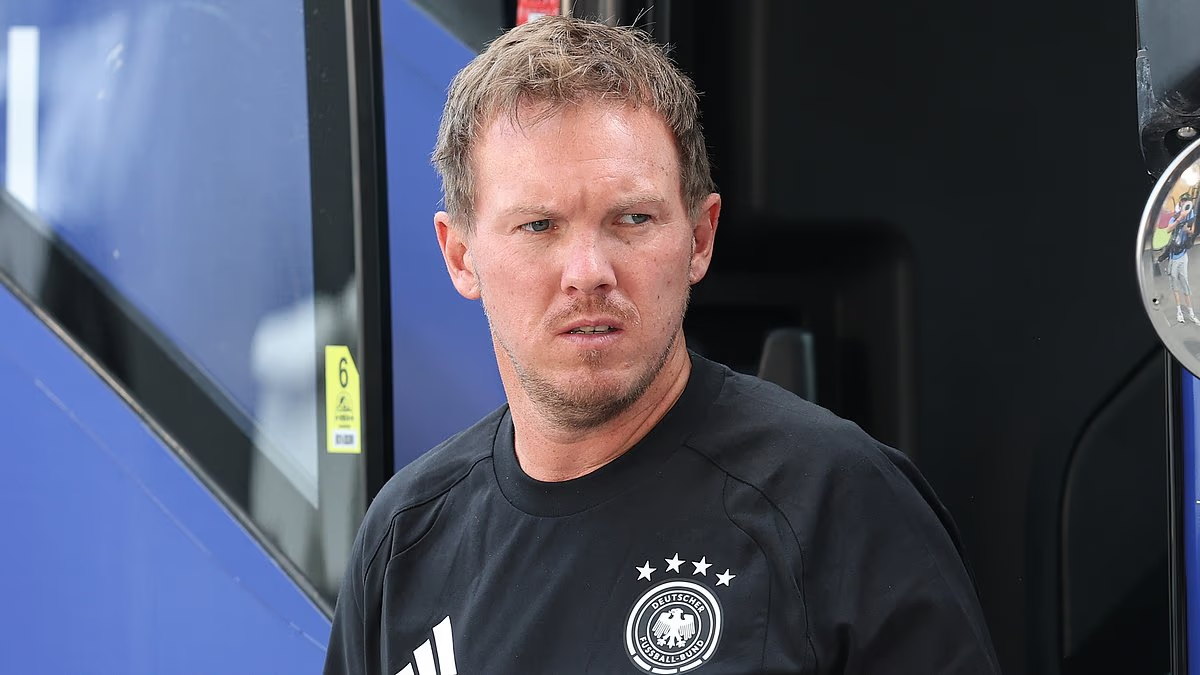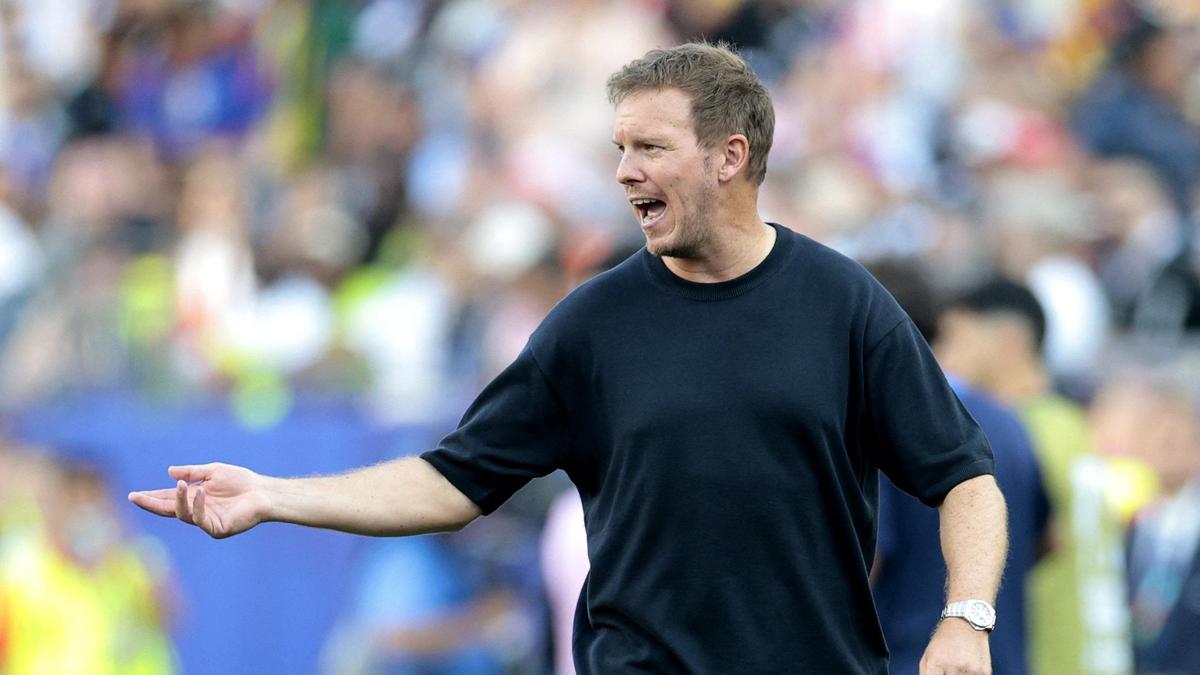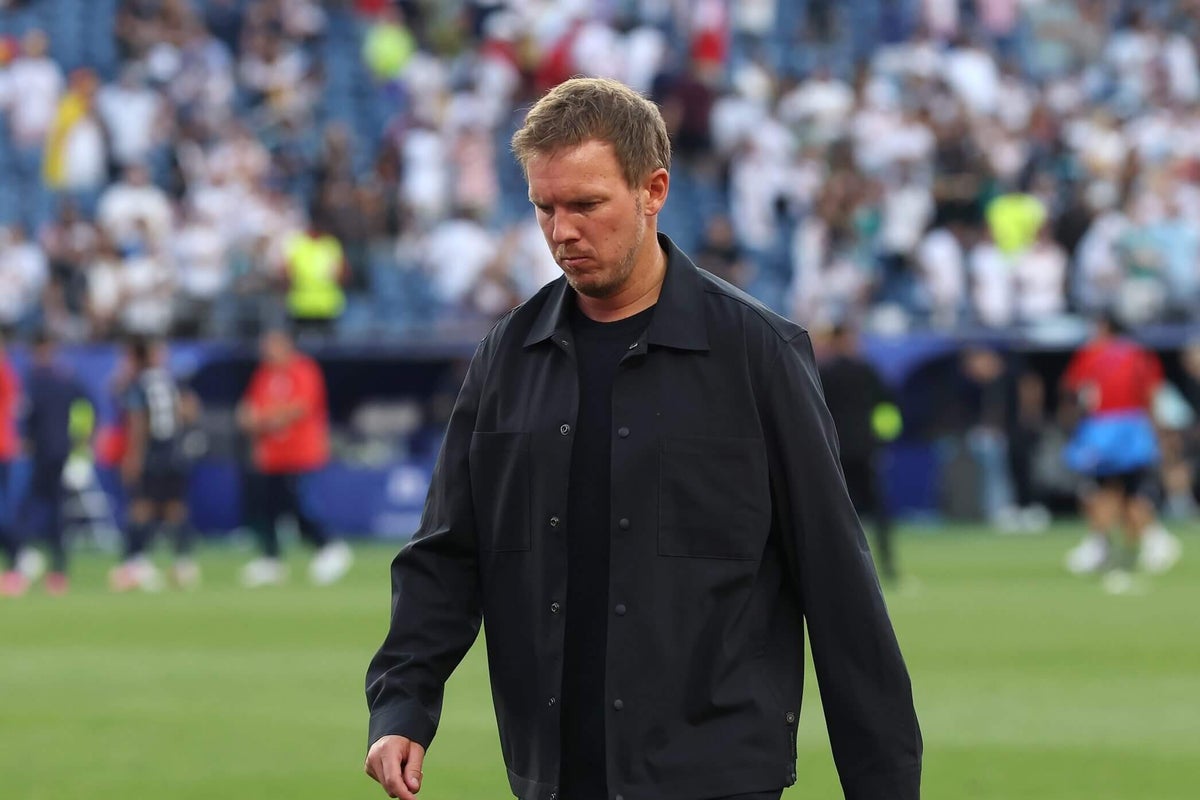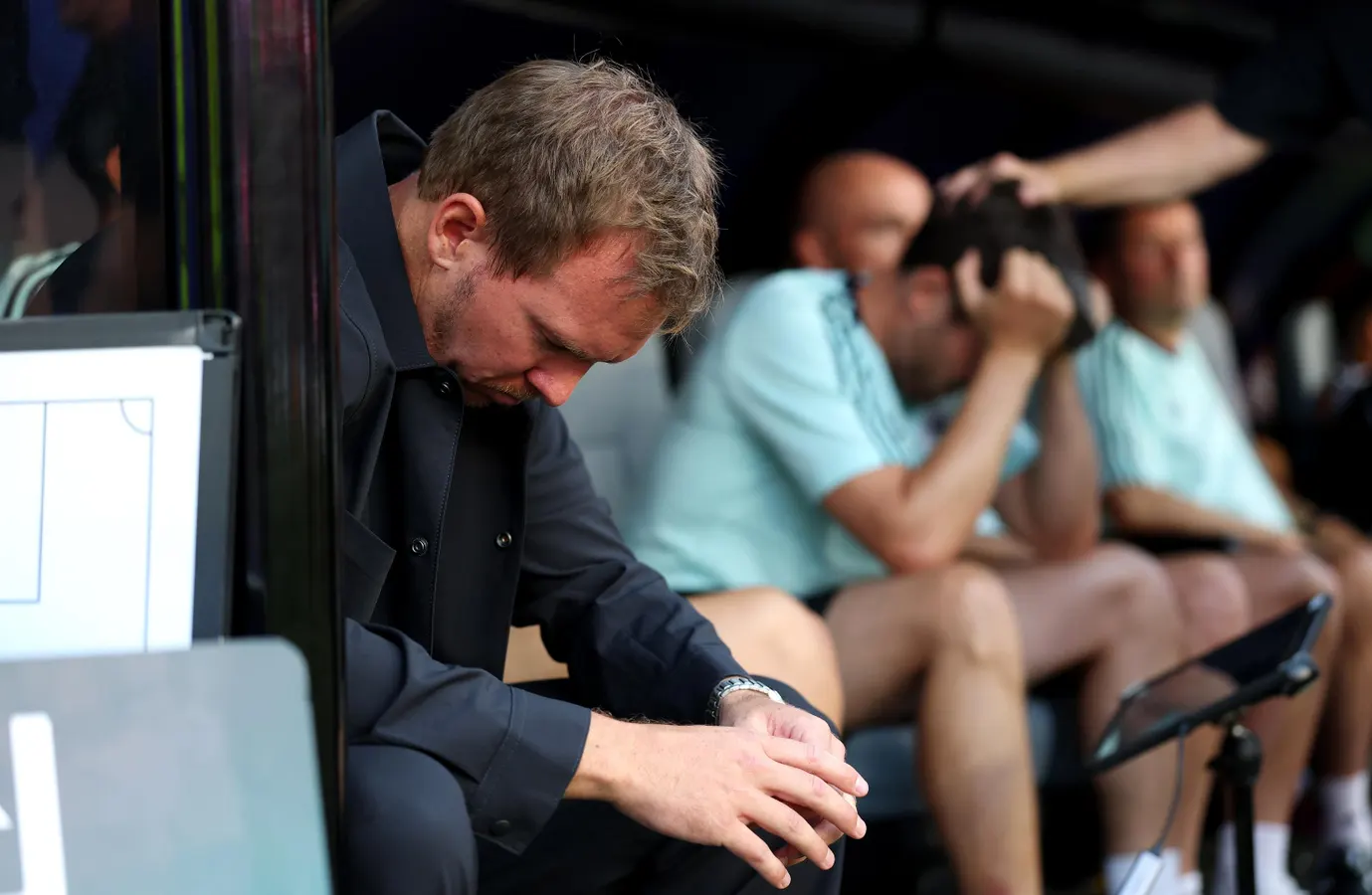
FOXBOROUGH, MASSACHUSETTS - JUNE 29: Julian Nagelsmann, Head Coach of Germany, reacts after the penalty shootout loss during the FIFA World Cup 2026 Round Of 32 match between Germany and Paraguay at Boston Stadium on June 29, 2026 in Foxborough, Massachusetts. (Photo by Joosep Martinson - FIFA/FIFA via Getty Images)FIFA via Getty ImagesThis was a different sort of Germany, managed by a different sort of head coach. And as they crash out of the 2026 World Cup to Paraguay after losing their first-ever World Cup penalty shootout, the outcome was different too.The question now is how much of that blame lands at manager Julian Nagelsmann’s feet and if the DFB’s decision to buck their long-standing hiring trend to appoint him was the wrong call – and if his reputation has suffered as a result.Prior to the former Bayern Munich and RB Leipzig boss’s arrival in September 2023, Germany had maintained a clear coaching lineage throughout decades of successful teams. Many of them represented continuity hires, with assistants or senior members of the team being given the chance to step up to the big job. They had worked within the system for years previously, understood the DFB politics and had handled the pressure of Die Mannschaft.Stretching all the way back to their first World Cup-winning manager, Sepp Herberger, who first got the job in 1936, through to decorated names such as Helmut Schön, Franz Beckenbauer and Joachim Löw, the approach remained the same… until Nagelsmann.A supercoach in waiting?Despite his young age, the then 36-year-old was far from a nobody plucked from the ether, though. He may not have been a Germany international or worked as a coach within the national system previously, but Nagelsmann had a strong bank of work behind him.MORE FOR YOUHe’d long been talked about as the next German supercoach, having taken over Hoffenheim at 28 and saving them from relegation in his first season before leading them to Champions League qualification with back-to-back top four finishes. He continued the same upward trend at RB Leipzig, coming 3rd and 2nd in the Bundesliga and reaching the Champions League semi-finals in 2019/20 – becoming the youngest-ever coach to do so. Winning a league title and two German Super Cups at Bayern in his next job showed he could win silverware too, although there were questions about his ability to control of a dressing room of elite players and handle big-club politics by the time he was sacked. There was a feeling Nagelsmann didn’t conduct himself in the way other top coaches do and senior figures – inside and outside of the dressing room – were increasingly unconvinced by him.FRANKFURT AM MAIN, GERMANY - JUNE 23: Head coach Julian Nagelsmann of Germany (R) talks to goalkeeper Manuel Neuer of Germany (L) during the UEFA EURO 2024 group stage match between Switzerland and Germany at Frankfurt Arena on June 23, 2024 in Frankfurt am Main, Germany. (Photo by Manuel Winterberger/Eurasia Sport Images/Getty Images)Getty ImagesHis CV was strong enough to get the Germany job. But he represented a new type of coach for them, with experience built outside of the institution. Nagelsmann arguably had a bigger coaching reputation than some of his predecessors, but he lacked the DFB heritage the likes of Rudi Voller, Berti Vogts and Jurgen Klinsmann had when they arrived in the role as relative rookies.A 2-1 quarter-final defeat in extra-time to eventual winners Spain in Euro 2024 was no disastrous start in Nagelsmann’s first tournament – despite being hosts – but Germany never failed to convince at this World Cup, even before the shock defeat to Paraguay.World Cup failings raise familiar questionsA thumping 7-1 against Curacao in their opener raised hopes, but they relied on a late comeback to beat an Ivory Coast side that looked more than their equals in their second match and lost to Ecuador to round off the group.In the last 32, they looked sluggish and lacked ideas to break down a stubborn Paraguay defence. La Albirroja sat deep for most of the match and Germany may feel aggrieved at Jonathan Tah’s extra-time header being ruled out by VAR, but Nagelsmann’s men should have had the quality not to have let it get that far.There are undoubtedly some imbalances within Germany’s player pool and their coach had to make the most of what he had available to patch up weaknesses in certain areas, with a big call to start Denis Undav ahead of Jamal Musiala in the knockouts.Yet Nagelsmann’s handling of players, such as Undav – who he’d previously publicly raised doubts about as anything more than an impact-sub – and his pre-tournament call to replace goalkeeper Oliver Baumann with the returning Manuel Neuer at short notice, has drawn criticism.Germany’s first penalty shoot-out defeat at a World Cup and only their first since 1976 will draw less criticism, even if it’s the loss of a proud national record.Nagelsmann’s detractors say his decisions are mired by a lack of communication, tactical cohesion and understanding of dressing-room politics, much the same as his time at Bayern. Whether he stays to see out the last two years of his Germany contract or not, those question marks will likely hinder his ascension to be considered an elite boss at club level when he returns.There’s a growing feeling that he may be a coach who is a great disruptor, but one whose skills better suit a team not traditionally considered among the favourites. For the German national team, their attempt to modernise the position with a new profile of coach has taken a hit. If they stick with Nagelsmann, they’ll hope there’s still time for the approach to pay off. Maybe both parties need it to.
Germany’s World Cup Exit Puts Julian Nagelsmann’s Hiring Strategy Under Scrutiny
Germany’s World Cup exit raises fresh questions over Julian Nagelsmann, his outsider status and the DFB’s break from coaching tradition.
947 words~4 min read