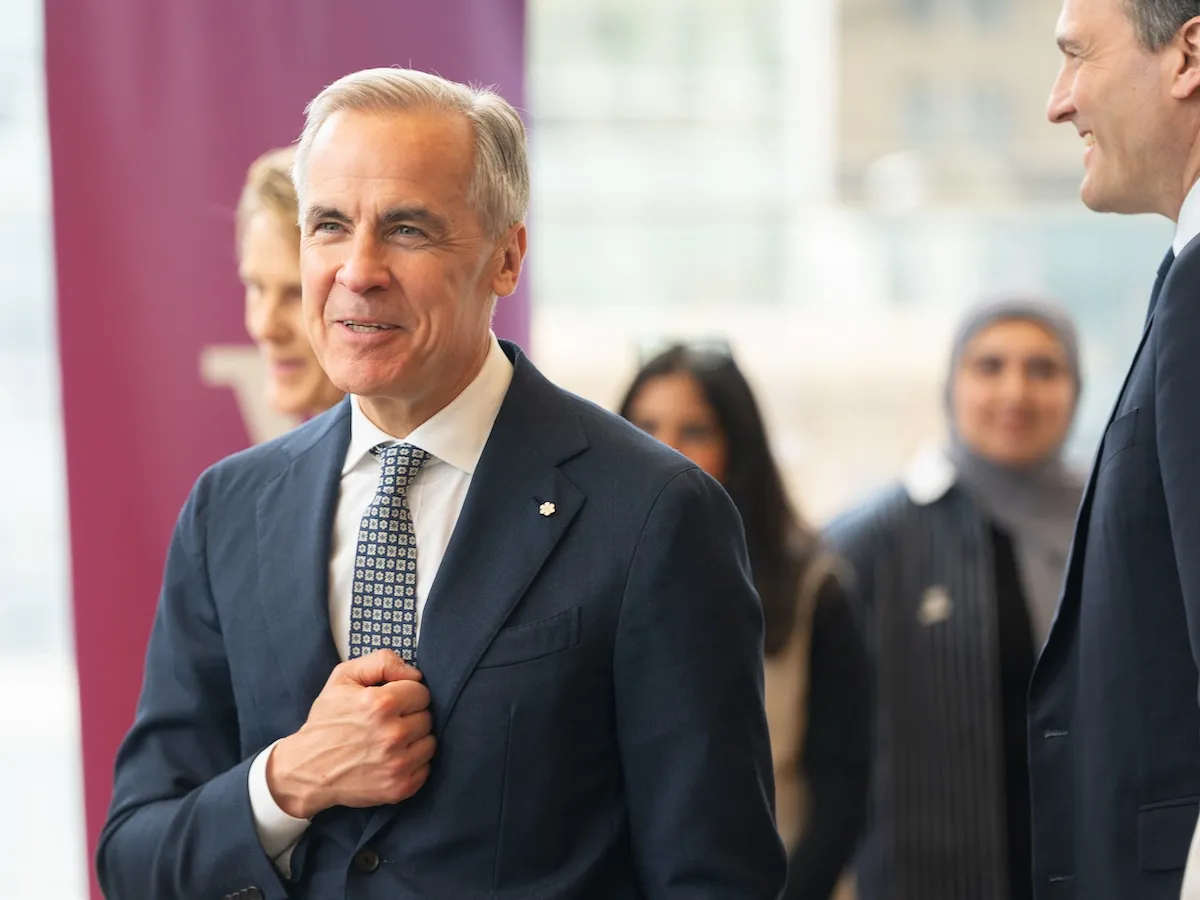
Skip to Content Subscribe Our Offers My Account Manage My Subscriptions FAQ Newsletters Canada Canadian True Crime Canadian Politics Health World Israel & Middle East Financial Post NP Comment Longreads Puzzmo Diversions Comics NP News Quiz New York Times Crossword Horoscopes Life Eating & Drinking Style Sponsored Play for Ontario Travel Travel Canada Travel USA Travel International Cruises Travel Essentials Culture Books Celebrity Movies Music Theatre Television Business Essentials Advice Lives Told Tails Told Shopping Buy Canadian Home Living Outdoor Living Kitchen & Dining Tech Style & Beauty Personal Care Entertainment & Hobbies Gift Guide Travel Guide Amazon Prime Day Deals Savings National Post Store More Sports Hockey Baseball Basketball Football Soccer Golf Tennis Driving Vehicle Research Reviews News Gear Guide Obituaries Place an Obituary Place an In Memoriam Classifieds Place an Ad Celebrations Working Business Ads Archives Healthing Epaper Manage Print Subscription Profile Settings My Subscriptions Saved Articles My Offers Newsletters Customer Service FAQ Newsletters Canada World Financial Post NP Comment Longreads Puzzmo Diversions Life Shopping Epaper Manage Print Subscription HomeNP CommentSabrina Maddeaux: Carney using 'conflicts' to avoid doing his jobThe PM keeps recusing himself. At some point this has less to with ethics than in protecting his personal brandLast updated Jun 30, 2026 You can save this article by registering for free here. Or sign-in if you have an account.Prime Minister Mark Carney in Toronto, Ontario on Thursday, June 4, 2026. (Peter Power/Postmedia News)It will surprise nearly no one that Prime Minister Mark Carney, thanks to his extensive corporate career, has potential conflicts of interest in his new role. His critics can shout “Brookfield!” in assorted accusatory tones until they’re hoarse, but his connections to the asset management firm are baked into his political rise, and doing so won’t meaningfully shift public opinion.Enjoy the latest local, national and international news.Exclusive articles by Conrad Black, Barbara Kay and others. Plus, special edition NP Platformed and First Reading newsletters and virtual events.Unlimited online access to National Post.National Post ePaper, an electronic replica of the print edition to view on any device, share and comment on.Daily puzzles including the New York Times Crossword.Support local journalism.Enjoy the latest local, national and international news.Exclusive articles by Conrad Black, Barbara Kay and others. Plus, special edition NP Platformed and First Reading newsletters and virtual events.Unlimited online access to National Post.National Post ePaper, an electronic replica of the print edition to view on any device, share and comment on.Daily puzzles including the New York Times Crossword.Support local journalism.Create an account or sign in to continue with your reading experience.Access articles from across Canada with one account.Share your thoughts and join the conversation in the comments.Enjoy additional articles per month.Get email updates from your favourite authors.Create an account or sign in to continue with your reading experience.Access articles from across Canada with one accountShare your thoughts and join the conversation in the commentsEnjoy additional articles per monthGet email updates from your favourite authorsSign In or Create an AccountorHowever, what may come as a surprise to many Canadians is how he’s chosen to approach the issue and the significant impact those choices have had on his ability to govern the country — ironically raising an entirely different type of conflict of interest.This newsletter from NP Comment tackles the topics you care about. (Subscriber-exclusive edition on Fridays)By signing up you consent to receive the above newsletter from Postmedia Network Inc.We encountered an issue signing you up. Please try againLast week, it was revealed that conflict of interest “screens” erected by Carney and his senior staff are preventing him from not only leading decision-making on, but having any input into or knowledge of, key files across some of the most urgent issues of the day.The problem is that the extent of the screens seems less about protecting the government from corruption and more about preserving Carney’s image and poll numbers from controversy. Conflict of interest screens are meant to be above politics, not in service of them, and to use them in this manner is an abuse.While certainly some of the screens are legitimate, it’s notable that many of them aren’t legal “musts,” but choices that appear more protective of personal political brand than actual propriety — the equivalent of a captain benching himself when it matters most not because he can’t play, but because stepping onto the field could open up opportunities for criticism or fan backlash. Better to find ways to stay on the injured list.If Carney were an athlete, the number of ailments keeping him on the injured list would number half the bones in the human body. Carney is screened from 103 companies, which, according to letters sent to a parliamentary committee by the Privy Council Office (PCO), has already stopped him from being involved in at least 17 “situations” since he assumed office. These include multiple federal government decisions on housing, exporting electricity to the U.S., and Canada’s new Nuclear Energy Strategy.The housing crisis, energy, and U.S.-Canada trade relations are no small potatoes; they’re the top concerns of the day and most Canadians would expect their prime minister to be deeply involved in major policy changes, generational strategies, and multi-billion dollar tax dollar commitments central to them.Of course, avoiding true conflicts of interest is vital to democratic governance. However, Carney’s sweeping conflict screens far exceed his legal obligations and even an abundance of caution to cross over into a voluntary abdication of responsibility.Under the federal Conflict of Interest Act, reporting public office holders, including prime ministers, must declare assets and place certain investments under a blind trust. They also can’t make decisions or vote on issues that would further their own or their relatives’ or friends’ private interests.However, the law doesn’t consider “private interest” to include decisions of “general application,” such as broad housing, nuclear energy, or artificial intelligence policies. Carney does not legally have to opt out of those policy decisions just because his past employers operate in those sectors.But even if he chose to extend the line to cover those scenarios, Carney’s conflict of interest screens for 103 companies go far beyond those he’s directly worked for or managed to also include an optional array of joint ventures, subsidiaries, and strategic corporate partners of his past employers even though he has no direct history or financial interest with them.When Brookfield and the companies it does business with touch just about every corner of the Canadian economy, the impacts on Carney’s ability to govern are enormous.The PMO describes these as “entities being screened out of an abundance of caution” and has publicly positioned the screens as adhering to the highest ethical standards, rather than artificial, self-imposed limitations monitored and managed by hand-picked political staff.Carney’s own campaign defined the current climate as an existential crisis moment for Canada. To bench the prime minister from critical nation-building debates and policymaking during such a time should require more than tangential-bordering-on-hypothetical vapors of conflicts. The fear that the media or opposition parties may get a whiff of one and turn it into a bad news cycle or ongoing controversy doesn’t justify the means.Personal political motives can’t be allowed to outweigh the core responsibilities of office, or by extension the national interest.The real story in all of this isn’t Carney’s association with Brookfield, but a prime minister who is placing optics above duty, and not being transparent with the public about the implications that voluntary overreach has on his ability to do the job.Conflict of interest screens have a crucial place in any government, and legitimate ones should remain in place. However, using them as political shields is itself a kind of self-dealing.National Post Join the Conversation This website uses cookies to personalize your content (including ads), and allows us to analyze our traffic. Read more about cookies here. By continuing to use our site, you agree to our Terms of Use and Privacy Policy.
Sabrina Maddeaux: Carney using 'conflicts' to avoid doing his job
The PM keeps recusing himself. At some point this has less to with ethics than in protecting his personal brand
1,307 words~6 min read