Mininglamp Open-Sources Octo: Designing the Collaboration Layer for Multi-Agent Teams
Over the past year, something changed in the AI agent space. Claude Code can independently handle full code engineering workflows. Codex can batch-execute development tasks in the background. Our own Mano-P on-device model hit 58.2% success rate on the OSWorld benchmark, ranking first among purpose-built GUI agent models. Individual agent capability is no longer the bottleneck.
But when companies actually try to scale agent usage across teams, a different problem surfaces: these agents don't talk to each other. The developer's agent writes code. The product manager's agent organizes requirements. The ops team's agent crunches data. Three agents producing output that none of the others can see—and syncing information still means copy-pasting manually. More agents, more coordination burden on humans.
The problem isn't that agents aren't smart enough. It's that there's no infrastructure connecting them. Before the internet existed, every computer had compute power. What changed the world was the network protocol and communication layer that linked them together.
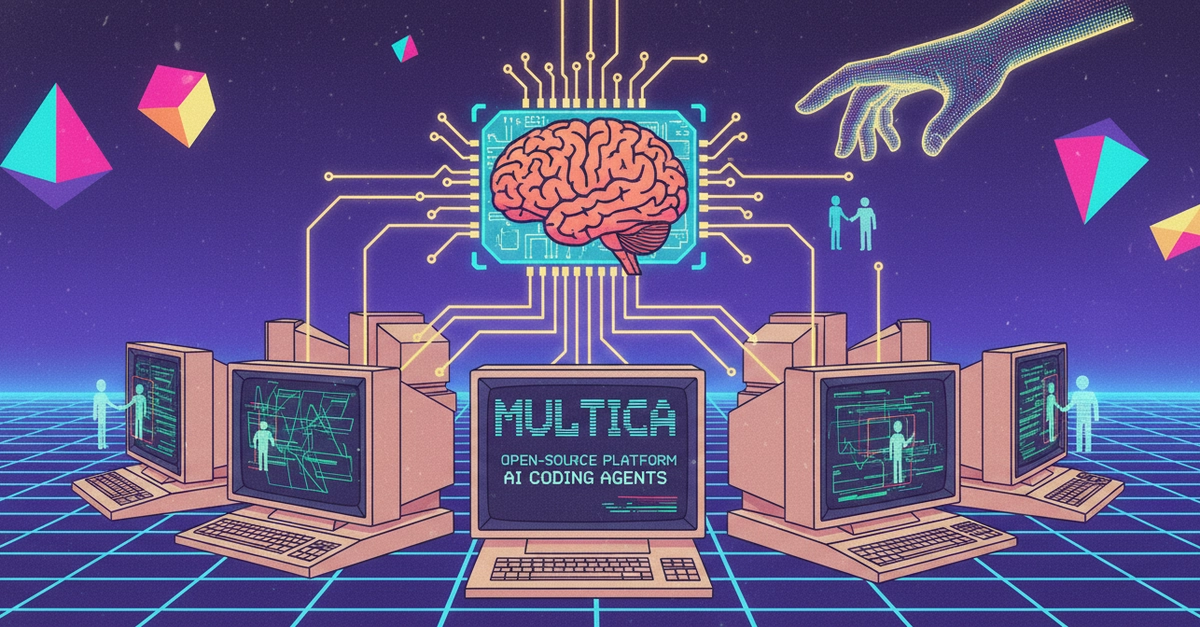
Octo, now open-sourced by Mininglamp Technology, targets exactly this gap. It's an open-source work platform built for human-AI agent collaboration. Its core value isn't building yet another powerful AI assistant—it's getting existing agents into the same collaboration network, forming organization-level coordination capability.