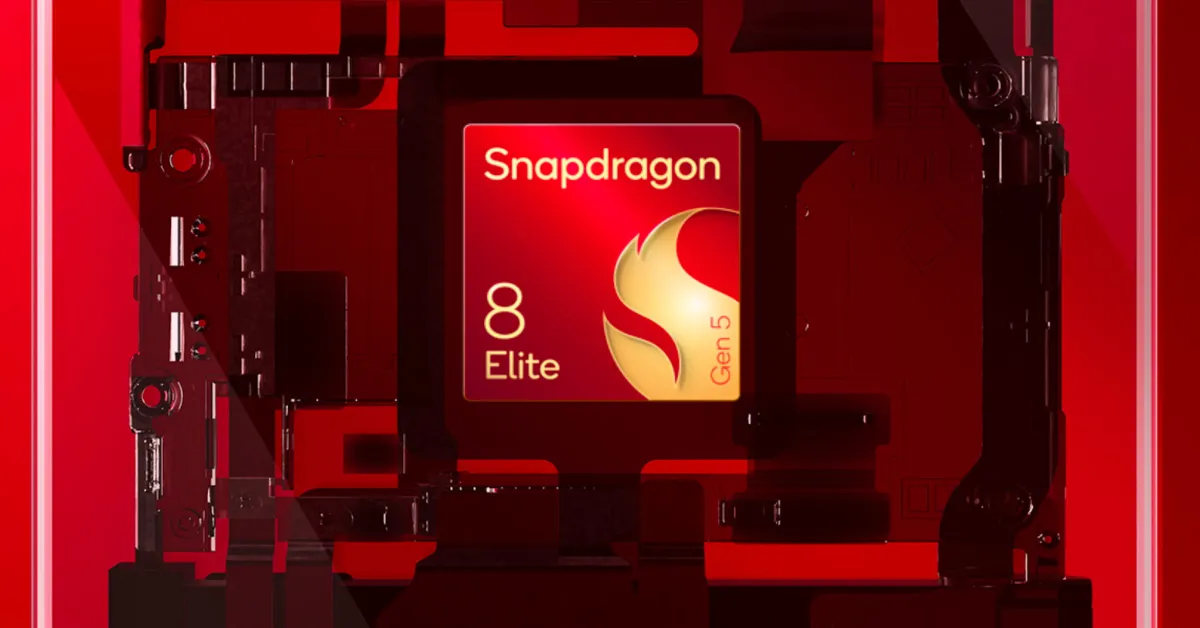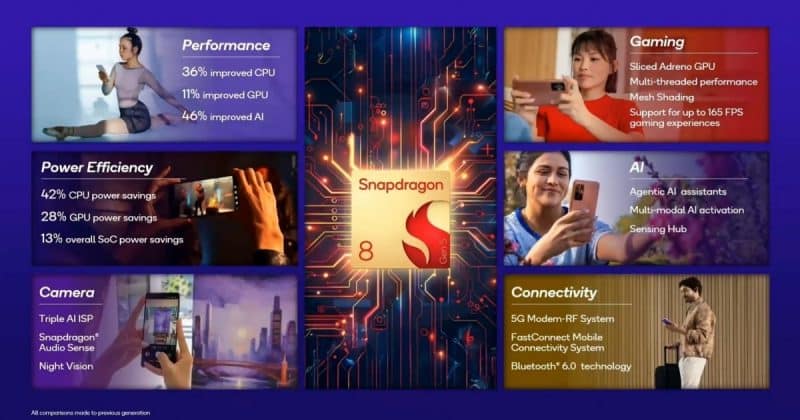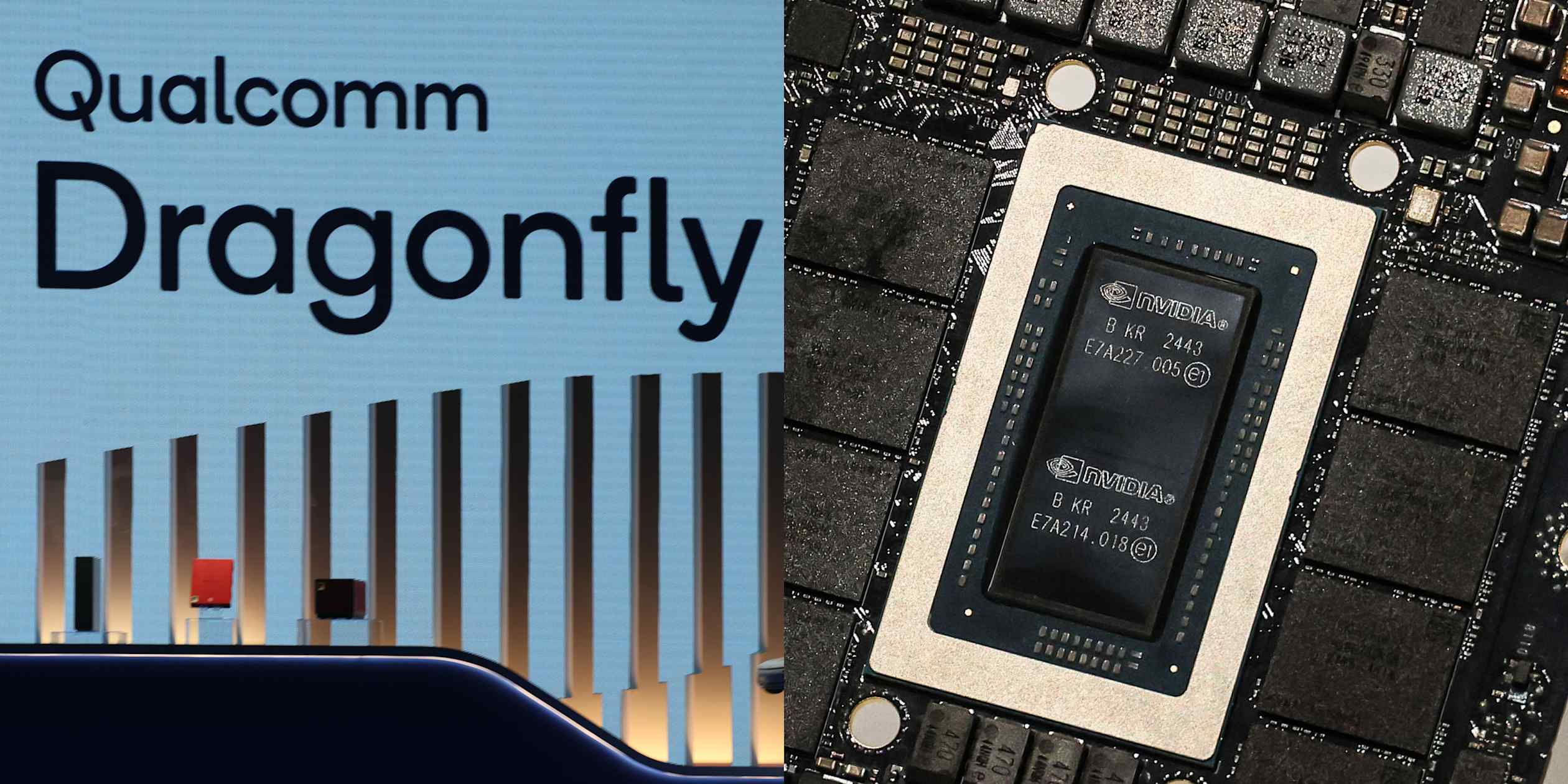
Qualcomm has confirmed that its ninth annual Snapdragon Summit will run from 22 to 24 September 2026 in Maui, Hawaii, the stage where it launches the flagship mobile chip that defines the following year of premium Android phones. The headline act is already half-leaked: a 2nm Snapdragon 8 Elite Gen 6, the silicon that will sit inside the Galaxy S27, the Xiaomi 18 and most of the Android elite. For three days in paradise, Qualcomm will look like exactly what it has always been, the undisputed king of the smartphone processor.Look past the luau, though, and a quieter, larger story is running underneath. The company throwing this party is racing to become something else entirely. A modem cliff arrives in 2027, when Apple finishes building its own. China accounts for nearly half of Qualcomm's revenue. The smartphone market has matured into a slow, brutal trench war. And so the Maui keynote is best read as two things at once: a victory lap for the engine that pays the bills today, and a distraction from the harder, riskier project of building the company Qualcomm needs to be tomorrow.What Qualcomm will show in MauiSnapdragon Summit has a rhythm, and the metronome rarely slips. Qualcomm uses this event each year to unveil its next flagship phone processor, and 2026 follows the script. Leaks from the reliable tipster Digital Chat Station point to two parts: a standard Snapdragon 8 Elite Gen 6, built on a 2nm process with LPDDR5X memory, and a Snapdragon 8 Elite Gen 6 Pro that steps up to LPDDR6 and the newest UFS 5.0 storage. Both run a next-generation version of Oryon, Qualcomm's home-grown CPU core, with the Pro carrying the beefier A850 graphics and the standard part an A845. Treat the fine print as informed speculation until Cristiano Amon says it on stage.The phones tell you the stakes. Xiaomi has built a habit of racing to be first out with each new Snapdragon flagship, and its Xiaomi 18 series should land by the end of September, squaring up against the iPhone 18 Pro that arrives a few weeks earlier. Win the benchmark wars in October, and you set the tone for the whole Android year.Two other reveals are likely. The Summit is also where Qualcomm refreshes its Windows-on-Arm laptop silicon, so a Snapdragon X3 Elite is the natural sequel to last year's X2 Elite, though leaks there stay thin for now. And the company may expand on its newly introduced Reality Elite headset platform, its play for the smart-glasses and mixed-reality wave that Samsung, Google and Meta are all chasing.What's expected at Snapdragon Summit 2026DetailConfidenceSnapdragon 8 Elite Gen 62nm, next-gen Oryon CPU, LPDDR5X, A845 GPULeaked, highSnapdragon 8 Elite Gen 6 Pro2nm, LPDDR6, UFS 5.0, A850 GPULeaked, highSnapdragon X3 Elite (PC)Successor to X2 Elite for Windows laptopsExpectedReality Elite updatesHeadset and smart-glasses platformPossibleFirst phonesXiaomi 18 series, late SeptemberLikelyWhy the celebration carries an undertowHere is the fact that reframes everything else: Qualcomm is about to lose a chunk of its single biggest customer. Apple has spent years building its own cellular modem, and the in-house C1 is already shipping inside iPhones. By Qualcomm's own guidance, its modem share within the iPhone 18 line falls to around 20 per cent in fiscal 2027, which cuts its Apple chip revenue to roughly $2 billion, down from more than $6 billion just two years earlier. Add the licensing income that travels with those chips, and analysts size the hole at $7 to $8 billion a year once the transition completes. The supply agreement runs through 2026. Then the tide goes out.One customer is the sharpest risk, yet it sits among several. China supplies close to half of Qualcomm's revenue, a concentration that turns every twist in the US-China trade relationship into a balance-sheet event. The smartphone market itself has stopped growing the way it once did, leaving Qualcomm to fight MediaTek and a resurgent Samsung Exynos for a fixed pool of premium sockets. And the AI-driven memory shortage now quadrupling DRAM prices lands on every Snapdragon phone too, lifting the cost of the very devices Qualcomm needs people to keep buying.So the island metaphor holds. Qualcomm has spent two decades on the most lucrative patch of land in technology, the smartphone, and the patch is eroding at the waterline. Staying put is the one option that fails.The trouble at the bottom of the marketDig into the smartphone slowdown and a sharper problem surfaces, one that lands close to a chunk of Qualcomm's business. The memory shortage falls unevenly, and it hammers the cheap phones hardest. Memory accounts for over 40 per cent of the bill of materials in an entry-level handset, against roughly 14 per cent in a mid-range device, by Counterpoint Research's reckoning, so a doubling of DRAM and NAND prices does disproportionate damage at the floor. Budget phones under $200 have already swallowed cost rises of 20 to 30 per cent since early 2025, and brands are answering by trimming specs, with TrendForce expecting some base models to slide back to 4GB of RAM.The result is a market splitting in two. Average selling prices are climbing fast, up around 14 per cent in early 2026 to a record, even as unit volumes fall, a value paradox in which the industry sells fewer phones for more money. The pain pools at the bottom. Counterpoint sees the sub-$150 segment facing something close to a collapse, IDC's Nabila Popal has warned that the sub-$100 phone risks becoming permanently uneconomical to build, and Nothing's Carl Pei put the shift bluntly, saying the more-specs-for-less-money formula that built the value brands has stopped working.For Qualcomm, this cuts two ways, and one edge is genuinely awkward. Premiumisation flatters the part of the business that sells flagship Snapdragon chips, since a market tilting toward expensive phones suits the company that owns premium Android silicon. The trouble is that the volume lives lower down, in the mid-range and entry Snapdragon tiers where MediaTek and Unisoc fight hardest, and that volume is exactly what is eroding. Worse, Qualcomm's licensing arm collects a royalty on nearly every handset sold on earth, so a global slide in unit shipments drains the patent river directly, whatever ASPs do. The cash engine meant to fund the long voyage runs strongest at the premium peak and weakest at the base, in the very year Qualcomm needs every dollar it can pull.How Qualcomm plans to replace the iPhone moneyIts answer, in a word, is everywhere-but-phones. And the early numbers give the strategy real credibility rather than mere hope. Automotive is the genuine bright spot, growing 38 per cent year-on-year to a record $1.33 billion in the second quarter of fiscal 2026, with management steering toward a $6 billion annual run rate. Qualcomm's chips now sit behind the dashboards of most major carmakers, running the screens, the driver assistance and the connectivity. The internet-of-things business, which spans industrial gear, wearables and the AI laptops, adds another growing leg.Stack the ambitions together and the shape becomes clear. Qualcomm has told investors it wants $40 billion in non-handset revenue by fiscal 2029, split across data centre, automotive, industrial and robotics, and personal AI and XR. In that future, handsets fall to roughly a third of the chip division's revenue. The smartphone stops being the whole company and becomes one business among several.That is the plan on paper. The execution is where the voyage gets choppy, because the single largest prize Qualcomm is chasing barely exists yet.The data-centre gambitThe boldest bet landed far from Hawaii, in New York. At its Investor Day on 24 June, a separate event entirely from the Summit, Qualcomm formally re-entered the data-centre race it had abandoned years earlier. The portfolio carries the Dragonfly brand: a server processor called the C1000, built on the same Oryon cores as its phone chips, with more than 250 cores running above 5GHz. Alongside it sits a family of AI accelerators, the AI200 and AI250, aimed squarely at inference, the run-the-model half of artificial intelligence rather than the train-the-model half that Nvidia rules.Its genuinely novel piece is the memory architecture. Qualcomm calls it High Bandwidth Compute, and it stacks LPDDR memory directly onto the compute die to attack the bottleneck that throttles AI inference, the slow business of moving data in and out of memory. It is a real engineering departure rather than a faster version of the same idea, and it earned Qualcomm two marquee endorsements. Mark Zuckerberg appeared to confirm a multi-generation Meta deal for the C1000, and Satya Nadella backed the memory architecture for Microsoft's Azure.The ambition is enormous, and so is the gap between today and payday. Qualcomm wants more than $15 billion a year from data centre by fiscal 2029. Yet the C1000 ships in the second half of 2028, Nvidia commands somewhere north of 80 per cent of the AI accelerator market, and Qualcomm walked away from its last server-chip effort, Centriq, which it abandoned before reaching scale. To win, it bought a software weapon: Modular, the inference-software startup founded by LLVM and Swift creator Chris Lattner, for $3.92 billion, a deal designed to let developers run AI on any chip, free of code locked to Nvidia's CUDA. Make the software portable, the logic runs, and the hardware competes on merit, which is the one fight Qualcomm believes it can win.The shopping spree that built itAll of this grew from years of groundwork. Over five years, Qualcomm has assembled its AI stack the way a card player builds a winning hand, buying one missing piece at a time. The foundation was Nuvia, the $1.4 billion 2021 purchase of a team of ex-Apple architects that gave Qualcomm the Oryon core now running through its phones, its laptops and its servers. Everything else slots around it.In 2024 it absorbed MovianAI, the generative-AI division of Vietnam's VinAI, for on-device model talent. In 2025 came Edge Impulse for edge-AI developer tools and Autotalks for automotive connectivity. Then the data-centre pieces arrived in quick succession: Alphawave Semi, a $2.4 billion deal for the high-speed interconnect IP that shuttles data across AI racks, and Ventana Micro Systems in December for a RISC-V server CPU design that Qualcomm owns outright, free of Arm. Modular added the software layer. Each cheque bought a layer of the stack, and together they describe a company trying, very deliberately, to become a full-stack alternative to Nvidia.DealPriceDateWhat it addsNuvia$1.4 billion2021Oryon custom CPU coreMovianAI (VinAI)Undisclosed2024On-device generative-AI talentEdge ImpulseUndisclosed2025Edge-AI developer toolingAutotalksUndisclosed2025Automotive connectivityAlphawave Semi$2.4 billion2025-26High-speed interconnect, chipletsVentana MicroUndisclosedDec 2025RISC-V server CPU designModular$3.92 billionJun 2026Hardware-agnostic AI compilerThe $10 billion swing for Jim KellerQualcomm's most audacious bet is also its least certain. Qualcomm is in reported talks to buy Tenstorrent, the AI-accelerator startup run by Jim Keller, for somewhere between $8 billion and $10 billion. Treat that as a reported development rather than a done deal: the talks surfaced in mid-June, the companies have stayed silent, and the negotiations could still collapse. Qualcomm's Investor Day came and went on 24 June with Modular confirmed and Tenstorrent unmentioned.The logic, though, is almost too neat. Tenstorrent would hand Qualcomm the one thing Dragonfly still lacks, a credible AI accelerator, built on the open RISC-V architecture and now shipping as the Galaxy Blackhole platform since April. Paired with Modular's compiler, it would let Qualcomm attack Nvidia from two directions at once: open silicon underneath, portable software on top. And it would bring Jim Keller, the architect whose fingerprints sit on Apple's A-series, AMD's Zen and Tesla's self-driving chip, a hire that would be a coup on reputation alone.The price tells its own story about scarcity. A year ago Tenstorrent raised money at a $3.2 billion valuation; the reported figure now is triple that, inflated by Intel's rival interest and by an AI-silicon market where Cerebras went public near $83 billion. Yet the risks ride along with the reward. Bernstein's Stacy Rasgon flagged the central irony, warning that Keller tends to move on from public companies before his work ships, exactly as he did at Intel. The Tensix software ecosystem still trails what CUDA offers out of the box. And folding Tenstorrent in would leave Qualcomm juggling four architectures at once, Arm-based Oryon, Ventana's RISC-V, Tenstorrent's cores, and two incompatible accelerator families. The hand is strong. Playing it cleanly is another matter.The thread tying it togetherStep back, and the scattered bets resolve into one idea. At Computex this year, Amon branded 2026 the Year of Agents, and that phrase is the key to the whole strategy. Qualcomm is wagering that AI stops living only in distant cloud chatbots and starts running as agents everywhere at once: on the phone in your pocket, in the car on your drive, and in the data centre that coordinates them. That single thesis explains why the same Oryon core, bought with Nuvia in 2021, now runs through a flagship phone chip, a Windows laptop and a 250-core server processor alike. The on-device agentic AI that headlines the Maui keynote and the agentic servers unveiled in New York are two ends of the same wire. Seen that way, the diversification reads less like a company fleeing its past and more like one placing a coherent, if costly, wager on where computing goes next.The challenges that outlast the keynoteStrip the strategy to its load and three hard problems remain. Timing is the first, and the cruellest. The Apple hole opens in 2027; the Dragonfly chips that are meant to fill it ship in 2028. Qualcomm has to cross a year of shrinking smartphone money before its biggest new bet pays a cent, and the automotive engine, healthy as it is, covers only part of the gap.Second comes the field. Qualcomm is charging into a data-centre market where Nvidia holds more than 80 per cent, where AMD already mass-produces 256-core server chips, and where its own 250-core, 5GHz headline numbers may read as ordinary by the time the C1000 actually arrives in 2028. Winning here means out-executing the best-resourced companies in the industry on their home turf, from a near-zero base, with the ghost of Centriq as a reminder that Qualcomm has tried and failed at exactly this before.Third, and quietest, sits the market's patience. Qualcomm trades like an expectations stock, re-rated on a diversification story it has only partly delivered, and the share price has whipsawed through 2026 as investors price and re-price the gap between narrative and revenue. Every quarter the automotive and IoT lines keep printing growth, the thesis holds. The quarter they stall, the story breaks.The India readFor India, this matters more than the distance from Maui suggests. Snapdragon's Elite chips power the premium Android phones that define the country's high end, from Samsung's flagships to Xiaomi's, and the 8 Elite Gen 6 will set the bar for the devices Indian buyers covet through 2027. The memory crunch threading through this story lands here too, pushing up the price of those flagships in a market that feels every rupee of a price rise. Qualcomm's scramble to diversify is, indirectly, a story about how affordable India's next premium phone turns out to be.What it all meansSo the keynote in Maui is the easy part. For three days Qualcomm will command a stage it has owned for years, unveiling a chip that genuinely leads the field, and the applause will be real. The hard part begins when everyone flies home. The company is trying to sail off the most profitable island in technology before the water reaches the door, paddling toward a data-centre shore it can see but reaches only in 2028, in a boat it is still assembling from acquired parts mid-voyage.Competition is fierce, yet it is the lesser opponent. The clock is the real one. Qualcomm knows precisely when its old world starts to shrink, and roughly when its new one is meant to arrive, and the whole strategy lives or dies in the gap between those two dates. Hawaii is where it shows off the engine that got it here. Whether that engine can power the crossing is the question that lies beyond any keynote.Frequently asked questionsWhen and where is Snapdragon Summit 2026?Qualcomm has confirmed Snapdragon Summit 2026 for 22 to 24 September in Maui, Hawaii, its ninth annual event, with one report citing 23 to 25 September. The company uses it to launch its next flagship mobile processor.What chip will Qualcomm announce at Snapdragon Summit 2026?Leaks point to the Snapdragon 8 Elite Gen 6 and a step-up 8 Elite Gen 6 Pro, both built on a 2nm process with next-generation Oryon CPU cores. A Snapdragon X3 Elite laptop chip is also expected, though details there stay thin.Why is Qualcomm diversifying beyond smartphones?Apple is replacing Qualcomm's modems with its own, cutting an estimated $7 to $8 billion a year from 2027. Combined with heavy China exposure and a mature smartphone market, that pushes Qualcomm into automotive, IoT and data centre.What is Qualcomm's data-centre strategy?Qualcomm unveiled its Dragonfly portfolio in June, led by the C1000 server CPU and AI200 and AI250 inference accelerators, with Meta and Microsoft as anchor customers. It targets more than $15 billion in annual data-centre revenue by fiscal 2029, with chips shipping from 2028.Is Qualcomm buying Tenstorrent?Qualcomm is in reported talks to acquire Jim Keller's Tenstorrent for $8 to $10 billion, though the deal stays unconfirmed and the talks could still fail. It would add the RISC-V AI accelerator that Qualcomm's data-centre line currently lacks.Which AI companies has Qualcomm acquired?Qualcomm bought Nuvia in 2021 for its Oryon CPU, then added MovianAI, Edge Impulse, Autotalks, Alphawave Semi for $2.4 billion, Ventana Micro for RISC-V, and Modular for $3.92 billion, assembling a full-stack AI platform.What are the biggest risks for Qualcomm?Timing is the sharpest: the Apple revenue loss hits in 2027, while the data-centre chips that replace it ship in 2028. Qualcomm also faces Nvidia's dominance, integration complexity across multiple chip architectures, and a stock priced on diversification it has yet to fully deliver.end of article
Snapdragon Summit 2026 in Maui: The 2nm chips and AI bets to expect from Qualcomm
Qualcomm has locked in its biggest show of the year for late September in Hawaii, where it will reveal the chip that powers next year's flagship Android phones. The party sits on an island. So, in a sense, does the company: dependent on the smartphone that made it, and on a single Apple cheque that runs out in 2027. The real story of this Summit is the voyage off that island, and the roughly $14 billion Qualcomm is spending to find dry land.
2,987 words~14 min read