Lithuania’s political leadership wants to normalise relations with China within the next six months, setting an ambitious goal for Foreign Minister Kęstutis Budrys. But experts say that, judging by how other countries have repaired damaged ties with Beijing, the timeline may prove unrealistic.
Examples from Norway, South Korea, Australia and Canada suggest that restoring relations with China after a diplomatic crisis is usually a lengthy process that often requires political concessions. Yet analysts argue that Lithuania’s dispute with Beijing is in a category of its own because it centres on Taiwan, an issue China considers its most sensitive national interest.
“Our case is unique because it concerns Taiwan, which is China’s biggest red line,” said Tomas Janeliūnas, a professor at Vilnius University’s Institute of International Relations and Political Science. “China was prepared to go as far as possible, including imposing secondary sanctions. They viewed Lithuania’s decision as far more significant than the disputes they had with Canada, Australia, Norway or South Korea.”
Taiwan at the centre of the dispute
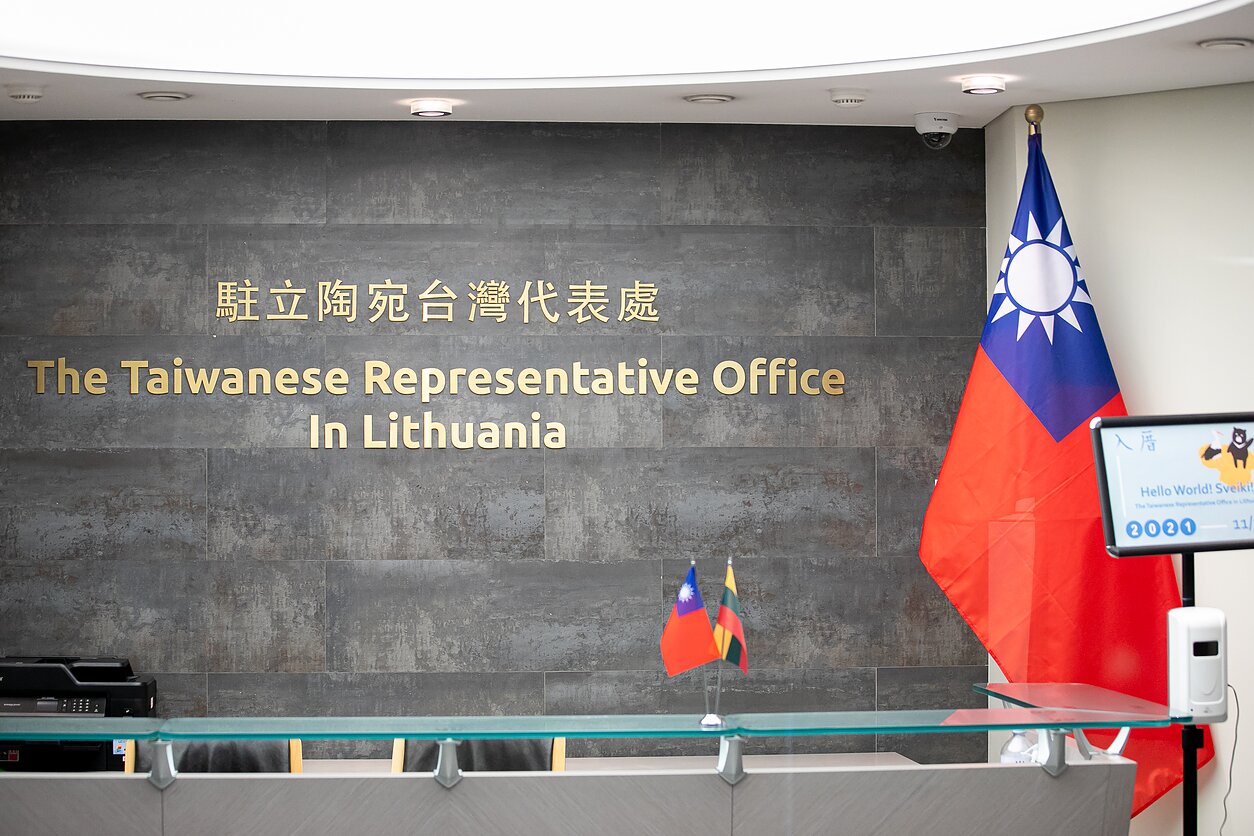
Relations between Vilnius and Beijing collapsed in 2021 after Lithuania allowed Taiwan to open a representative office under the name “Taiwanese Representative Office in Lithuania”. Unlike similar offices elsewhere in Europe and North America, which typically use the name “Taipei”, the Lithuanian office’s title was widely interpreted by Beijing as implying greater recognition of Taiwan’s separate political identity.