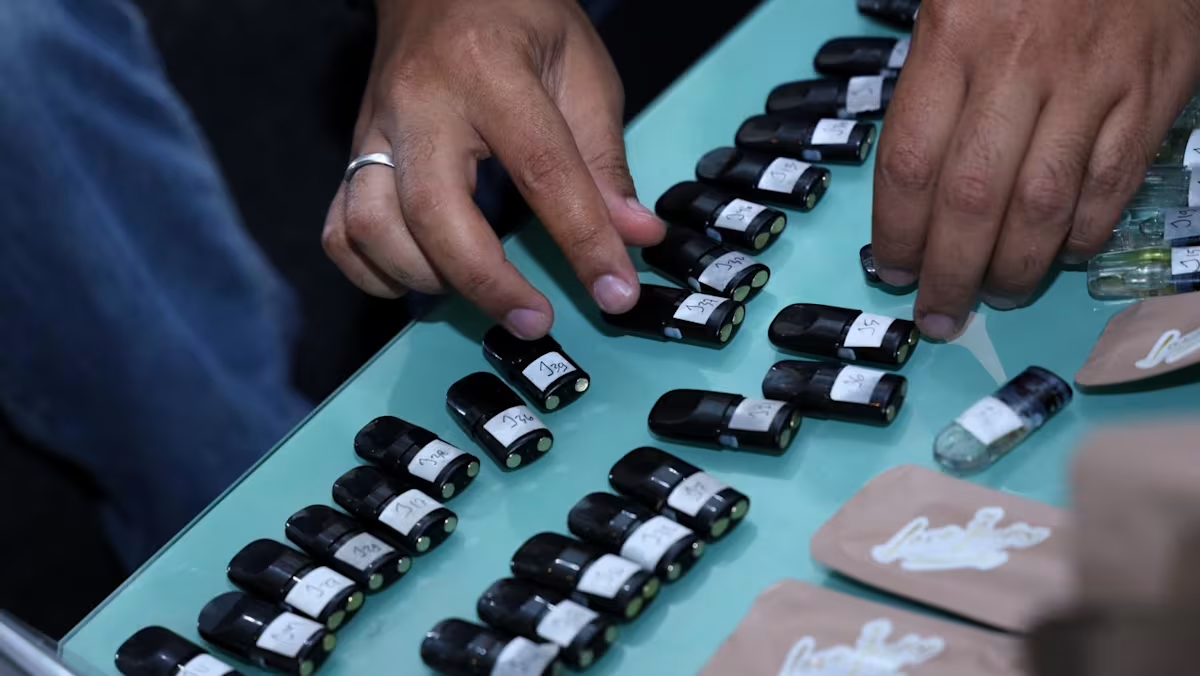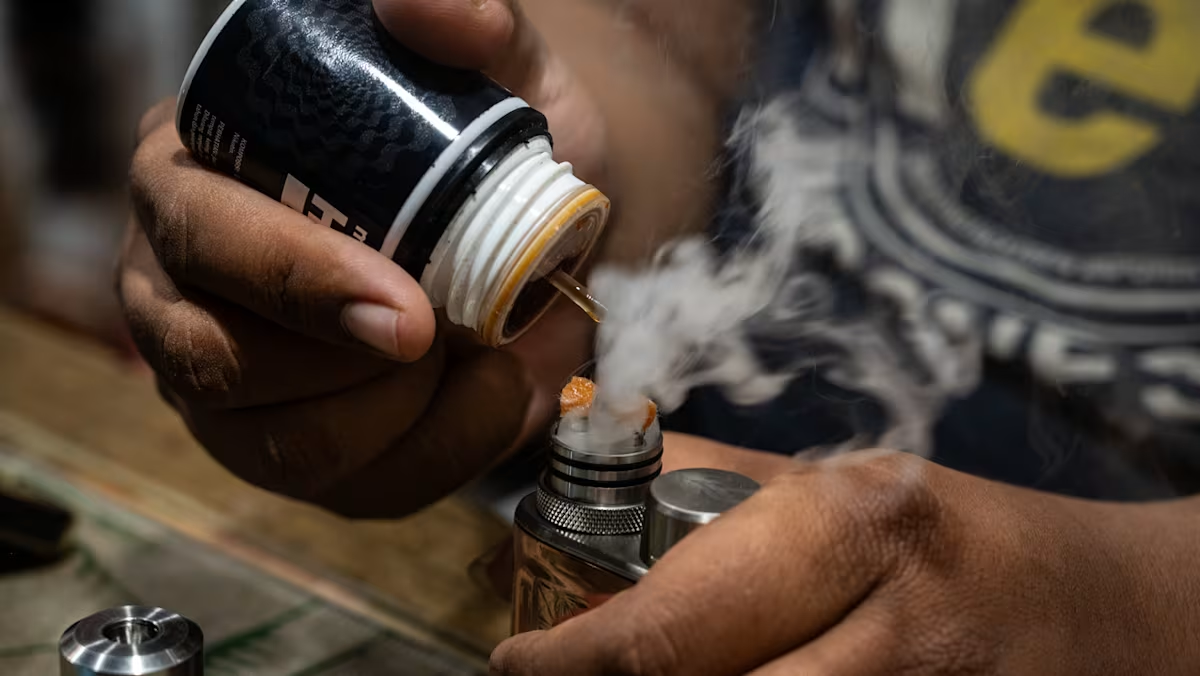
Europe is being “flooded” by cheap vapes and e-cigarettes produced in Asia that often do not meet EU safety rules, dodge customs taxes and in some cases contain harmful and illegal substances, the head of the EU’s anti-fraud office has said. “We can see it every day in the streets, there’s a rising demand for vapes and e-cigarettes, especially among the younger generation,” said Petr Klement, director general of the European Anti-Fraud Office (Olaf). A recent cross-border investigation by Olaf, in co-operating with national authorities, seized 94 million vape products as part of a crackdown on the booming market. The inquiry found fraudsters had used a range of schemes to misdeclare the goods when transporting or shipping them into the EU market and across internal borders, to avoid paying the correct rate of tax. Seized vapes were falsely declared as shipments of toys, earphones, shoes, clothing and essential oils. “Mislabelling is done for two reasons, either avoiding the tax or simply missing the required labelling of warnings ... Then we have the simple or the classic counterfeiting of products, which is also happening,” Klement said. Some 90 per cent of the products confiscated did not comply with health and safety rules and other national standards, posing a risk to European customers, he said. Some vapes were found to have double the normal nicotine doses and others contained cannabis. Beijing has banned flavoured e-cigarettes from being sold in China, although it still exports a huge proportion of the world’s supply of the products. Photograph: Michael Nagle/Bloomberg via Getty Images China is a huge player in the vape market, particularly single-use products that are popular with young people. Beijing has banned flavoured e-cigarettes from being sold in China, although it still produces and exports a huge proportion of the world’s supply of the products.“In China only the flavours are banned, so it’s possible to buy a vape with the tobacco flavour in China and it’s highly regulated there. What is probably a bit less regulated is the production of vapes and their sale. We are facing ... large imports of [Chinese] vapes into Europe,” he said. “I don’t want to blame only China, but it’s Asia and others,” he said. Klement, a Czech prosecutor, took over as head of the EU anti-fraud watchdog this February. Although not in his remit, he is nervous about the long-term health impact of e-cigarettes. He described younger generations smoking the products as “guinea pigs” who were voluntarily participating in a large health experiment. “Because we do not know what will happen 20 years after,” he said. Differing standards around flavourings, tax and substances across the EU’s 27 states were being exploited by producers and fuelling a black market. “As a citizen I have to ask, does our health standard of human beings differ?” Klement said. Olaf investigates instances of fraud and irregularities that affect the EU budget, making recommendations to institutions, agencies or national authorities about how to better protect the union’s money when it finds shortcomings. A big part of the job involves stopping the flow of goods being smuggled into the EU, which result in huge losses in tax revenues. To do that Olaf monitors the activity of “suspicious traders”, Klement said. “Identifying a suspicious pattern means, for example, when a container leaves a port and arrives too early to another one,” said. Vapes and substandard e-cigarettes are increasingly being flown into the European market by air freight, a new “trend” to avoid checks, he said.Where a case points to possible criminality it is taken up by a separate body, the European Public Prosecutor’s Office (EPPO).Getting Olaf and EPPO to work well together is something Klement wants to focus on. He was deputy chief prosecutor in EPPO, so he feels well placed in his new job to improve co-operation between the two investigative authorities. Petr Klement, director general of the European Anti-Fraud Office. Photograph: EU Another trend investigators were noticing was the sale of dodgy vapes and related products on ecommerce sites. “There it gets very much out of control and I think that there, it is most dangerous to buy,” he said.“Organised crime nowadays works as a business enterprise ... So the groups they follow the demand, if there’s a rising demand on vapes, they would follow the demand,” he said. Klement said he remembered cases many years ago of factories producing illegal cigarettes in central and eastern Europe, which also seem to have returned. “There was a sustained effort of law enforcement to suppress this ... I thought we were successful, [but] nowadays we can see factories in Belgium and in France and in western Europe,” he said. These “underground” cigarette factories were often small to evade detection. “We know that, for example in Belgium’s market, the number or the volume of smuggled cigarettes or undeclared cigarettes, undeclared imports of cigarettes, is very, very high,” he said.
European market ‘flooded’ with unsafe vapes, EU anti-fraud chief says
Recent crackdown uncovered millions of vapes shipping into EU labelled as toys, earphones, shoes and essential oils to avoid tax
815 words~4 min read