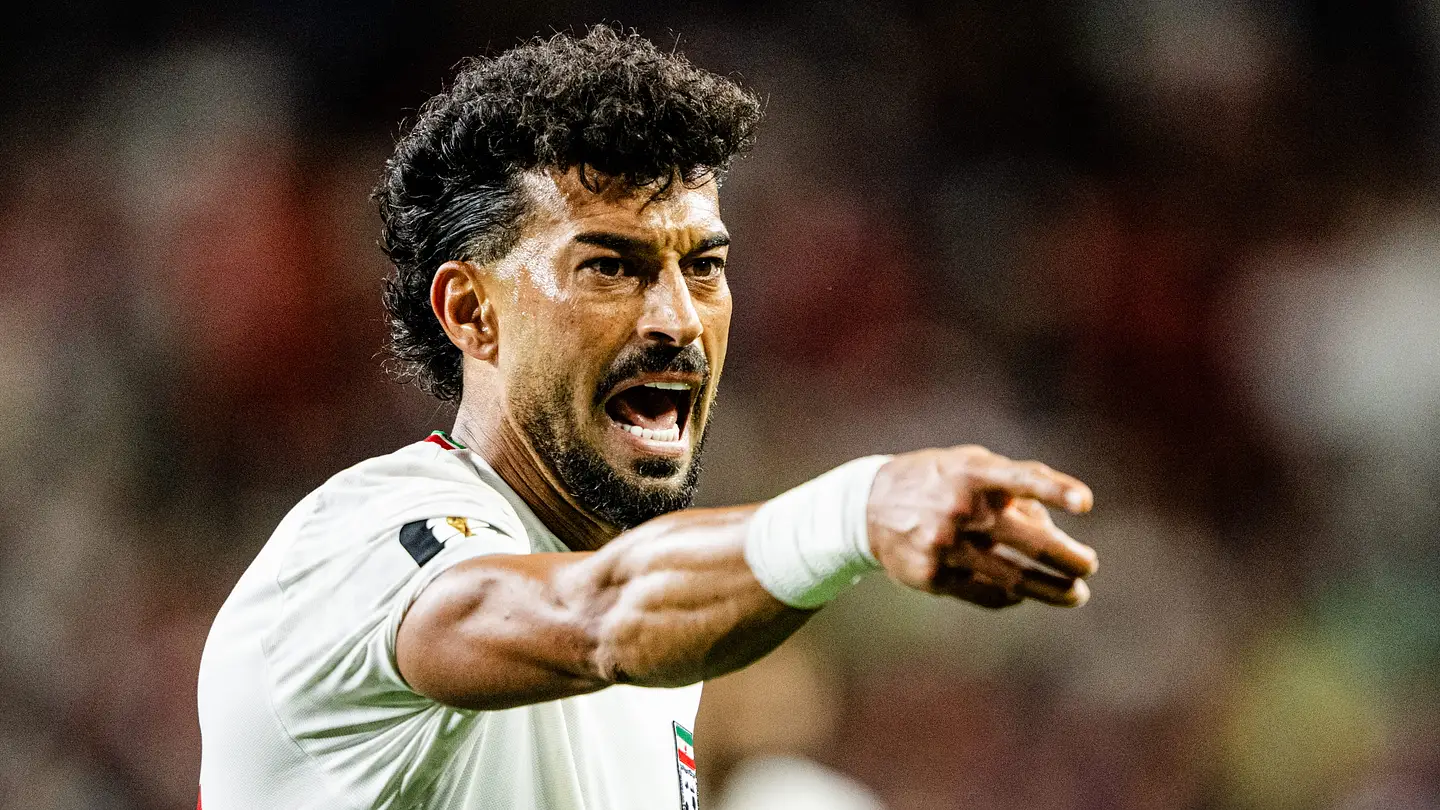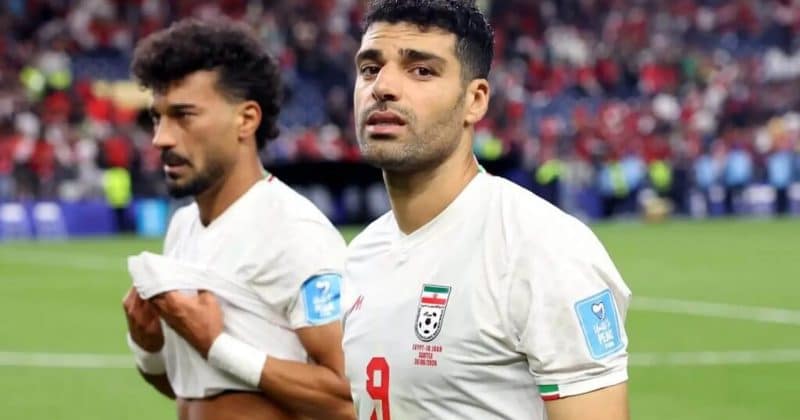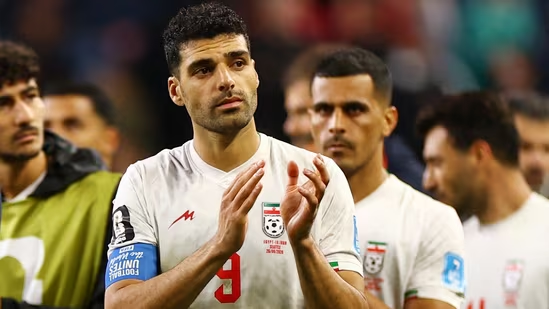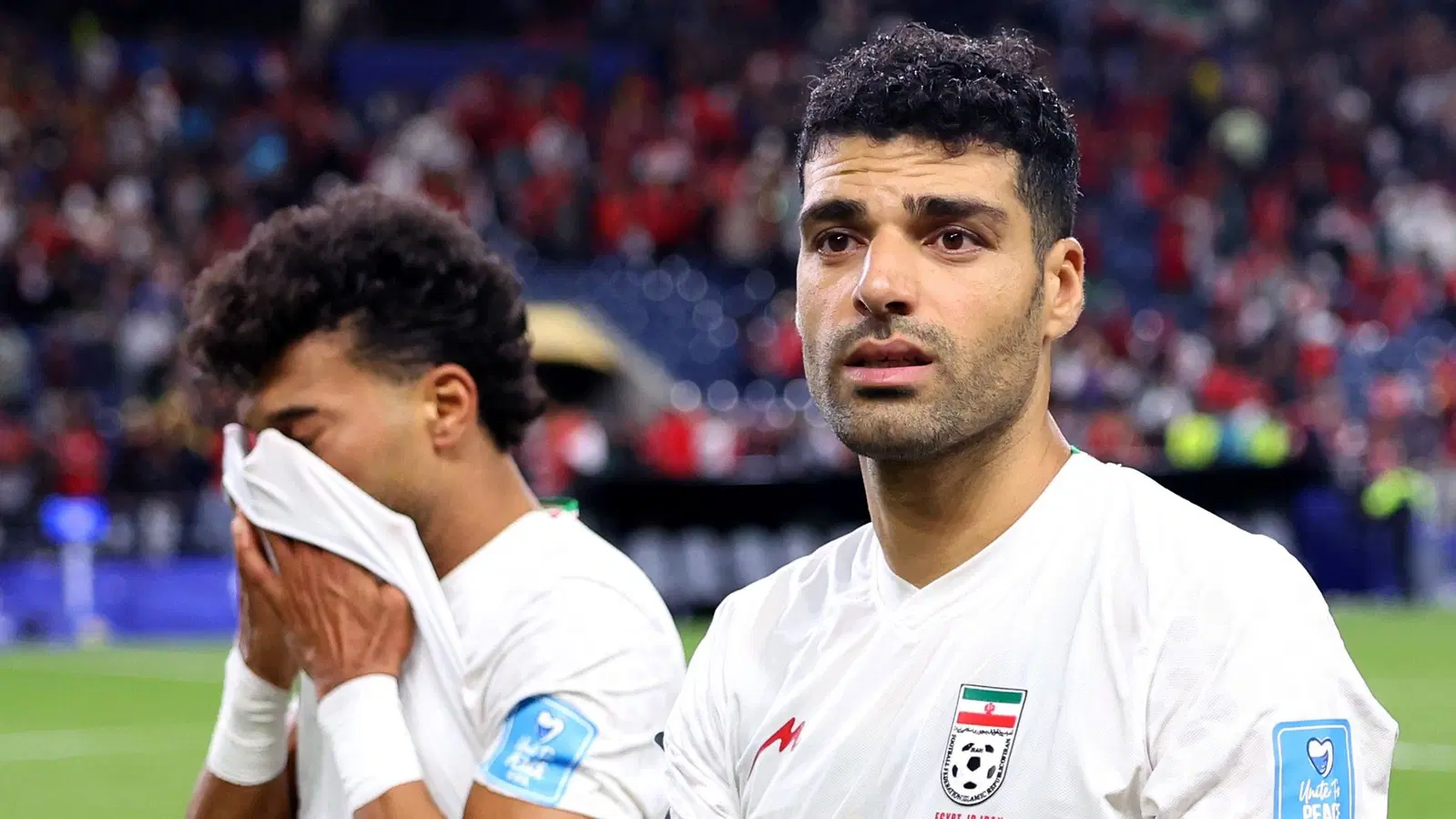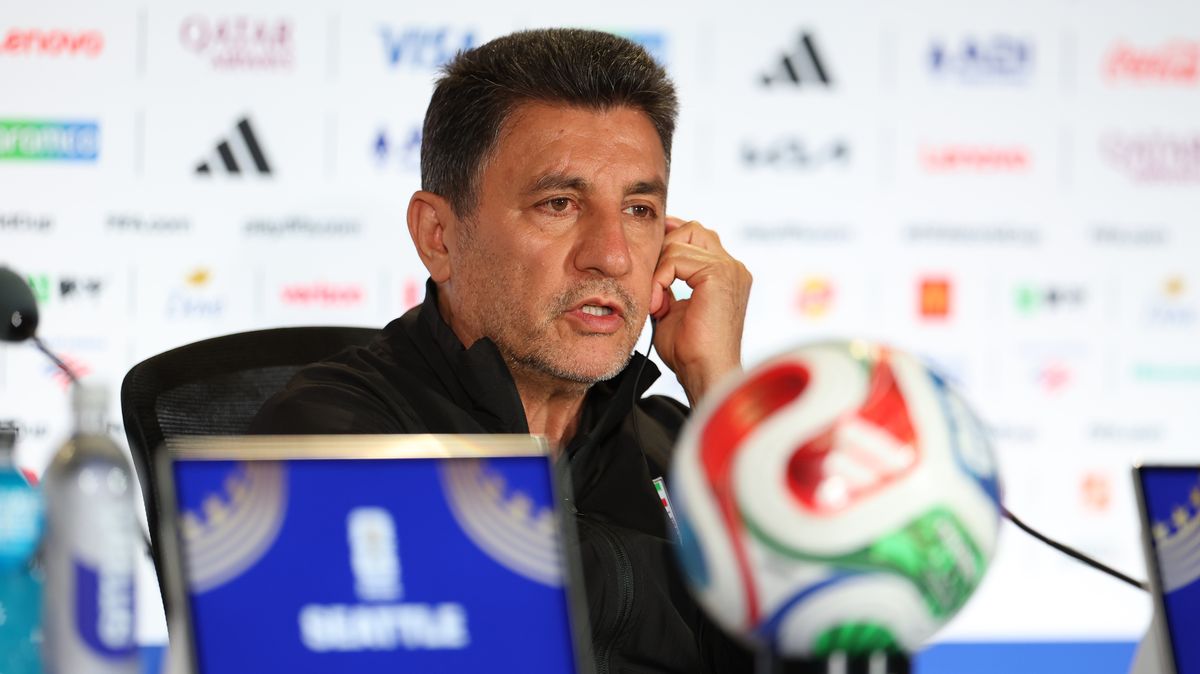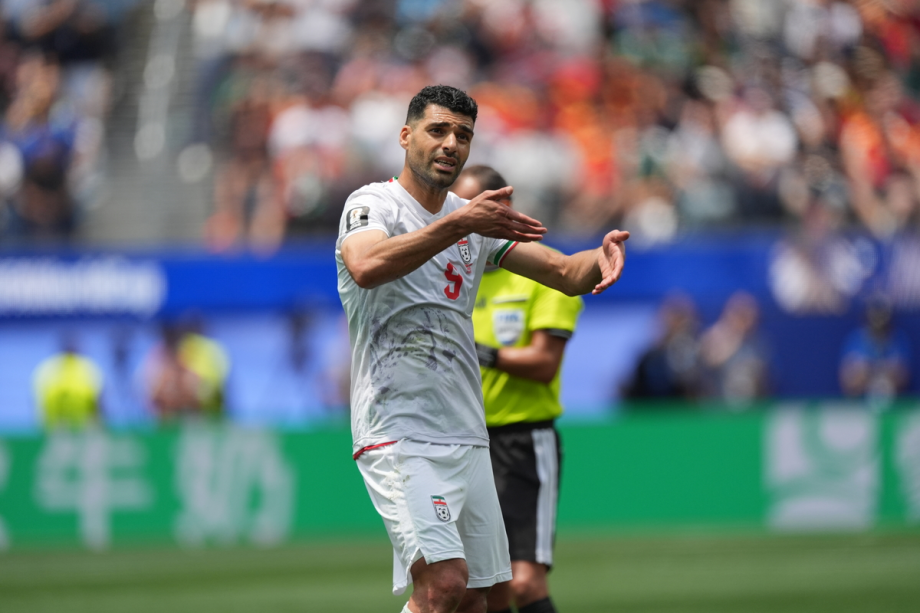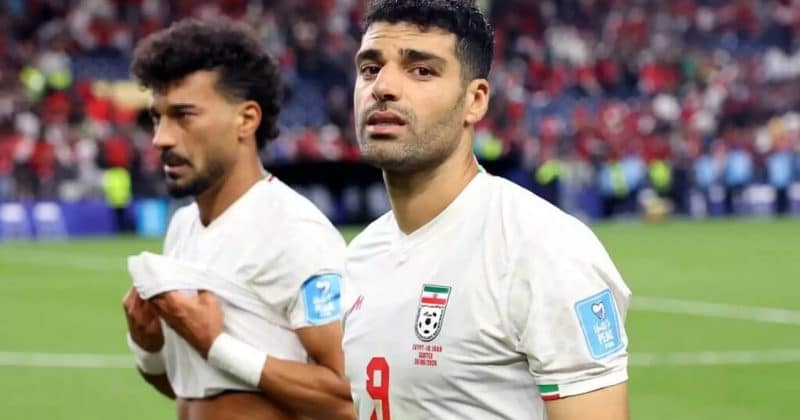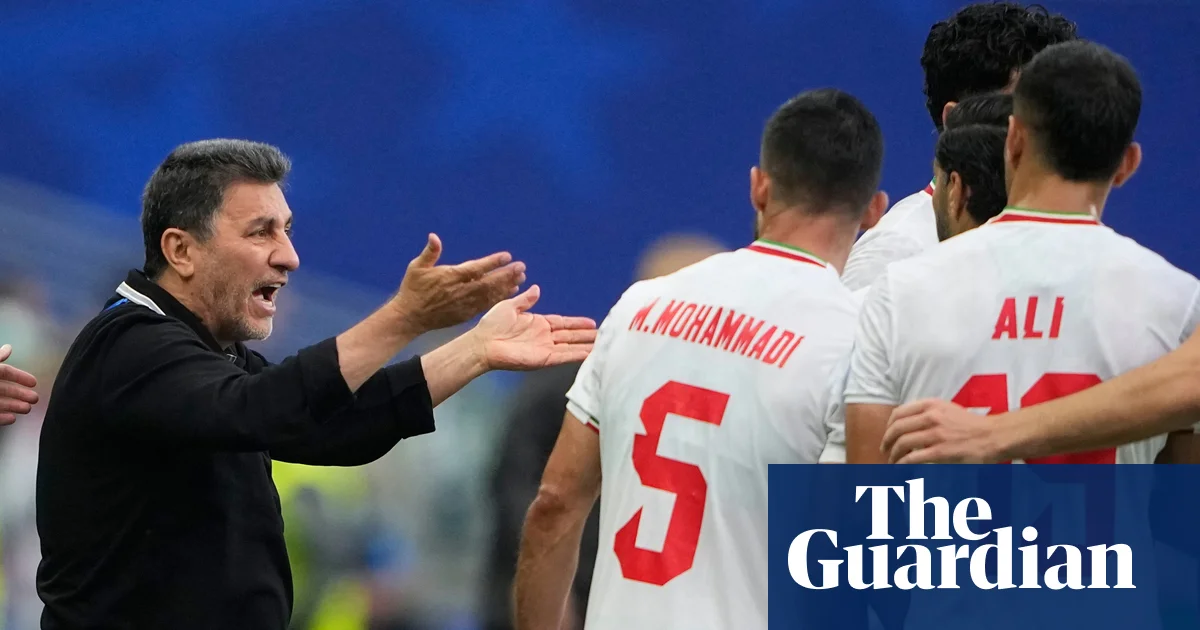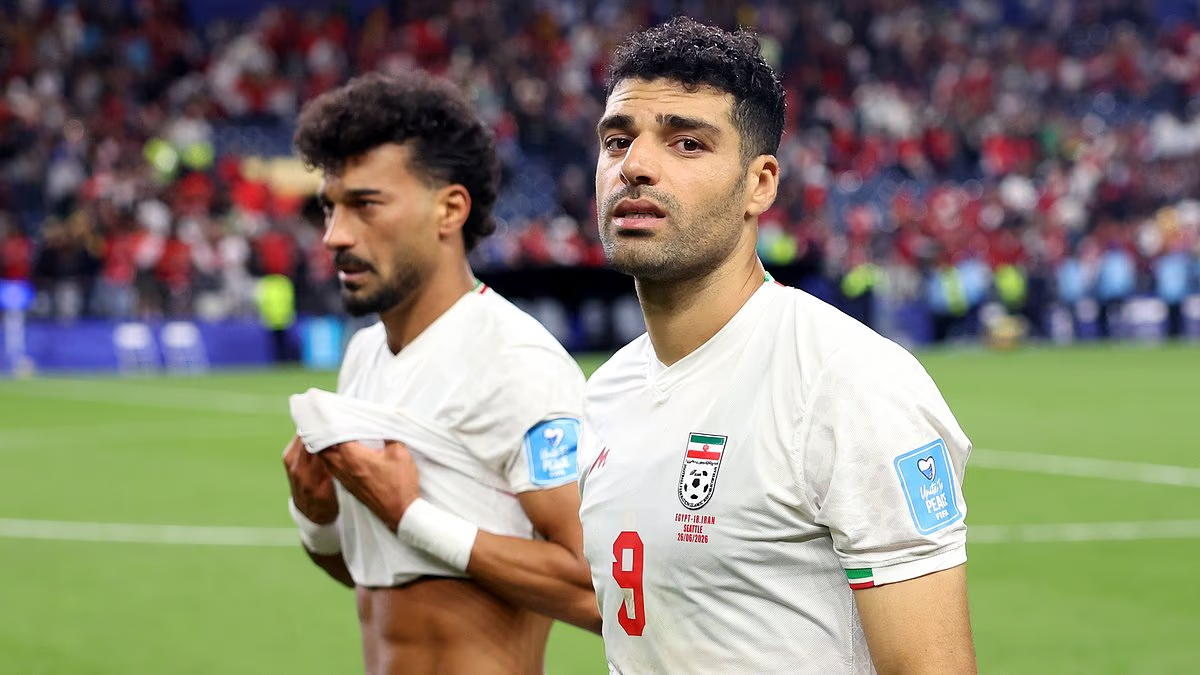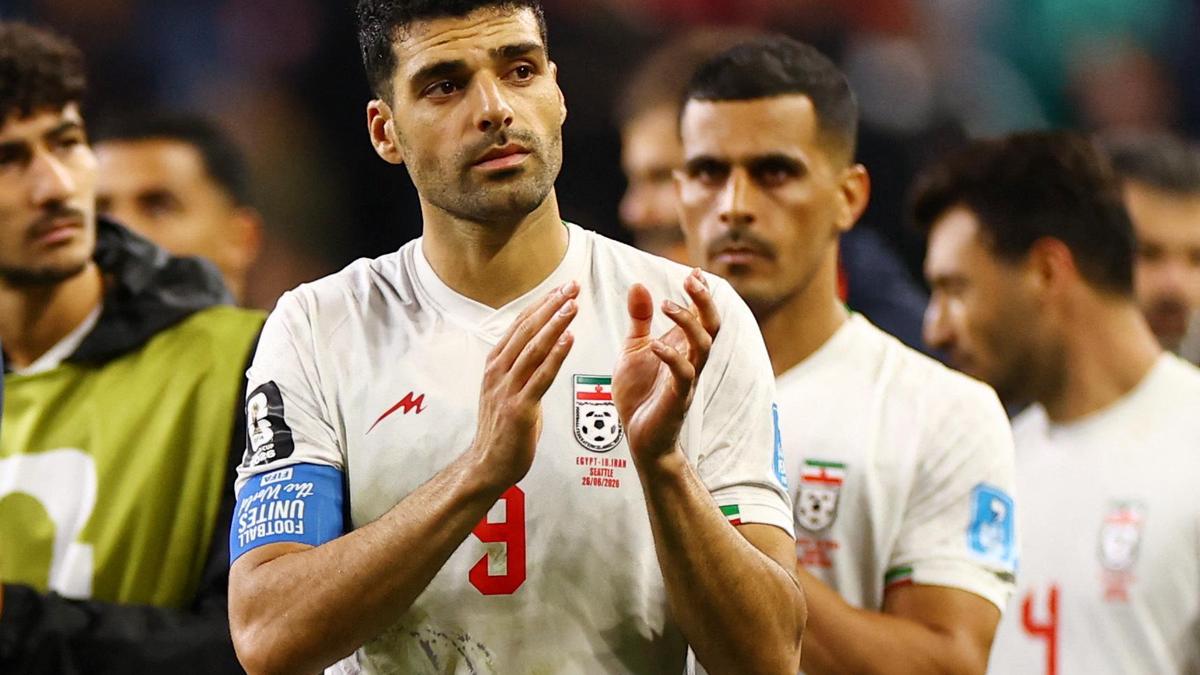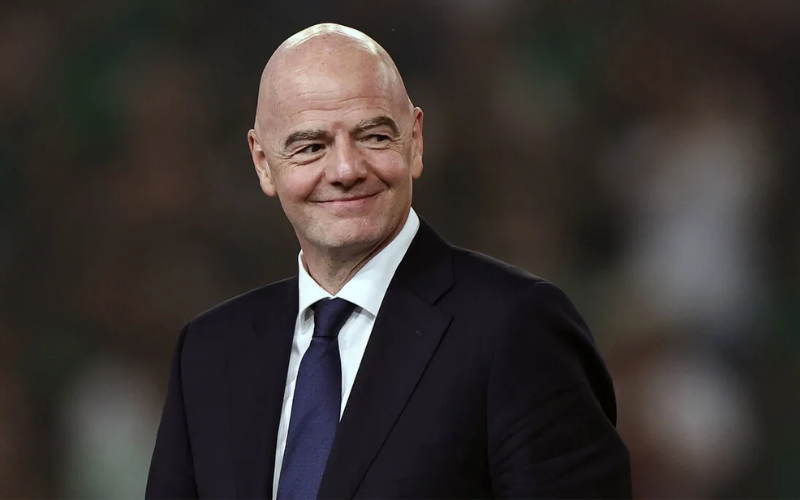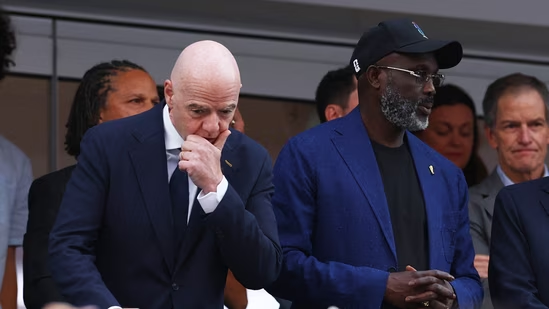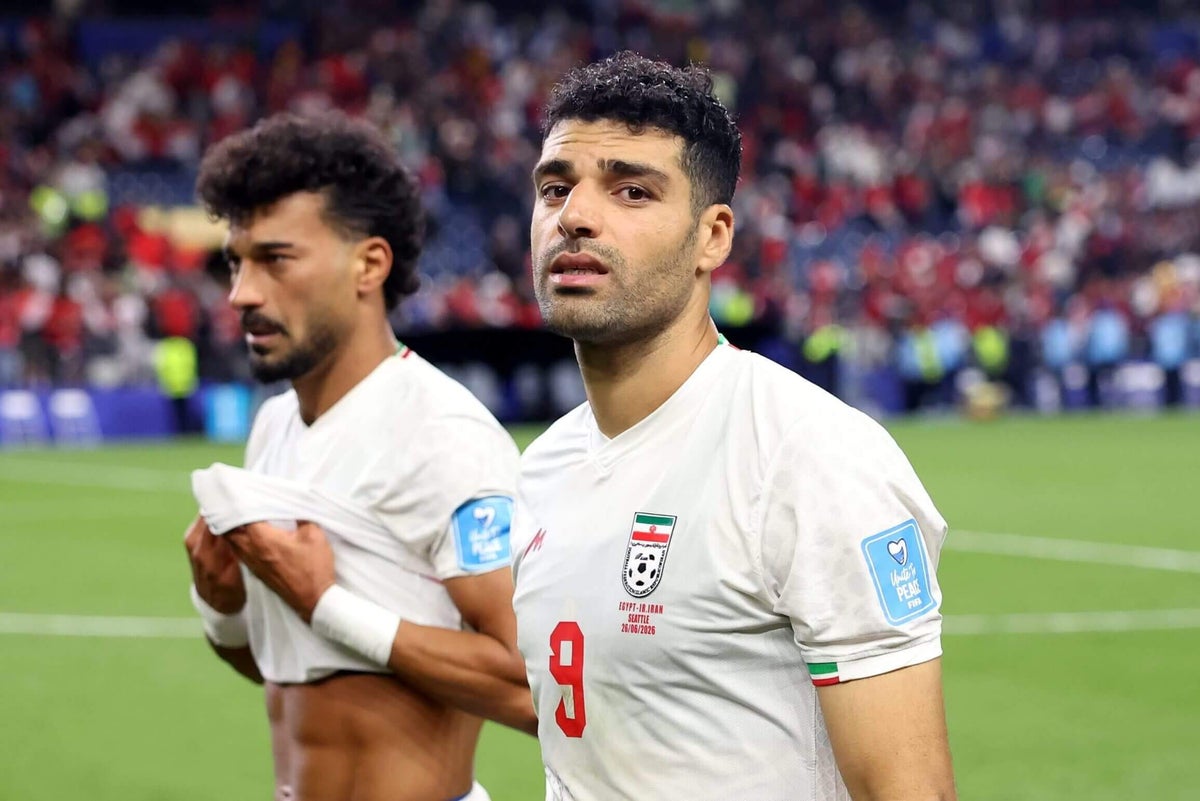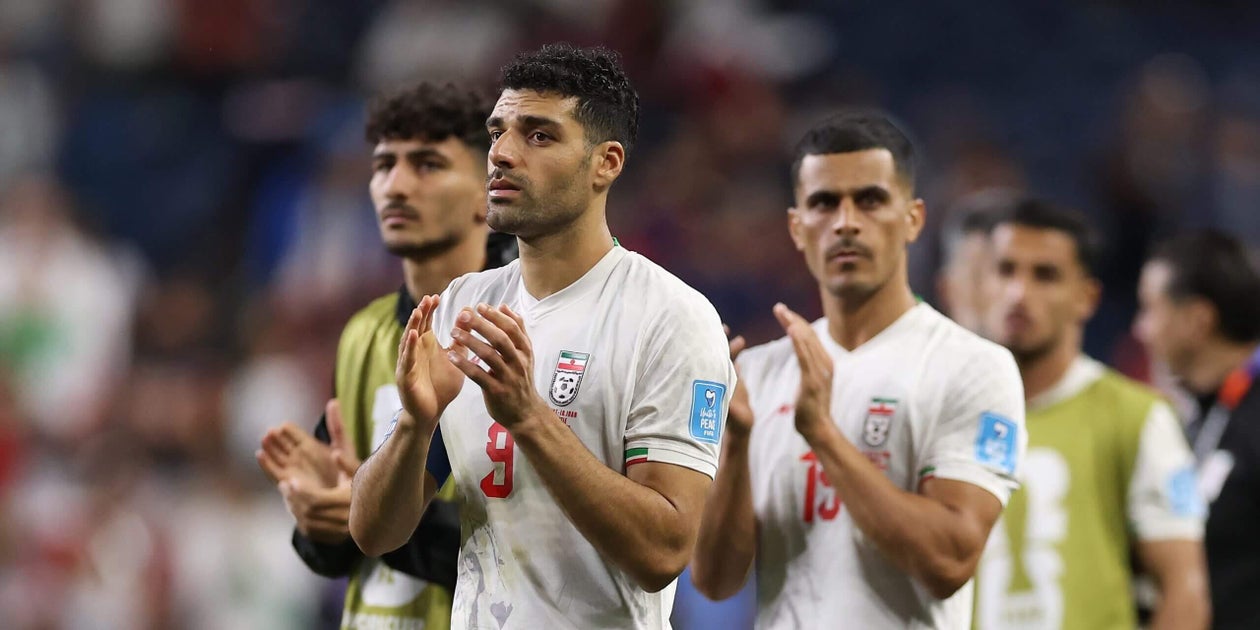
Gianni Infantino has made great play of FIFA’s influence over host nations in the past, but when it came to the United States and Iran at this World Cup he was, in one moment, reduced to the role of court jester.The FIFA president went to Iran’s dressing room after their opening match, the 2-2 draw with New Zealand at SoFi Stadium, Inglewood, to show the players, in his own inimitable way, that he was thinking of them.“You are sending a strong message to the entire world,” Infantino said. “You united the whole stadium here, behind ‘Team Melli’, you are showing to the world. So, thank you very much.”He let the claps from Iran’s squad and staff subside before delivering a line with which he looked rather pleased, turning and placing his hand on the shoulder of head coach Amir Ghalenoei. “And if the coach needs an attacker, I come for the next match, to play with you.”Given Iran were trying to obtain a new visa for left winger Mehdi Torabi, who had entered the country on single-use terms, and Mehdi Taremi, the team’s captain and striker, would soon be stopped for questions at border control in Los Angeles before Iran flew back to their training base in Tijuana, Mexico, his attempted humour felt in particularly poor taste.Infantino added: “This is just the beginning of the World Cup. You are writing history. Continue to play with your heart, for your people, and for everyone in the world who is falling in love with Iran. Let’s go, you’re stronger than everything.”Ultimately, Infantino has proved largely ineffectual on Iran since that saccharine sermon.Four of the 15 Iranian staff members initially denied visas to enter the U.S. were granted the right to travel into the country after appealing to the State Department. By the time of Iran’s third match against Egypt in Seattle, the team were able to fly in two days in advance, having been limited to the day before the match for their first two fixtures in Los Angeles.But once again, Taremi was held up by U.S. authorities — this time at Tijuana airport alongside assistant coach Saeed Alhoei — delaying the team’s departure from Mexico to the Pacific Northwest.And still, for the third game in a row, Iran had to make a swift exit, leaving the U.S. after the final whistle, against their wishes.This led to an impassioned address by Taremi after the dramatic 1-1 draw with Egypt, a result which left Iran’s chances of progress to the last 32 hanging in the balance.“It’s a disaster World Cup,” Taremi told reporters. “Mr Infantino came to our changing room after the first game against New Zealand and said, ‘It’s just the beginning…’ but the group stage finishes tomorrow.”He continued: “We don’t have recovery or logistic people to help us. We always complain about these things but no one helps. It’s not fair. Is it fair for FIFA? OK, good to them. Who wants to help us? If they want us to be out, then OK; let’s get out.”Mehdi Taremi was critical of FIFA after the draw with Egypt (Peng Ziyang/Xinhua via Getty Images)Around 24 hours later, in more astonishing circumstances, Taremi’s words came to pass.Algeria’s quite ridiculous 3-3 draw with Austria, following on from DR Congo’s late comeback win over Uzbekistan earlier in the day, confirmed Iran’s exit. Video footage emerged of Iran’s players, back at their Marriott hotel in Tijuana, celebrating Riyad Mahrez’s 93rd-minute goal for Algeria that would have sent them through. Three minutes later their hopes were extinguished when Sasa Kalajdzic equalised for Austria.And so, an unprecedented story in World Cup history finished in a manner that felt completely befitting.Iran’s stay at this tournament has been full of complexities and complications, with emotional protests by the team and against them. All the while, the political tensions sparked in February by the U.S.-Israeli military strikes on Iran have cast a long shadow.Following several conversations with relevant people in various cities, some of whom will remain anonymous to protect relationships, here is the story of Iran’s World Cup.The Athletic also approached FIFA and the Iranian Football Federation for comment before publication.Conflict has followed Iran’s participation at this tournament.The U.S. and Israeli offensive threw their participation into major doubt. Talks on the eve of the finals found a solution, with Iran relocating their training base from Tucson, Arizona, to Tijuana. But since then, just as ceasefires have been followed with retaliatory attacks by those in political power, Iran’s presence at this World Cup has followed a parallel narrative. A communications battle has raged like a proxy war between the nations.It was only on June 6, that Iranian players and “necessary support” staff were issued visas ahead of the World Cup. An administration official quickly said Donald Trump’s government “will not allow them to abuse this system to sneak terrorists into the United States”.Iranian Football Federation secretary-general Hedayat Mombeini and vice-president Mehdi Mohammad Nabi were named by Iranian state television as among those 14 staff denied visas. One staff member who had attended the past five World Cup tournaments without issue was blocked from watching matches in the U.S. and had to stay in Tijuana, according to multiple sources familiar with the situation. However, some players were said to disagree with Taremi and felt visa denials of wider staff did not have an impact on the squad.Even those who were granted access to the U.S. could only enter the day before the game. This led to strong rumours there would be no pre-match press conference ahead of the opening fixture against New Zealand. But Ghalenoei and Taremi, the former Porto and Inter forward, appeared to first reveal their deep frustrations at the situation.Iran’s head coach Amir Ghalenoei shows the strain at his pre-match media conference in Los Angeles (Bai Xuefei/Xinhua via Getty Images)“I have felt tension — we don’t have the same beautiful experience as previously, of peace and joy, for every country,” said Taremi, now a veteran of three World Cups.Ghalenoei hit a prophetic note. “I hope the World Cup will go well despite the travel problems we have had,” he said. “I hope it will not affect the quality of play.”Arguably, it already had. Sardar Azmoun, one of Iran’s best players with 57 goals in 91 international appearances, was left out of the squad after he made a post on social media perceived as being against the Iranian government. Ghalenoei said he “wished” Azmoun had been with them and the forward was said to want to play but was told he had to publicly apologise to the Iranian regime if he wanted to be selected. He would not do this.There have been claims other players were included in the squad due to their closeness to the regime — particularly some of the more experienced personnel.The split in the fanbase was clear at Iran’s training session a short drive away at LA Galaxy’s home stadium. A couple of dozen protesters chanted outside, calling for a new government in Iran.One woman, who fled Tehran at the turn of the century and wished to withhold her name to protect her family, said her group were specifically taking aim at the team. “We want to show them that we do not support the players,” she said. “They represent the regime which kills people. From their speeches, we do not see that they are neutral. They play the role of propaganda.“I will boo if they score. We will boo the anthem. There will be a lot of us there. We create a hell in Los Angeles.”One man, standing over the road, tried to hit back, chanting in favour of the Iranian government via a megaphone.Sardar Azmoun (No 20) was not included in Iran’s World Cup squad (AFP via Getty Images)The next morning at Los Angeles County Superior Court in downtown, a case that cut to the heart of this internal turmoil was heard.FIFA wanted to block fans from bringing in pre-revolution flags to SoFi on the grounds they are a political expression and might incite disturbances. Lawyer Shahrokh Mokhtarzadeh, representing the Institute for Voice of Liberty and Iranian ticket-holder Sam Kermanian, argued FIFA was impinging free speech.Three lawyers acting on behalf of FIFA, led by Chris Boehning, insisted the organisers, as private entities, had the right to impose regulations. Judge Curtis A. Kin agreed.Staff members at SoFi were sent pictures of the current flag and previous lion-and-sun flag to determine what was permissible. Many people had their items confiscated. Dozens more snuck their flags in. In the stands, several were displayed in defiance.Some fans booed the Iranian players and cheered when New Zealand scored twice through Eli Just. But, overall, the Iranians were well backed by the large LA diaspora, twice coming from behind through Ramin Rezaeian and Mohammad Mohebi.Afterwards, in the dressing room, Ghalenoei gave Infantino a piece of his mind. “I know how hard it took for us to be here,” he said through a translator in a video later posted on social media. “But let me talk about the human point of view. Technically, we are the most oppressed team in the history of the World Cup, because of the conditions and the effect they created for us. And maybe it was an injustice to this team.“I hope that FIFA will act a little more powerfully and the team will no longer be disrespected.”He said he had wanted to start Iran’s stay Stateside two weeks earlier because of a 10.5-hour time difference to the Gulf. “They didn’t even want us to come two days early,” he said. “We need to recover after the game, but they forced us to get on the plane to go back.”Ghalenoei was said to feel the immediate flights back affected his ability to arrange training at optimal times, although others close to the squad believe this was not a major aspect, with several other nations also returning to base camps immediately after matches.Some players were privately critical of Ghalenoei’s selections against New Zealand, feeling he overlooked his opponents. The selection of inexperienced right-back Arya Yousefi on the left wing was seen as particularly confusing when a lot of senior wingers were not chosen.Protestors demonstrate against the Islamic Republic of Iran, while holding pre-revolutionary Iranian flags, outside SoFi Stadium (Mario Tama/Getty Images)Iran flew back to Tijuana that night, a trip by air of less than an hour, and the next day they hosted one of their sessions open to the media.Tijuana was chosen for its proximity to Los Angeles, where Iran had two games, as well as being on the same coast as Seattle, the venue for their final group match, but the late change from Tucson, only confirmed on June 8, meant a scramble to sort facilities.We traveled to Tijuana to go behind the scenes at Iran's training campLaurie WhitwellClub Tijuana Xoloitzcuintles de Caliente, known as Los Xolos after the hairless dog breed, was the place selected; a training base already inspected by FIFA in case any World Cup team needed to be based in Tijuana.Some players questioned why Iran opted to switch their base to Mexico, although they conceded it was more a sense of awkwardness than a performance issue, and they were all feeling physically very good. The facilities in Tijuana were faultless, players believed. FIFA has a representative in Tijuana to assist Iran, but football’s governing body has been guarded on details.Fernando Arce, a former Mexico international now a director of Xolos, told The Athletic: “The biggest challenge was making sure the training pitch was in the best possible condition so the team could work comfortably throughout their stay. Although our own professional team uses them on a daily basis, we did everything possible to adjust our schedule and operations so Iran could have everything they needed while they were here.”Outside the stadium, an enormous sculpture of a dog marks the entrance, a symbol of the club in recognition of founder Jorge Hank’s pet Xolo. The 50-foot high structure, with ears spiked up and sharp teeth showing, is actually not as intimidating as the national guard officers who have been situated around the premises, several of them carrying guns.The entrance to Club Tijuana Xoloitzcuintles de Caliente, known as Los Xolos (The Athletic)A motto painted in white letters on a red wall at the back of the training pitches seemed poignant. “The Team Without Borders,” it read.That sense of being on the outside was shared by this Iran team and local people. At Iran’s team hotel, the Marriott, a 10-minute walk away, people regularly gathered to greet them back from training and wish them well as they departed.Tijuana embraced having Iran as visitors. Yalda Sepahpour, an oil painter who was born in Tehran but left when she was 18, has lived in the town for two years. She made shirts combining Iranian and Mexican heritage and gave them to the team the night before they left for their final game in Seattle.“I was able to pass the shirts with the help of others and I received a thank you from the players who I directly handed the boxes to,” she told The Athletic. “The whole experience was quite moving. The Mexican people have been so supportive of Iran.”The shirt made by Yalda Sepahpour and print shop Serijuana was given to Iran players (The Athletic)Sepahpour also made two large canvases, pinned to either side of a truck, that she drove to the centre of Tijuana and to LA for the Belgium game. One read, ‘El Futuro Es El Sur’, the future is the South. The other says ‘Iran esta en Tijuana / Tijuana esta con Iran’, translating as Iran is in Tijuana / Tijuana is in Iran.“I think Mexican people have been able to relate to Iran and the team for various reasons,” she said. “The first is that they are extremely resilient people with a lot of soul and fire. It is also quite complicated for some of them to cross (the border to the U.S.) … Many wake up as early as 4am to be able to get to work in time and don’t return until 8/9pm.”Yalda Sepahpour drove her truck to the centre of Tijuana and to LA for the Belgium game (The Athletic)As the days went on, Iran increased its complaints against the U.S. over the block on crossing the border until the day before their games. Hedayat Mombeini, the secretary general of the Iranian Football Federation, told reporters in Tijuana that Iran would lodge a complaint with FIFA.“This sort of breaking of our rules and our agreements, in my opinion, calls football itself into question,” Mombeyni said. “I believe this will mark a dark point in the World Cup’s recent history.”Hedayat Mombeini addresses the media (Guillermo Arias/AFP via Getty Images)Andrew Giuliani, executive director of the White House FIFA Task Force, said Iran had been told in advance they would only be allowed to enter the U.S. 24 hours ahead of kick-off. In an interview with Politico on June 14 he described it as “another example of the goodwill gesture to the team”. FIFA’s World Cup rules state only “in exceptional cases” should teams travel earlier to venues.Still, Ghalenoei pressed his country’s case. “I asked the 47 other coaches (at the World Cup) a question and none of them have responded to me. They are busy with their own teams, and we did not receive anything,” he said in a press conference.Iran’s football federation then called out what they termed “FAKE Remarks” by Markwayne Mullin after the U.S. Secretary of Homeland Security told Fox News that someone with ties to the Islamic Revolutionary Guard Corps (IRGC) had attempted to board the Iran team’s flight to LA for their second World Cup game against Belgium.Mullin said: “President Trump and I spoke about this, the President of FIFA, Gianni and I have had multiple conversations, they tried to get somebody in, he was supposed to be the president of the soccer federation. When we started doing the research on him he’d only been put in place since 2022, and we didn’t allow him to board the plane. The guy who tried to get on the plane had direct ties to IRGC. We’re checking them as they get on the plane, as they get off the plane, in both places, we have custom border protection agents doing biometrics so we know who’s coming in the country and leaving.”Iran responded. “The claim that an official representative of the Iranian football federation attempted to board a flight to enter the United States and was prevented from doing so is an outright and undeniable lie,” a statement read. “His claim is so unfounded that those who made it are well aware that such an incident never occurred in the first place.”A PR war was raging, even featuring a fake image on social media of winger Mohebi putting a poster of Mahsa Amini, who died in a hospital in Tehran in 2022 after being arrested for allegedly not wearing the hijab to meet government standards, in the bin. Her death sparked mass riots and clashes with the regime in 2022 as well as protests worldwide.“We would like to clarify that these images are entirely fabricated and have been created using artificial intelligence tools,” read an official statement from Iran’s football federation.There was real upset outside SoFi for the Belgium game, though, with one woman angered at a steward demanding she put her pro-revolution flag in the bin before entering the stadium.When the match commenced, Iran again had overwhelming support within the ground, and looked on course for a win that would have secured their passage to the last-32 when Nathan Ngoy was sent off in the 66th minute. But they could not break down Belgium’s 10 men, which made the VAR’s overturning of Taremi’s first-half goal, by the slenderest of offside calls, all the more significant.Saeid Ezatolahi celebrates but Iran’s goal is eventually ruled out (Jamie Squire/Getty Images)Alireza Jahanbakhsh told reporters after the 0-0 draw: “I hope we can go (to Seattle) as soon as possible to adapt to the situation in the city and to the place where we’re going to play,” he said. “That’s just a fairness, I think, for all the teams. We’re not asking for much.”Iran left a hand-written note on a board in the dressing room. “We came to Los Angeles with pride, competed with honour, and leave with dignity,” read one part.(Iran Football Federation)Iran’s final group game with Egypt in Seattle drew yet more attention because it was pride weekend in the city.The federations of Iran and Egypt issued statements rejecting local authority claims this was ‘Pride match’. It added up to a combination of conflicting themes and motivations outside Lumen Field, where Iranian protestors called for regime change in the country while LGBTQ+ campaigners flew rainbow flags.The mood was especially tense between protestors bearing Iran’s pre-revolutionary flag, banned from the stadium, and those attempting to carry in the official one.The Athletic witnessed two flashpoints where only temporary barriers prevented insults from escalating, but there was a mix of views about the importance of the team’s performance at the World Cup. While some wanted Iran to lose because the team represented a repressive state, others were able to separate politics and football. These Iranians also believed Iran’s participation drew attention to the country’s position.A protest placard outside the stadium in Seattle (Mathieu Lewis-Rolland/Getty Images)On the team’s Instagram account, the names of all 168 people killed in a missile strike attributed to the U.S. on the Shajareh Tayyebeh Elementary School in Minab, Iran — mainly children and teachers — were listed under the title: The Team That Never Grew Up. Remembering those deaths has been a theme of Iran’s World Cup.What followed was an enthralling match between two nations desperate to make their mark on the tournament. Iran thought they had won the game in stoppage time when Shoja Khalilzadeh hit the back of the net, prompting scenes of jubilation, before VAR ruled the goal out for offside by a toe. Iran then rattled the crossbar.Taremi, who missed a penalty against Egypt, made his frustrations clear over FIFA and Infantino post-match. Again, Iran left a hand-written message on a board in the dressing room. “Perhaps points can be won in many ways, but respect cannot,” read one line.Iran arrived back in Tijuana at 4am local time. Later that day, two articles relating to the Disgrace of Gijon, the World Cup game in 1982 when West Germany and Austria played out a 1-0 scoreline to ensure both teams progressed, was shared by Iran staff in the media WhatsApp channel, suggesting a fear the same would happen in Algeria’s game against Austria in Kansas City — a result that would contribute to Iran being knocked out.The World Cup and WarAdam Leventhal and Reuben PinderAt 1pm an announcement was made that a senior Iranian official would speak in Tijuana shortly before the team’s 6pm training session.First, though, DR Congo needed to lose against Uzbekistan, and when they fell behind, Iran hopes rose. The training session, which would have clashed with the second half of that game, was pushed back an hour. The interview with the senior official was postponed. Then Congo came back to win and the training session was cancelled altogether.More drama was to follow. Friends and families were invited to watch Algeria-Austria game with the players at the Marriott. Austria led twice, then Algeria went ahead with only a few minutes to play. But Austria’s equaliser put Iran out once and for all. Frustration reigned.On four occasions during the final day of group matches, Iran were through. Considering the VAR call against Egypt, the missed penalty, and the VAR call against Belgium, Iran could have finished on seven points as group winners. Instead they head home to what remains a difficult picture.Iran’s ambassador to Mexico, Abolfazl Pasandideh (second left) and Hedayat Mombeini speak to supporters after the team’s World Cup elimination (Guillermo Arias/AFP via Getty Images)Iran’s ambassador to Mexico, Abolfazl Pasandideh, raised an eyebrow at those VAR calls in a statement to Politico. “Perhaps some balls fell just centimetres short of bringing joy to millions of Iranians — centimetres that were not even measured by the linesman’s flag, yet were magnified by ‘pseudo-VAR’ interventions,” he said. “However, nothing could ever diminish the magnitude of your determination.”Given the ages of their main players, this might be Iran’s best shot at a World Cup for a while. Taremi (33), Azmoun (31), Jahanbakhsh (32) and Ezatolahi (29) have mainly led the last three tournaments, but the future of the national team is bleak, with fewer promising young players in Europe or abroad. Iran were the oldest team at this World Cup.One player described Iran’s group as the easiest they’d been in for the last four tournaments, but tactics and execution were lacking. For all the controversy and obstacles, rudimentary football shortcomings still applied.In the U.S., dispute and acrimony followed Iran to the end. Mullin said that he did a “happy dance” and “sung a song or two” to celebrate Iran’s exit from the World Cup. He added he is “so glad they’re gone”.Iran responded. “These remarks once again demonstrate that U.S. officials have no commitment to international law or the principles expected of a host nation capable of organizing a global sporting event. The fact that he openly celebrates Iran’s elimination says far more about him than it does about our team. It reflects a level of pettiness that cannot even tolerate the presence of a football team competing on the world’s biggest stage.”In Tijuana, the mood was totally different. Harmony marked Iran’s departure. Olivaldo Paz Gomez, the current president of the National Chamber of Commerce, Services, and Tourism of Tijuana, invited locals to wave goodbye to the team at their Marriott hotel at 6.30am on Tuesday morning.The leaflet advertising the event read: “The Iranian national team is making a return and we want to say goodbye to them as only the people of Tijuana know how to do it — with affection, respect and gratitude.”Additional contributors: Christopher Kamrani, Henry Bushnell, Simon Hughes, Adam Crafton
Inside Iran’s ‘disaster’ World Cup: Infantino’s ‘offer’ and a home from home in Tijuana
The Iran captain Mehdi Taremi described this as 'a disaster World Cup' given the restrictions his team have endured through the tournament
4,016 words~18 min read