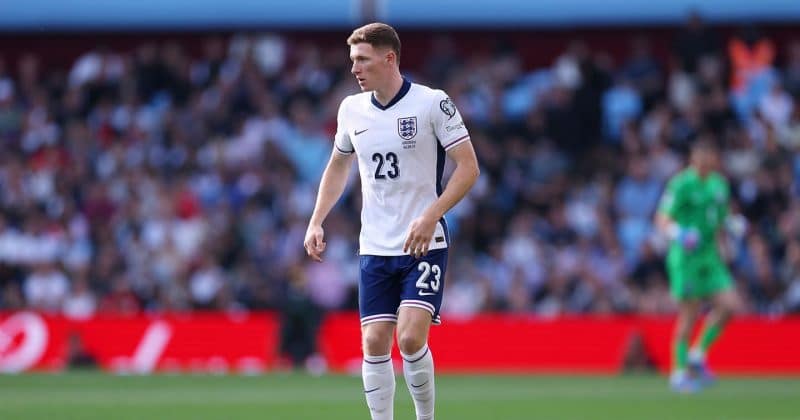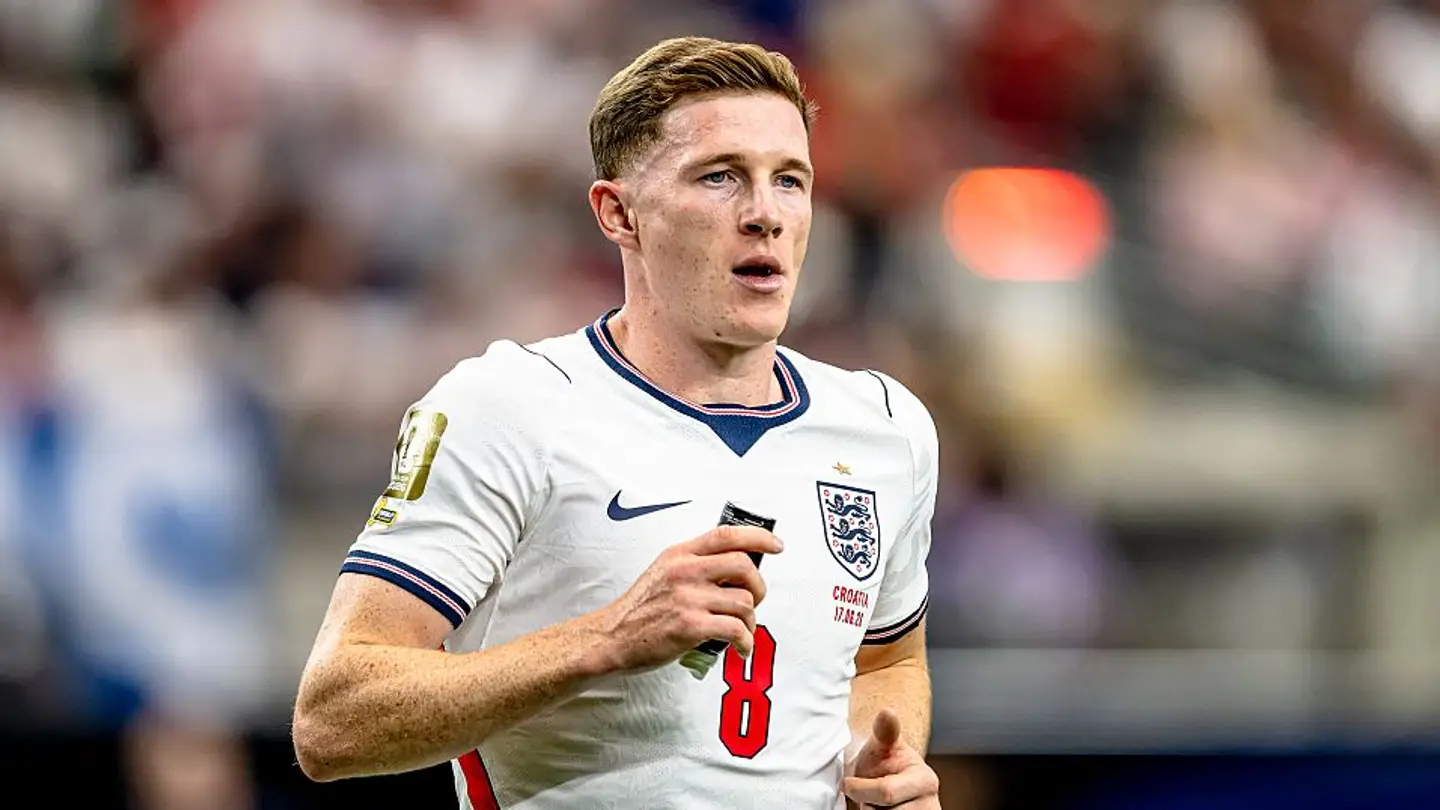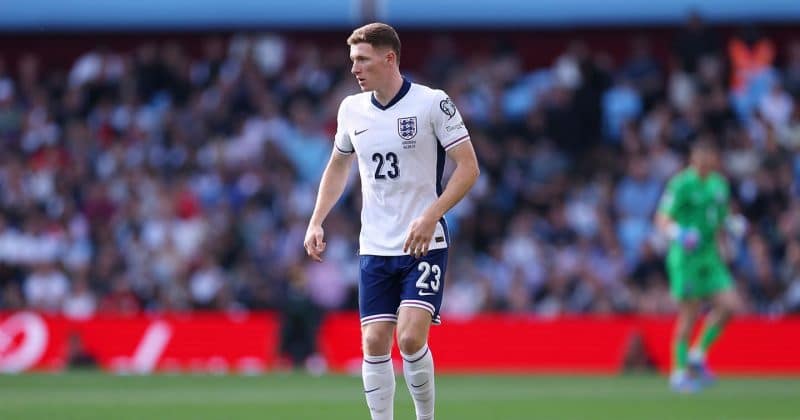
As coincidence would have it, Aston Villa were the trailblazers in two very different times.Leaders of English football’s Victorian period, Villa were the first team to spend three figures on a player, signing Willie Groves from West Bromwich Albion for £100 in 1893.One hundred and twenty-eight years later, they were the first club to receive another landmark ‘100’ figure for a British player — this, of course, being 2021 and now in the millions, rather than pounds — from Manchester City for local lad, Jack Grealish.Five years on and Villa may prove to be at the centre of another transfer record. Villa are using Elliot Anderson, the latest player to break the transfer record for a British player, after City struck a £116million deal with Nottingham Forest, as a potential gauge for Morgan Rogers’ sale. A similar school of thought is being applied at Borussia Dortmund for midfielder Felix Nmecha and Bradley Barcola at Paris Saint-Germain.Elliot Anderson’s fee is £116m (Photo: Mike Egerton/PA Images via Getty Images)As multiple agents have stated to The Athletic, speaking on the condition of anonymity to protect relationships, the market usually needs one domino to fall before everything and everyone else can truly begin. Anderson’s record-breaking move may be it.Anderson surpassed his England midfield partner Declan Rice and the £105m fee Arsenal paid West Ham United in 2023. Villa sources have discussed using Anderson and Rice’s fees as markers for the asking price for Rogers, even if that figure is not yet definitive.If Rogers was to move, therefore, there is a chance the British record may be broken again. The Athletic previously reported Arsenal are among several Premier League and European clubs exploring his signing.Villa are insistent they want more for Rogers than Anderson’s fee, with the attacking midfielder internally considered among the top five players in the Premier League.Yet others involved in the potential transfer believe the fee required will be less, given industry sources stated going into the summer that the benchmark would be Villa’s previous sale of Grealish and are consequently leaning on Anderson’s move to drive up the price. Whether the British record tumbles again depends on what those interested are willing to pay and the decision of co-owner Nassef Sawiris, who will have the final say.The pre-Premier League recordsEleven years after Groves commanded the first hundred-pound fee, striker Alf Common ruffled the top hats of 20th-century politics and media. Common had joined Middlesbrough from Sunderland for £1,000 in 1905 (£108,000 in today’s money), which was the first four-figure fee paid.In 1922, after the First World War, Scottish clubs entered into the equation. Falkirk were the first British side to pay £5,000, for West Ham’s Syd Puddefoot, only for Arsenal to double that six years later with Bolton Wanderers’ inside forward, David Jack.That was it until after the Second World War, when mainland Europe started to dominate the transfer market. They had greater spending power than British clubs, with the upshot being the world transfer record was regularly broken. Leeds United forward John Charles was the first British player to be bought for £50,000 when he joined Juventus in 1957, with Denis Law moving to another Italian club, Torino, four years later for £110,000.But it was in the 1970s when the fees really started to rise. Now out of the era of austerity, Martin Peters became the first £200,000 player, having left West Ham for Tottenham Hotspur. By 1977, Hamburger SV had spent £500,0000 taking Kevin Keegan from Liverpool and, two years later, Trevor Francis became the first million-pound transfer, with Nottingham Forest buying him from Birmingham City.Francis, who won the European Cup with Forest, became the first £1m player (Photo: Peter Robinson/EMPICS via Getty Images)Rapid riseThe advent of the Premier League turbo-charged the fees being commanded. Led by Jack Walker in 1992, the local Lancashire businessman, Blackburn Rovers broke the British transfer record for Alan Shearer, signing the forward for £3.6million from Southampton. A need to get ahead and sustain progress ahead of the ‘legacy clubs’ and now their rivals at the top end of the Premier League, Walker kept on spending. Two years later, Shearer’s would-be strike partner and the partner in the ‘SAS’ duo, Chris Sutton, joined from Norwich City for £5m. Newcastle United’s Andy Cole nudged ahead six months later with a £7million move to Manchester United, only to then be outstripped by Stan Collymore’s £8.5m move from Nottingham Forest to Liverpool. Within three years, starting from Shearer’s transfer, the record had more than doubled. Shearer reclaimed top spot in 1996 (from Collymore), becoming the first £15m player after returning to the North East and Newcastle. This meant that, between both of his records, the highest British fee had seen a 316 per cent increase.Alan Shearer became the most expensive player twice (Photo: Radford/Allsport/Hulton Archive/Getty Images)The correlation was obvious. Costs had risen exponentially in line with the Premier League’s boom. Having formed in 1992, the top flight of English football was displaying burgeoning signs of being a commercially lucrative juggernaut.Manchester United’s Rio Ferdinand was the first £30m British transfer in 2002 after signing from Leeds. Admittedly, things did slow over the next nine years until Liverpool paid £35m (£53m in today’s money, accounting for inflation) for Andy Carroll from Newcastle. For a few hours, at least, prior to Chelsea signing Fernando Torres from Liverpool for £50m, Carroll was the eighth most expensive transfer of all time and the reason behind the biggest transfer outlay of any British club.The genie came out of the bottle in 2013, when Gareth Bale joined Real Madrid for £85.3m. It was a world-record transfer, let alone shattering the British one.As broadcast money and overall revenues mushroomed, transfer spending became emblematic of football’s modern era. It was evolving into a huge commercial entity, with rich oligarchs and state-backed ownership on the rise. Clubs went from local chairmen, such as Walker, to a very different profile. Money felt endless — so too did the possibilities.British transfer fees were influenced by what was happening overseas and the market value of international players. Paul Pogba rejoined Manchester United for £89m, before Neymar, funded by PSG’s Qatari backers, sent the market spiralling. The £195m fee to sign the Brazil international from Barcelona remains startling and a completely distorted reality and player value.Though not to that excessive extent, a similar marker in Anderson’s move to Manchester City this summer is being set for other moves, such as any deal involving Rogers, Barcola or Nmecha.Anderson’s transfer to City eclipses Rice joining Arsenal, having been the second nine-figure English player after Grealish. Could Villa, who broke the record twice to sign a player and then sell a player, do the same again with Rogers? The first domino has fallen.
How record fee for a British player reached £116m – and will it be broken again soon?
Elliot Anderson's fee for his move to Manchester City is £116million. England team-mate Morgan Rogers might be set to beat that mark.
1,119 words~5 min read