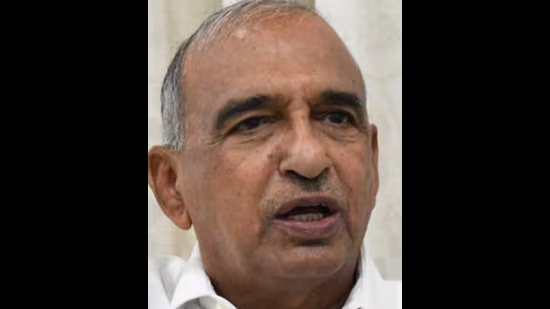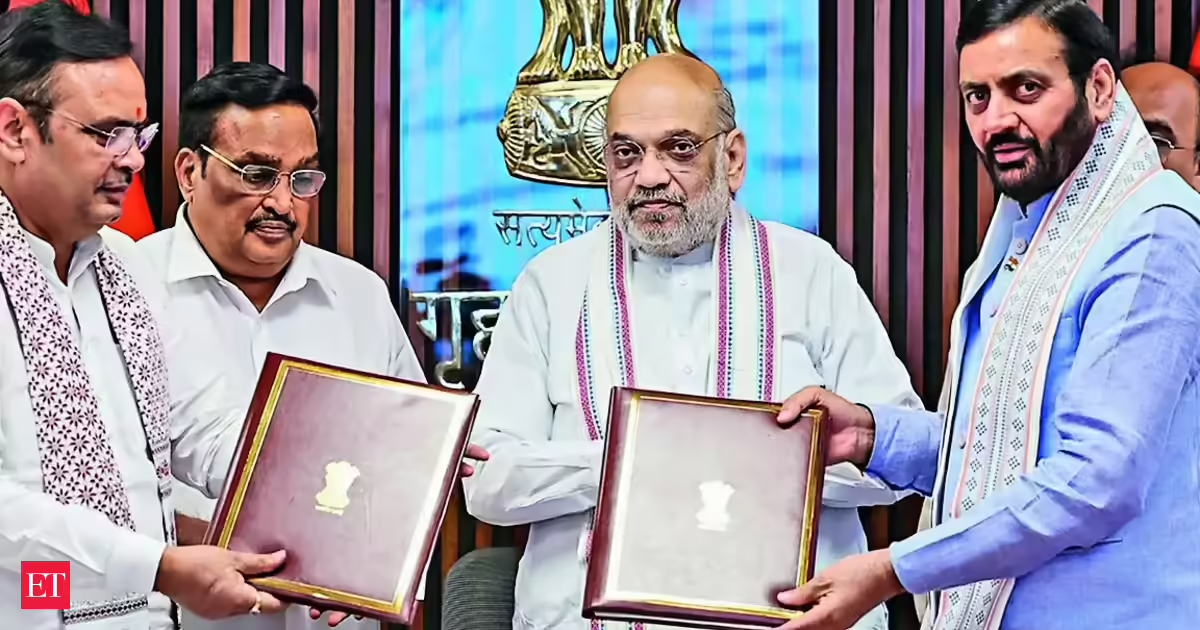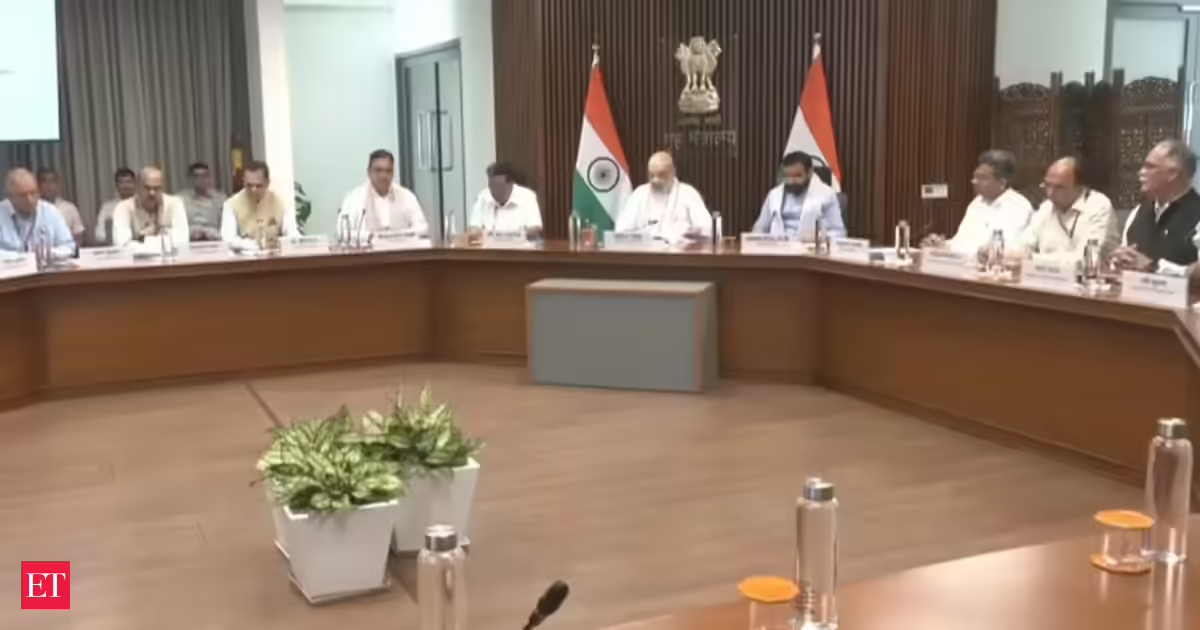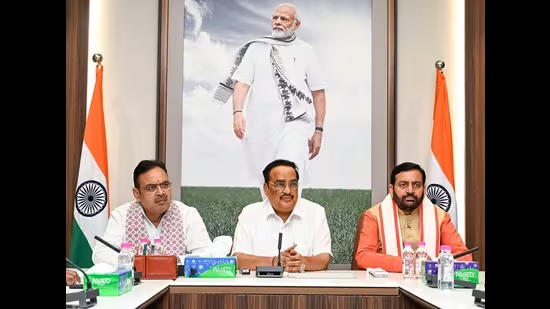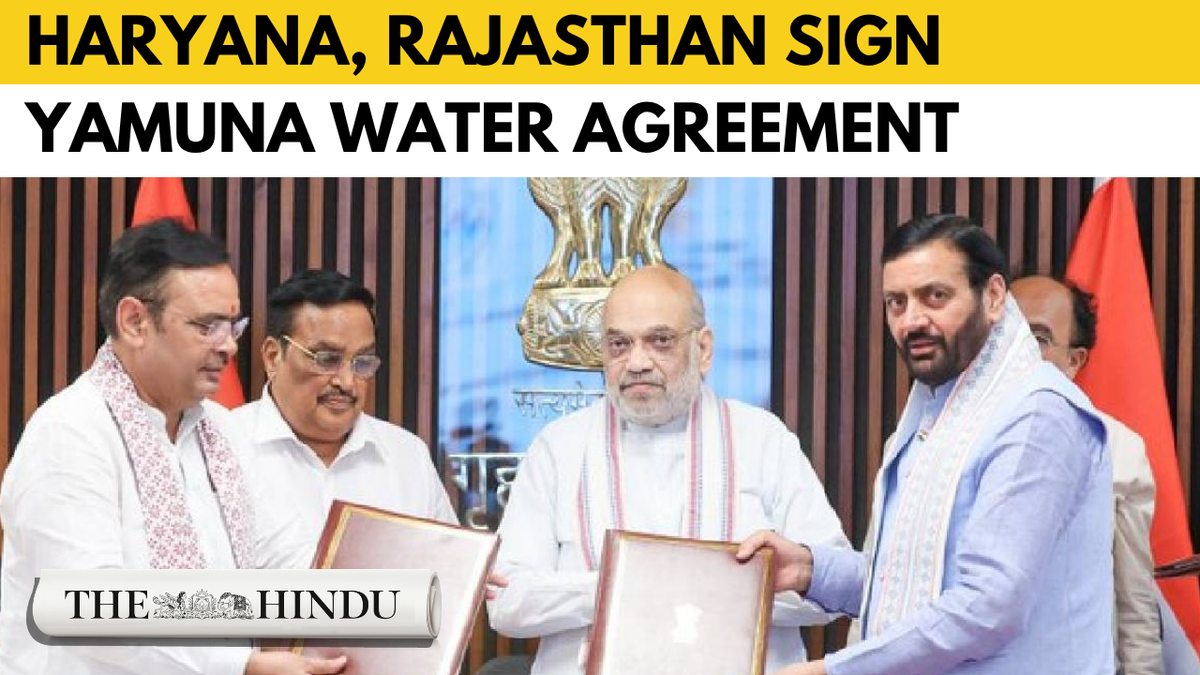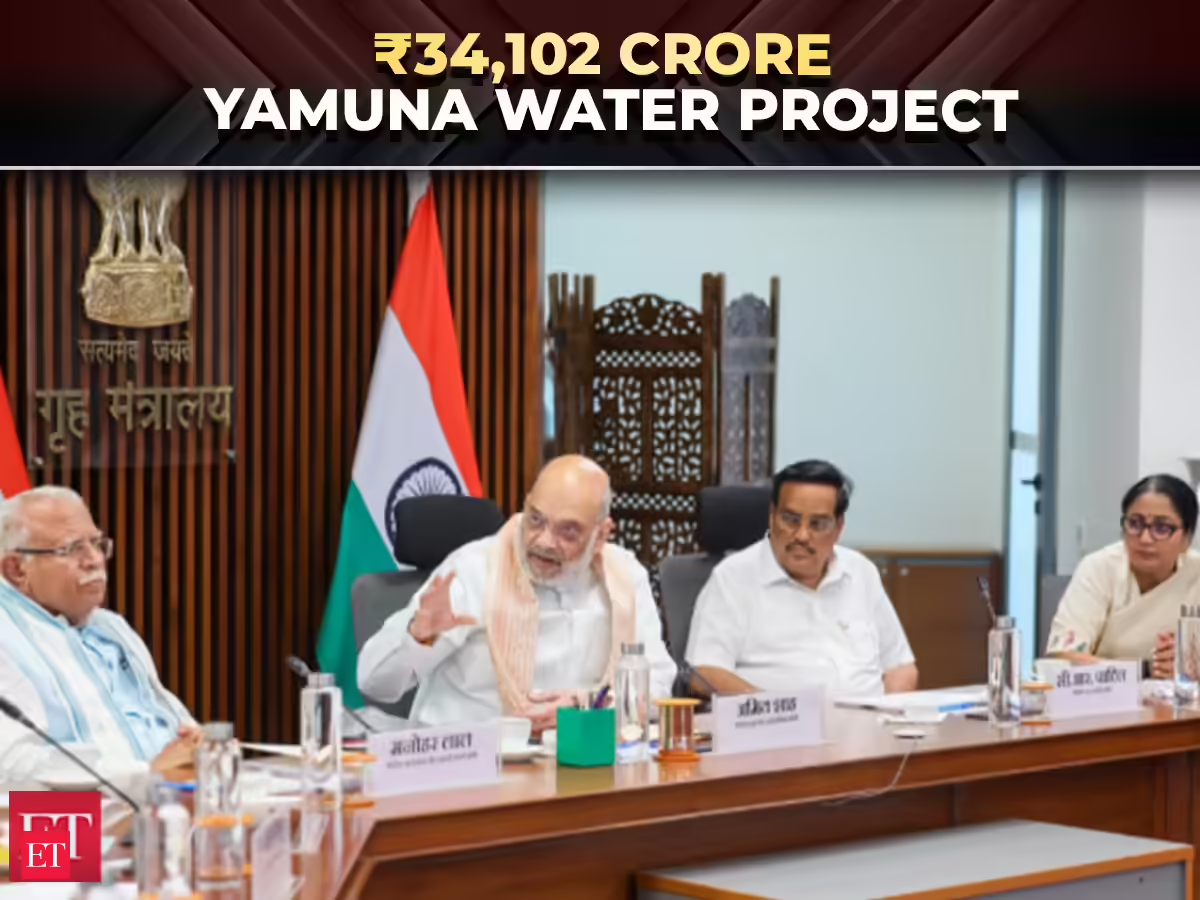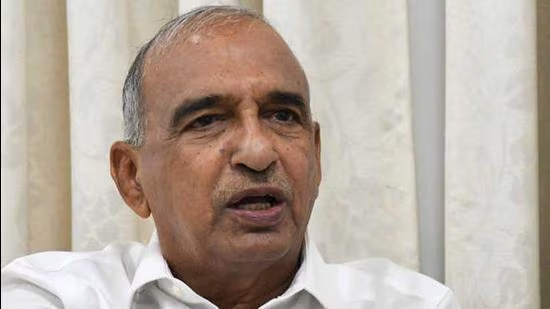
Former Haryana finance minister Sampat Singh on Monday opposed the water agreement signed between BJP-ruled Haryana and Rajasthan in New Delhi for utilisation of surplus rainwater available in Haryana between July and October through a dedicated pipeline for drinking water purposes.Former Haryana finance minister Sampat Singh on Monday opposed the water agreement signed between BJP-ruled Haryana and Rajasthan in New Delhi for utilisation of surplus rainwater available in Haryana between July and October through a dedicated pipeline for drinking water purposes. (HT File)The project seeks to facilitate the conveyance of Rajasthan’s allocated share of Yamuna waters through an underground pipeline system from the western Yamuna Canal, enabling it to utilise the water allocated to it under the 1994 memorandum of understanding on the sharing of utilisable surface waters of the Upper Yamuna Basin.At a briefing, the Indian National Lok Dal (INLD) leader said the construction of the SYL Canal remains incomplete despite repeated directives of the Supreme Court causing Haryana to face a persistent water crisis. Both the BJP and the Congress have ‘failed’ to effectively protect Haryana’s legitimate water rights. Haryana’s water belongs to Haryana, and the INLD will continue to fight to protect every single drop of it,” Singh said.He said that the INLD has always fought to safeguard Haryana’s water rights and will not accept any compromise regarding the state’s legal share of Yamuna water.The INLD patron noted that the Yamuna water agreement signed on March 12, 1954, between the then-states of Punjab and Uttar Pradesh, had recognised Punjab’s rights regarding the Eastern and Western Yamuna Canal systems. Following the formation of Haryana in 1966, these rights were transferred to the state. For several decades, approximately 12 billion cubic metres (BCM) of Yamuna water was utilised, with Haryana consuming about eight BCM and Uttar Pradesh about four BCM. However, under a new agreement reached on May 12, 1994, at the initiative of the central government, the chief ministers of Haryana, Uttar Pradesh, Rajasthan, Himachal Pradesh and Delhi reduced Haryana’s share to 5.730 BCM, while allocating 4.032 BCM to Uttar Pradesh, 1.119 BCM to Rajasthan, 0.724 BCM to Delhi, and 0.378 BCM to Himachal Pradesh. This caused Haryana’s share to drop from about 67% to 46%. Previously, Rajasthan and Delhi were supplied with surplus water solely on humanitarian grounds; the 1994 agreement transformed this into a permanent allocation, the former finance minister said.Singh said that the same agreement included provisions for constructing the Renuka, Kishau, and Lakhwar-Vyasi dams to increase the availability of Yamuna water. However, even after three decades, these projects remain incomplete. He noted that following the devastating floods of 1978, the Haryana government constructed the Masani reservoir in 1989 at a cost of approximately ₹69 crore to utilise water from the Sahibi, Krishnawati, and other seasonal rivers for irrigation. Subsequently, Rajasthan obstructed the natural flow of water by constructing earthen dams in the upstream areas, thereby adversely affecting Haryana’s irrigation capacity. He alleged that instead of resolving these long-standing disputes, the current BJP government is entering into new agreements with Rajasthan that further undermine Haryana’s interests.Sampat Singh recalled that in 1994, all 17 INLD MLAs resigned from the state assembly in protest against the Yamuna water agreement, a move led by former CM Om Prakash Chautala.
Will not allow Haryana’s water rights to be compromised: INLD
The project seeks to facilitate the conveyance of Rajasthan’s allocated share of Yamuna waters through an underground pipeline system from the western Yamuna Canal
541 words~2 min read